Whether an E-Collar Belongs on a Pomsky
As a Pomsky parent, you've probably faced a moment (or many moments!) where your furry friend's independent streak, boundless energy, or selective hearing has tested your patience. It's easy to get frustrated when your Pomsky seems to have a mind of its own, perhaps bolting after a squirrel or stubbornly ignoring your calls. In these challenging times, the idea of an e-collar, often touted as a quick and effective training solution, might cross your mind. But before you consider this path, it’s vital to understand what e-collars truly entail and whether they align with the unique needs and sensitive nature of our beloved Pomskies. This guide will dive deep into the world of e-collars, exploring their mechanics, the ongoing debates surrounding their use, and the potential impact they could have on your Pomsky, while also offering humane and effective alternatives.
Understanding E-Collars and Their Function
The term "e-collar" itself often brings up strong opinions, and part of that stems from a misunderstanding of what these devices are and how they operate. Let's break down the different types and what they're designed to do, so you can make an informed decision about whether any of them belong on your Pomsky.
What an E-Collar Is (and Isn't)
At its core, an e-collar is a training device that delivers a remote stimulus to a dog, typically around their neck. The common misconception is that all e-collars are "shock collars" delivering painful jolts. While some devices do use static correction, modern e-collars often offer a range of stimuli, including vibration and tone, in addition to or instead of static. The intention behind these tools is to interrupt unwanted behaviors or to provide a distinct cue for desired actions, especially in scenarios where a long-distance correction is needed, like off-leash training. It's a remote control for a collar that can get your dog's attention, sometimes in a way that feels unpleasant to them.
Historically, the initial static collars were indeed more rudimentary and could deliver stronger, more jarring corrections. This is where a lot of the stigma comes from, and it's something responsible owners agonize over. Today, many manufacturers emphasize that their devices are designed for communication and attention-getting, with adjustable levels to match a dog's sensitivity. However, even with the most advanced technology, the fundamental mechanism of delivering an aversive stimulus remains, which is where the ethical debate truly begins for many of us.
How Different Stimuli Work
When we talk about e-collars, we're typically referring to three main types of stimuli:
Static Correction E-Collars
These collars deliver a mild electrical pulse or "static correction" to the dog's neck. The levels are usually adjustable, ranging from a barely perceptible tingle to a more noticeable sensation. Proponents argue that the sensation is akin to a static shock from rubbing your feet on carpet – surprising, but not truly painful. The idea is to create an unpleasant association with a specific unwanted behavior, or to get the dog's attention strongly enough to redirect them.
However, the subjective nature of this sensation is a huge point of contention. What might be a "mild tingle" to one dog could be genuinely frightening or painful to another, especially a sensitive breed like a Pomsky. It requires precise timing and a deep understanding of canine body language to use effectively without causing undue stress, fear, or anxiety. Without proper introduction and conditioning, a dog can easily associate the correction with anything in the environment at that moment – a friendly stranger, another dog, or even you – leading to fear-based aggression or generalized anxiety.
Vibration E-Collars
These collars provide a vibrating sensation on the dog's neck. Unlike static correction, there's no electrical component. The vibration is meant to be a clear, tactile cue that gets the dog's attention. Many owners use these successfully for deaf or hearing-impaired dogs, or as a gentler alternative for sensitive dogs.
For some Pomskies, a vibration collar can be an effective way to communicate at a distance without the potential for pain or fear associated with static. It's an interruption, a tap on the shoulder from afar. The key here, as with any tool, is how it's introduced and what the dog learns it means. If the vibration always precedes a reward for coming when called, it can become a positive communication tool. If it's used solely to interrupt undesirable behavior without offering a clear alternative, it might just confuse or frustrate your smart Pomsky.
Tone/Beep E-Collars
Many e-collars also include a tone or beep function. This emits an audible sound from the collar, which can be used as a warning or a cue. For example, a beep might precede a static correction, allowing the dog to learn to respond to the beep alone to avoid the less pleasant stimulus. Or it can simply be used as a distinct sound cue, similar to a clicker in positive reinforcement training.
The advantage of a tone is its purely informational nature – it's not inherently aversive. However, for a Pomsky with selective hearing (and let's be honest, many of them have it!), a tone might not always be enough to cut through their focus on a scent or a potential chase. It still needs to be carefully conditioned, meaning you need to teach your Pomsky what the sound means and what action you expect in response. Without that foundation, it's just a random noise.
The Ethical and Practical Debate Around E-Collars for Pomskies
The discussion around e-collars is often heated, with strong arguments on both sides. As a Pomsky owner, it's crucial to wade through this debate with your specific dog's temperament and breed characteristics in mind. What works (or doesn't) for one dog certainly won't for another, and our Pomskies bring their own unique blend of sensitivities and strong wills to the table.
The Case For: When E-Collars Might Be Considered
Proponents of e-collar training often highlight situations where they believe these tools can be highly effective, especially for breeds with strong prey drives or independent natures, much like our Pomskies.
Addressing Stubbornness and High Prey Drive
Pomskies are a mix of Siberian Husky and Pomeranian, inheriting a blend of traits that include both intelligence and a notorious stubborn streak. That Husky heritage means many Pomskies have a strong prey drive, leading them to chase squirrels, rabbits, or even blowing leaves with an intensity that makes recall seem impossible. This is a common frustration for owners, as documented in articles like The Prey Drive a Pomsky Gets From the Husky. In these scenarios, some trainers suggest an e-collar can be a powerful tool for interrupting a chase or getting a dog's attention when they are highly distracted. The argument is that the immediate, undeniable stimulus can override the intense focus on prey, potentially preventing a dangerous situation like running into traffic.
Similarly, for a Pomsky that genuinely struggles with Building a Recall a Pomsky Answers even after consistent positive reinforcement, an e-collar is sometimes presented as a "last resort" to ensure safety. The idea is to use it to create a very clear boundary or a strong "come here" signal when other methods have failed to penetrate the Pomsky's independent mind, especially when off-leash reliability is paramount for their safety in open spaces.
Safety and Off-Leash Freedom
For owners dreaming of safe off-leash adventures, an e-collar is sometimes seen as the key to achieving this freedom, particularly for the Pomsky Recall on a Pomsky Bred From a Dog That Runs. It's true that a well-trained dog with a reliable recall can enjoy a much richer life, exploring more and getting more exercise. If an e-collar provides a way to enforce commands at a distance, it might enable off-leash privileges in appropriate, safe environments that would otherwise be impossible.
The logic is that if the choice is between a dog never being off-leash or using an e-collar to ensure their safety and compliance, the latter might be seen as the lesser of two evils. For The Pomsky Escape Artist in a Twenty Pound Body, who might bolt at any opportunity, the ability to deliver a remote correction could literally be a lifesaver in certain emergencies.
The Case Against: The Risks and Ethical Concerns
Despite the arguments for their use, many reputable trainers, veterinarians, and animal welfare organizations strongly advise against e-collars due to significant ethical concerns and potential risks, especially for a breed like the Pomsky.
Potential for Fear, Anxiety, and Aggression
The biggest concern with e-collars is their reliance on aversive stimuli. While proponents emphasize low levels, the very nature of an unpredictable, uncomfortable, or painful sensation can be terrifying for a dog. Pomskies, despite their confident demeanor, can be quite sensitive. If a Pomsky experiences pain or fear from an e-collar, they might not associate it with their specific misbehavior. Instead, they could link it to whatever they were focusing on at the moment – a child, another dog, or even their owner. This can lead to:
- Generalized anxiety: The dog becomes constantly worried about when the next correction will come.
- Fear-based aggression: A dog might lash out at people or other animals they associate with the collar's stimulus.
- Learned helplessness: The dog shuts down, becoming unresponsive or withdrawn because they can't figure out how to avoid the unpleasant sensation. This is often misinterpreted as "compliance."
Imagine trying to teach a child by giving them an electric shock every time they make a mistake; it breeds fear, not understanding. Our Pomskies deserve to learn in an environment of trust and clarity, not coercion.
Misinterpretation and Abuse
E-collars require incredibly precise timing and a deep understanding of canine learning theory to use without causing harm. Even then, mistakes happen. A common issue is the "pop and praise" method where the collar is used to gain attention, then the dog is praised. However, if the timing is off, the dog might think the praise is for avoiding the shock, not for performing the desired behavior. More worryingly, they can be easily misused by inexperienced owners who simply apply a higher level when a dog doesn't respond, mistaking lack of understanding for defiance. This is a recipe for disaster with a Pomsky, who can become fearful or even aggressive if they don't understand what's being asked of them and are subjected to uncomfortable stimuli. Whether a Pomsky Is Stubborn or Independent really plays into this—their independence is often misunderstood as defiance, leading to harsher (and counterproductive) corrections.
Furthermore, the very nature of a remote device can create a disconnect between the owner and the dog. Instead of teaching a dog to respond to you and your cues, it teaches them to avoid a sensation coming from an unknown source. This undermines the bond and communication, which is the foundation of effective training.
Pomsky-Specific Considerations for E-Collar Use
Before even contemplating an e-collar for your Pomsky, it's absolutely vital to consider their unique breed traits. Pomskies are not generic dogs; they come with a specific genetic blueprint that makes them both wonderful and challenging.
Sensitivity and Temperament
Pomskies often carry the sensitivity and vocal nature of the Pomeranian, alongside the independent, sometimes aloof, nature of the Husky. This combination means they can be highly reactive to unpleasant stimuli. A static correction that might be mildly irritating to a more robust or less sensitive breed could be genuinely frightening or distressing for a Pomsky. They are often highly intelligent and observant, meaning they will quickly learn to associate the collar with discomfort, which can lead to evasive behaviors rather than genuine understanding or cooperation.
For example, if your Pomsky is already prone to nervousness or anxiety in new situations, adding an e-collar could exacerbate these issues dramatically. They might become fearful of the outdoors, of other people, or even of you if they associate these things with the unpredictable and unpleasant sensation from the collar. Building trust and a positive relationship is paramount for a Pomsky, and tools that rely on aversives can quickly erode that trust.
Their Double Coat and Skin
One often-overlooked practical consideration for e-collars on Pomskies is their luxurious, dense double coat. This magnificent coat, designed to protect them from harsh weather, can also impede the effectiveness and safety of an e-collar.
Electrode Contact Challenges
For an e-collar to deliver its static or vibration stimulus effectively and consistently, the electrodes on the collar need to make direct contact with the dog's skin. With a Pomsky's thick undercoat and guard hairs, achieving this consistent contact can be incredibly difficult. Owners often have to tighten the collar to an uncomfortable degree or shave patches of fur to ensure contact.
If the contact is inconsistent, the stimulus can be sporadic and unpredictable, which is far more confusing and frightening for a dog than a consistent (even if unpleasant) one. Imagine being poked or shocked intermittently with no clear pattern – it's unsettling. Moreover, if the collar is too tight or constantly rubbing due to poor contact, it can cause skin irritation, sores, or even pressure necrosis, which is a severe skin injury. This turns a training tool into a source of physical discomfort and potential harm.
Effective and Humane Alternatives to E-Collars for Pomskies
The good news is that you don't need to resort to aversive tools to train your smart, energetic Pomsky. There are numerous force-free, positive reinforcement methods that are not only highly effective but also strengthen the bond you share with your dog, building trust and cooperation.
Positive Reinforcement Training
This is the gold standard for training any dog, especially intelligent and sensitive breeds like Pomskies. Positive reinforcement involves rewarding desired behaviors, making the dog more likely to repeat them. This could be high-value treats (think cooked chicken or cheese), favorite toys, verbal praise, or a quick game of fetch.
Harnessing Motivation and Building Trust
Pomskies are smart and can be motivated, even if they sometimes choose to ignore you! The trick is to find what truly motivates your individual Pomsky. For some, it's food. For others, it's a specific squeaky toy. Once you identify their motivators, you can use them to teach everything from basic commands to complex tricks. When your Pomsky learns that performing a desired action (like coming when called) results in something wonderful, they are eager to engage. This builds a strong, positive association with training and with you, rather than teaching them to avoid punishment.
Online resources, like programs offered by BAXTER & Bella, are excellent for guiding owners through positive reinforcement techniques from puppyhood through adulthood. They focus on building communication and understanding, which is exactly what a Pomsky thrives on. Consistency is key here; short, frequent training sessions where your Pomsky is set up for success will yield far better results than occasional, frustrating attempts with an e-collar.
Long Lines and Secure Environments
For Pomskies with a strong prey drive or a tendency to bolt, such as those discussed in Whether a Pomsky Can Ever Be Off Leash, a long line is an invaluable tool. A long line is essentially an extra-long leash (anywhere from 15 to 50 feet) that allows your Pomsky to explore and feel a sense of freedom while still being safely tethered to you.
Practicing Recall Safely
With a long line, you can practice recall in open, distraction-filled environments without the risk of your Pomsky running away. When they ignore your call, you can gently reel them in, rather than relying on an e-collar correction. This allows you to reward them for coming close, gradually building a positive association with the recall command, even when distractions are high. It's a fantastic way to bridge the gap between leashed walks and hypothetical off-leash reliability. You can find excellent quality long lines on platforms like Amazon, ensuring you have the right tools for safe exploration.
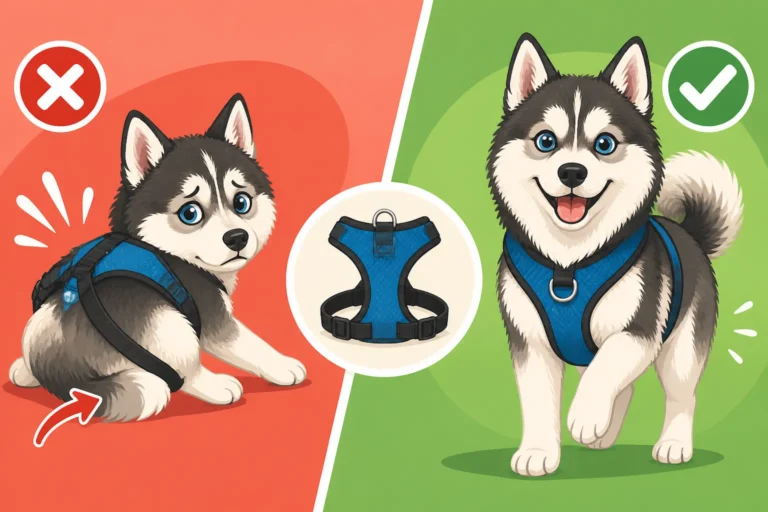
This method also applies to managing their escape artist tendencies. Instead of using a harsh method to prevent them from slipping a collar, use a well-fitted harness. A good harness that fits correctly will prevent them from backing out and gives you better control without putting pressure on their delicate trachea, as explored in Why a Pomsky Should Wear a Harness.
Professional Guidance and Specialized Training
Sometimes, a Pomsky's behavior challenges require more than DIY training. Don't be ashamed to seek professional help! A certified professional dog trainer (CPDT) who specializes in force-free methods can assess your Pomsky's individual temperament and your specific challenges, developing a tailored training plan.
Addressing Specific Challenges
Whether your Pomsky is struggling with The Suspicion a Pomsky Gets From the Pomeranian towards strangers, excessive vocalization, or simply being A Pomsky That Digs up your yard, a professional trainer can provide strategies that work with your Pomsky's natural instincts, rather than against them. They can teach you how to motivate your Pomsky, manage their environment, and communicate clearly, all without the need for aversive tools. They can also help you understand your Pomsky's body language better, so you can anticipate and prevent unwanted behaviors before they escalate. Remember, a trainer's job is to empower you with the skills to teach your dog effectively and humanely.
Ultimately, the goal is to build a cooperative relationship with your Pomsky, where they choose to work with you because it's rewarding, not because they fear the consequences of not complying. Investing time, patience, and positive methods will lead to a happier, better-adjusted Pomsky and a stronger bond for both of you.
| Training Method | Key Principle | Impact on Pomsky | Effectiveness for Pomsky Challenges (e.g., Recall, Prey Drive) | Ethical Considerations |
|---|---|---|---|---|
| E-Collar (Static/Vibration) | Aversive stimulus (discomfort/interruption) | Potential for fear, anxiety, aggression, pain, confusion; can damage trust | Can interrupt strong behaviors but risks adverse side effects and superficial learning | Highly debated, often considered inhumane by force-free advocates |
| Positive Reinforcement | Reward desired behaviors, ignore/redirect unwanted ones | Builds confidence, happiness, strong bond, genuine understanding | Highly effective with consistency, high-value rewards, and skilled application | Generally considered humane and builds a strong foundation |
| Long Line Training | Physical management for safety and practice | Freedom to explore safely, builds positive associations with recall | Excellent for practicing recall and managing prey drive in open spaces | Humane and safe, allows for error correction without fear |
| Professional Force-Free Trainer | Expert guidance, customized humane strategies | Tailored learning experience, addresses root causes of behavior | Extremely effective for complex issues or when owners need support and new skills | Highest ethical standard, prioritizes welfare and positive outcomes |
Disclaimer
This article is for general informational purposes only and does not constitute professional advice. Laws, prices and regulations vary by location and change over time. Consult a qualified professional for guidance on your specific situation.