What a Pomsky’s Shedding Does to a House
Pomsky shedding creates widespread household hair accumulation on clothing and furniture, requiring daily management of floating fur and fabrics.
The daily stuff, done right.
Feeding amounts by life stage, coat and skin routines, dental and nail care, exercise needs, and what changes as they age.
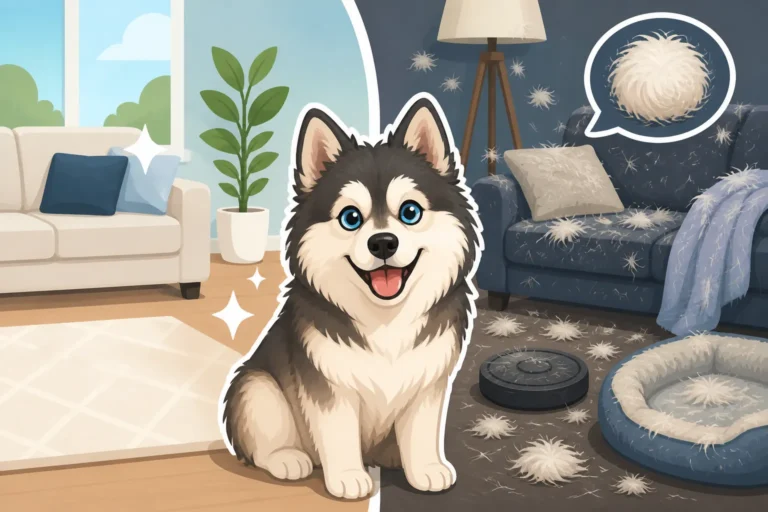
Pomsky shedding creates widespread household hair accumulation on clothing and furniture, requiring daily management of floating fur and fabrics.

Pomsky shedding patterns, including their continuous year-round hair loss and double coat maintenance requirements, explained clearly.

Pomsky coat blowouts occur twice yearly when double-coated dogs shed their dense undercoats, lasting several weeks as seasons change.

Pomsky coat blowouts happen twice a year, causing heavy undercoat shedding during the spring and autumn seasonal changes.

A long, soft, dense undercoat with a plush, cottony feel defines the wooly coat; whether it counts as a flaw and what it means for daily care.

Pomsky puppy coat types at eight weeks cannot reliably predict adult coat density, length, or texture due to complex genetics.

Pomsky coat genetics determine whether an F1 puppy inherits a fluffy Pomeranian double coat or a sleek Siberian Husky look.

Short-coated Pomskies feature a double coat with shorter guard hairs and undercoat, maintaining insulation and a sleeker body.

The wooly Pomsky coat requires specialized grooming tools to manage its extreme density and prevent painful mats in the fur.

The standard Pomsky coat combines a soft undercoat with guard hairs inherited from Siberian Husky and Pomeranian parent breeds.