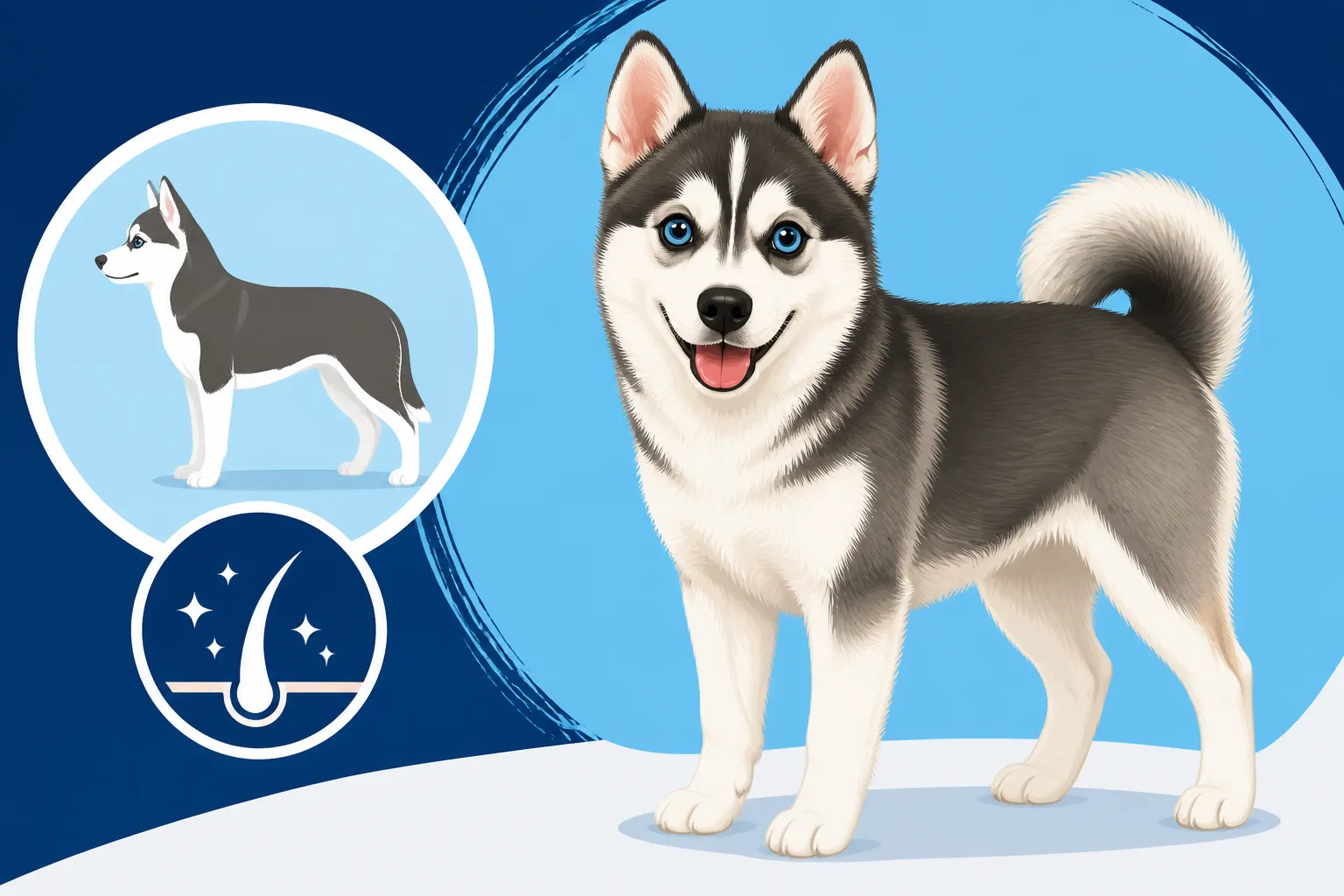
The Short Coated Pomsky
It’s easy to get swept up in the adorable images online of Pomskies with their magnificent, fluffy coats, looking like miniature Huskies perfectly scaled down for cuddles. We all scroll through social media, seeing those picture-perfect pups, and naturally, we start dreaming of that exact look for our own future furry family member. But the reality of Pomsky coats is a little more varied, and sometimes, the dog you bring home might have a coat that's quite different from the iconic "wooly" look you imagined. This guide is all about one of those less-talked-about, but equally charming, variations: the short-coated Pomsky, often surprisingly practical and still utterly delightful.
Understanding Pomsky Coat Types in General
When you’re looking at a Pomsky, whether in person or in photos, one of the first things that grabs your attention is that glorious coat. It’s a huge part of their appeal, combining the dense plushness of a Pomeranian with the robust, weather-resistant qualities of a Siberian Husky. But within this blend, there’s a range of expressions, and understanding these is key to appreciating your dog, regardless of its specific fluff factor.
The Double Coat Foundation
Every single Pomsky, without exception, inherits a double coat. This isn't just a stylistic choice from Mother Nature; it's a functional marvel. The double coat consists of two distinct layers: a soft, dense undercoat that provides insulation against both cold and heat, and a coarser, longer outer coat (known as guard hairs) that protects the undercoat from moisture and dirt. This vital characteristic is inherited from both parent breeds. The Siberian Husky is renowned for its thick, insulating double coat, perfectly adapted to arctic conditions. Similarly, the Pomeranian, though much smaller, also boasts a very dense double coat that gives it that characteristic "fluffed up" appearance. So, no matter if your Pomsky is the fluffiest of the fluffy or leans towards a shorter look, that fundamental double-coat structure is always there, doing its job to keep your pup comfortable in various temperatures.
The Spectrum of Pomsky Coats
While the double coat is universal, the way it manifests visually can vary quite a bit, leading to what breeders and owners typically categorize into three main types: the "wooly," the "standard," and the "short" or "plush" coat. The wooly coat is perhaps the most famous, characterized by its exceptionally long, luxurious guard hairs and incredibly dense undercoat, often requiring significant grooming. Then there's the standard coat, which is still plush and full, but with guard hairs of a medium length, offering a balanced look that's recognizably Pomsky without being quite as dramatic as the wooly. Finally, we have the short coat, which is the focus here. This isn't a single-coated dog; it still has that crucial undercoat and guard hairs. It’s just that both layers are comparatively shorter and lie flatter against the body than their wooly or standard counterparts, giving the dog a sleeker, more compact appearance. Think of it as a spectrum of fluff, with each type bringing its own unique aesthetic and care requirements.
What Defines the Short Coated Pomsky
When someone says "short-coated Pomsky," it can sometimes conjure images of a completely smooth, single-coated dog, which isn't accurate for this breed. The key is understanding that "short" is relative within the context of a double-coated breed. It means shorter than the typical Pomeranian fluff or Husky density, but still functionally a double coat.
Visual Characteristics of a Short Coat
A short-coated Pomsky will immediately strike you as having less volume and overall length compared to its wooly or standard siblings. The guard hairs, which are the visible top layer, will be noticeably shorter, often lying closer to the body rather than standing off it in a fluffy halo. This gives the dog a sleeker, more streamlined silhouette. You might still see the characteristic "ruff" around the neck and feathering on the legs and tail, but these too will be less pronounced. The undercoat, while still present and dense, won't push the outer coat out as much, contributing to that closer-lying appearance. Visually, these dogs often present a more athletic or even "miniature Husky" look, as their shorter fur can highlight their musculature and body lines more clearly. They retain the striking Husky markings and Pomeranian features, but they do so without the extravagant fluff. For owners who love the Pomsky look but perhaps dread the intense grooming of a wooly coat, this type can be a fantastic middle ground.
The Genetic Factors Behind a Short Coat
The variation in Pomsky coat types, including the short coat, is primarily a matter of genetics, drawing directly from their Siberian Husky and Pomeranian ancestry. Both parent breeds carry genes for coat length and density. While Pomeranians are known for their abundant, stand-off coats, and Huskies for their thick, insulating fur, there's always a spectrum within breeds, and the mixing of these genes in a hybrid creates a wider range of possibilities. A short-coated Pomsky likely inherited a combination of genes that favor shorter guard hairs and a slightly less voluminous undercoat. It’s not a defect or a sign of an unhealthy coat; it’s simply a different expression of the genes. Breeders often try to predict coat types, but even within the same litter, you can see pups with varying levels of fluffiness, from very wooly to quite short. This unpredictability is part of the charm (and challenge) of hybrid breeds, making each Pomsky truly unique. You can learn more about how genetics play into these differences in Whether a Pomsky's Coat Comes Out Pomeranian or Husky.
Shedding and Grooming for the Short Coated Pomsky
Even with a shorter coat, a Pomsky is still a double-coated dog, which means shedding is an undeniable part of their life. Don't let the "short" in "short-coated Pomsky" fool you into thinking grooming will be minimal. While it might be less demanding than a wooly coat, it's certainly not absent!
Shedding Habits of a Short Coated Pomsky
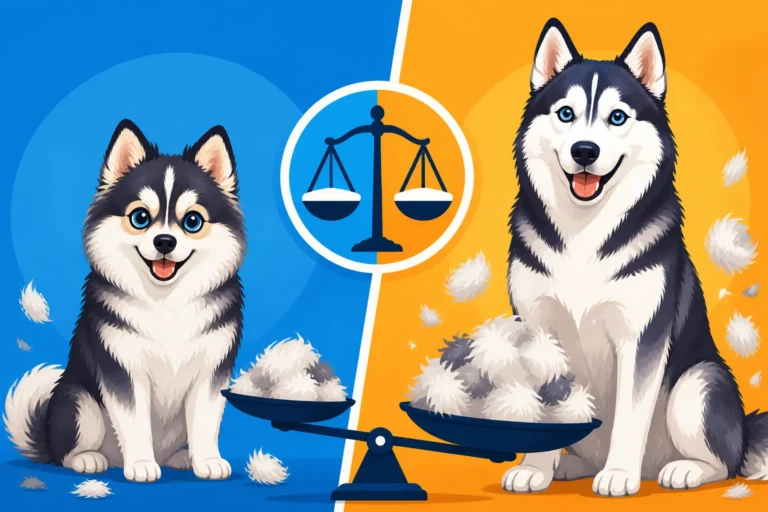
Despite having less overall length, short-coated Pomskies still shed. They have that dense undercoat, and that undercoat has to go through cycles of growth and shedding. You'll still experience the two major "blowouts" each year, typically in spring and fall, where they shed vast amounts of their undercoat to adapt to the changing seasons. During these periods, expect to find fur everywhere – on your clothes, furniture, and floating through the air like tiny snow flurries. Outside of these blowouts, they will also shed moderately year-round. It's a continuous process, just like with any double-coated breed. The main difference compared to their longer-coated relatives is that the individual hairs might be shorter, making them less noticeable in some ways, but the quantity of shedding can still be significant. If you're wondering how much fur you can expect, consider Whether a Pomsky Sheds All Year as Well.
Essential Grooming Tools and Techniques
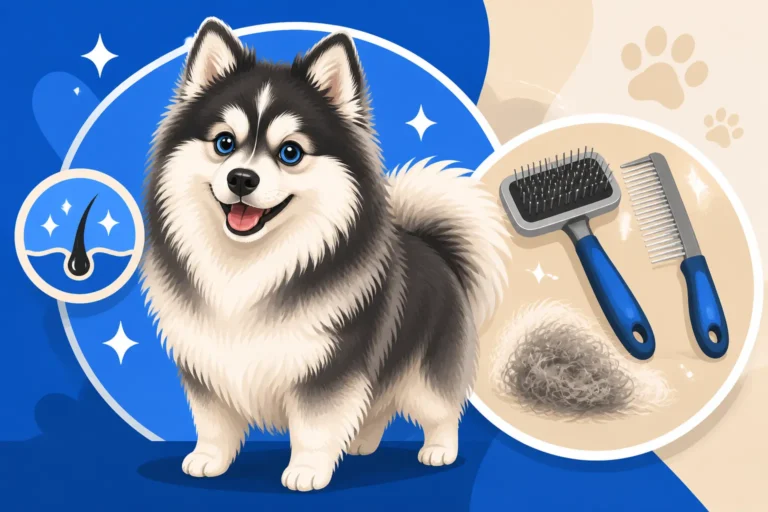
Grooming a short-coated Pomsky is all about maintaining the health of their double coat, even if it's not as visually dramatic. Regular brushing is still paramount to remove loose undercoat, prevent matting (yes, even short coats can mat if neglected, especially behind the ears and in the "armpits"), and distribute natural oils for a healthy shine. You’ll want to invest in a good quality slicker brush, an undercoat rake, and a metal comb. The slicker brush is great for general tidying and getting through the top coat. The undercoat rake is your secret weapon, designed specifically to reach through the guard hairs and gently pull out dead undercoat without damaging the healthy hair. You can find a fantastic selection of these essential tools on Amazon or Chewy.
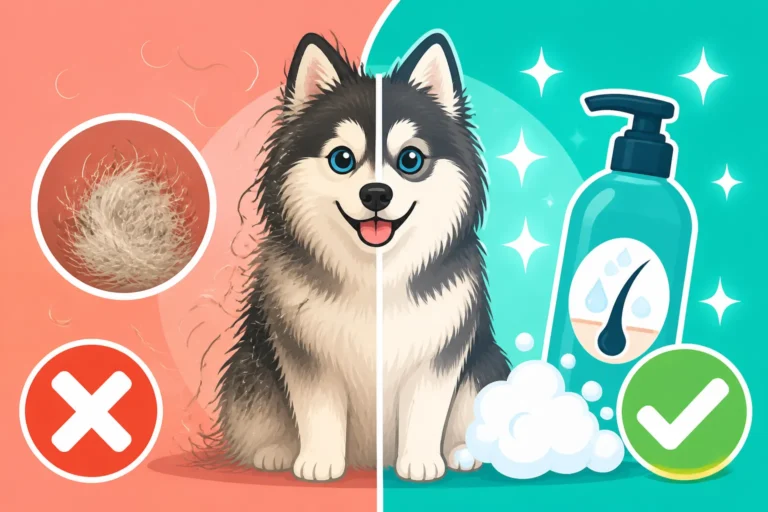
Bathing should be done as needed, typically every few weeks or months, depending on how dirty your pup gets. Always use a dog-specific shampoo and conditioner to avoid stripping their natural oils. After bathing, thorough drying is critical for a double-coated dog, even a short-coated one. A high-velocity dog dryer can be a game-changer, not only speeding up drying time but also helping to "blow out" more loose undercoat, further reducing shedding indoors. This also helps prevent skin issues like hot spots that can arise from a damp undercoat. For more on the crucial role of drying, check out Drying a Pomsky to the Skin.
Seasonal Blowouts and Short Coats
The infamous "Pomsky blowout" is a rite of passage for all owners of this breed, and the short-coated Pomsky is no exception. Twice a year, usually in spring and fall, your dog will undergo a significant shedding period where they shed their entire undercoat. For a short-coated Pomsky, this might look slightly different than for a wooly one. You might not see enormous clumps of fur falling off in quite the same way, but the sheer volume of loose, downy undercoat that comes out when you brush can still be astounding.
During these times, daily brushing with an undercoat rake becomes absolutely essential. This helps to remove the dead hair quickly and efficiently, preventing it from ending up all over your home. A deshedding bath can also be incredibly helpful during a blowout. Many professional groomers offer deshedding treatments, or you can do it at home with a good deshedding shampoo, followed by vigorous drying with a force dryer. This process helps to loosen and remove a lot of the old undercoat, making the overall shedding period more manageable. It’s important to understand that no matter the coat length, the biological process of a blowout is the same for all double-coated Pomskies, and preparing for it will save you a lot of vacuuming and frustration.
Advantages and Disadvantages of the Short Coated Pomsky
While the long, fluffy coats often get all the attention, there are distinct pros and cons to having a short-coated Pomsky that are worth considering. It's not just about aesthetics; it impacts daily life and care.
Benefits for Owners
One of the most significant advantages of a short-coated Pomsky is the reduced risk of matting. Those luxurious, long coats, especially the wooly type, are prone to tangles and mats, particularly in areas like behind the ears, under the legs, and around the tail. These mats can be incredibly painful for the dog and require careful, often professional, removal. With a shorter coat, while not entirely immune, the likelihood and severity of matting are considerably lower, making daily brushing a much quicker and easier affair. This means less time spent battling knots and more time for playtime and cuddles!
Another benefit often cited by owners is the perception of "less shedding." While we’ve established that all Pomskies shed, the shorter hairs of a short-coated Pomsky might be less conspicuous on furniture and clothing. They can also be easier to vacuum up or wipe away compared to long, wispy hairs that seem to weave themselves into fabric. This doesn't mean your house will be fur-free, but the management of shedding might feel less overwhelming. Furthermore, these coats tend to dry faster after a bath or a romp in the rain, which is a definite plus for busy owners.
Potential Drawbacks
Despite the grooming advantages, a short-coated Pomsky might not be what everyone expects. One common "drawback," for some, is purely aesthetic: they might not have the "fluffy miniature Husky" look that many prospective Pomsky owners initially envision or see in popular online photos. If you're dreaming of a dog that looks exactly like those viral images, a short-coated Pomsky might feel like a visual deviation from that ideal. This can sometimes lead to disappointment if expectations aren't properly managed before bringing the dog home. Understanding Why Most Pomskies Look Like Large Pomeranians can help set realistic expectations.
Another potential consideration, though often minor, is related to temperature regulation. While all double coats provide insulation, an exceptionally short coat (though still double-layered) might offer slightly less extreme cold protection compared to an ultra-dense, long wooly coat. This isn't usually an issue for most climates or for indoor dogs, but for those living in truly harsh winter conditions or planning extensive outdoor activities, it's something to be aware of. They’ll still thrive in cold weather, but perhaps their threshold for discomfort might be reached a little sooner than a super-wooly sibling.
Living with a Short Coated Pomsky
Bringing any dog into your home is a commitment, and a Pomsky, regardless of its coat type, comes with specific needs and characteristics. Understanding how a short coat fits into their overall lifestyle can help you prepare and ensure a happy, healthy companion.
Adapting to Different Climates
A Pomsky's double coat is designed for adaptability, and even the short-coated variant benefits from this natural engineering. The dense undercoat provides insulation, meaning they can still tolerate cooler temperatures quite well. They're not built for extreme tropical heat, but they're generally more resilient in moderate heat than a single-coated breed because their double coat also acts as an insulator against heat, trapping a layer of cooler air next to the skin. However, in very hot and humid climates, all Pomskies, including those with shorter coats, require careful management to prevent overheating. This means providing plenty of shade, fresh water, and avoiding strenuous exercise during the hottest parts of the day. A short coat isn't a "get out of jail free" card for hot weather; vigilance is still required. You can learn more about how to keep your Pomsky comfortable in warmer weather by reading Whether a Pomsky Overheats More Than a Husky.
In colder climates, a short-coated Pomsky will still appreciate the cold, playing in the snow and enjoying brisk walks. However, if the temperatures drop to truly extreme lows or if they are spending extended periods outdoors, even a double-coated short Pomsky might benefit from a protective coat or sweater, just like their fluffier counterparts might. It's about monitoring your individual dog and understanding their limits, rather than relying solely on coat length.
Common Misconceptions
There are a few myths surrounding short-coated Pomskies that often need debunking. The biggest one is that "short coat" means "non-shedding" or "hypoallergenic." This is absolutely not true. All Pomskies shed, and none are hypoallergenic, due to their double coats and the dander they produce. If you or someone in your household has allergies, a short-coated Pomsky will likely still trigger them. Another misconception is that a short coat is somehow inferior or less "purebred" for a Pomsky. This is also false. As discussed, coat length is a natural genetic variation within the breed blend, and a shorter coat is just as legitimate a Pomsky coat type as a wooly one. The only difference is aesthetic and practical care, not a sign of lesser quality or health. It's important for prospective owners to understand Whether a Pomsky Suits a Household With Allergies before making a commitment.
Finally, some owners might worry that a short coat means their Pomsky isn't as "cute" or desirable. While beauty is in the eye of the beholder, a short-coated Pomsky still possesses all the charm, intelligence, and playful spirit of the breed, just with a more streamlined look. They're equally capable of being loving companions, excelling in training, and bringing immense joy to their families. Focus on the dog's personality and health, and you'll find a wonderful companion regardless of coat length.
Here's a quick overview of the different Pomsky coat types:
| Coat Type | Guard Hair Length | Undercoat Density | Visual Appearance | Grooming Needs (Relative) | Matting Risk (Relative) |
|---|---|---|---|---|---|
| Wooly | Very Long | Very Dense | Profoundly fluffy, stands off body, plush | High | High |
| Standard | Medium | Dense | Full and fluffy, but less extreme than Wooly | Moderate to High | Moderate |
| Short/Plush | Short | Dense | Sleeker, lies closer to body, more compact | Moderate | Low |
The Pomsky That Carries a Husky Coat at Twenty Pounds
There's something truly captivating about a Pomsky that embodies the spirit of a Husky but in a more manageable, twenty-pound package. Many prospective owners are drawn to the breed by the promise of a miniature Siberian Husky, and while the "wooly" coats often steal the spotlight, it's frequently the short-coated Pomsky that most closely approximates that classic Husky silhouette and coat texture, just scaled down. This particular coat type offers a practical beauty that aligns perfectly with what many people initially hoped for when the breed first captured hearts.
The Husky Influence on a Short Coat
When we talk about a short-coated Pomsky carrying a Husky coat, we're referring to the texture and lay of the fur. Siberian Huskies have a very distinct double coat: a soft, dense undercoat and straight guard hairs that lie relatively flat. It's not a fluffy, stand-off coat like a Pomeranian's. A short-coated Pomsky often inherits more of this Husky-like guard hair texture and length, resulting in a coat that, while still dense and functional, doesn't have the exuberant fluff. The hair is generally straighter, less prone to curling or standing on end, giving a much more defined outline to the dog's body. This means that features like the husky's distinctive mask markings, eye color, and overall body structure are often more clearly visible and defined in a short-coated Pomsky than in one with a voluminous wooly coat that can obscure these details. For those who adore the sleek, athletic appearance of a Husky, this coat type can be a delightful surprise.
Balancing Husky Look with Pomeranian Size
The genius of the short-coated Pomsky is its ability to marry the aesthetic of the Husky with the size constraint of the Pomeranian. Imagine a perfectly proportioned Siberian Husky, with all its striking features – the intelligent eyes, the erect ears, the curled tail, and that characteristic dense, but not overly long, double coat – simply miniaturized. That's often what you get with a short-coated Pomsky. They don't have the exaggerated fluff that can sometimes make a Pomsky look more like a slightly oversized Pomeranian; instead, their more compact coat lets their Husky heritage shine through more clearly. This is particularly appealing to those who fell in love with the original concept of a "mini Husky."
This balance also has practical implications. A Husky's coat is designed for efficiency and insulation without excess bulk, and a short-coated Pomsky benefits from this engineering. It's robust, weather-resistant, and relatively easy to maintain, providing the dog with excellent protection without becoming a matting nightmare. It offers the best of both worlds: the iconic look that draws so many to the breed, combined with a coat type that is perhaps more functional and less demanding in terms of daily grooming than its longer-haired counterparts.
The Undercoat Rake a Pomsky Owner Lives With
No matter the length of your Pomsky's outer coat, if they have a double coat (which they all do!), you'll quickly become intimately familiar with the undercoat rake. This isn't just a suggestion; it's a cornerstone of responsible Pomsky grooming, and it’s especially vital for maintaining the health and comfort of any double-coated dog, including the short-coated Pomsky.
Why the Undercoat Rake is Indispensable
The undercoat rake isn't just another brush; it's a specialized tool designed to tackle the specific challenge of a double coat. Its long, curved teeth are engineered to reach deep beneath the outer guard hairs, right down to the skin, where the dense, fluffy undercoat resides. This is crucial because the undercoat sheds independently of the guard hairs. If dead undercoat isn't removed, it can become trapped, leading to several problems. For one, it can create painful mats and tangles, even in shorter coats, especially around pressure points or friction areas. Secondly, a buildup of dead undercoat can prevent proper air circulation, leading to skin irritation, hot spots, and even fungal infections. Thirdly, it significantly exacerbates shedding throughout your home.
For a short-coated Pomsky, while the matting risk might be lower, the need to remove dead undercoat is just as high. Their undercoat is still dense, and it still sheds. The rake efficiently pulls out this loose, dead fuzz without cutting or damaging the healthy guard hairs. This process not only keeps your dog more comfortable but also dramatically reduces the amount of fur that ends up on your floors, furniture, and clothes. Think of it as spring cleaning for your dog, all year round. Many owners find their favorite undercoat rakes on Chewy, often alongside their regular food orders.
Mastering the Rake for a Short Coat
Using an undercoat rake effectively on a short-coated Pomsky involves a specific technique that ensures comfort for your dog and maximum efficiency for you. Start by ensuring your dog's coat is clean and completely dry. Never rake a wet or damp coat, as this can pull and cause discomfort. Work in small sections, starting from the head and moving towards the tail, and from top to bottom. Use gentle, long strokes in the direction of hair growth. You should always be able to see the teeth of the rake just barely emerging from the coat as you pull.
The key is to use enough pressure to get through the guard hairs and into the undercoat, but not so much that you're scraping the skin or causing discomfort. If you feel resistance, stop and gently work through any minor tangles with a slicker brush or wide-toothed comb first. You'll be amazed at the amount of fluffy undercoat that comes out, even from a short-coated Pomsky! Regular, consistent sessions, especially during seasonal blowouts, are far more effective than infrequent, marathon grooming sessions. Teaching your Pomsky to be comfortable with grooming from a young age, as discussed in Teaching a Pomsky to Be Brushed, will make these sessions much more pleasant for both of you.
Whether a Pomsky Blows Its Coat Twice a Year
The "blowing of the coat" is perhaps one of the most talked-about and often dreaded aspects of owning a double-coated breed like the Pomsky. Many people incorrectly assume that because a Pomsky has a shorter coat, they might be exempt from this spectacular shedding event. Unfortunately, that's not the case. The biological imperative behind a coat blow is deeply ingrained in their DNA, inherited from both parent breeds, and it's a fundamental part of a double-coated dog's life cycle.
The Biological Reason for Seasonal Shedding
All double-coated dogs, including short-coated Pomskies, undergo significant seasonal shedding, commonly referred to as "blowing their coat," usually twice a year. This isn't just random shedding; it's a sophisticated biological process driven by changes in daylight hours and temperature. In the spring, as days lengthen and temperatures rise, your Pomsky's body signals it's time to shed their thick winter undercoat in favor of a lighter, less insulating summer coat. This helps them stay cool and prevents overheating as the warmer months approach. Conversely, in the fall, as days shorten and temperatures drop, they shed their lighter summer undercoat to grow in a denser, warmer winter coat to prepare for the cold.
This process is essential for their health and comfort. If the old, dead undercoat isn't shed and removed, it can become matted, trap moisture, and lead to skin problems. It also loses its insulating properties. So, regardless of whether your Pomsky has a long, flowing wooly coat or a sleek, short one, their body will still go through these crucial seasonal transitions, demanding your attention with a brush.
Managing the Blowout in a Short Coated Pomsky
Even with a shorter outer coat, managing a Pomsky's seasonal blowout requires consistent effort. You might not see dramatic clumps of hair clinging to your dog quite as much as with a wooly coat, but rest assured, the undercoat is still detaching in vast quantities. The key to navigating this period successfully is proactive and frequent grooming. Daily brushing with an undercoat rake is non-negotiable. This tool is specifically designed to reach deep and pull out the copious amounts of dead undercoat without damaging the top layer.
Bathing can also play a significant role during a blowout. A good bath with a deshedding shampoo, followed by a thorough drying with a high-velocity force dryer, can help to loosen and blast out a remarkable amount of shedding undercoat. Many owners schedule professional grooming appointments during these times to take advantage of professional deshedding treatments. While it might seem like a lot of work for a "short-coated" dog, remember that you're not just preventing fur from taking over your house; you're actively supporting your Pomsky's skin health and comfort by ensuring their natural insulation system is functioning optimally. Understanding How Long a Pomsky's Blowout Lasts can help you mentally prepare for these periods.
What a Pomsky's Coat Type Shows at Eight Weeks
One of the biggest questions for prospective Pomsky owners, especially those who have a strong preference for a particular look, is "When can I tell what my puppy's coat type will be?" It's a fair question, but unfortunately, the answer isn't always as clear-cut as we'd like. Predicting a Pomsky's adult coat type, especially differentiating between a standard and a truly short coat, can be quite challenging when they are still very young puppies.
Puppy Fluff vs. Adult Coat
Pomsky puppies, regardless of what their adult coat will eventually look like, are born with a soft, fuzzy "puppy coat." This coat is typically uniformly fluffy and doesn't give many definitive clues about the length and density of their future adult fur. An eight-week-old puppy destined to have a sleek, short coat might look remarkably similar to a puppy that will grow into a full, standard coat. The true texture, length, and density of the guard hairs and undercoat usually don't start to properly develop until the puppy is several months old, often around 4-6 months, and sometimes even later.
Observing the parents' coats can offer some clues, but even then, Pomsky genetics can be a delightful genetic lottery. An F1 Pomsky (first generation, Husky x Pomeranian) can have a wider range of coat types than, say, an F2 or multi-generational Pomsky, where breeders have been selectively breeding for specific traits. So, while you can admire a puppy's general cuteness at eight weeks, trying to definitively label their adult coat type at this early stage is largely a guessing game, even for experienced breeders.
Subtle Clues and Breeder Experience
While a definitive prediction is hard, an experienced Pomsky breeder might be able to offer educated guesses based on subtle clues. They might look at the density of the undercoat peeking through, the length of the individual hairs, and how much the coat "stands off" the body, even at an early age. Puppies that will develop wooly coats sometimes show a slightly longer, more exaggerated fluff around their ears and hindquarters, or an overall "puffier" appearance. Puppies leaning towards a shorter coat might appear slightly less fluffy, with their puppy fur lying a bit flatter against their bodies.
However, these are subtle indicators, not guarantees. Environmental factors, nutrition, and even the dog's individual growth rate can influence how quickly the adult coat develops. It's often safer to assume a degree of unpredictability when choosing a Pomsky puppy, especially if you have a strong preference for a specific coat length. If a breeder guarantees a specific adult coat type at eight weeks, proceed with caution, as genetics are complex, and puppies change a lot as they grow. Ultimately, a healthy, well-socialized puppy, regardless of eventual fluff factor, is the most important consideration. Whether a Pomsky Puppy's Fluff Predicts the Adult Coat provides more insights into this fascinating topic.
Feeding a Twenty Pound Pomsky
Feeding your Pomsky correctly is one of the most fundamental aspects of their care, impacting everything from their energy levels to the health and luster of their coat. A twenty-pound Pomsky falls into a medium-small category, and their dietary needs are a careful balance between the requirements of their energetic Husky heritage and their smaller Pomeranian size. It’s not just about how much food they eat, but what kind of food and how often.
Caloric Needs of an Active Small-Medium Dog
A twenty-pound Pomsky isn't just a sedentary lap dog; they carry the spirit and activity levels of a much larger breed within their compact frame. This means their caloric needs are often higher per pound than a truly laid-back small breed. They need enough fuel to support their daily exercise, their playful antics, and the mental stimulation they crave. However, because they are still a smaller dog, overfeeding can quickly lead to weight gain, which puts undue stress on their joints (something to be cautious about given potential issues like Slipping Kneecaps in a Pomsky) and can contribute to other health problems.
The exact amount of food will depend on their age, activity level, metabolism, and the specific food you choose. High-quality dog food, whether kibble, wet food, or fresh food, is essential. Look for foods with real meat as the first ingredient and a balanced nutrient profile. Many reputable dog food brands, easily found on Chewy or through subscription services like Ollie, provide feeding guidelines based on weight, but these are just starting points. You’ll need to monitor your Pomsky's body condition and adjust accordingly, ensuring they maintain a healthy weight without becoming too lean or too heavy. A good rule of thumb is to be able to feel their ribs easily but not see them prominently, and they should have a discernible waist when viewed from above.
Nutritional Support for a Healthy Coat and Skin
Even a short-coated Pomsky benefits immensely from a diet rich in nutrients that support skin and coat health. While their coat might be shorter, it's still a double coat that needs proper nourishment to stay strong, vibrant, and shed healthily. Key nutrients for a healthy coat include Omega-3 and Omega-6 fatty acids (found in fish oil, flaxseed, and certain vegetable oils), biotin, zinc, and various B vitamins. These nutrients contribute to skin barrier function, reduce inflammation, and promote healthy hair growth.
If your Pomsky has dry skin, a dull coat, or experiences excessive non-seasonal shedding, it might be worth discussing dietary supplements with your vet. Sometimes, even with a good diet, individual dogs might benefit from an added boost of fish oil or a zinc supplement. Zinc, in particular, is important for many Northern breeds and their mixes, as some can be prone to conditions like Zinc Responsive Dermatosis. While a short coat is less prone to physical damage like matting, its health is still a direct reflection of your dog's internal nutrition. Therefore, investing in a high-quality diet is one of the best ways to ensure your short-coated Pomsky looks and feels their absolute best.
Disclaimer
This article is for general informational purposes only and does not constitute professional advice. Laws, prices and regulations vary by location and change over time. Consult a qualified professional for guidance on your specific situation.