Whether a Pomsky Goes Blind From Cataracts
Pomsky cataracts and their progression to blindness, including early cloudy eye signs, protein clumping, and veterinary checks.
Know what to watch for.
Breed-specific conditions, screening and DNA tests, what surgery actually costs, and the daily habits that stretch a healthy lifespan.
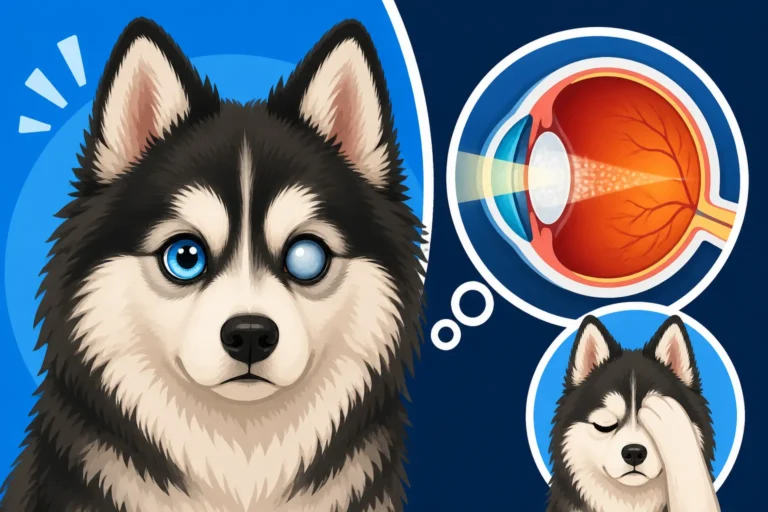
Pomsky cataracts and their progression to blindness, including early cloudy eye signs, protein clumping, and veterinary checks.
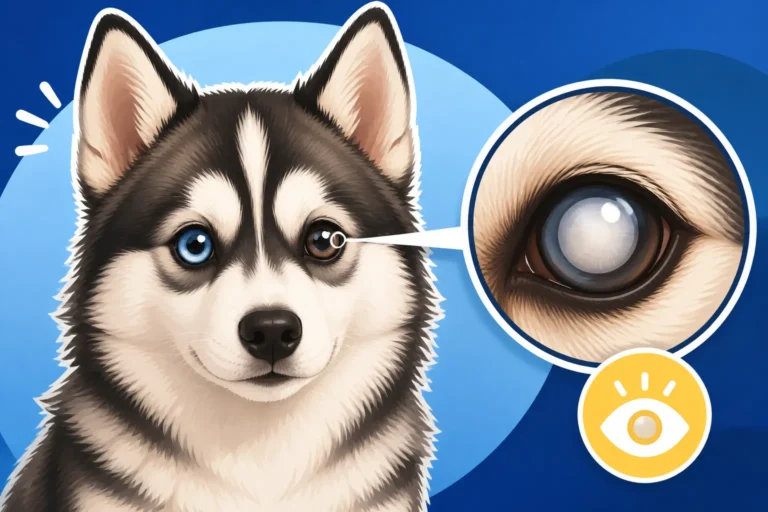
Juvenile cataracts in Pomskies usually appear before six years of age, sometimes developing in puppies as early as six months old.

Pomsky resting respiration rates between 15 and 30 breaths per minute define normal breathing and indicate when veterinary advice is necessary.

Pomsky snoring causes and inherited traits from Siberian Huskies and Pomeranians explain why dogs make nighttime noises.

Pomsky susceptibility to kennel cough depends on exposure and immune health rather than Siberian Husky and Pomeranian genetics.
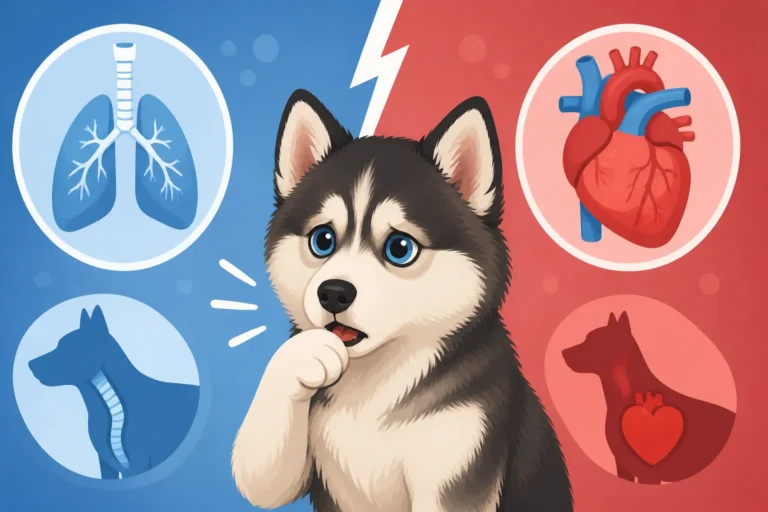
Pomsky coughing distinguishes between a tracheal collapse and a heart problem to help owners seek proper veterinary care.
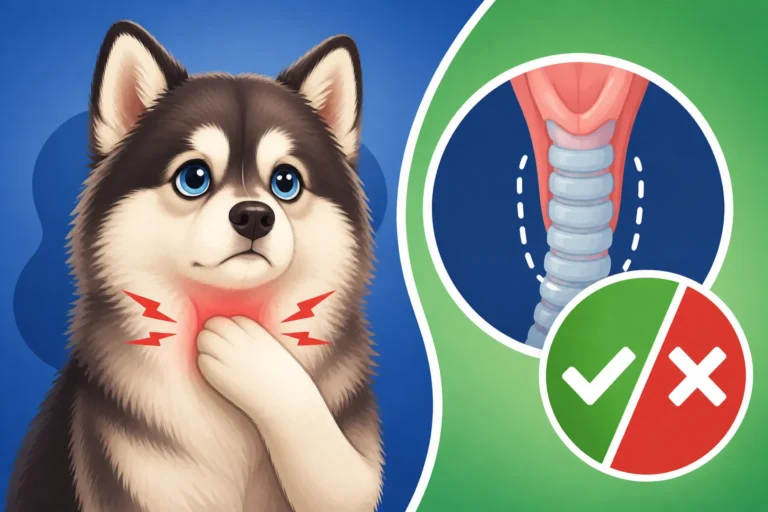
Pomsky tracheal surgery and collapsing windpipe symptoms, including the dry goose honk cough and bluish gums from lack of oxygen.
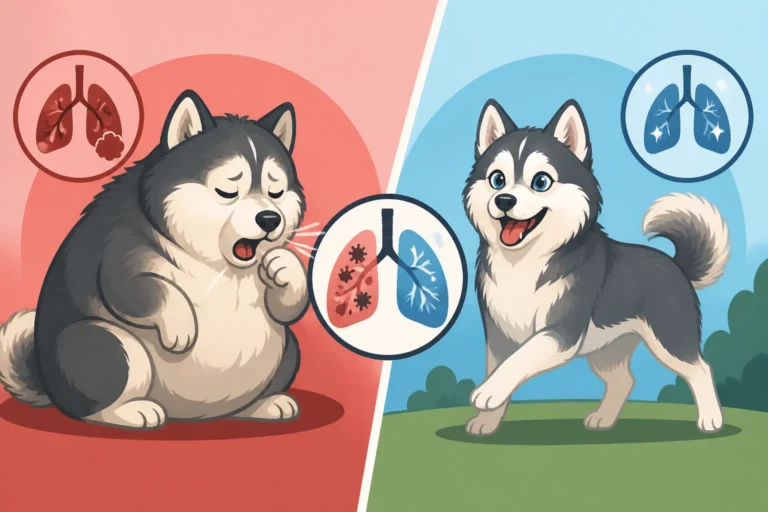
Extra weight puts physical pressure on a Pomsky airway, explaining why heavier dogs suffer from a collapsing trachea and cough more.
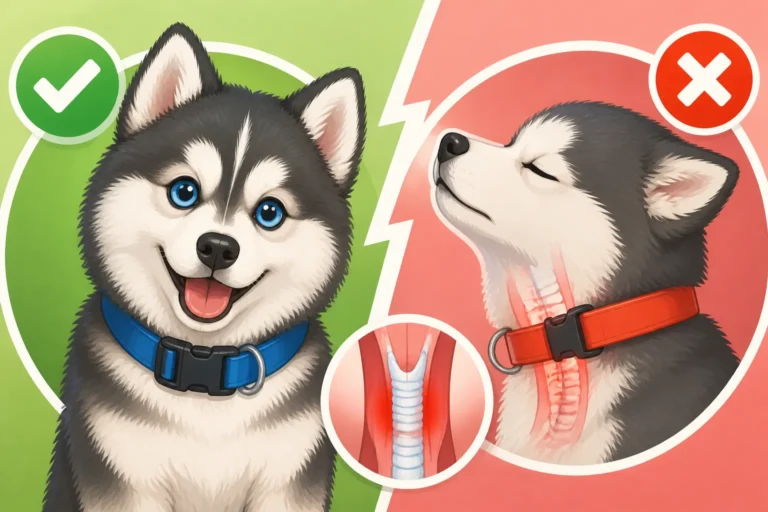
Pomsky windpipe health risks from traditional collars and genetic traits like tracheal collapse from Pomeranian heritage.
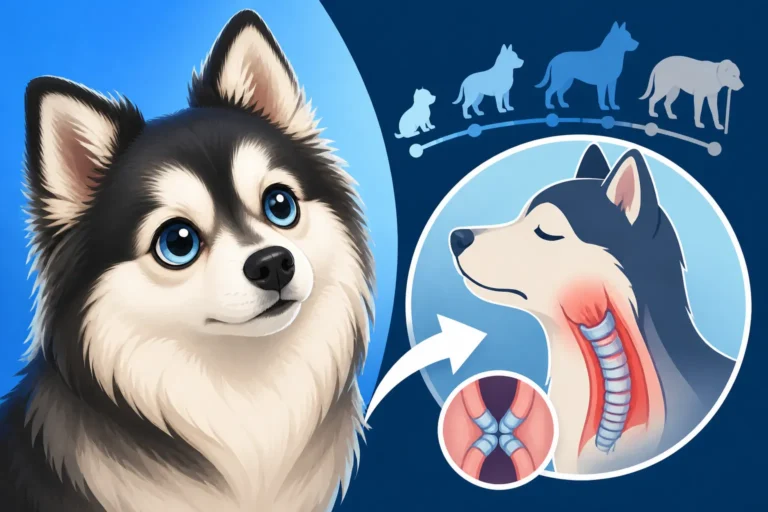
Tracheal collapse in aging Pomskies causes breathing issues because weakened cartilage rings flatten the windpipe over time.