Whether You Pick a Pomsky Puppy or the Breeder Does
Bringing a Pomsky puppy home is such an exciting time, but the path to getting your furry family member can sometimes feel a bit murky, especially when it comes to choosing your puppy. Many prospective owners dream of hand-picking their future companion from a litter, only to find that many reputable breeders have a different approach. This guide will walk you through the various ways breeders handle puppy placement, helping you understand whether you'll get to pick your Pomsky puppy or if the breeder will make that crucial decision for you.
Understanding the Breeder's Perspective on Puppy Placement
It's natural to feel a little disappointed if you've always pictured yourself kneeling among a litter of adorable Pomsky puppies, choosing the one that waddles over to you first. But for many dedicated breeders, the process is far more nuanced, and for very good reason. They're not trying to be difficult; they're trying to ensure the best possible match for everyone involved.
The Rationale Behind Breeder-Led Matching
Think of a good breeder as a matchmaker, not just a seller. They spend weeks, sometimes months, observing each individual puppy in their care. They see them at their most playful, their most sleepy, their most mischievous, and their most curious. This intimate daily interaction gives them invaluable insight into each puppy's burgeoning personality, energy levels, and overall disposition. They've also gotten to know you, the prospective owner, through applications, interviews, and conversations about your lifestyle, experience, and what you're looking for in a companion.
Their goal is to place a puppy in a home where it will thrive, and where the family will be happy for the next The Twelve to Fifteen Years a Pomsky Lives. A calm, shy puppy might be overwhelmed by a bustling family with young children, while a bold, high-energy pup might drive a quiet, first-time owner absolutely batty. The breeder understands the unique traits that come from the Husky and Pomeranian parentage and aims to align a puppy's temperament with your family's dynamic, living situation, and activity level. This is why many experienced breeders firmly believe in "breeder's choice," or at least a heavily guided selection process, over a free-for-all pick-of-the-litter scenario.
Temperament Testing and Observation
Breeders don't just guess; they observe and often conduct formal temperament assessments. These "puppy aptitude tests" are typically performed around 7-8 weeks of age, just before the puppies are ready to go to their new homes. These tests involve presenting puppies with various stimuli to gauge their reactions to new sights, sounds, textures, and social interactions. They look for things like how a puppy reacts to being gently restrained, how it follows a moving object, its reaction to loud noises, its willingness to approach a stranger, and its biddability.
Beyond formal tests, daily life in the litter is a constant assessment. The breeder notes who's the first to explore, who hangs back, who's the biggest instigator in playtime, and who's the first to snuggle up for a nap. For Pomskies, this is particularly important because of their strong genetic predispositions. A breeder might look for indicators of The Pomsky Escape Artist in a Twenty Pound Body or significant vocalization tendencies, which some owners might not be prepared for. They're looking beyond the cute puppy fluff to the adult dog it will become, aiming for a harmonious lifelong match rather than a fleeting impulse decision based purely on aesthetics.
When Buyers Get a Say: The "Pick of the Litter" Concept
While many breeders lean towards making the final match themselves, there are definitely situations where buyers get more input into which puppy they bring home. It's often a balance, and how much choice you have can depend on the breeder's philosophy, the specific litter, and even your position on the waiting list.
The Different "Pick" Scenarios
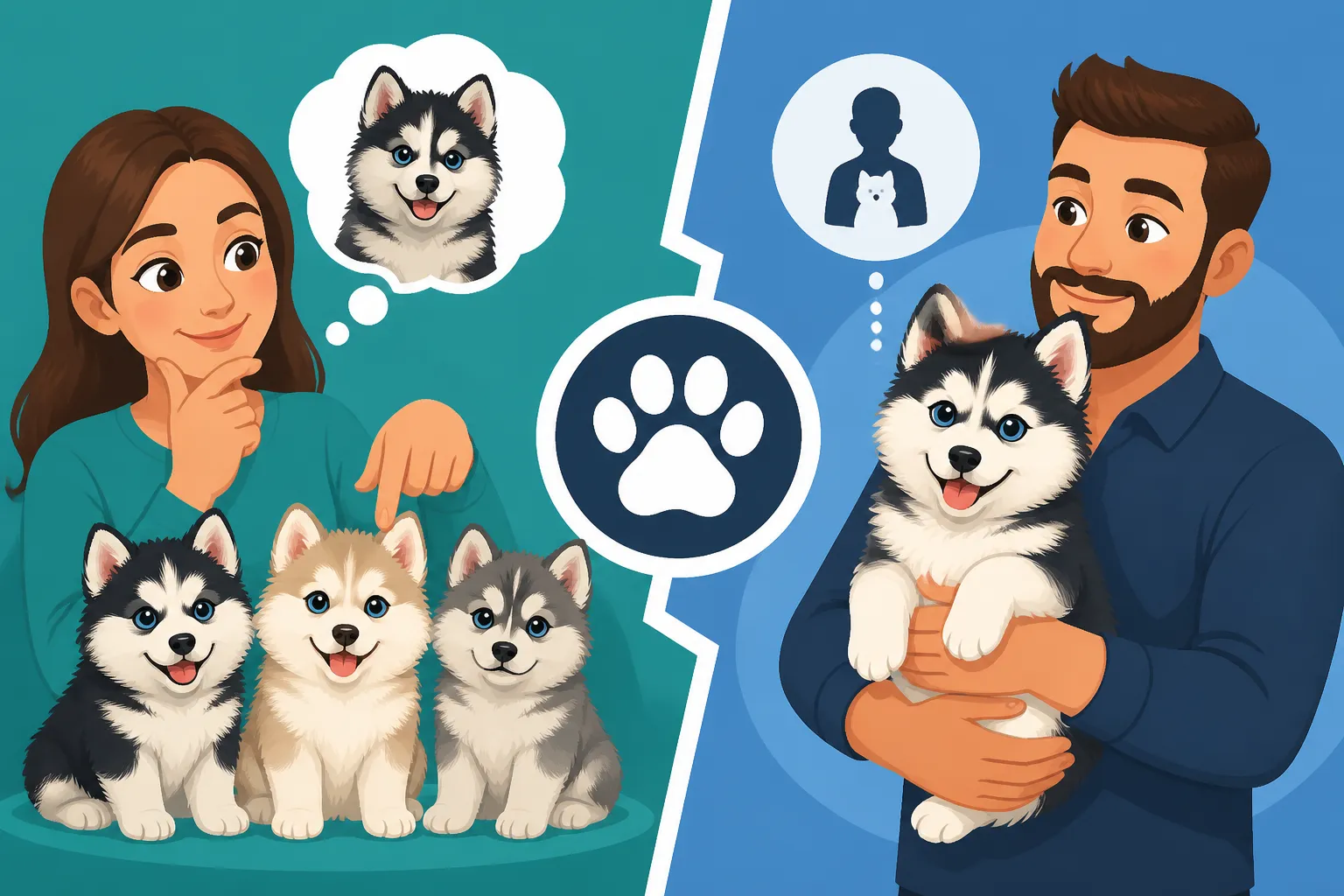
The concept of "pick of the litter" often means that buyers on a waitlist get to choose their puppy in the order their deposit was received. So, the family who put down their deposit first might get "first pick," the second family "second pick," and so on. However, even within this system, there can be variations. Some breeders might allow "first pick of the males" or "first pick of the females" if a buyer specifically requested a certain gender.
It's important to clarify this early in your conversations with a breeder. Don't assume anything. Ask them directly about their selection process. Some breeders might do a "soft match" where they suggest a few puppies they think would be a good fit, and then allow you to choose from that narrowed selection. Others might require you to commit to a puppy once it's assigned, even if you were hoping for a different one. Understanding What a Pomsky Deposit Costs and whether it's refundable if you don't like your assigned puppy is crucial.
Factors Influencing Buyer Choice (When Allowed)
When buyers are given the opportunity to choose, what often drives their decision? Unsurprisingly, appearance often plays a huge role. Everyone has that ideal image in their head: the striking blue eyes, the perfect Husky mask, or a specific coat color. Many people are drawn to The Blue Eyes People Buy a Pomsky For or particular markings, sometimes overlooking temperament or health considerations.
Beyond looks, initial puppy personality can be a strong draw. You might observe a litter and be instantly charmed by the boldest, most playful puppy, or conversely, by the quietest, most cuddly one. While these early impressions are valid and adorable, it's vital to remember that puppy personalities are still developing. That super confident puppy might become a handful if not properly trained and exercised, and the shy one might blossom into a confident companion with the right support. Focusing solely on a puppy's initial cuteness or fleeting demeanor without considering the long-term implications can sometimes lead to a mismatch down the road.
Navigating the Puppy Selection Process as a Buyer
When you're looking for a Pomsky, it's not just about finding a breeder; it's about engaging in a two-way street of information sharing to ensure the best possible match. You have a role to play in helping the breeder understand your needs, even if they're ultimately making the final decision.
Preparing Your Family's Profile for the Breeder
The more open and honest you are with a reputable breeder, the better they can guide you to the right puppy. Think of your initial application and conversations as building a detailed profile of your family. Be prepared to discuss:
- Your household: How many people live there? Are there children (and their ages)? Are there other pets (dogs, cats, small animals)?
- Your lifestyle: Are you active and outdoorsy, or more laid-back? How much time can you realistically dedicate to training, exercise, and grooming? Remember that The Exercise a Pomsky Needs Every Day is substantial.
- Your living situation: Do you live in an apartment or a house with a yard? If you have a yard, is it securely fenced? This is important because Pomskies can be The Pomsky Escape Artist in a Twenty Pound Body.
- Your experience with dogs: Have you owned dogs before, especially double-coated or Northern breeds?
- What you're looking for in a Pomsky: Are you hoping for a future hiking buddy, a loyal companion for movie nights, or a dog that can potentially participate in dog sports?
This detailed information helps the breeder identify which puppies in the litter might best fit into your specific environment. It's about finding a personality that complements your family, rather than fighting against it.
What to Look For During Puppy Visits (If Permitted)
Some breeders allow supervised visits with the puppies, often after their first vaccinations. This is an incredible opportunity to observe the litter, even if you're not making the final "pick" yourself. When you visit, try to:
- Observe the litter dynamics: Watch how the puppies interact with each other. Is there a confident leader, a quiet observer, a constant instigator? How do they play? How do they react when startled?
- Interact individually (if allowed): If the breeder permits, spend some quiet time with individual puppies. See how they respond to gentle handling. Do they make eye contact? Are they comfortable being held? Remember, a puppy might be shy at first in a new situation, but a good breeder can help interpret their true nature.
- Meet the dam (and sire, if on-site): Observing the mother's temperament is crucial, as many traits are inherited. A calm, friendly mother is often a good indicator of the puppies' potential adult temperaments. Ask about the sire's temperament too.
- Ask questions: Don't be afraid to ask the breeder about their observations. "Which puppy do you think is the most adventurous?" or "Which one seems to be the most biddable for training?" Listen to their insights; they are with these puppies daily.
A word of caution: falling in love with the cutest puppy can be easy, but try to keep a level head. Your goal is a lifetime companion, not just an adorable Instagram star.
The Impact of Early Puppy Selection on Future Temperament
It's tempting to think that the cuddly puppy you meet at eight weeks will be the same dog forever, but a lot can change. Understanding how early experiences and genetics shape a Pomsky's personality can help manage expectations, whether you pick your puppy or the breeder does.
Why Early Impressions Can Be Deceiving
A puppy's personality at 8 weeks old is like a sapling; it's just starting to show its true form, but it still has a lot of growing and shaping to do. That tiny, bold explorer might become a high-energy dog that needs a lot of stimulation, or the shy, reserved one might blossom into a wonderfully affectionate companion once it feels safe and secure. It's not uncommon for a "cuddly" puppy to grow into an independent adult, or for a "mischievous" pup to mature into a well-behaved dog with consistent training.
Genetics certainly play a huge role. A Pomsky inherits traits from both the independent, sometimes mischievous Husky and the confident, sometimes opinionated Pomeranian. Understanding Whether an F1 Pomsky Is Healthier Than an F2 or how generational breeding impacts traits might provide some insight, but individual variation is always present. However, early socialization, training, and the environment you provide will heavily influence how those inherited traits manifest. A great breeder makes their best assessment, but your influence as an owner is paramount.
Breeder Expertise vs. Buyer Emotion
This is often where the breeder-choice model really shines. While a buyer might be swayed by a puppy's adorable antics or striking blue eyes, a seasoned breeder sees beyond the immediate cuteness. They've seen countless puppies grow into adult dogs. They understand the nuances of the breed's temperament, the potential for certain behaviors, and the commitment required to raise a well-adjusted Pomsky.
For example, a breeder might notice a puppy with a particularly strong prey drive, making it unsuitable for a home with cats, even if that puppy is incredibly charming during a visit. Or they might identify a puppy with an exceptionally outgoing and boisterous personality that would thrive with an active family, but might be too much for a quieter, older couple. It's hard to override that emotional connection you feel with a puppy, but trusting the breeder's expertise, which is based on years of experience and objective observation, often leads to a more successful and happier match in the long run.
The Role of Contracts and Guarantees in Puppy Placement
Regardless of whether you pick your Pomsky puppy or the breeder assigns one, a comprehensive contract and clear guarantees are non-negotiable. This protects both you and the breeder and provides clarity on expectations.
Understanding Health Guarantees and Temperament Clauses
A reputable breeder will always provide a written contract. This document should detail various aspects, including:
- Health Guarantees: These typically cover genetic health issues that may arise within a certain timeframe (e.g., one to two years). Given that Pomskies can be prone to certain conditions inherited from their parent breeds, like Slipping Kneecaps in a Pomsky or The Eyes a Pomsky Gets From the Husky, a health guarantee is incredibly important. It usually stipulates what the breeder's responsibility is if a covered condition is diagnosed (e.g., a partial refund, replacement puppy).
- Temperament Guarantees (less common but valuable): Some breeders might include clauses related to temperament, especially if they are heavily involved in the matching process. This might be a commitment to work with you on training if behavioral issues arise, or a promise to take the dog back if the match is truly unworkable.
- Return Policy: Reputable breeders will always require that if you cannot keep the dog for any reason at any point in its life, it must be returned to them. This ensures their puppies never end up in shelters.
- Spay/Neuter Clause: Most pet contracts will require you to spay or neuter your Pomsky by a certain age to prevent accidental breeding or backyard breeding.
Always read the contract thoroughly and ask any questions you have before signing. Transparency is key. Companies like Healthy Paws offer pet insurance that can help cover unexpected veterinary costs, but understanding what your breeder's guarantee covers is your first line of defense.
What Happens If the Match Isn't Right
Despite everyone's best efforts, sometimes a puppy-owner match just doesn't work out. This can be incredibly heartbreaking and frustrating. A good contract from a responsible breeder will outline the process for such a situation. This might involve:
- Returning the puppy: Most reputable breeders will have a clause stating that if, for any reason, you cannot keep the Pomsky, you must return it to them. They will take the dog back, no questions asked, because they are committed to the lifelong welfare of their puppies.
- Assistance with rehoming: If a direct return isn't immediately feasible, the breeder might offer to assist you in finding a suitable new home for the dog, acting as a resource and vetting potential new owners.
- Support and guidance: Before considering a return, a good breeder will often offer support and guidance to help you work through any challenges, especially behavioral ones. They might recommend trainers or offer advice based on their extensive experience with the breed.
Remember, bringing a dog into your home is a significant commitment. Even with the perfect match, challenges will arise. Being prepared to invest in training, proper nutrition (perhaps even exploring options like Ollie for specialized diets), and quality supplies from places like Chewy will go a long way in ensuring a happy life for your Pomsky. When considering What a Pomsky's Vet Bills Look Like, remember that regular vet check-ups and preventative care are part of responsible ownership, no matter how healthy your puppy starts out.
Comparison: Breeder's Choice vs. Buyer's Pick
To help illustrate the differences, here's a table summarizing the pros and cons of each approach to puppy selection:
| Feature | Breeder's Choice | Buyer's Pick (from a selection) |
|---|---|---|
| Primary Goal | Optimal long-term placement based on temperament and lifestyle fit. | Fulfilling buyer preferences (looks, initial personality). |
| Knowledge Base | Extensive, daily observation of puppy behavior and family dynamics; deep breed expertise. | Limited observation during visits; driven by personal preferences and initial impressions. |
| Risk of Mismatch | Lower, as it's an informed decision based on experience. | Higher, as initial charm can override practical considerations. |
| Emotional Satisfaction | Trust in breeder's expertise; potential for pleasant surprise with the perfect fit. | Direct involvement in choice can be very satisfying; fulfilling a specific "look" desire. |
| Focus | Temperament, energy level, biddability, health, and suitability for owner's specific home environment. | Often appearance (coat color, eye color, markings) and immediate puppy cuteness or perceived personality. |
| Typical Breeder Type | Highly experienced, dedicated, ethical breeders committed to lifelong welfare. | May be offered by various breeders; ethical ones will still guide, less ethical may allow purely superficial choices. |
| Potential Downside | May feel like a loss of control for the buyer; not getting the "look" you initially wanted. | Could lead to a less ideal temperament match if choices are based solely on superficial traits or fleeting puppy antics. |
Remember, a reputable Pomsky breeder, often one registered with an organization like The International Pomsky Association and What It Sets, will always prioritize the welfare of their puppies and the satisfaction of their families, regardless of the exact method of puppy placement. They understand that a happy Pomsky in a suitable home is the ultimate goal.
Disclaimer
This article is for general informational purposes only and does not constitute professional advice. Laws, prices and regulations vary by location and change over time. Consult a qualified professional for guidance on your specific situation.