Whether Pavement Burns a Pomsky’s Pads
It's heartbreaking to watch your beloved Pomsky lift a paw gingerly, or even refuse to walk, because the very ground beneath them is searing hot. Many of us, myself included, have had that moment of sickening realization on a sunny day, wondering if we've unknowingly caused our furry friends pain. This guide will walk you through everything you need to know about protecting your Pomsky's delicate paw pads from the dangers of hot pavement, how to recognize a burn, and what to do if the worst happens.
The Delicate Balance of Pomsky Paws on Urban Terrain
Your Pomsky might seem tough, a small bundle of Husky energy and Pomeranian spunk, but their paw pads, while designed for resilience, are not invincible. Navigating the world with soft pads on hard, hot surfaces is a constant challenge that we, as their human companions, often underestimate.
Understanding Your Pomsky's Paw Pads
Think about your own bare feet. Could you walk across black asphalt in the middle of a summer day without flinching? Probably not. Your Pomsky's paw pads, while thicker and more calloused than our skin, are still made of tissue that can blister and burn. They provide insulation, grip, and shock absorption, but their ability to withstand extreme heat is limited. Many Pomsky owners are drawn to the "miniature husky" aesthetic, imagining their dog trekking through snow or exploring rugged trails. While they might look like they could handle anything, the reality is that their pads are susceptible, especially on man-made surfaces. The genetics for tough, cold-weather paw pads from their Husky lineage don't necessarily translate into heat-resistant pads capable of handling scorching city streets.
The Unseen Dangers of Pavement Temperatures
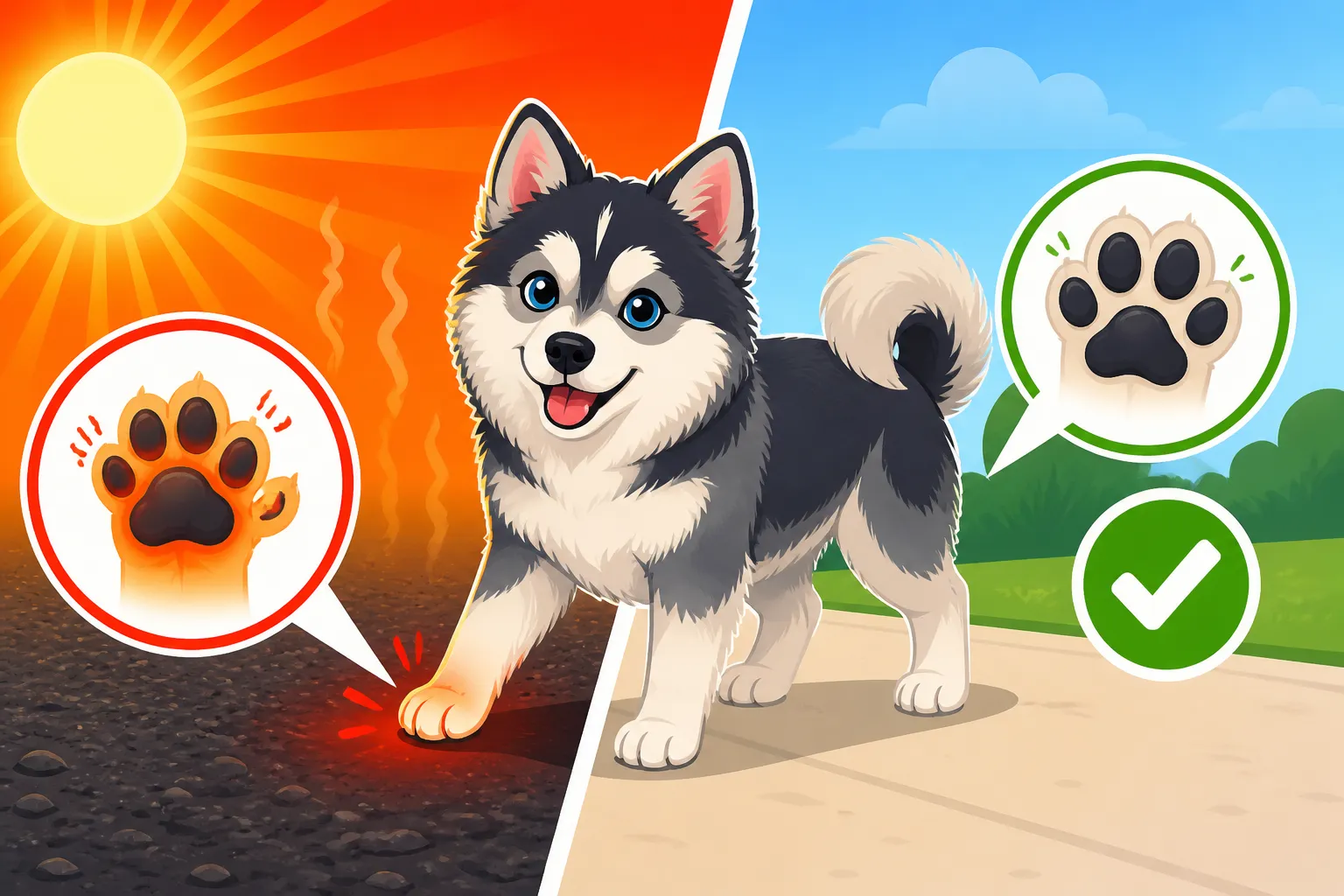
It’s easy to look at a pleasant 75-degree Fahrenheit day and think, "Perfect weather for a walk!" But the air temperature is a stark contrast to the temperature of surfaces like asphalt, concrete, and even some sidewalks. Dark pavement, especially, acts like a giant solar collector, absorbing and retaining heat at an alarming rate. On a day when the air is 77°F (25°C), the asphalt can reach a blistering 125°F (51°C) – hot enough to cause damage in just a minute. When the air hits 86°F (30°C), pavement can soar to 143°F (62°C), causing burns in mere seconds.
The "five-second rule" is a widely recommended benchmark, and it's something every Pomsky owner should internalize. Simply place the back of your hand flat on the pavement for five seconds. If it's too hot for you to hold it there comfortably, it’s too hot for your Pomsky's paws. This simple test, performed before every walk, can prevent serious injury. It's often shocking to realize how hot the ground truly is, even when the ambient air feels pleasant. This is especially critical for a breed like the Pomsky, who might also struggle with overall body temperature regulation in warm climates. Whether a Pomsky Copes in a Southern Summer is a crucial consideration, and paw pad burns are just one part of the picture.
Recognizing the Signs of Burned Paw Pads
Knowing what to look for is your first line of defense. A Pomsky might not always yelp loudly, especially if they’re stoic or distracted, but there are always subtle (and not-so-subtle) cues that tell you something is wrong.
Immediate Indicators and Behavioral Clues
If your Pomsky steps on hot pavement, their reaction might be immediate and dramatic. You might see them:
- Lifting and shaking paws: This is often the first, most obvious sign. They’ll quickly pick up a paw, shake it, and then try to put it down again, only to repeat the process.
- Limiting or refusing to walk: They might suddenly slow down, try to walk on grass or dirt at the edge of the pavement, or sit down and refuse to budge.
- Holding a paw up: After a few steps, they might consistently hold one or more paws off the ground.
- Excessive licking or chewing at paws: Once you’ve stopped, they might immediately start grooming their feet intensely.
- Whining or yelping: While some Pomskies are more vocal than others, pain often elicits a vocal response.
- Seeking cooler surfaces: They might instinctively try to find a patch of grass or shade to stand on.
These behavioral changes are your Pomsky's way of telling you they're in distress. Don't dismiss them as stubbornness; it's a genuine plea for help.
Visual and Physical Symptoms of Paw Pad Burns
Upon closer inspection, if you suspect a burn, you’ll start to see physical evidence. These can range from mild irritation to severe tissue damage:
- Redness: The pads might look noticeably redder than usual, especially around the edges or between the toes.
- Blistering: Small or large blisters filled with fluid can form on the pads, similar to human burns. These can be very painful and are prone to rupture.
- Peeling skin: In more severe cases, layers of skin might begin to peel away, exposing raw, sensitive tissue underneath.
- Discoloration: The pads might appear darker, even black, in severe, deep tissue burns.
- Swelling: The paw pads and the areas around them can become swollen.
- Tenderness to touch: Your Pomsky will likely react negatively if you try to gently press on the affected pads.
It's vital to examine all four paws, as a Pomsky might try to shift weight to less injured pads, masking the full extent of the damage. A severe burn not only causes immense pain but also creates an open wound, making your Pomsky vulnerable to infection. Just like a human burn, these injuries require careful management and often veterinary intervention.
Protecting Your Pomsky's Paws from Hot Pavement
Prevention is always better than cure, especially when it comes to sensitive paw pads. With a double-coated breed like a Pomsky, whose insulation works a little too well in the heat, paw protection is just one piece of the puzzle for their overall comfort. Signs a Pomsky Is Overheating go beyond just their feet, but burned pads can certainly exacerbate the problem.
Strategic Walking Practices and Timing
The easiest and most effective way to protect your Pomsky’s paws is to adjust when and where you walk them.
- Timing is everything: Schedule walks for early morning or late evening. The sun’s angle is lower, and surfaces have had a chance to cool down significantly. Even if the air feels mild in the afternoon, the pavement could still be dangerously hot from hours of direct sun. This aligns with overall heat management strategies for Pomskies.
- Seek alternative surfaces: Whenever possible, choose grassy parks, shaded dirt trails, or wooded areas. These surfaces absorb less heat and offer a much cooler, softer texture for your Pomsky’s pads. If you're walking through your neighborhood, stick to the grass verges as much as possible, even if it means a slower, more meandering pace.
- The five-second rule, every time: Make it a habit. No matter how many times you’ve walked that route, or how cool you think it might be, always check the pavement with the back of your hand for five seconds. This quick check can save your Pomsky a lot of pain and a trip to the vet.
- Short bursts: If you absolutely must walk on pavement during warmer hours, keep it incredibly brief. A quick potty break on concrete is one thing; a leisurely stroll is another. For their The Exercise a Pomsky Needs Every Day, consider indoor activities or shaded natural areas.
Paw Protection Products and Their Efficacy
While timing and surface choices are paramount, sometimes you need an extra layer of defense.
- Paw balms and waxes: Products designed to create a protective barrier on paw pads can be incredibly helpful. These balms often contain natural waxes and oils that moisturize, protect against rough surfaces, and offer some thermal insulation. Think of it like a protective balm for their feet. You can find a wide variety of these on platforms like Chewy or Amazon, making it easy to research ingredients and read reviews. While they won't stop severe burns, they can certainly help against minor abrasions and provide a little extra buffer against moderate heat. Remember to apply them regularly for the best effect.
- Dog booties: These are perhaps the most direct form of protection against hot pavement. Good quality dog booties provide a physical barrier between the paw pad and the ground.
- Pros: Excellent thermal protection, shield against sharp objects, can aid in healing existing paw injuries. Many brands offer durable, well-fitting options.
- Cons: Some Pomskies protest wearing them, it takes time to get them accustomed to the feel, and they need to fit correctly to avoid rubbing or falling off. Training your Pomsky to accept booties might involve positive reinforcement, treats, and short periods of wear around the house before venturing outside. You'll want to measure your Pomsky's paws carefully and check reviews on sites like Amazon or Chewy to find booties that are known for good fit and durability.
Here’s a quick guide to pavement temperatures and actions:
| Air Temperature (approx.) | Pavement Temperature (approx.) | Risk Level | Action for Pomsky Owners |
|---|---|---|---|
| Under 70°F (21°C) | Under 100°F (38°C) | Low | Generally safe, but still check. |
| 70-75°F (21-24°C) | 100-110°F (38-43°C) | Moderate | Check pavement with hand. Be cautious, keep walks short. |
| 75-80°F (24-27°C) | 110-120°F (43-49°C) | High | Pavement can burn in minutes. Stick to grass/shade or use booties. |
| 80°F+ (27°C+) | 120°F+ (49°C+) | Extreme | Pavement can burn in seconds. Avoid walking on pavement entirely. |
Alternative Exercise Options for Hot Days
If the pavement is too hot, it doesn't mean your Pomsky has to miss out on vital physical and mental stimulation. Remember, a Pomsky is an intelligent, energetic breed; they need both. How Far a Pomsky Should Walk Daily needs to be balanced with safety.
- Indoor enrichment: Engage your Pomsky with puzzle toys, snuffle mats, training sessions, or indoor fetch. Mental work can be just as tiring as physical exercise for a smart dog like a Pomsky. Teach new tricks, play hide-and-seek with treats, or practice obedience commands.
- Cool water activities: If your Pomsky enjoys water, a dog-friendly pool or a splash pad can be a fantastic way to burn energy and stay cool. Even a small kiddie pool in your shaded backyard can provide immense fun. Always supervise them closely, especially around water. Whether a Pomsky Should Swim to Cool Down can be a great option for some.
- Doggy daycare: A reputable doggy daycare with air-conditioned indoor play areas can be a lifesaver on scorching days. They’ll get supervised playtime with other dogs and plenty of stimulation.
- Shaded dog parks/trails: If available, seek out dog parks or walking trails that are heavily shaded and have natural, cooler surfaces like wood chips or dirt. Always remember to perform the hand test before letting your Pomsky off-leash, even in these areas.
First Aid and Veterinary Care for Burned Paws
Despite our best efforts, accidents can happen. If you suspect your Pomsky has burned paw pads, knowing how to react immediately is crucial.
Immediate At-Home Care Steps
Time is of the essence when dealing with burns.
- Get off the hot surface immediately: Carry your Pomsky if possible, or guide them to the coolest, shadiest spot available – grass, dirt, or indoors.
- Cool the paws gently: Use cool (not ice cold) water to rinse the paws for at least 10-15 minutes. A hose on a gentle setting, a cool damp cloth, or a shallow basin of water works well. Avoid ice or extremely cold water, as this can cause further tissue damage or shock.
- Clean the wounds: Once cooled, gently clean the pads with mild, unscented antibacterial soap and water if there are open wounds, or just saline solution. Pat dry with a clean cloth. Be very gentle.
- Protect the paws: Apply a thin layer of an antiseptic ointment (like a triple antibiotic cream for minor burns, or a vet-recommended product) and cover the paws with loose, non-stick gauze pads. Secure these with self-adhesive veterinary wrap, but don’t wrap it too tightly – you should be able to slip two fingers under the bandage easily. The goal is to keep the wound clean and prevent further trauma.
- Prevent licking: Your Pomsky will instinctively want to lick their injured paws, which can introduce bacteria and worsen the burn. An Elizabethan collar (cone of shame) is usually necessary to prevent them from chewing or licking the bandages and the wound.
- Monitor: Keep a close eye on the paws for swelling, increased redness, discharge, or foul odor, which could indicate infection.
When to Seek Professional Veterinary Help
While minor redness might resolve with home care, many paw pad burns require professional attention. It’s always safest to consult your vet if you’re unsure, especially with a breed like the Pomsky who can be prone to other health issues. What a Pomsky's Vet Bills Look Like can give you an idea of potential costs, but treatment for burns is absolutely essential.
Seek immediate veterinary care if:
- The burn is severe: This includes large blisters, peeling skin, deep discoloration, or visible raw tissue.
- Your Pomsky is in significant pain: They are limping heavily, refusing to put weight on the paw, or are vocalizing in pain.
- Signs of infection develop: Look for pus, increased redness and swelling, a foul odor from the paw, or if your Pomsky develops a fever or becomes lethargic.
- The burn covers a large area: Multiple pads or a large portion of one pad are affected.
- You can't manage the wound: If the bandages keep slipping, or your Pomsky won't stop licking despite the cone, professional bandaging and management might be needed.
- After initial cooling, the pain persists or worsens: This suggests a more serious injury than a superficial burn.
Your veterinarian can properly assess the degree of the burn, clean and dress the wounds, prescribe pain medication and antibiotics if necessary, and advise on long-term care to promote healing and prevent scarring. They might also recommend specific paw care products, some of which you could purchase from online retailers like Chewy or Amazon. Remember, paw pad burns are extremely painful and can take weeks to heal, impacting your Pomsky's ability to walk and play. Early and appropriate care is key to a good recovery.
Disclaimer
This article is for general informational purposes only and does not constitute professional advice. Laws, prices and regulations vary by location and change over time. Consult a qualified professional for guidance on your specific situation.