Brushing a Pomsky’s Teeth
One of the trickiest parts of owning a Pomsky, or any dog for that matter, is trying to tackle their dental health. Many of us dread the idea of wrestling with a wriggly pup, attempting to scrub tiny teeth, and often, we just hope those dental chews are doing enough. But the truth is, neglecting your Pomsky's oral hygiene can lead to serious health problems down the line, and it’s a frustration many owners face. This guide is here to walk you through the ins and outs of brushing your Pomsky's teeth, offering practical advice and making this essential task a little less daunting.
Why Dental Health is a Big Deal for Your Pomsky
It’s easy to overlook dental care when your Pomsky seems happy and healthy, especially when there are so many other things to focus on, like exercise and training. But trust me, as someone who’s seen it all, ignoring those pearly whites (or not-so-pearly, as the case may be!) is a huge mistake. Dental disease isn't just about bad breath; it's a silent threat that can impact your dog's overall well-being.
The Hidden Dangers of Poor Oral Hygiene
When we talk about dental health, we’re really talking about preventing a cascade of problems that start in the mouth but don't always stay there. The most common culprit is plaque, a sticky film of bacteria that constantly forms on your Pomsky's teeth. If left unchecked, plaque hardens into tartar, a stubborn mineral deposit that brushing alone can't remove. This buildup irritates the gums, leading to gingivitis – red, swollen, and sometimes bleeding gums.
From gingivitis, it's a short hop to full-blown periodontal disease, where the infection spreads below the gumline, attacking the bone and supporting structures of the teeth. This is incredibly painful for your dog, often leading to loose teeth, abscesses, and even tooth loss. Imagine having a constant toothache, but being unable to tell anyone – that's what many dogs experience. Beyond the mouth, the bacteria from severe dental disease can enter the bloodstream and travel to major organs, potentially causing serious issues like heart disease or kidney problems. It truly underscores why we stress about The Twelve to Fifteen Years a Pomsky Lives and how preventing dental issues can contribute to a longer, healthier life.
Why Pomskies are Prone to Dental Issues
Our adorable Pomskies, being a mix of Siberian Husky and Pomeranian, inherit a unique set of challenges when it comes to their teeth. One of the biggest factors is their mouth structure. From their Pomeranian side, they often get a smaller jaw, but their teeth might be sized more like a Husky’s. This mismatch can lead to Dental Crowding in a Pomsky's Small Mouth, where teeth are packed too closely together.
When teeth are crowded, there's less space between them, creating prime spots for food particles and plaque to accumulate. These tight spaces are incredibly difficult for a toothbrush (or even chew toys) to reach, making them hotspots for decay and gum disease. We also see issues like retained puppy teeth, where the baby teeth don't fall out when the adult teeth erupt, further contributing to crowding and trapping debris. Addressing Whether a Pomsky's Baby Teeth Need Pulling early on can prevent a lot of future headaches. It’s not a fun vet visit, but it’s a necessary one to set them up for success.
Getting Started: The Right Tools for Pomsky Teeth Brushing
Okay, so you’re convinced dental care is important – great! But now you're probably wondering where to even begin. Just like you wouldn't use a regular human toothbrush and toothpaste on your Pomsky, you need specific tools designed for canine mouths. Don't worry, these aren't exotic items; they're readily available and make the job much easier (and safer!).
Choosing the Right Toothbrush
The toothbrush you choose needs to be comfortable for both you and your Pomsky. For puppies and smaller Pomskies, a finger brush that slips over your finger can be a good starting point. It allows you to feel exactly what you're doing and can be less intimidating for your dog. For larger Pomskies or once your dog is more accustomed to the routine, a long-handled dog toothbrush might be better. These often have angled heads and softer bristles designed to reach all surfaces of their teeth without causing irritation.
The key is finding a brush with soft bristles that are gentle on their gums but effective enough to remove plaque. You might even find brushes with two heads at different angles, which can be fantastic for getting to those hard-to-reach back molars. Many pet stores, online retailers like Chewy or Amazon, offer a variety of options, so it's worth experimenting a little to see what works best for your specific Pomsky's mouth size and temperament. Remember, comfort is key to a successful brushing session.
Selecting Dog-Specific Toothpaste
This is a non-negotiable point: NEVER use human toothpaste on your Pomsky. Human toothpaste often contains fluoride, xylitol, and other ingredients that are toxic to dogs. Your Pomsky will swallow the toothpaste, and these ingredients can cause serious health issues, ranging from upset stomachs to liver failure.
Instead, opt for toothpaste specifically formulated for dogs. These are typically enzymatic, meaning they contain enzymes that help break down plaque and fight bacteria, even if your brushing technique isn't perfect. They also come in dog-friendly flavors like poultry, beef, or peanut butter, which can make the experience much more palatable for your furry friend. Seriously, the right flavor can turn a dreaded chore into a treat-like experience! I've had great luck with poultry-flavored options from Chewy. Just like with toothbrushes, you'll find a wide selection of safe and effective dog toothpastes available from pet supply stores and online at retailers like Amazon.
Mastering the Art of Brushing Your Pomsky's Teeth (Step-by-Step)
Now that you have your tools, let’s get down to the actual brushing. This isn’t a one-and-done process; it requires patience, consistency, and a whole lot of positive reinforcement. Think of it as a bonding experience rather than a battle!
The Acclimation Process: Making it a Positive Experience
If you try to jam a toothbrush into your Pomsky’s mouth without any prior introduction, you’re likely to face resistance. The secret sauce here is gradual acclimation and positive association. Start by simply getting your Pomsky used to having their muzzle and mouth handled. Gently lift their lips, touch their teeth, and give them a treat and praise. Do this for a few days.
Next, introduce the dog-specific toothpaste. Let them lick a tiny bit off your finger – they’ll likely enjoy the taste. Once they're okay with that, put a small amount of toothpaste on your finger and gently rub it along their gumline and outer teeth. Keep sessions super short, just a few seconds, always ending on a positive note with praise, cuddles, or a special treat from brands like Ollie. The goal is to build trust and make them associate mouth handling with good things. This slow and steady approach is vital, especially when dealing with the potentially suspicious nature some Pomskies inherit from their Pomeranian side, as discussed in The Suspicion a Pomsky Gets From the Pomeranian.
The Brushing Technique
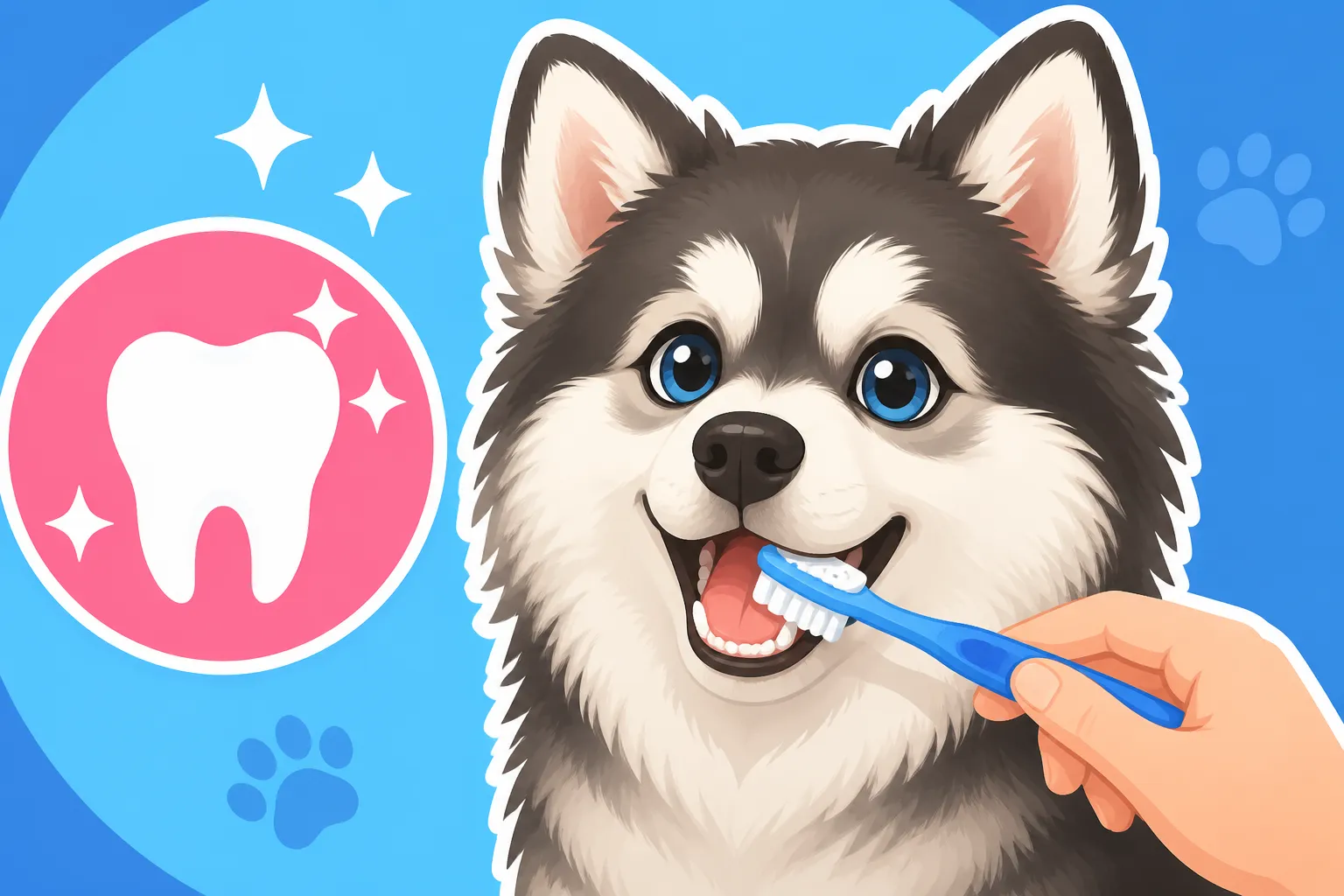
Once your Pomsky is comfortable, it’s time for the brush. Apply a pea-sized amount of dog toothpaste to the brush. Gently lift their upper lip to expose the teeth. Focus on brushing the outside surfaces of the teeth first, as these are where most plaque and tartar tend to accumulate. Angle the brush at a 45-degree angle to the gumline, using small, gentle circular motions. Don't scrub vigorously; a light touch is all that's needed to dislodge plaque.
Work your way around their mouth, focusing on a few teeth at a time if your Pomsky is still getting used to it. The back molars and canine teeth are particularly important, as they do most of the chewing and are prone to buildup. If your Pomsky tolerates it, you can also gently brush the inside surfaces of their teeth, though this is often more challenging. Always remember to praise them throughout the process and reward them immediately afterward. Consistent, calm handling will make all the difference.
Frequency and Consistency
For optimal dental health, ideally, you should brush your Pomsky's teeth daily. I know, I know, that sounds like a lot! Life gets busy, and sometimes daily simply isn't feasible. If daily isn't possible, aim for at least three times a week. The more frequently you brush, the less plaque has a chance to harden into tartar, and the more effective your efforts will be.
Consistency is more important than perfection. Even a quick, gentle brush for a minute or two a few times a week is vastly better than nothing at all. Make it a part of your Pomsky's What a Pomsky Needs Daily routine, perhaps after their evening walk or before bedtime. Over time, it will become a normal, accepted part of their day, just like feeding or walks.
Beyond Brushing: Other Avenues for Pomsky Dental Care
While brushing is the gold standard for dental hygiene, it's not the only tool in your arsenal. There are several supplementary methods that can help support your Pomsky's oral health, especially for those days when brushing just isn't happening. These shouldn't replace regular brushing but can certainly enhance your overall dental care strategy.
Dental Chews and Toys
Dental chews can be a fantastic way to help scrape away plaque and stimulate gum health, but it's crucial to choose the right ones. Look for chews that are specifically designed to reduce plaque and tartar, often featuring unique shapes or textures that help clean teeth as your dog chews. Enzymatic dental chews are particularly effective because they contain ingredients that actively work to break down bacteria. Brands like Greenies are popular and widely available on sites like Chewy and Amazon.
However, a word of caution: avoid extremely hard chews like natural bones, antlers, or nylon bones that are too rigid. These can cause serious dental damage, leading to broken teeth or worn enamel, which then requires costly vet visits for extraction or repair. Always supervise your Pomsky with any chew toy to ensure they're chewing safely and not ingesting large pieces. Also, remember that while dental chews are helpful, they are not a substitute for brushing, especially if your Pomsky is prone to issues like Dental Disease in a Pomsky's Crowded Mouth.
Oral Rinses and Water Additives
For Pomskies who are particularly resistant to brushing, or as an added layer of protection, oral rinses and water additives can be considered. Oral rinses are typically applied directly to the teeth and gums and contain antiseptic ingredients that help reduce bacteria. Water additives are simply added to your Pomsky’s drinking water and work subtly throughout the day to inhibit plaque formation and freshen breath.
While these products can offer some benefits, it’s important to understand their limitations. They are generally less effective than mechanical brushing at removing existing plaque and tartar. Think of them as supplemental aids, not standalone solutions. If you use them, ensure they are veterinary-approved and follow the directions carefully. Always check with your vet if you have concerns about adding anything new to your Pomsky's routine.
Professional Dental Cleanings
Even with diligent home care, most Pomskies will eventually need professional dental cleanings from their veterinarian. Just like humans need dental check-ups and cleanings, dogs accumulate tartar that can only be safely removed under anesthesia. During a professional cleaning, your vet or a veterinary technician will thoroughly scale the teeth, both above and below the gumline, and then polish them. They'll also perform a comprehensive oral exam to check for any underlying issues, such as abscesses, fractured teeth, or advanced periodontal disease.
You might notice signs that your Pomsky needs a professional cleaning: persistent bad breath, visible tartar buildup (brown or yellow stains on the teeth), red or bleeding gums, difficulty eating, pawing at their mouth, or changes in their chewing habits. If you're wondering How Often a Pomsky's Teeth Need Scaling or are concerned about What a Pomsky Dental Costs, it's best to discuss this with your vet. While the idea of anesthesia can be worrying, especially if you're thinking Whether Anesthesia Is Riskier on a Small Pomsky, modern veterinary protocols prioritize safety, and the benefits of a clean, healthy mouth far outweigh the risks. Regular vet check-ups are key to catching these issues early and keeping your Pomsky comfortable and healthy.
Dental Care Comparison: Tools and Aids
To help you visualize the different options for your Pomsky's dental care, here's a quick comparison table:
| Dental Care Method | Description | Pros | Cons | Frequency |
|---|---|---|---|---|
| Toothbrush & Toothpaste | Manual brushing with dog-specific brush and enzymatic toothpaste | Most effective for plaque removal and gumline cleaning; targets specific areas | Requires consistency and cooperation from your Pomsky; can be challenging initially | Daily (ideal) |
| Dental Chews | Edible chews designed to scrape plaque and stimulate gums | Dogs often enjoy them; convenient; some have enzymatic properties | Not as thorough as brushing; can be calorie-dense; risk of choking or tooth fractures with inappropriate chews | Daily/Several times a week |
| Oral Rinses | Antiseptic liquid applied to teeth/gums to reduce bacteria | Easy to apply; can help freshen breath and reduce surface bacteria | Less effective at removing existing plaque/tartar; some dogs dislike the taste | Daily/As directed |
| Water Additives | Liquid added to drinking water to inhibit plaque and freshen breath | Very convenient; works passively throughout the day | Least effective for active plaque/tartar removal; not all dogs tolerate taste changes; only preventative | Daily |
| Professional Cleaning | Veterinary procedure under anesthesia to scale, polish, and examine teeth | Removes hardened tartar; addresses sub-gumline issues; allows for thorough vet assessment | Requires anesthesia; higher cost; typically done annually or as needed | Annually/As needed |
Taking care of your Pomsky's teeth might feel like a big commitment, but it’s a critical part of ensuring they live a long, happy, and healthy life free from pain. By understanding their unique predispositions, gathering the right tools, and implementing a consistent routine, you can make a huge difference in their overall well-being. Don’t get discouraged if it takes time for your Pomsky to adjust; patience and positive reinforcement will pay off in the long run.
Disclaimer
This article is for general informational purposes only and does not constitute professional advice. Laws, prices and regulations vary by location and change over time. Consult a qualified professional for guidance on your specific situation.