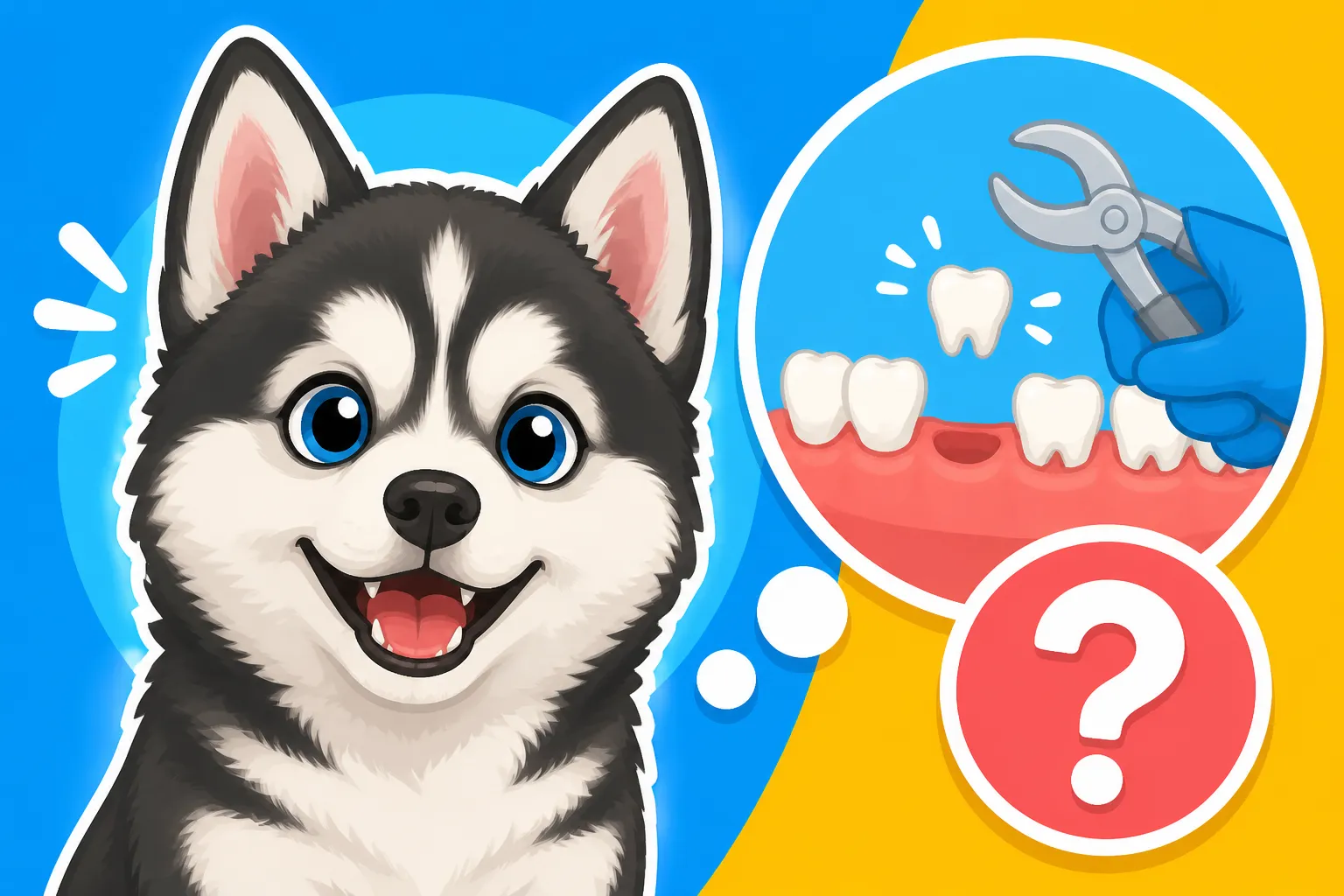
Whether a Pomsky’s Baby Teeth Need Pulling
It’s a common concern for many Pomsky parents: you’re watching your adorable puppy grow, and while the adult teeth are making their grand appearance, those tiny, needle-sharp baby teeth just aren't letting go. This isn't just a quirky phase; retained puppy teeth can lead to significant dental issues, pain, and even long-term health problems for your furry friend. This guide will walk you through why this happens in Pomskies, how to spot the signs, and what steps you might need to take to ensure your pup's mouth stays healthy.
Why Retained Baby Teeth are a Problem for Pomskies
When a puppy's baby teeth, also known as deciduous teeth, don't fall out as they should, it creates a cascade of problems that can seriously impact their oral health and overall well-being. This isn't just an aesthetic issue; it's a structural and hygienic one that needs prompt attention.
Impact on Adult Tooth Eruption
Imagine trying to squeeze a new book onto a shelf that's already full. That's essentially what happens in your Pomsky's mouth when baby teeth refuse to budge. The permanent adult teeth, which are trying to erupt, get blocked or diverted from their natural path. Instead of coming in cleanly, they can erupt in abnormal positions, pointing inwards, outwards, or completely out of alignment. This "double dentition" where both baby and adult teeth are present in the same spot, not only looks odd but can cause serious discomfort. The adult teeth might rub against the gums or other teeth, leading to sores, pain, and an improper bite, which can affect their ability to chew food properly throughout their life.
Risk of Dental Disease and Pain
When you have two teeth trying to occupy the space meant for one, it creates a perfect little trap for food particles, plaque, and tartar. These tight, often overlapping spaces become incredibly difficult, if not impossible, to clean, even with the most diligent home dental care. This constant accumulation of debris rapidly leads to the development of gingivitis, which is inflammation of the gums, and can quickly progress to periodontitis. Periodontitis is a more severe form of dental disease where the supporting structures of the teeth – the bone and ligaments – begin to break down. This is incredibly painful for your Pomsky and can lead to tooth loss, oral infections, and even systemic health issues if bacteria from the mouth enter the bloodstream. It's a significant contributor to Dental Disease in a Pomsky's Crowded Mouth, a problem already common in the breed.
Breed Predisposition in Pomskies
Pomskies, being a hybrid of the Siberian Husky and the Pomeranian, inherit traits from both, and unfortunately, this can include a predisposition to dental issues. Smaller dog breeds, like the Pomeranian, are notoriously prone to retained deciduous teeth. Their compact jaws simply don't have the same amount of space as larger breeds, making the precise timing and shedding of baby teeth more challenging. This genetic tendency means that many Pomskies are born with jaws that are disproportionately small for the size of their developing adult teeth. Consequently, the roots of the baby teeth might not resorb properly, or there just isn't enough room for the adult teeth to push them out cleanly. As a Pomsky parent, being aware of this predisposition means you need to be extra vigilant about checking your puppy's mouth during this critical developmental period.
Recognizing the Signs of Retained Puppy Teeth
Catching retained puppy teeth early is crucial for preventing more severe problems down the line. It requires a keen eye and a willingness to get up close and personal with your Pomsky's adorable (but sometimes tricky) mouth.
Visual Cues and Dental Checks
The most obvious sign of a retained baby tooth is seeing two teeth occupying the same spot in the gum line, often with the adult tooth erupting right next to or slightly behind the baby tooth. This is commonly observed with canine teeth (the "fangs") and incisors (the small front teeth), but can occur with any tooth. When you gently lift your Pomsky's lips, look for:
- Double dentition: Specifically, a baby tooth sitting right next to an adult tooth. This is the clearest indicator.
- Misaligned adult teeth: If an adult tooth is coming in at an unusual angle, it might be because a baby tooth is blocking its proper path.
- Red or swollen gums: Inflammation around the site where an adult tooth is trying to erupt next to a baby tooth can signal discomfort or early gingivitis.
- Food trapped between teeth: If you notice food consistently getting stuck in a particular area, it could be due to the tight space created by retained teeth.
Making a habit of gently examining your Pomsky's mouth once a week, especially between the ages of 4 and 6 months, can help you catch these issues quickly.
Behavioral Indicators
Sometimes, your Pomsky might not have visible double teeth, but they could still be experiencing discomfort or pain from retained teeth or related dental crowding. Watch for changes in their behavior that might indicate oral pain:
- Reluctance to chew or play with toys: If your normally enthusiastic chewer suddenly loses interest in their favorite dental toys, it could be a sign of pain.
- Paw at their mouth or rub their face: This is a common indicator that something is bothering them in their mouth.
- Excessive drooling: While some drooling is normal, a sudden increase could point to oral discomfort.
- Bad breath: Persistent bad breath, beyond typical "dog breath," can be a sign of infection or decaying food particles stuck between crowded teeth.
- Changes in appetite or difficulty eating: If your Pomsky seems hesitant to eat hard kibble or chews only on one side of their mouth, it might be due to pain.
Any of these subtle changes warrant a closer look and, most likely, a trip to the vet.
When to Seek Veterinary Advice
If you observe any of the visual or behavioral signs discussed, it's time to call your veterinarian. Don't adopt a "wait and see" approach when it comes to retained baby teeth. The longer a retained tooth remains, the more potential damage it can cause to the permanent tooth and the surrounding structures. Ideally, baby teeth should be shed by around 6-7 months of age. If your Pomsky is past this age and you still see baby teeth, or if you notice any double dentition regardless of age, immediate veterinary consultation is advisable. Your vet can perform a thorough oral examination and determine the best course of action. This proactive approach is part of ensuring your Pomsky receives The Screening a Pomsky Should Have Yearly for overall health.
The Process of Extracting Retained Baby Teeth
When a Pomsky’s baby teeth don't fall out on their own, extraction often becomes a necessary procedure to protect their long-term oral health. This isn't a minor decision, but understanding the process can help alleviate any worries you might have.
Veterinary Examination and X-rays
The first step in addressing retained baby teeth is a comprehensive examination by your veterinarian. They will meticulously check your Pomsky’s mouth, identifying which baby teeth are present alongside their adult counterparts and noting any signs of gum inflammation or malocclusion (improper bite). Crucially, this initial assessment will include dental X-rays. Unlike what can be seen visually, X-rays provide an invaluable look beneath the gum line, revealing the roots of the retained baby teeth and the precise position of the adult teeth. This allows the vet to understand the full extent of the issue, identify any unerupted adult teeth, and plan the safest and most effective extraction procedure. Sometimes, a retained baby tooth might have a surprisingly long root, or an adult tooth might be severely impacted, information only visible through imaging.
The Surgical Procedure and Anesthesia
Extracting retained baby teeth is a surgical procedure, always performed under general anesthesia. This might sound daunting, especially for a young dog, but it's essential for several reasons. Firstly, it ensures your Pomsky experiences no pain or stress during the procedure. Secondly, it allows the veterinary team to work with precision and safely, which is critical for preventing damage to the delicate adult teeth and jawbone. The vet will carefully extract the retained tooth, ensuring the entire root is removed. If any root fragment is left behind, it can lead to further complications, including infection or cyst formation.
Understandably, many owners are concerned about anesthesia, especially for smaller breeds. It’s a valid concern, and topics like Whether Anesthesia Is Riskier on a Small Pomsky are frequently discussed. However, modern veterinary anesthesia protocols are extremely safe. Your vet will conduct pre-anesthetic blood work to assess your Pomsky’s organ function, and they'll tailor the anesthetic plan to your dog's specific needs, closely monitoring vital signs throughout the procedure. Many owners find that having pet insurance, like a policy from Healthy Paws, helps cover these unexpected but necessary surgical costs, giving them peace of mind during such procedures.
Post-Operative Care and Recovery
After the extraction, your Pomsky will need some careful post-operative care to ensure a smooth recovery. Your vet will typically prescribe pain medication and possibly antibiotics to prevent infection. You'll likely be instructed to feed soft food for several days to a week to protect the surgical sites. It's important to monitor the extraction sites for any signs of swelling, redness, discharge, or excessive bleeding. Most Pomskies recover very quickly from these procedures, often returning to their playful selves within a day or two, though careful supervision is still necessary. You might also need to prevent them from chewing on hard toys or bones for a period, and definitely keep them from pawing or rubbing their mouth excessively, which could disrupt the healing process. Follow-up appointments might be scheduled to ensure proper healing and to check the eruption of any previously impacted adult teeth.
Preventative Care and Long-Term Dental Health
While addressing retained baby teeth is crucial, it's just one piece of the puzzle when it comes to ensuring your Pomsky enjoys excellent oral health throughout their The Twelve to Fifteen Years a Pomsky Lives. A proactive approach to dental care can prevent many common issues and contribute significantly to their overall well-being.
Regular Home Dental Care
The cornerstone of long-term dental health is a consistent home care routine. While professional cleanings are vital, what you do daily makes a huge difference. Ideally, daily tooth brushing with dog-specific toothpaste is recommended. Start slowly, making it a positive experience, and work your way up to brushing all teeth. Don't be discouraged if your Pomsky isn't thrilled about it at first; patience is key.
Beyond brushing, consider incorporating other dental health aids. Dental chews and toys designed to reduce plaque and tartar can be beneficial, but always choose appropriate sizes and types for your Pomsky to prevent choking or tooth fractures. Water additives formulated to reduce bacteria in the mouth can also play a role. Remember, no single method is a magic bullet, but a combination approach is most effective in preventing issues like Dental Disease in a Pomsky's Crowded Mouth.
Professional Dental Cleanings
Even with the best home care, plaque and tartar can build up, especially in a breed prone to crowded teeth like the Pomsky. This makes regular professional dental cleanings, performed by your veterinarian under anesthesia, incredibly important. These cleanings allow the vet to thoroughly scale away tartar from above and below the gum line, polish the teeth to smooth surfaces less prone to plaque adhesion, and perform a comprehensive oral examination, including full mouth X-rays.
Your vet will recommend how often your Pomsky needs a professional cleaning, but for many small breeds, annual or bi-annual cleanings might be necessary to stay ahead of dental disease. Think of it like your own dental check-ups – regular visits are key to catching problems before they become serious. This is often an essential part of maintaining good oral hygiene, alongside understanding How Often a Pomsky's Teeth Need Scaling.
Insurance Considerations
The cost of veterinary care, especially surgical procedures like tooth extractions or professional dental cleanings, can add up quickly. This is where pet insurance can be a real lifesaver. When facing a potential dental surgery for retained teeth, having a robust pet insurance plan from providers like Healthy Paws can significantly ease the financial burden. They often cover accidental injuries and illnesses, which can include necessary dental procedures. While routine cleanings might not always be covered, medical necessities like extractions due to retained teeth or periodontitis usually are. It's worth researching different plans, and many Pomsky owners find Healthy Paws offers comprehensive coverage options that can be a lifesaver for unexpected vet bills. Understanding What a Pomsky's Vet Bills Look Like can help you prepare for these potential expenses and decide if insurance, which often also covers aspects of Insuring a Pomsky Against Two Parent Breeds, is right for your family.
Understanding Your Pomsky's Dental Development
To further illustrate the importance of timely intervention, here's a quick comparison of normal dental development versus what happens with retained puppy teeth:
| Feature | Normal Dental Development | Retained Puppy Teeth Scenario |
|---|---|---|
| Baby Tooth Shedding | Deciduous teeth fall out naturally, typically 1-2 per week. | Baby teeth persist beyond 6-7 months of age. |
| Adult Tooth Eruption | Permanent teeth erupt into their correct, vacant spaces. | Adult teeth are blocked, erupting abnormally or out of alignment. |
| Spacing Between Teeth | Sufficient space allows for proper cleaning. | Overcrowding, tight spaces, and plaque traps. |
| Gum Health | Gums are pink, healthy, and not inflamed. | Gums around retained/crowded teeth often red, swollen, or painful. |
| Risk of Disease | Lower risk of dental disease with good home care. | High risk of gingivitis, periodontitis, and infections. |
| Chewing Comfort | Unrestricted and comfortable chewing. | Pain or discomfort when chewing, potential changes in appetite. |
Disclaimer
The information provided in this guide is intended for educational purposes only and should not be considered a substitute for professional veterinary advice. Always consult with a qualified veterinarian regarding any health concerns or before making any decisions about your Pomsky's medical care.