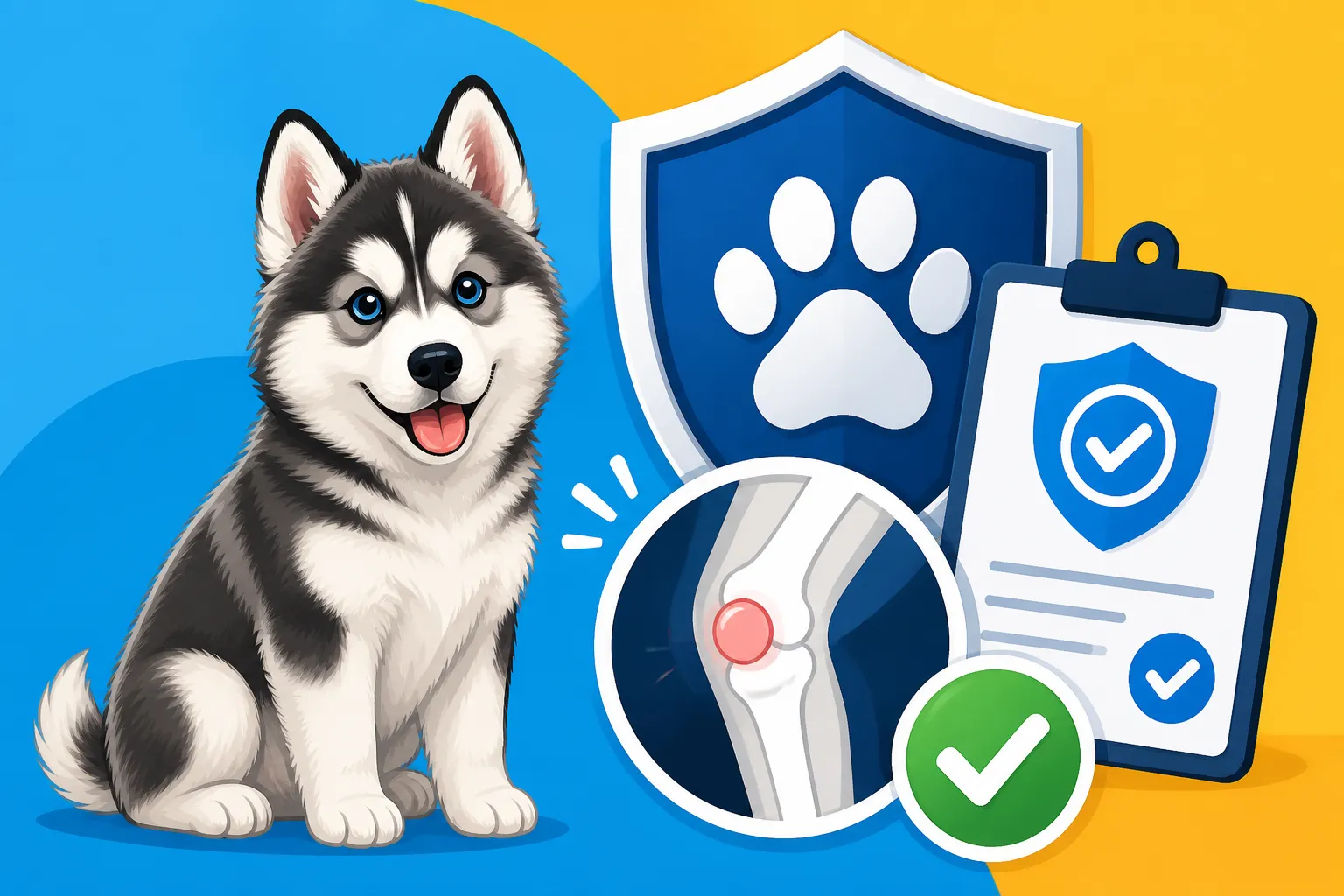
Whether Patella Trouble Is Excluded on a Pomsky Policy
It's a heartbreaking moment when you notice your beloved Pomsky skip a step, perhaps holding up a back leg for a moment before returning to normal play. The worry immediately sets in, and for many Pomsky parents, a major concern is whether their pet insurance policy will actually cover the costs associated with something like a slipping kneecap. The frustrating truth is, navigating the world of pet insurance, especially when it comes to common breed-specific ailments, can feel like walking through a minefield. This guide is here to shed light on whether patella trouble is typically excluded from a Pomsky's pet insurance policy and what you can do about it.
Understanding Patellar Luxation in Pomskies
Patellar luxation, more commonly known as a slipping kneecap, is unfortunately a condition many small and miniature dog breeds, including the Pomeranian side of our Pomskies, are predisposed to inherit. It's a genuine concern for Pomsky owners, leading to potential lameness and pain if not managed. Understanding what it is and why it happens can help you be better prepared, both medically and financially.
The Mechanics of a Slipping Kneecap
Imagine your knee joint: it's a complex system of bones, ligaments, and cartilage. In dogs, the patella, or kneecap, is a small bone that sits in a groove at the end of the femur (thigh bone). This groove is designed to hold the kneecap in place as the leg bends and straightens. When a dog has patellar luxation, this kneecap slips out of its groove, either to the inside (medial luxation) or outside (lateral luxation) of the leg. This slipping can happen intermittently, causing that characteristic skip in their step, or it can be a constant issue, leading to chronic lameness.
For a Pomsky, whose parent breeds contribute different sizes and bone structures, this anatomical quirk can be particularly impactful. The smaller size inherited from the Pomeranian often comes with a more shallow trochlear groove or misaligned bones in the hind leg, which makes the kneecap more prone to slipping. This isn't just a minor inconvenience; repeated luxation can lead to cartilage damage, arthritis, and significant pain over time.
Why Pomskies Are Prone to Patellar Luxation
Our adorable Pomskies inherit a unique genetic blueprint from both the Siberian Husky and the Pomeranian. While Huskies are generally robust dogs with fewer orthopedic issues in their smaller sizes, Pomeranians are well-known for their predisposition to Slipping Kneecaps in a Pomsky. This means that a Pomsky has a genetic lottery when it comes to this particular joint problem. It's not necessarily a reflection of poor breeding, though ethical breeders do strive to screen for it. Rather, it's a common trait passed down through generations of smaller dogs.
Factors like the shape of the femur, the depth of the trochlear groove, and the alignment of the tibia can all contribute to whether a Pomsky develops patellar luxation. These are often congenital issues, meaning your puppy is born with the predisposition, even if the symptoms don't show up until later in life. It's a cruel twist of fate for many Pomsky owners who discover this issue as their lively pup grows.
Recognizing the Signs and Grades
The signs of patellar luxation can vary greatly, from a subtle skip or "bunny hopping" gait to outright lameness. You might notice your Pomsky suddenly holding up a back leg for a few steps, then putting it down as if nothing happened. This often occurs during play or when they're excited. In more severe cases, your Pomsky might consistently limp, struggle with stairs, or even show signs of pain. It's important to differentiate this from other limping issues, as patellar luxation requires a specific approach.
Veterinarians grade patellar luxation from Grade 1 to Grade 4, with Grade 1 being the mildest and Grade 4 the most severe.
- Grade 1: The kneecap can be manually luxated but pops back into place on its own. Often intermittent, barely noticeable.
- Grade 2: The kneecap luxates frequently and may stay out for longer periods, often requiring the dog to extend its leg to pop it back in. This is where you'll see those "skips."
- Grade 3: The kneecap is luxated most of the time but can be manually returned to the groove, though it will pop out again easily. Consistent lameness.
- Grade 4: The kneecap is permanently luxated and cannot be manually put back in place. Severe lameness and potential deformity.
Your vet will conduct a physical examination to diagnose the condition and determine its grade. Early detection is crucial, not just for your Pomsky's comfort, but also for navigating potential insurance coverage. You can learn more about the specifics of these grades in Patellar Luxation Grades in a Pomsky.
How Pet Insurance Handles Pre-Existing Conditions
This is where things often get tricky and cause a lot of frustration for pet parents. Pet insurance, much like human health insurance, has specific rules about what it will and won't cover, particularly concerning conditions that exist before the policy starts.
The Definition of a Pre-Existing Condition
A pre-existing condition is generally defined by pet insurance companies as any illness or injury that your pet showed signs of before the waiting period ended, even if it wasn't formally diagnosed by a vet. This is a critical point. It doesn't necessarily mean you had a diagnosis on paper; if your vet notes in your Pomsky's medical records that they observed a skip in their gait or lameness before your policy's waiting period was over, that condition might be deemed pre-existing. This can be a huge source of disappointment for owners who diligently get insurance, only to find a looming issue isn't covered.
The exact definition can vary slightly between providers, but the core idea remains: if the symptoms appeared before coverage was fully active, it's likely pre-existing. This is why enrolling your Pomsky in a policy when they are a young puppy, and ideally before any health issues arise, is always recommended. The longer you wait, the higher the chance that a condition, even a subtle one, could be noted in their records.
Waiting Periods and Their Impact
Every pet insurance policy comes with waiting periods – a specific amount of time you must wait after buying the policy before certain conditions become eligible for coverage. These periods vary by company and by type of condition. For accidents, waiting periods are often short, perhaps just a few days. For illnesses, they are typically longer, ranging from 14 to 30 days. However, orthopedic conditions like patellar luxation often have even longer waiting periods, sometimes 6 to 12 months. This is because these conditions can be sneaky, developing slowly or being harder to diagnose definitively.
If your Pomsky develops symptoms of patellar luxation, or if the condition is diagnosed, during this specific orthopedic waiting period, it will almost certainly be considered pre-existing and excluded from coverage. This is a common point of contention and why it's so important to read the fine print of any policy you consider. Many people sign up for pet insurance, thinking they're covered, only to be hit with a denial later because they missed the implications of a lengthy orthopedic waiting period. Brands like Healthy Paws, for example, have waiting periods that you need to be aware of when considering their plans for conditions like this.
Bilateral Conditions and Common Exclusions
Here's another wrinkle that often catches Pomsky owners by surprise: bilateral conditions. Many pet insurance companies consider conditions that can affect both sides of the body (like patellar luxation, hip dysplasia, or cruciate ligament tears) to be "bilateral." If your Pomsky develops patellar luxation in one knee before your policy's waiting period ends, many insurers will then exclude coverage for that same condition in both knees, even if the second knee shows no symptoms until much later. This is incredibly frustrating because it assumes that if one side is affected, the other is inherently predisposed.
This blanket exclusion for both sides, if one side is considered pre-existing, is a common practice to protect insurers from significant costs. It means that even if your Pomsky has surgery on one knee and develops an issue in the other two years later, that second surgery might not be covered if the first knee's condition was pre-existing. This makes it even more crucial to ensure your Pomsky is enrolled and through all waiting periods before any signs of patellar luxation appear. When you're looking at various options, whether through a provider like Chewy's pet insurance offerings or other dedicated companies, always ask directly about their stance on bilateral conditions.
Navigating Patella Exclusions on Your Pomsky's Policy
Knowing that patellar luxation is a common concern for Pomskies, and understanding how pet insurance treats pre-existing and bilateral conditions, the next step is to carefully examine actual policy wording and strategies to maximize your chances of coverage.
Policy Wording and Specific Patella Clauses
This is where the devil truly is in the details. Pet insurance policies are legal contracts, and the language used can be very specific. Some policies might have explicit clauses detailing how patellar luxation is handled. They might state that it's always excluded if signs appear before enrollment, or they might have specific waiting periods just for knee conditions. It's not enough to assume; you must read the entire policy document, paying close attention to sections on orthopedic conditions, inherited conditions, and pre-existing conditions.
Don't be afraid to call the insurance provider directly and ask pointed questions. For instance, you might ask: "If my Pomsky, who is currently symptom-free, is diagnosed with Grade 1 patellar luxation six months after my policy starts and after all waiting periods, will surgery for a Grade 3 on that same knee two years later be covered? What if the other knee is affected?" Getting these specifics clarified can save you immense heartache and financial strain later. Some plans, such as those that might be offered through services like Ollie (if they partnered with an insurance provider), might have different nuances in their terms.
The Importance of Early Enrollment and Medical Records
The single most impactful step you can take to avoid patella trouble being excluded is to enroll your Pomsky in a comprehensive pet insurance policy as early as possible, ideally as a puppy, and certainly before any veterinary notation of a limp or skip. Insurers rely heavily on your pet's veterinary medical records to determine if a condition is pre-existing. Every visit, every observation, every symptom noted by your vet creates a paper trail.
If your vet documented a "hind limb lameness, intermittent" during a puppy vaccine appointment, even if it wasn't a formal diagnosis of patellar luxation, an insurer could use that note to deny coverage for any future patella-related claims. This is why having a clear bill of health before your policy activates and passes its waiting periods is paramount. Ensure all initial vet visits are thorough, and keep detailed records yourself. It's a proactive measure that gives you the best fighting chance for coverage. The Screening a Pomsky Should Have Yearly covers other health tests that are crucial.
Seeking Policies with Broader Coverage for Orthopedic Issues
While many standard policies will have similar exclusions for pre-existing conditions, some insurance providers might offer slightly different approaches or rider options that could be beneficial for breeds prone to orthopedic issues. It's worth researching companies known for their robust orthopedic coverage, or those that have shorter orthopedic waiting periods. Some providers might also offer a "vet health check" prior to enrollment that can waive certain waiting periods if your vet confirms no signs of specific conditions.
When comparing policies, create a checklist:
- What is the specific waiting period for orthopedic conditions?
- How do they define "pre-existing condition" for orthopedic issues?
- What is their policy on bilateral conditions?
- Are there any riders or add-ons available for genetic or inherited conditions?
By asking these questions and scrutinizing the details, you can potentially find a policy that offers better protection for your Pomsky against conditions like patellar luxation. Remember, what's cheap upfront might be incredibly expensive later if crucial coverage is missing.
| Feature / Consideration | Standard Pet Insurance Policy | Enhanced Orthopedic Coverage Policy (if available) |
|---|---|---|
| Definition of Pre-Existing | Any condition (or symptoms thereof) before policy activation/waiting periods. | Similar, but may have more specific language for inherited conditions. |
| Orthopedic Waiting Period | Typically 6-12 months. | May be shorter, or offer waivers with a vet exam. |
| Bilateral Conditions | If one side is pre-existing, the other side is often excluded. | May offer more lenient terms, or cover the second side after a waiting period. |
| Genetic/Inherited Cond. | Often covered if not pre-existing. | May have specific riders or higher limits for these conditions. |
| Policy Cost | Generally lower premiums. | Potentially higher premiums, reflecting broader coverage. |
What to Do If Your Pomsky Has Undiagnosed or Pre-Existing Patella Issues
It's a tough situation when you realize your Pomsky already has signs of patellar luxation, or it was diagnosed before you secured adequate insurance. While a comprehensive policy might no longer cover that specific issue, all hope is not lost. There are still avenues to explore for financial and practical support.
Exploring Limited Coverage or Accident-Only Plans
If your Pomsky's patellar luxation is clearly documented as pre-existing, a traditional comprehensive illness and accident policy won't cover it. However, that doesn't mean pet insurance is entirely useless. You might still consider an accident-only plan. These policies are generally much more affordable and will cover injuries resulting from accidents, such as getting hit by a car, suffering a broken bone from a fall (unrelated to the patella), or ingesting something toxic. While it won't help with the kneecap issue, it provides a safety net for other unexpected and costly emergencies.
Another option could be policies that cover new illnesses and accidents, but explicitly exclude the identified pre-existing condition. This means if your Pomsky develops Hip Dysplasia in a Pomsky later in life, or gets a nasty ear infection, those would still be covered, but the patellar luxation would not. It's about finding what coverage is still available and makes financial sense for your specific situation, rather than giving up on insurance entirely.
Proactive Care and Management Strategies
Even without insurance coverage for patellar luxation, you can take significant steps to manage your Pomsky's condition and improve their quality of life. Regular veterinary check-ups are essential to monitor the progression of the luxation and discuss potential interventions. Weight management is incredibly important; keeping your Pomsky at a healthy weight reduces stress on their joints. Supplements like glucosamine and chondroitin, often found in formulations from pet supply retailers like Chewy, can support joint health, though their effectiveness varies.
Physical therapy, low-impact exercise (like swimming instead of jumping), and even acupuncture or chiropractic care can be beneficial for pain management and strengthening surrounding muscles. Creating a joint-friendly home environment, with ramps for furniture and non-slip rugs, can also prevent further injury. While these aren't always cheap solutions, they are often less costly than surgery and contribute greatly to your Pomsky's comfort.
Financial Planning Beyond Insurance
If surgery or long-term medical management for patellar luxation is a possibility and insurance isn't covering it, robust financial planning becomes critical. The cost of What Patella Surgery Costs a Pomsky Owner can be substantial. Start by creating a dedicated savings fund for your Pomsky's medical needs. Even small, regular contributions can add up over time. Some veterinary clinics offer payment plans, or you might look into veterinary credit cards that provide deferred interest options for larger bills.
Crowdfunding or local breed-specific rescue organizations might also offer assistance in certain circumstances, especially for severe cases. Ultimately, while discovering a pre-existing condition can be a major hurdle, focusing on proactive care and establishing a financial safety net are powerful ways to ensure your Pomsky receives the best possible treatment, regardless of insurance policy limitations.
Disclaimer
This article is for general informational purposes only and does not constitute professional advice. Laws, prices and regulations vary by location and change over time. Consult a qualified professional for guidance on your specific situation.