Patellar Luxation Grades in a Pomsky
It’s truly disheartening to see your spirited Pomsky suddenly hesitant to jump, or worse, witnessing that tell-tale skip in their step. That moment of confusion and worry about what’s going on with their little knee can feel overwhelming. This guide is here to shed light on patellar luxation, a common orthopedic issue, helping you understand its grades, recognize the signs, and navigate the best path forward for your beloved Pomsky.
Understanding Patellar Luxation in Pomskies
When we talk about patellar luxation, it sounds pretty scientific, right? But really, it’s just a fancy way of saying your dog's kneecap slips out of place. Imagine your own kneecap (patella) not staying in its proper groove at the end of your thigh bone (femur). For dogs, especially smaller breeds like our adorable Pomskies, this can be a real issue that impacts their comfort and mobility.
What Exactly is Patellar Luxation?
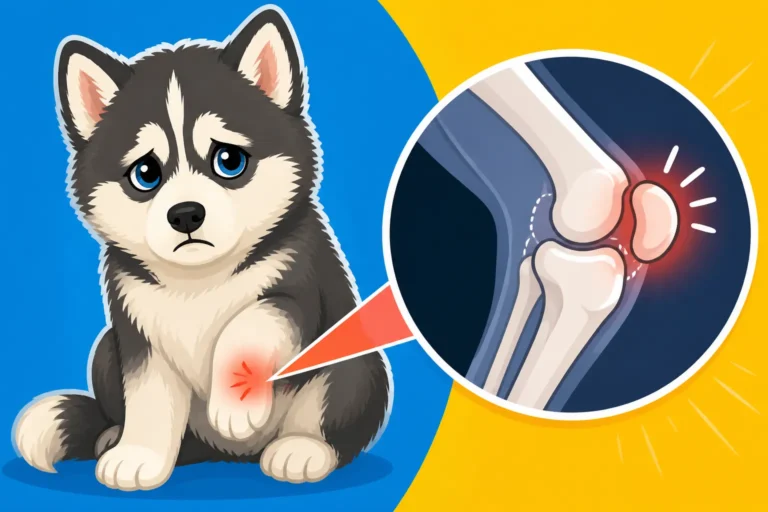
At its core, patellar luxation means the patella, or kneecap, dislocates from the trochlear groove, which is a shallow indentation at the bottom of the femur where the kneecap normally glides. This dislocation can happen to the inside (medial luxation, most common in small breeds) or the outside (lateral luxation) of the leg. When it slips, the leg can't straighten properly, leading to that characteristic skip or lameness you might notice. It’s not just a momentary inconvenience; repeated luxations can cause wear and tear on the joint cartilage and bones, potentially leading to more serious problems down the line, like arthritis.
Why Pomskies are Prone to It
If you’ve spent any time researching Pomskies, you know they inherit traits from both the Siberian Husky and the Pomeranian. Unfortunately, patellar luxation is one of those pesky conditions that the Pomeranian side of their family tree brings to the mix. It's considered a hereditary condition, meaning it’s passed down through generations. While not every Pomsky will develop it, those with a stronger genetic predisposition from their Pomeranian lineage are at a higher risk. This isn't a fault of poor breeding necessarily, but rather a known genetic characteristic that ethical breeders screen for. The goal is always to minimize the chances, but it's something every Pomsky owner should be aware of, especially given the rising popularity of the breed.
The Anatomy of a Pomsky's Knee
To truly grasp what’s happening, a quick peek at the knee anatomy helps. The stifle joint, or knee, of a Pomsky is a complex marvel of engineering. You have the femur (thigh bone), the tibia (shin bone), and the patella (kneecap) sitting right in front. The patella is embedded within the patellar tendon, which connects the quadriceps muscle to the tibia. This whole setup is designed to allow smooth, efficient movement. The patella acts like a pulley, increasing the leverage of the quadriceps muscles as they extend the leg. For the patella to do its job correctly, it needs to track perfectly within that trochlear groove on the femur. When this groove is too shallow, or the alignment of the leg bones is a bit off, the kneecap can easily pop out, causing pain and instability. Understanding this mechanism helps us understand why Slipping Kneecaps in a Pomsky is such a common concern for owners.
Recognizing the Signs and Symptoms
Catching patellar luxation early can make a huge difference in managing the condition and ensuring your Pomsky's comfort. The signs can be subtle at first, often mistaken for just a momentary clumsiness, but paying close attention can help you identify a problem before it escalates.
Early Indicators in a Pomsky Puppy
It’s often heartbreaking to think of a puppy dealing with joint issues, but sometimes the signs of patellar luxation can show up quite early. For a Pomsky puppy, you might notice an intermittent skip or hop while they’re running or playing. They might suddenly pick up a back leg for a few steps, hold it up for a moment, and then put it down as if nothing happened, resuming normal play. This is usually the kneecap momentarily slipping out and then popping back into place on its own. You might also observe a slight reluctance to bear full weight on the affected leg, especially after a period of rest, or they might be a bit hesitant to jump onto furniture that they previously managed with ease. These are the earliest whispers of a problem, and they shouldn't be ignored. If you notice The Age a Pomsky's Kneecap First Slips, it's crucial to consult your veterinarian.
Advanced Symptoms in Adult Pomskies
As patellar luxation progresses, or if it's left unaddressed, the symptoms become more pronounced and persistent in adult Pomskies. You might see a consistent limp, not just an occasional skip. The leg might appear bowed or abnormally positioned. Your Pomsky could start showing clear signs of pain, perhaps whimpering when they move or shying away from touch around the knee area. Their activity levels might significantly drop; they might be less interested in walks, playtime, or even just getting up to greet you. In severe cases, they might walk with a crouched stance, with both hind legs stiff, or be unable to fully extend their leg. This can severely impact their quality of life, making even simple movements a struggle. It’s also common for pet owners to notice The Skip That Means a Pomsky's Knee Has Gone becoming more frequent and debilitating as they age.
How to Observe Your Pomsky
Being an observant pet parent is your best tool for early detection. Watch your Pomsky closely during different activities. When they're walking or trotting, look for any irregularity in their gait. Does one leg seem to swing out differently? Is there a brief moment where they don't put weight on a hind leg? During play, notice if they suddenly stop or yelp. Pay attention when they jump on or off furniture – do they hesitate, or do they land awkwardly? Even when they're resting, observe how they position their legs. Do they stretch out comfortably, or do they hold one leg in an odd way? Gently palpating their knees yourself, feeling for any clicks or pops, can also give you clues, though a definitive diagnosis always requires a professional. Keeping notes or even taking videos can be incredibly helpful information to share with your vet during an examination.
The Four Grades of Patellar Luxation
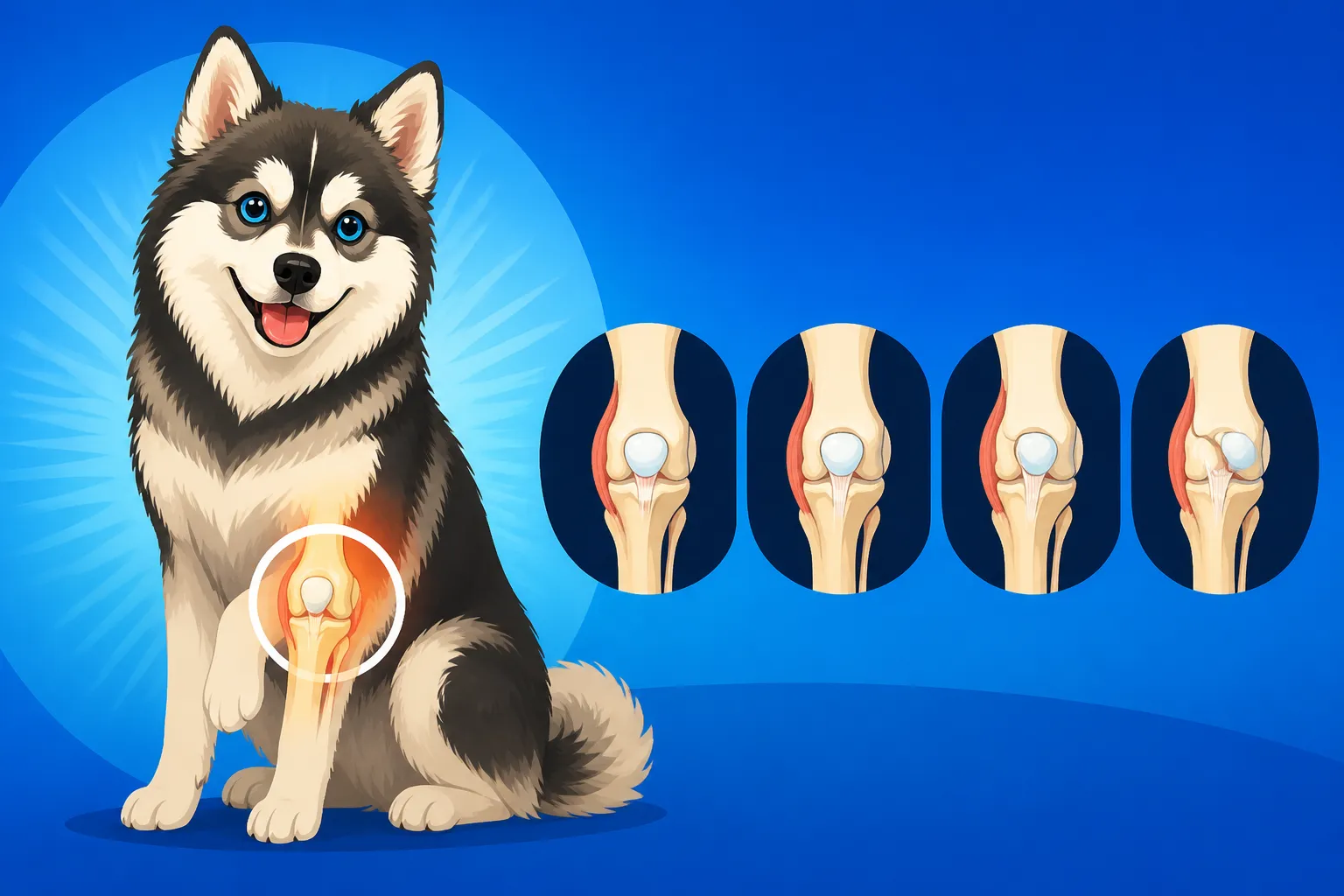
Patellar luxation isn't a one-size-fits-all condition. Veterinarians classify it into four distinct grades, which describe the severity of the luxation. These grades are crucial because they guide treatment decisions and help you understand the prognosis for your Pomsky.
Grade 1: The Mildest Form
Grade 1 patellar luxation is often the sneakiest. In this mildest form, the kneecap can be manually luxated (pushed out of its groove by a veterinarian) but will immediately return to its normal position once released. Clinically, many Pomskies with Grade 1 luxation show very few, if any, symptoms. You might occasionally see that characteristic skip, but it's usually brief and infrequent. The dog might not seem bothered by it at all. Because it's so subtle, owners might not even realize there's an issue until a routine vet check-up uncovers it. Despite its mild nature, it's still worth monitoring, as consistent slipping, even if momentary, can lead to cartilage damage over time.
Grade 2: Intermittent Slipping
This is where the signs become a bit more noticeable. In Grade 2 patellar luxation, the kneecap luxates spontaneously (slips out on its own) or can be manually luxated. However, it doesn't always go back into place immediately on its own. Sometimes it requires the dog to stretch their leg or you might even be able to gently push it back in. When the kneecap is out, your Pomsky will likely hold the leg up, unable to put weight on it. Once it's back in, they'll resume normal activity. The skipping and lameness become more frequent and more obvious. This grade often presents with a range of symptoms, from mild, occasional skips to more persistent lameness. This is typically the stage where owners begin seeking veterinary attention, as the intermittent discomfort starts to impact their dog's daily life.
Grade 3: Frequent Dislocation
Now we’re moving into more significant territory. With Grade 3 patellar luxation, the kneecap is luxated most of the time. While it can still be manually reduced (pushed back into place by the vet), it will easily slip out again. Because the kneecap is spending more time out of its groove than in it, the trochlear groove itself might start to become shallower, and the surrounding soft tissues can adapt to the abnormal position. Your Pomsky will likely exhibit a persistent lameness, and their leg might appear bowed or angled differently. They might walk with a distinct crouch or an awkward gait, constantly trying to compensate for the unstable knee. Pain is more common at this stage, and their overall activity will definitely be affected. This grade often requires more direct intervention.
Grade 4: Permanent Dislocation
Grade 4 is the most severe form of patellar luxation. In this situation, the kneecap is permanently out of its groove and cannot be manually reduced back into place. The trochlear groove is often completely flattened or even convex (bulging outwards) instead of concave. The bones of the leg might have undergone significant changes, twisting or bowing due to the chronic malalignment. Pomskies with Grade 4 luxation experience severe, persistent lameness and often walk with a pronounced crouch, if they can bear weight on the affected leg at all. The constant abnormal position leads to significant pain and can cause serious arthritis and irreversible joint damage. This grade almost always necessitates surgical correction to restore function and alleviate pain.
Here’s a quick overview of the grades for easier understanding:
| Grade | Description | Symptoms | Prognosis |
|---|---|---|---|
| Grade 1 | Kneecap can be manually luxated but reduces spontaneously. | Asymptomatic or occasional, brief skips. | Good, usually conservative management. |
| Grade 2 | Kneecap luxates spontaneously/manually, remains luxated intermittently. | Intermittent skipping, lameness, holds leg up. | May require surgery if symptoms worsen. |
| Grade 3 | Kneecap is usually luxated, can be manually reduced but reluxates easily. | Persistent lameness, bowed leg, awkward gait, more pain. | Surgery often recommended. |
| Grade 4 | Kneecap is permanently luxated, cannot be manually reduced. | Severe lameness, significant pain, crouching walk, abnormal leg posture. | Surgery almost always necessary, guarded prognosis. |
Diagnosis and Early Intervention
When you notice those tell-tale skips or limps, the immediate thought is often, "What do I do now?" The good news is that veterinary science has advanced, and your vet is well-equipped to diagnose and guide you through the process.
Your Vet's Role in Diagnosis
The first step, always, is a visit to your trusted veterinarian. They will perform a thorough physical examination, which includes what's called a palpation of the stifle joint. This means they'll gently manipulate your Pomsky’s knee to feel for any instability or if the kneecap slips out of place. They'll assess the range of motion and look for any signs of pain or discomfort. Often, the grade of patellar luxation can be determined during this physical exam. In some cases, especially if they suspect other issues or if surgery is being considered, X-rays might be recommended. These images help visualize the bone structure, assess the depth of the trochlear groove, and check for any secondary changes like arthritis, which can provide a clearer picture of the overall joint health. It's important to be honest and detailed about your observations at home, as this helps your vet immensely.
The Importance of Early Detection
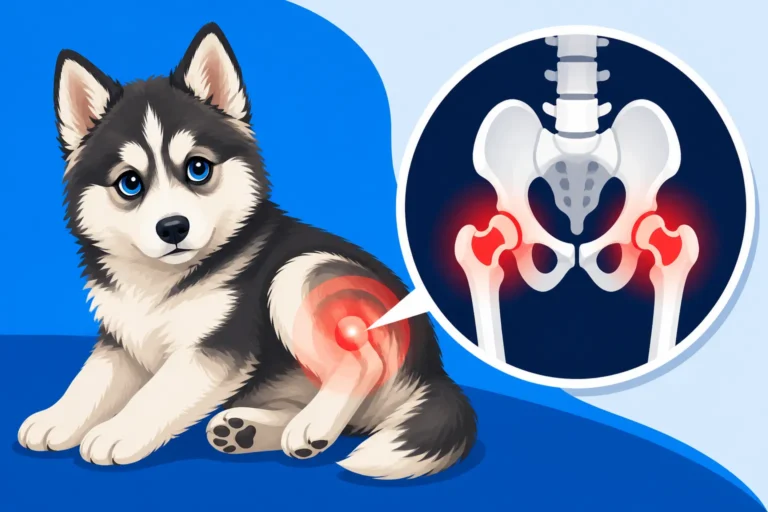
You might be thinking, "It's just a little skip, maybe it will go away." But with patellar luxation, ignoring the early signs can lead to more significant problems. Early detection is absolutely key. When caught early, especially in Grades 1 and 2, there are often conservative management strategies that can help prevent the condition from worsening. Without intervention, repeated luxation can lead to damage to the cartilage lining the bones, erosion of the trochlear groove, and eventually, the development of painful arthritis. It can also put abnormal stress on other joints, potentially leading to issues like Hip Dysplasia in a Pomsky or even luxation in the other knee, an important consideration when thinking about Whether Both of a Pomsky's Knees Go. Early intervention helps preserve joint health, reduce pain, and maintain your Pomsky’s mobility for as long as possible.
Management for Lower Grades
For Pomskies diagnosed with Grade 1 or even some Grade 2 patellar luxation, immediate surgery isn't always the first course of action. Often, veterinarians will recommend a conservative approach focusing on supportive care. This primarily involves strict weight management to reduce stress on the knee joint. Even a few extra pounds can significantly worsen luxation. Your vet might also suggest specific joint supplements, like glucosamine and chondroitin, which can help support cartilage health, and omega-3 fatty acids for their anti-inflammatory properties. Controlled exercise, avoiding high-impact activities like jumping and rough play, is crucial. This might mean keeping your Pomsky from jumping off high furniture, perhaps investing in pet stairs or ramps, to protect their knees. Building strong hind leg muscles through controlled, low-impact exercise can also help stabilize the joint. This proactive management can often delay or even prevent the need for surgery.
Treatment Options for Patellar Luxation
When conservative measures aren't enough, or for higher grades of luxation, surgical intervention often becomes the best option to restore comfort and mobility. Navigating these choices can be daunting, but your vet will guide you through what’s best for your Pomsky.
Non-Surgical Management
Before jumping to surgery, especially for Grade 1 and sometimes Grade 2 luxations, many vets will explore non-surgical management. This is often the first line of defense. As mentioned, maintaining an ideal body weight is paramount. Even slight obesity significantly increases stress on the joint. Regular, moderate exercise, like leash walks on even surfaces, helps build muscle strength around the joint without excessive impact. This muscle development can offer natural support, helping to keep the kneecap in place.
Additionally, your vet might prescribe anti-inflammatory medications, such as NSAIDs, to manage pain and reduce inflammation, especially during flare-ups. Long-term use of these should always be under vet supervision. Nutritional supplements, including glucosamine, chondroitin, and MSM, are widely used to promote cartilage health and reduce joint degradation. Brands like Dasuquin or Cosequin are popular choices that many owners find helpful. Physical therapy, which can include exercises to strengthen specific muscles, laser therapy, or hydrotherapy, can also be incredibly beneficial in improving range of motion and reducing pain. It’s all about creating an environment where the knee is supported and protected without invasive procedures. For pet owners concerned about costs, a robust pet insurance plan like Healthy Paws can really ease the financial burden of these ongoing treatments.
Surgical Interventions and Procedures
When the luxation is more severe (typically Grade 2 progressing to 3, or definite Grade 3 and 4), or if conservative management fails to provide relief, surgery is often recommended. The goal of surgery is to realign the patella within its groove and stabilize the joint. There are several surgical techniques, often used in combination:
- Trochleoplasty (or Trochlear Wedge Resection/Block Recession): This procedure deepens the trochlear groove on the femur where the kneecap sits. By creating a deeper groove, the kneecap has a more secure channel to track in.
- Tibial Crest Transposition: The tibial crest is the bony prominence on the shin bone (tibia) where the patellar tendon attaches. If the tendon pulls the kneecap out of alignment, the tibial crest can be cut and reattached to a new, more appropriate position to ensure the kneecap tracks straight.
- Lateral Imbrication/Medial Release: This involves tightening the joint capsule on the side opposite the luxation (e.g., tightening the lateral side for medial luxation) and sometimes releasing the tight tissues on the side of the luxation (e.g., medial release).
- Corrective Osteotomy: In severe Grade 4 cases where the bones themselves are significantly deformed (e.g., bowed femur), bone cuts might be necessary to realign the entire limb.
The specific combination of procedures will depend on your Pomsky's individual anatomy and the severity of the luxation. Your veterinary surgeon will discuss the best approach for your dog. Understanding Whether a Pomsky's Kneecap Needs Operating is a big decision, and it’s always made with your Pomsky's long-term health in mind.
Post-Surgical Care and Recovery
Surgery is only half the battle; the recovery period is just as crucial. After surgery, your Pomsky will typically need strict rest and restricted activity for several weeks, often involving crate rest or a small, confined area. Pain management is paramount and will be prescribed by your vet, usually involving a combination of pain relievers and anti-inflammatories. You’ll need to monitor the incision site for any signs of infection or swelling.
Gradual rehabilitation is a key component of recovery. This might start with passive range of motion exercises at home, then progress to controlled leash walks, and eventually potentially include professional physical therapy. Hydrotherapy (underwater treadmill) can be incredibly effective for rebuilding muscle strength without putting excessive weight on the healing joint. The entire recovery process can take several months, and it requires dedication and patience from you as the owner. Regular follow-up appointments with your vet will be essential to monitor healing and adjust the rehabilitation plan as needed. While What Patella Surgery Costs a Pomsky Owner can be substantial, with proper aftercare, many Pomskies go on to live full, active lives post-surgery, especially if covered by a comprehensive insurance policy from providers like Healthy Paws.
Living with a Pomsky with Patellar Luxation
A diagnosis of patellar luxation doesn't mean the end of your Pomsky's happy, active life. It simply means you'll need to be more mindful of their needs and proactively manage their joint health.
Long-Term Management Strategies
Even after successful surgery or with conservative management of lower grades, long-term care is essential. This means ongoing vigilance. Regular veterinary check-ups will allow your vet to monitor the health of the joint, watch for signs of arthritis, and address any new concerns promptly. Maintaining your Pomsky's ideal weight remains crucial throughout their life. Consider making home modifications, such as providing Whether a Pomsky Should Use Steps to the Couch or bed ramps to minimize jumping. Non-slip rugs on slick floors can also prevent accidental slips and twists that could exacerbate the condition. Continue with joint supplements as recommended by your vet, as these provide continuous support for cartilage health. A high-quality diet rich in omega-3 fatty acids can also contribute to overall joint health, helping to manage inflammation.
Preventative Measures for Other Joints
It’s easy to focus solely on the affected knee, but patellar luxation can sometimes have a domino effect on other parts of your Pomsky’s body. When one knee is compromised, dogs naturally shift their weight and gait, putting increased stress on the other hind leg, the hips, and even the spine. This can potentially lead to problems in these areas, such as the development of luxation in the other patella or accelerating the onset of hip or spinal issues. Therefore, any long-term management plan should include measures to protect all joints. This means ensuring symmetrical muscle development through balanced exercise, paying attention to their posture and movement, and providing overall joint support. Regular exercise that strengthens core muscles can help stabilize the entire skeletal system. If your Pomsky is prone to these issues, discussing comprehensive joint care with your vet, potentially including supplements like those from Healthy Paws, is a wise move.
Supporting Your Pomsky's Quality of Life
Ultimately, our goal as Pomsky parents is to ensure our furry companions live their happiest, most comfortable lives. Living with patellar luxation requires understanding and empathy. Be patient with your Pomsky, especially if they’re recovering from surgery or managing pain. Provide them with a comfortable, supportive bed, ideally an orthopedic one, to cushion their joints. Continue to engage them in activities they enjoy, modifying as necessary. Instead of high-impact games, opt for gentle walks, scent work, or puzzle toys that challenge their mind without stressing their body. If Exercise for a Pomsky With Bad Knees needs to be restricted, mental enrichment becomes even more important. Celebrate their good days, and on tougher days, offer extra comfort and reassurance. Remember, a happy Pomsky isn't just about physical health; it's about emotional well-being too. Showing them consistent love and support will make all the difference in their journey.
Disclaimer
This article is for general informational purposes only and does not constitute professional advice. Laws, prices and regulations vary by location and change over time. Consult a qualified professional for guidance on your specific situation.