Whether a Pomsky Should Use Steps to the Couch
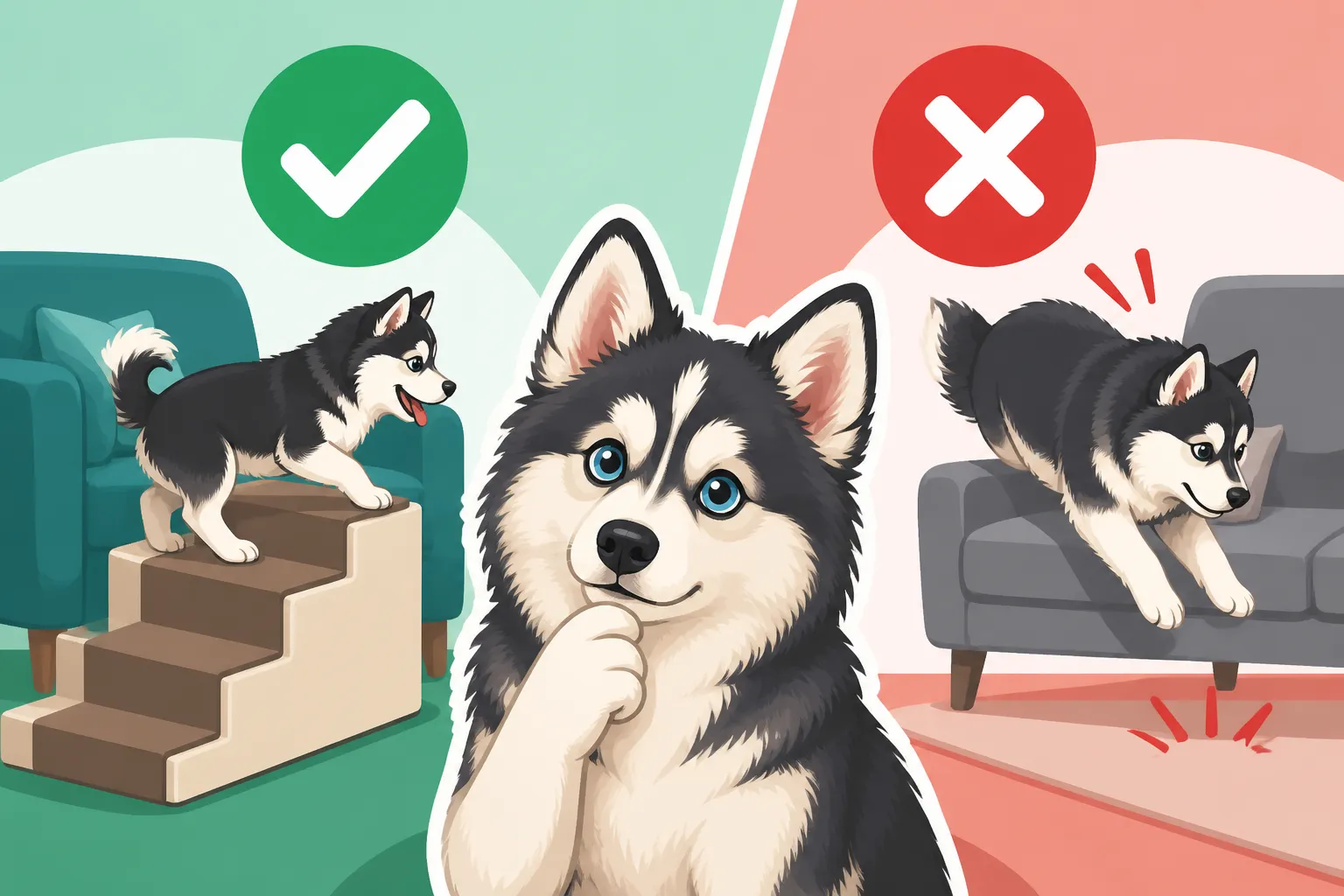
It’s a common sight: your adorable Pomsky, with their boundless energy and seemingly invincible spirit, leaping onto or off the couch to join you. While this might look cute and harmless in the moment, those repeated impacts can quietly take a toll on their small, yet sturdy, joints and spine over time. Many Pomsky owners worry about the long-term health implications of these daily jumps, especially given the breed's predispositions. This comprehensive guide will explore why providing steps or a ramp to your couch isn't just a convenience, but a crucial preventative measure for your Pomsky's joint health, covering everything from understanding the risks to choosing and training them to use the perfect aid.
The Risks of Jumping for Your Pomsky's Joints
When you see your Pomsky rocket off the sofa, it’s easy to think, "They’re so agile! They’ll be fine." But imagine yourself jumping off a table multiple times a day, every day, for years. Even if you don't break something instantly, the repetitive stress on your joints would add up. For our Pomskies, who carry the genetic legacies of both the athletic Siberian Husky and the sometimes delicate Pomeranian, those impacts are far from inconsequential.
The Delicate Structure of a Pomsky's Legs and Spine
Pomskies are a unique blend, inheriting traits from both parent breeds. From the Pomeranian side, they can get a smaller, more compact frame, which often means their joints are less equipped to handle high-impact activities, despite their energetic nature. The Siberian Husky contributes athletic genes, certainly, but also specific structural considerations. Their longer legs and higher drive can sometimes lead to greater jumping heights and more forceful landings. When you combine these, you get a dog that often wants to jump like a Husky but might have the more vulnerable joint structure of a Pomeranian, or a hybrid that falls somewhere in between.
Consider the physics for a moment. When a Pomsky jumps off a couch, their body weight is accelerated by gravity. Upon landing, all that force is absorbed primarily by their front legs, especially the elbows and shoulders, and then transmitted up their spine. For a small dog, this force can be several times their body weight. Over months and years, this constant jarring can lead to micro-traumas in the joint cartilage, ligaments, and tendons. It's like a tiny hammer repeatedly striking a delicate structure. While they might not show pain immediately, the groundwork for serious orthopedic issues is being laid with every enthusiastic leap.
Common Injuries from Repeated Jumping
The most prevalent issues related to repeated jumping and impact in breeds like the Pomsky often revolve around their knees and hips, but spinal health is also a significant concern.
One of the primary concerns for Pomsky owners is Slipping Kneecaps in a Pomsky, formally known as patellar luxation. This condition occurs when the kneecap (patella) slips out of its groove in the thigh bone. While often genetic, repeated jumping and awkward landings can exacerbate an existing predisposition or even contribute to the development of the condition. When a Pomsky jumps down, the force can momentarily shift the patella, causing it to pop out. Over time, this constant slipping can wear away the cartilage, cause pain, and lead to arthritis. There are different Patellar Luxation Grades in a Pomsky, and even low grades can worsen with consistent stress. The Age a Pomsky's Kneecap First Slips can vary, but repeated trauma doesn't help.
Another significant orthopedic issue is Hip Dysplasia in a Twenty Pound Pomsky. Although more commonly associated with larger breeds, Pomskies, inheriting from the Husky side, are not immune. Hip dysplasia is a malformation of the hip joint, where the ball and socket don't fit together properly. Jumping adds significant strain to already compromised hip joints, grinding the joint surfaces and accelerating degenerative changes. Even if your Pomsky isn't genetically predisposed, harsh landings contribute to wear and tear that can mimic or worsen the effects of dysplasia over time.
Spinal issues, though less discussed in the context of jumping, can also arise. The impact of landing can compress discs in the spine, particularly in the neck or lower back, leading to disc herniation. This can cause severe pain, nerve damage, and even paralysis in extreme cases. For a small dog with a relatively long back, like many Pomskies, this is a silent threat.
Beyond these specific conditions, the cumulative effect of jumping is the premature onset of arthritis. Cartilage, which acts as a cushion between bones, has a limited capacity for repair. Each jump causes a tiny amount of wear. Eventually, this wear and tear outpaces the body's ability to repair, leading to inflammation, pain, and stiffness associated with osteoarthritis. This can severely impact a Pomsky's quality of life as they age, making even simple movements painful. This is especially true for Arthritis in a Pomsky at Ten or older.
How Steps and Ramps Act as Preventative Care
Understanding the risks of jumping, the good news is that preventing these issues can be relatively simple and incredibly effective: dog steps or a ramp. These aids eliminate the impact associated with jumping, providing a gradual, controlled way for your Pomsky to access their favorite elevated spots.
Reducing Strain and Impact on Joints
Think of steps or a ramp as an escalator for your dog. Instead of a sudden, jarring descent or ascent, they provide a smooth transition. When your Pomsky walks up or down steps, their joints flex and extend in a controlled manner, distributing their weight evenly across all four limbs. This completely bypasses the high-impact stress that jumping creates. The difference in force absorbed by their joints is monumental.
By using steps or a ramp, you're not just preventing acute injuries; you're also mitigating the long-term cumulative damage that leads to conditions like arthritis. You're preserving the integrity of their joint cartilage, ligaments, and tendons, allowing them to remain healthy and strong for much longer. This proactive approach can significantly extend their comfortable, active years and reduce the likelihood of costly veterinary interventions down the line. Preventative measures, even simple ones like steps, are often far less expensive and stressful than treating a chronic condition later on.
Protecting Pomskies of All Ages
One of the beautiful things about dog steps and ramps is their universal benefit across all life stages of your Pomsky. They are not just for older dogs.
- Puppies: Pomsky puppies are bundles of uncoordinated energy. Their growth plates (areas of new bone growth) are still open and incredibly vulnerable to injury. A hard landing can cause damage that affects their bone development and leads to lifelong orthopedic problems. Encouraging puppies to use steps from a young age helps protect these delicate structures, setting them up for a healthier future. It also instills good habits early on.
- Adults: Even in their prime, adult Pomskies benefit immensely. While they might seem robust, the constant wear and tear from jumping is still happening internally. Steps help maintain their peak physical condition, delaying the onset of age-related joint issues and preserving their mobility. Think of it as an investment in their continued vitality.
- Seniors: As Pomskies age, they naturally become more prone to arthritis and general stiffness. Their muscles may weaken, and their proprioception (awareness of their body in space) might decline, making jumping riskier. Steps and ramps become absolutely essential for senior Pomskies. They allow them to continue enjoying their favorite spots – whether that's snuggling on the couch or sleeping on the bed – without pain or fear of falling. For an older Pomsky, these aids can truly enhance their quality of life, allowing them to maintain independence and comfort. For those with Exercise for a Pomsky With Bad Knees, steps can be a game-changer.
While you might secure a robust pet insurance plan from a provider like Healthy Paws to cover unexpected vet bills, preventing injuries in the first place is always the best course of action. These steps are a small investment now that can pay huge dividends in your Pomsky's comfort and longevity.
Choosing the Right Ramp or Set of Steps for Your Pomsky
With so many options on the market, choosing the right steps or ramp for your Pomsky might seem a little overwhelming. But by considering a few key factors, you can find the perfect solution that will be both safe and appealing for your furry friend.
Factors to Consider: Size, Material, and Stability
The main goal is to provide a stable, easy-to-use pathway.
- Height: First and foremost, measure the height of the furniture your Pomsky wants to access. The top step or ramp platform should be roughly level with the furniture seat. Steps that are too low will still require a jump; too high, and they become awkward or even dangerous. Many pet steps come in various heights, so make sure to match it closely.
- Weight Capacity: While Pomskies are generally small to medium-sized dogs, ranging from 10 to 40 pounds, always check the weight capacity of the steps or ramp. It needs to comfortably support your Pomsky's full adult weight, plus any slight downward force from their momentum. Most pet steps are designed for small to medium breeds, but it's always worth double-checking.
- Material:
- Foam/Soft Steps: These are often lightweight and easy to move. They can be good for very small or delicate Pomskies, or those with existing joint pain, as they offer a softer landing if they misstep. However, ensure they have a firm core and a non-slip cover, or they can become wobbly and insecure.
- Wood/Plastic Steps: These are generally more rigid and durable. Look for models with carpeting or non-slip treads on each step to provide traction. They tend to be more stable, which can be reassuring for a nervous dog. Plastic options are often lighter than wood but can sometimes feel less substantial.
- Fabric/Upholstery: Some steps are designed to blend more seamlessly with home decor, often covered in furniture-grade fabric. Again, prioritize non-slip surfaces and a sturdy internal frame.
- Stability: This is paramount. The steps or ramp must not wobble, slide, or tip when your Pomsky uses them. Look for features like rubberized feet, a wide base, and a solid construction. An unstable aid will only deter your Pomsky from using it and could even lead to an injury.
- Traction: The surface your Pomsky walks on needs to provide good grip. Smooth plastic or bare wood can be slippery, especially if your Pomsky has enthusiastic bursts of energy or slick paw pads. Carpeting, non-slip fabric, or textured rubber treads are ideal. This is particularly important for preventing falls, which could be as damaging as jumps.
Ramps vs. Steps: Which is Best for Your Dog?
The choice between a ramp and steps often comes down to your individual Pomsky's needs, personality, and your home environment.
Dog Steps:
- Pros: Steps can be more space-efficient, especially in smaller rooms, as they have a steeper incline. Many dogs are naturally comfortable with steps, as they encounter them frequently (e.g., stairs in a house). They can be easier to integrate into existing decor.
- Cons: Steps still involve lifting and lowering, albeit in a controlled manner, which can still put some minimal stress on joints compared to a ramp. Some dogs, particularly those with severe arthritis or very short legs, might find the "climbing" motion difficult or uncomfortable.
- Best For: Most healthy adult Pomskies, puppies, or those with mild joint issues. They are excellent for beds or couches that aren't excessively high.
Dog Ramps:
- Pros: Ramps offer a continuous, gentle incline, which means no stepping motion at all. This makes them ideal for dogs with significant mobility issues, severe arthritis, spinal problems, or those recovering from surgery. They eliminate virtually all impact on the joints.
- Cons: Ramps require more floor space due to their shallower incline. A safe ramp needs to be long enough to prevent it from being too steep, which can be challenging in tight living areas. Some dogs might be hesitant to use a ramp initially, as it's a less common type of surface for them to navigate.
- Best For: Senior Pomskies with advanced arthritis, dogs with serious back problems, those with very short legs, or any Pomsky that struggles with the stepping motion.
When making your decision, imagine your Pomsky using each option. Which one would feel more natural and secure for them? Observe their current mobility. If they already struggle with regular household stairs, a ramp might be the gentler choice. If they're agile but you simply want to prevent future problems, steps might be perfectly adequate. The important thing is that whichever you choose, it's sturdy, non-slip, and appropriately sized for your Pomsky and your furniture.
| Feature / Type | Dog Steps | Dog Ramps |
|---|---|---|
| Space Use | More compact, steeper incline | Requires more floor space, gentler incline |
| Joint Impact | Very low impact, controlled stepping motion | Virtually no impact, smooth continuous walk |
| Ideal For | Most Pomskies, puppies, mild joint issues | Severe arthritis, spinal issues, post-surgery |
| Training | Often intuitive for dogs | May require more patience for initial training |
| Portability | Varies; some lighter models available | Can be bulky, though folding options exist |
| Stability | Crucial; needs wide base, non-slip feet | Crucial; needs wide base, non-slip surface |
| Cost | Varies widely based on material and features | Can be higher due to length/materials |
Teaching Your Pomsky to Safely Use Their New Aid
Bringing home new steps or a ramp is only half the battle; the other half is teaching your Pomsky to actually use them! Some dogs take to them immediately, while others, particularly those who are cautious or have established jumping habits, might need a bit more encouragement and patience.
Positive Reinforcement and Gradual Introduction
The key to success is making the steps or ramp a positive, rewarding experience. Never force your Pomsky onto or off the aid, as this can create a negative association and make them fearful.
- Placement is Everything: Place the steps or ramp directly against the piece of furniture you want them to access. Ensure it’s stable and doesn’t wiggle. If it's for the bed, put it right where they'd normally jump up.
- Lure with Treats: Grab some high-value, irresistible treats. Hold a treat at the base of the steps/ramp, encouraging your Pomsky to approach. As they take the first step or sniff the bottom of the ramp, reward them immediately.
- One Step at a Time (Literally): For steps, place a treat on the first step. Once they put a paw on it, praise and reward. Gradually place treats higher up the steps, luring them to climb each one. For a ramp, place treats along the incline, encouraging them to walk a little further each time.
- Reach the Destination: Once they reach the top (couch or bed), celebrate with lots of praise and a jackpot of treats. Make it a party! They need to associate the end goal with reaching the furniture.
- Practice Going Down: This can sometimes be harder for dogs than going up. Place treats on each descending step or along the ramp’s decline, luring them down gently. Reward them when all four paws are safely on the floor.
- Consistency is Key: Repeat these training sessions multiple times a day, keeping them short and positive (5-10 minutes). Do this consistently for several days or even weeks until your Pomsky uses the steps/ramp confidently on their own. Always reward them, even if it's just a quick "good job!" and a pat when they use it independently.
- Verbal Cues: Consider adding a verbal cue like "up steps" or "ramp time." Say the cue just as they start to use the aid, and then reward them. This helps them understand what you want them to do.
Remember, every Pomsky learns at their own pace. Be patient, stay positive, and celebrate every small success. Even if they're a little hesitant at first, with consistent, reward-based training, they'll soon be navigating their new pathway like a pro.
Troubleshooting Common Challenges
It's not uncommon for Pomskies to encounter a few bumps in the road when learning a new behavior. Don't get discouraged!
- Fear or Reluctance: If your Pomsky seems genuinely afraid of the steps or ramp, it might be the unfamiliar texture, the height, or the sound it makes.
- Solution: Start by placing the steps/ramp in an open area, not against furniture, and just let them investigate it. Put treats on and around it. Let them approach it on their terms. You can even place a familiar blanket or their favorite toy on the steps to make it more inviting. Sometimes covering shiny or slippery surfaces with a towel can help. If they're extremely hesitant, consider a different material (e.g., foam steps instead of plastic).
- Ignoring the Steps and Jumping Anyway: Old habits die hard, especially if they’ve been jumping for years.
- Solution: This is where management comes in. Block access to the furniture when you're not there to supervise. You can use baby gates or simply place obstacles (like cushions) on the couch itself to make jumping less appealing. When you are present, gently redirect them. If they go to jump, calmly pick them up and place them on the first step or at the base of the ramp, then immediately use your luring technique with treats. Consistency here is paramount. Every time they choose to jump, it reinforces the old habit, so try your best to prevent it.
- Lack of Motivation: Some Pomskies are notoriously stubborn or picky with treats.
- Solution: Experiment with different high-value treats – cooked chicken, cheese, hot dogs. Find what truly motivates them. You might also try using a favorite toy as a lure, or even mealtime. If they normally eat their meals in a bowl, try hand-feeding a portion of their kibble one piece at a time on the steps.
- Only Going Up/Down One Way: Some dogs master going up but struggle with going down, or vice versa.
- Solution: Isolate the challenging direction and practice it more intensively. If going down is hard, try luring them down from the top of the steps with their favorite toy or treat, making sure to reward each step. You can also walk alongside them, providing a sense of security.
Remember, pet insurance, such as that offered by Healthy Paws, can be incredibly helpful for covering unexpected injuries or the long-term management of conditions like patellar luxation or hip dysplasia. However, the best approach is always prevention. By patiently teaching your Pomsky to use steps or a ramp, you're investing in their long-term comfort and well-being, potentially saving them pain and you significant vet bills in the future. It’s a small change that can make a huge difference in their quality of life.
Disclaimer
The information provided in this article is for general informational purposes only and is not a substitute for professional veterinary advice. Always consult with a qualified veterinarian regarding any health concerns or before making any decisions about your Pomsky's care or training regimen.