The Pomsky Escape Artist in a Twenty Pound Body
It's a common, gut-wrenching moment for many Pomsky owners: you turn your back for just a second, and suddenly, your adorable, twenty-pound fluffball has vanished, leaving you with a pounding heart and a frantic search ahead. Despite their smaller size, Pomskies often inherit a formidable escape artist gene, making them incredibly adept at finding the tiniest weaknesses in your containment efforts. This comprehensive guide is here to walk you through exactly why your Pomsky is such a determined escape artist and, more importantly, how to proactively secure your home and train your clever companion to keep them safe and sound.
Understanding the Pomsky's Drive to Escape
The desire to explore, roam, and sometimes, flat-out bolt, isn't a flaw in your Pomsky; it's often a deeply ingrained instinct passed down from their parent breeds. Understanding these foundational traits is the first step in outsmarting your little Houdini. You're not dealing with a disobedient dog so much as a canine with a strong independent streak and a keen sense of adventure. It's a testament to their intelligence and natural athleticism, even if it does give us grey hairs!
The Husky Half: Built for Distance
Think about the Siberian Husky. These magnificent dogs were bred for endurance, to pull sleds over vast, often featureless, snowy landscapes. Their brains are wired for covering ground, for exploring miles, and for navigating back home (or not, if something more interesting comes along!). When you combine that historical job with a dog that has a high prey drive, you get a powerful combination. A Husky's natural inclination is to run, and that drive can manifest strongly in a Pomsky, even if they're only twenty pounds. They might not be pulling a sled, but chasing a squirrel across three yards feels just as vital to them.
This inherent wanderlust means that a simple open door or a slight gap in a fence isn't just an oversight to a Pomsky; it's an invitation. They see the world as a giant playground to be investigated. Couple this with the Husky's known "selective hearing" when off-leash, and you quickly understand why Recall on a Pomsky Bred From a Dog That Runs is such a critical topic. They aren't ignoring you out of spite; they are simply following a deeply rooted instinct that tells them "the chase is on" or "there's something amazing over there."
The Pomeranian Prankster: Smart and Quick
Now, let's not forget the Pomeranian side of the equation. These little dogs are surprisingly intelligent and incredibly agile. They're often described as having a "big dog personality in a small dog body," and that definitely extends to their problem-solving skills. A Pomeranian can squeeze into small spaces, bark to demand attention, and manipulate situations to their advantage. When you mix this sharp wit and agility with the Husky's wanderlust, you get a highly capable escape artist.
Your Pomsky isn't just trying to go somewhere; they're actively figuring out how to get there. They'll test boundaries, observe patterns (like how you open the gate), and use their compact size to their advantage. A Pomsky might not have the sheer power to bust through a fence, but they can certainly use their intelligence to unlatch a poorly secured gate or slip through a gap a larger dog wouldn't even consider. They are natural observers, and they learn quickly.
Why Size Doesn't Limit Ambition
It's easy to look at a small to medium-sized dog like a Pomsky and assume they'll be easy to contain. This is a trap many new owners fall into. A Pomsky might weigh anywhere from 10 to 35 pounds, but their mental and physical capabilities for escape far exceed what their weight might suggest. They have the agility of a small dog, often with the muscular build and endurance of their Husky lineage.
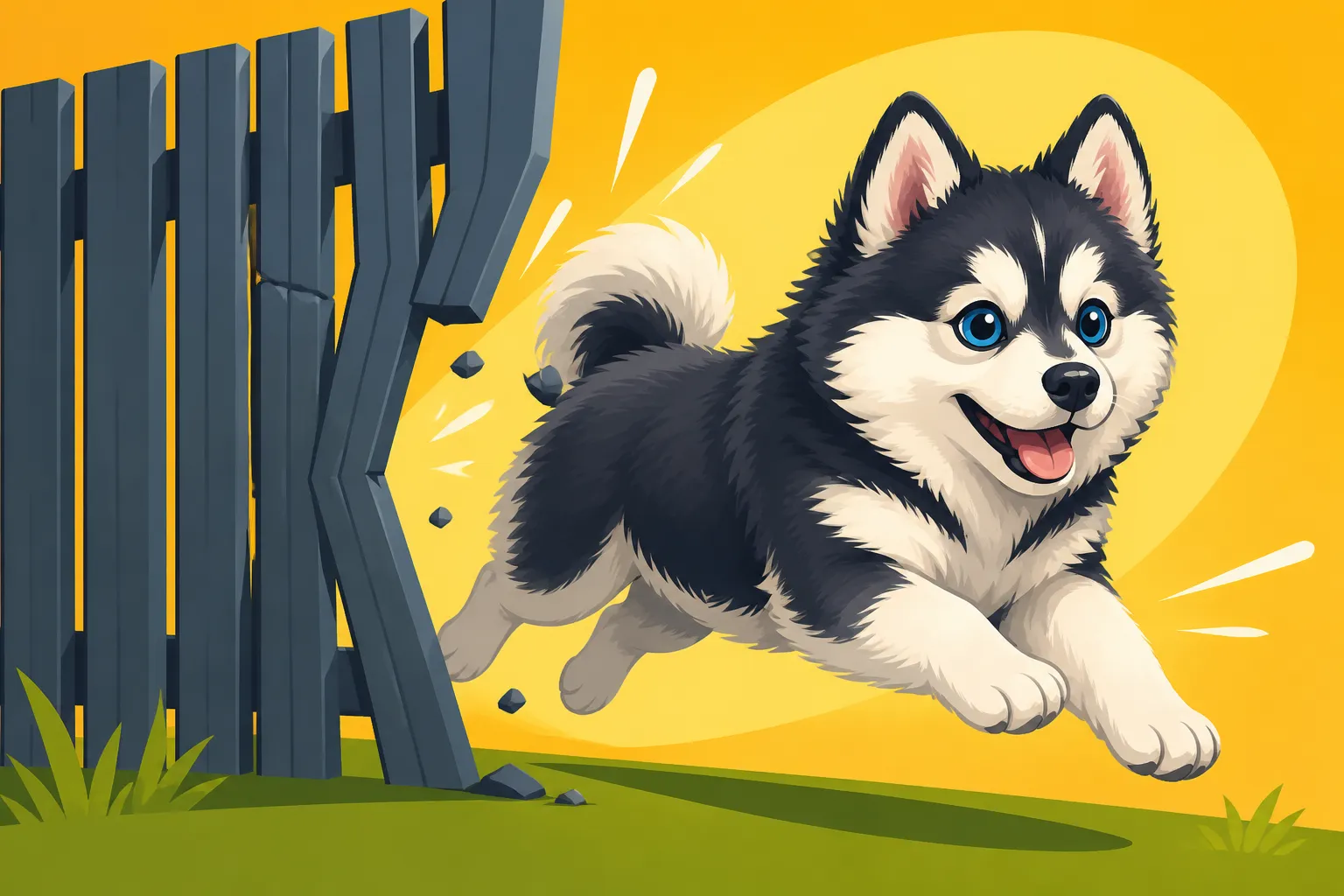
A twenty-pound Pomsky can clear fences that would challenge dogs twice their size, or dig with the determination of a badger. Their compact body allows them to squeeze through openings that seem impossibly small. Don't let their fluffy cuteness fool you; beneath that adorable exterior is a canine athlete with a strong will and an even stronger desire to explore. This combination is precisely why you need to approach containment and training with the same seriousness you would for a much larger, more traditionally "escape-prone" breed.
Common Escape Routes: Where Pomskies Find Freedom
Pomskies are resourceful, and they learn fast. Identifying their most common methods of escape is crucial to fortifying your home and yard. It's often the small, overlooked details that become their golden ticket to adventure.
Over the Top: The Jumping Pomsky
One of the most surprising things many Pomsky owners discover is just how high these dogs can jump. Don't underestimate the vertical leap of a motivated Pomsky! They often possess strong hindquarters from their Husky lineage and the lightweight agility from the Pomeranian, making them formidable jumpers. A standard four-foot fence, which might be perfectly adequate for many small breeds, can be little more than a suggestion for a determined Pomsky.
They might not always clear it in one graceful bound; sometimes it's a scramble, a parkour-like ascent using a nearby planter, a woodpile, or even a child's toy as a launchpad. If there's any object near the fence line, your Pomsky will view it as a stepping stone. They are problem-solvers, and getting "over the top" is a common solution to perceived confinement. For more detailed advice on this, you might find our article How Tall a Fence Stops a Pomsky helpful.
Under the Radar: The Digging Pomsky
Just as the Husky is known for its ability to clear fences, it's also famous for its love of digging. This isn't just a casual scratch; a Husky can excavate an impressive hole in a surprisingly short amount of time. Guess what? Many Pomskies inherit this very same trait. They might not be digging dens in the wild, but tunneling under a fence is a perfectly acceptable alternative when they crave freedom.
A Pomsky can spot a soft patch of earth or a loose board near the base of a fence and instinctively know it's a weak point. They'll use their strong paws and snouts to work away, creating a tunnel that might seem too small for them but is just right for their compact bodies. This is especially true if they are bored or seeking something interesting on the other side – a scent, a sound, or just the thrill of escape. Concrete footings or deeply buried wire can be effective deterrents, but without them, your yard becomes a potential minefield of escape tunnels.
Through the Cracks: The Door and Gate Houdini
This is where the Pomeranian's cleverness really shines through. Pomskies are often highly observant and learn human behaviors quickly. If they see you open a gate or a door, they understand the mechanism. They might not be able to turn a doorknob (though some particularly clever ones learn!), but they can certainly push against a slightly ajar door, squeeze through a closing gap, or nose their way past your legs as you enter or exit.
The "door dash" is a classic Pomsky move. You're bringing in groceries, grabbing the mail, or greeting a visitor, and in that split second, your Pomsky has bolted. It's not malicious; it's an opportunistic grab for freedom. Gates with flimsy latches or those left unlatched for "just a second" are also prime targets. They know that once they're through that opening, a world of smells and adventures awaits. This is why vigilance at every threshold is paramount, and why a solid, secure gate latch is worth its weight in gold.
The Problem with Standard Containment
Many common methods of dog containment that work for other breeds simply aren't enough for the clever and determined Pomsky. Relying on these standard approaches can lead to heartbreak and frustration.
Collars and Harnesses: Not Always Enough
A regular buckle collar is fine for attaching identification tags, but for actual restraint, especially with a dog prone to pulling or bolting, it can be woefully inadequate. Pomskies often have slender necks, and a determined pull can easily lead to them slipping out of a standard collar, especially if they panic. It's a terrifying moment when you watch your dog back out of their collar and dart into traffic.
Even many standard harnesses, while seemingly more secure, can fail. Some Pomskies are masters at wriggling, and a harness that isn't specifically designed for escape artists can be shimmied out of in seconds. They'll twist, contort, and pull until they're free. This is why finding the right gear is critical. As we discuss in Whether a Pomsky Slips a Collar and Whether a Pomsky Backs Out of a Harness, not all equipment is created equal when dealing with a truly determined escape artist. Look for harnesses with multiple points of adjustment and a secure, snug fit that makes it impossible for them to back out.
Invisible Fences: A Risky Bet
While invisible fences, which deliver a static correction if a dog crosses a boundary, seem like a convenient solution, they are generally not recommended for Pomskies, especially those with a strong escape drive. Here's why: firstly, a Pomsky's thick double coat can sometimes insulate them from the static correction, making the system less effective. But more importantly, the lure of chasing a squirrel, a bird, or simply the thrill of exploration can easily override the discomfort of the static shock for many Huskies and, by extension, many Pomskies.
Once they've "learned" that they can power through the shock for a moment of freedom, they'll likely do it again. The problem then becomes getting them to re-enter the yard. They might be deterred from coming back in by the same shock, leaving them stranded outside the safe zone. Furthermore, invisible fences don't protect your Pomsky from external threats like stray dogs, wildlife, or even people entering your yard. For a breed with a strong prey drive and an independent nature, relying solely on an invisible fence is a significant gamble. Our article Whether an Invisible Fence Holds a Pomsky goes into more detail on these risks.
Cracked-Open Doors and Gates: An Open Invitation
This is less about the equipment and more about human error, but it's a common and dangerous weakness. We've all done it: left the gate unlatched after mowing the lawn, propped the front door open for a moment while bringing in groceries, or forgot to double-check the back door after letting the kids out. For a Pomsky, these small oversights are enormous opportunities. They are constantly looking for an open window, metaphorically and literally.
A Pomsky's quickness means they can be through a cracked-open door before you've even registered their movement. They don't dilly-dally; they bolt. This necessitates a change in household habits. Every member of the family needs to be aware of the "Pomsky protocol" – doors and gates are always double-checked, and never left unsupervised. This seemingly simple step is often the most challenging to implement consistently, but it's vital for preventing escapes.
Prevention is Key: Fortifying Your Home and Yard
The best defense against a Pomsky escape artist is a proactive, multi-layered approach to security. You need to think like your Pomsky and anticipate their clever maneuvers.
Building the Great Wall: Fence Reinforcements
If you have a yard, your fence is your primary line of defense. Standard fencing is often insufficient. For jumpers, consider raising the fence height if possible, or installing "coyote rollers" or lean-ins at the top. These are angled extensions that prevent a dog from getting purchase to climb over. Even a 6-foot fence might not be enough if there's an easy launch point nearby. Make sure there's nothing your Pomsky can use to scale the fence, like stacked firewood, outdoor furniture, or even large snow drifts.
For diggers, you need to go beyond the surface. Burying chicken wire or a similar mesh horizontally along the fence line, extending about 1-2 feet inwards, can deter digging. Alternatively, pour a concrete footing under the fence. Regularly inspect your fence line for any signs of digging, loose boards, or weak spots. A small gap that might seem insignificant to you is a major invitation to a Pomsky. Remember, The Fence a Pomsky Actually Needs is often more robust than you might initially imagine.
Securing Every Exit: Door and Gate Protocol
Every door and gate in your home needs to be considered a potential escape route. Implement a strict "always latch, always lock" policy. For gates, consider double-locking mechanisms, or even adding a carabiner clip to ensure the latch can't be wiggled open. Inside the house, use baby gates or dog gates to create an additional barrier at front and back doors, especially when expecting visitors or bringing things in. This buys you precious seconds if your Pomsky tries to sneak out.
Train family members and guests to always ensure your Pomsky is safely contained in another room or on a leash before opening an exterior door. It takes a conscious effort, but it becomes second nature over time. Even a quick trip to the mailbox requires a moment of thought about your Pomsky's whereabouts. These diligent habits are your best line of defense against the opportunistic door-dash.
Supervised Outdoor Time: The Best Defense
Even with the most secure fence, no Pomsky should be left unsupervised in a yard for extended periods, especially if they have a history of escaping. Boredom, a tempting scent, or a passing critter can all trigger their escape drive. Supervised outdoor time means you are actively present, engaged, and aware of what your Pomsky is doing. This is not only safer but also provides an excellent opportunity for bonding and training.
During supervised time, you can work on recall in a secure environment, practice "leave it" commands, and reinforce good behavior. If you notice them sniffing intently at a fence line or starting to dig, you can intervene immediately. Think of your fenced yard as a large, safe training space rather than a containment solution that needs no oversight.
Training for a Reliable Recall and Impulse Control
A strong recall is the single most important command for any dog, but it is absolutely non-negotiable for a Pomsky with escape artist tendencies. This, coupled with impulse control, gives you the tools to manage their desire to roam.
Making Yourself More Interesting Than the Squirrel
For a Pomsky, the world is full of incredibly interesting things: squirrels, blowing leaves, the scent of a distant dog, that really cool discarded wrapper on the sidewalk. You need to compete with all of that for their attention. This means making yourself the most rewarding and exciting thing in their environment. Your voice, your treats, and your praise need to be irresistible. Start recall training in a low-distraction environment, like your living room. Use high-value treats – think small pieces of cheese, cooked chicken, or hot dogs – something they rarely get.
When you call their name and "Come!", make it a party. Get excited, clap your hands, use an upbeat tone. When they come, reward them instantly and lavishly. Gradually increase the distractions and the distance, always setting them up for success. Never punish them if they take a long time to come; just reward them when they eventually do, reinforcing the positive association with coming to you. Remember, a Pomsky is highly intelligent, but they are also Whether a Pomsky Is Stubborn or Independent, meaning consistency and high rewards are key.
The Power of Positive Reinforcement and High-Value Treats
Pomskies respond best to positive reinforcement. Harsh corrections or punishment can make them distrustful or even more determined to avoid you when called. Instead, focus on rewarding the behaviors you want to see. When they choose to look at you instead of bolting, reward them. When they come when called, throw a party! Use a varied array of treats, toys, and praise to keep them engaged and guessing.
Consider training platforms like BAXTER & Bella, which offer online training programs heavily focused on positive reinforcement and building a strong relationship with your dog. Their methods can be particularly effective for smart, independent breeds like the Pomsky, helping you understand how to motivate them without resorting to force. High-value treats are critical here; if your Pomsky is chasing a rabbit, a piece of dry kibble isn't going to cut it when you call them back. You need something truly irresistible to override that prey drive.
"Leave It" and "Stay": Essential Life Skills
"Leave It" is a command that teaches your Pomsky to ignore tempting distractions, whether it's a dropped piece of food, a squirrel across the park, or that exciting gap in the fence. Start by placing a low-value treat on the floor, covering it with your hand, and saying "Leave It." When your Pomsky looks away from the treat, reward them with a higher-value treat from your other hand. Gradually increase the difficulty, moving to uncovered treats, then objects they are tempted by, and eventually to real-world distractions.
"Stay" is equally important for those moments when you need your Pomsky to remain in place, such as when you're opening a door or gate. Practice this in short bursts, rewarding them for even a few seconds of staying, and gradually extending the duration and adding distance. These commands, while requiring patience and consistency, build a foundation of impulse control that can literally save your Pomsky's life.
Tools and Technology for the Escape-Prone Pomsky
In addition to training and physical barriers, several tools and technologies can provide extra layers of security and peace of mind for Pomsky owners.
Secure Leashes and Specialized Harnesses
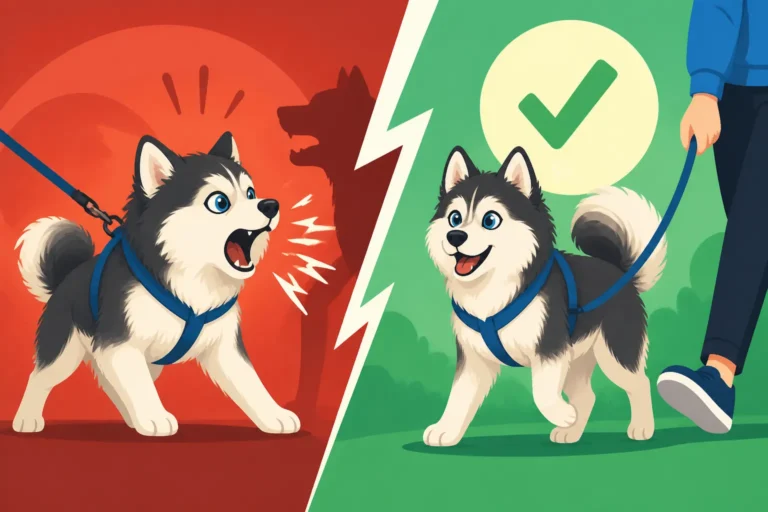
When you're out and about, a secure leash and harness are your primary connection to your Pomsky. Forget flimsy nylon leashes and harnesses that can slip. Look for a strong, durable leash, perhaps one made of biothane or heavy-duty nylon, with a robust clip. For harnesses, consider a Y-front harness that allows for full range of motion while providing a secure fit, or a "two-point" harness that clips both at the back and the chest, giving you better control and making it harder for them to back out. Some owners even prefer a combination of a collar and a harness, attaching separate leash clips to both for maximum security.
Brands like Ruffwear or Kurgo offer harnesses known for their durability and secure fit, often with features that make it harder for clever escape artists to wriggle free. Always ensure the harness is fitted snugly but comfortably, allowing two fingers to slip underneath but no more. A well-fitted harness from a reputable brand can make all the difference in preventing a spontaneous bolt. Why a Pomsky Should Wear a Harness is not just about comfort, but about security.
GPS Trackers: Peace of Mind on the Go
Despite your best efforts, escapes can happen. This is where a GPS tracker becomes an invaluable tool. These small, lightweight devices attach to your Pomsky's collar or harness and allow you to track their location in real-time via a smartphone app. This isn't a replacement for physical containment and training, but it's an excellent safety net. If your Pomsky does manage to slip away, you'll know exactly which direction they went and often their precise location.
Many trackers also offer features like virtual fences, alerting you if your dog leaves a designated safe zone, and activity monitoring. Brands such as Tractive or Whistle are popular options. While they come with a monthly subscription fee, the peace of mind they offer is priceless. Knowing that you have a higher chance of quickly locating your lost Pomsky can significantly reduce the panic of an escape situation. This aligns directly with the insights from Whether a Pomsky Should Have a GPS Tracker. These devices are readily available on platforms like Amazon.
Crate Training: A Safe Haven, Not a Prison
Crate training is an essential management tool for any dog, but it's particularly beneficial for a Pomsky. A properly crate-trained Pomsky views their crate as a safe, comfortable den, not a punishment. This gives you a secure place to put them when you can't actively supervise them, such as when guests are arriving, children are running in and out, or you need to step out for a short period. It eliminates the risk of them slipping out an open door or chewing on something dangerous due to boredom.
Choose a crate that is appropriately sized – large enough for them to stand up, turn around, and lie down comfortably, but not so large that they can soil one end and sleep in the other. Make it inviting with soft bedding and toys. Never use the crate as a form of punishment. Consistent, positive crate training makes it a valuable safety tool that contributes to your Pomsky's overall well-being and prevents accidental escapes.
| Escape Route Category | Specific Vulnerabilities | Recommended Reinforcements | Essential Training |
|---|---|---|---|
| Over the Top | Low fences, nearby objects | Higher fences, coyote rollers, remove climb aids | Recall, "Stay" |
| Under the Radar | Loose soil, gaps at base | Buried wire, concrete footings, regular inspection | "Leave It" |
| Through the Cracks | Unlatched doors/gates, human error | Double latches, baby gates, strict household protocol | Recall, "Stay" |
| Slip-Through Gear | Ill-fitting collars/harnesses | Secure, escape-proof harness, dual leash attachment | N/A |
What to Do When Your Pomsky Does Escape
Even with the most stringent precautions, a truly determined Pomsky might still manage to slip away. Knowing what to do in those terrifying first moments can significantly increase your chances of a swift reunion.
Immediate Steps for a Lost Pomsky
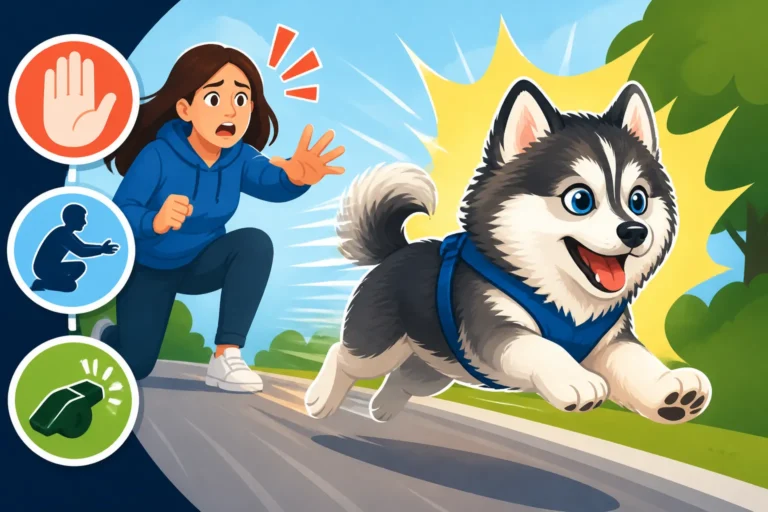
The moment you realize your Pomsky is gone, time is of the essence. Don't waste time panicking (easier said than done, I know!). Immediately start searching the immediate vicinity. Call their name loudly and clearly, using their favorite recall phrase and tone. Shake a bag of their favorite high-value treats or squeak a beloved toy. Many Pomskies, particularly those with a strong pack drive, will often not go far initially, especially if they hear familiar sounds.
Enlist help from anyone nearby. Assign specific directions for people to search, expanding outwards from the escape point. If you have another dog your Pomsky is bonded with, bring them along on a leash – their presence and scent might draw your Pomsky back. Leave a familiar scent item, like their bed, a worn piece of your clothing, or their favorite toy, near the escape point, along with a bowl of water. Your Pomsky might return to this scent anchor. Our guide What to Do When a Pomsky Bolts offers an in-depth action plan for these stressful situations.
Spreading the Word: Community and Social Media
If your immediate search isn't successful, it's time to leverage your community. Create a "Lost Dog" poster with a clear, recent photo of your Pomsky, their name, your contact information, and any distinguishing features. Distribute these posters widely in your neighborhood, at local veterinary clinics, groomers, and pet supply stores. Offer a reward to incentivize people to actively look for your dog.
Crucially, utilize social media. Post on local lost pet groups, neighborhood forums, and your personal pages. Include the same information as your poster, plus the last known location and direction of travel. Many communities have dedicated Facebook groups for lost and found pets, which can be incredibly effective. Ask friends and family to share your post widely. The more eyes looking, the better your chances.
Reuniting and Re-evaluating Your Security
When your Pomsky is found (and with vigilance, they usually are!), the relief is immense. But the work doesn't stop there. Once they are safely back home, it's critical to re-evaluate your entire security system. Try to determine how they escaped. Was it a new gap in the fence? Did someone leave a gate open? Did they slip out of their collar? Every escape is a learning opportunity to strengthen your defenses.
This might mean investing in new, more secure fencing, reinforcing gate latches, or upgrading to an escape-proof harness. It also means redoubling your training efforts, especially on recall and door manners. An escape, while terrifying, can be a powerful reminder of how vigilant we need to be with these clever, adventurous dogs. It reinforces the fact that our tiny Pomsky is indeed a twenty-pound escape artist, and we need to be equally artistic in our containment strategies.
Disclaimer
This article is for general informational purposes only and does not constitute professional advice. Laws, prices and regulations vary by location and change over time. Consult a qualified professional for guidance on your specific situation.