Whether a Pomsky Backs Out of a Harness
It's a fear every Pomsky parent knows well: that sudden jolt, the sickening feeling as your clever, wriggly dog manages to back right out of their harness, leaving you holding an empty strap and them, potentially, bolting into traffic or disappearing into the distance. This isn't just a fleeting worry; it's a very real challenge many Pomsky owners face due to their unique build and innate intelligence. This guide will walk you through why Pomskies are so adept at this Houdini-like feat and how you can choose and properly fit a harness that keeps your precious companion safely by your side.
Understanding Your Pomsky's Escape Tendencies
Pomskies are a fascinating mix, inheriting traits from both the Siberian Husky and the Pomeranian. This genetic blend gives them their adorable looks, but also some characteristics that can make them prime candidates for harness escapes. It's not about being naughty; it's about their physical design and instinctual drives.
Their Unique Physique and Coat
Think about a Husky's sleek, powerful build – deep chest, narrow hips, and often a very flexible spine. Now imagine that on a smaller scale, sometimes with a dense, fluffy Pomeranian coat adding visual bulk without actual substance. This combination often means a Pomsky has a relatively deep, barrel chest but a much smaller neck circumference, making standard harnesses tricky to fit. Many harnesses are designed with a more uniform body shape in mind, not the "V" or "hourglass" shape a Pomsky often presents.
When a Pomsky pulls forward, a poorly fitting harness might feel snug. But the moment they stop, drop to the ground, or back up with intent, that loose neck strap can often be slipped over their head with surprising ease. Their dense double coat also plays a role. While beautiful, it can compress, making a harness that seemed tight suddenly feel a little looser, especially after a good shake or a few steps. This compression gives them just enough wiggle room to start their escape maneuver.
The Ancestral Drive to Explore
Both parent breeds contribute to a Pomsky's adventurous spirit, which can sometimes manifest as a strong desire to explore. Huskies are notorious escape artists, known for their ability to jump fences, dig under them, and open gates. This innate wanderlust, combined with high intelligence and problem-solving skills, translates directly to many Pomskies. They are curious creatures who are always on the lookout for new scents and experiences.
If something exciting catches their attention – a squirrel, another dog, or just an interesting smell – their immediate instinct might be to pull or even back out of whatever is holding them to pursue it. It's not malicious; it's their heritage. They are driven by an instinct to roam, and if a harness feels restrictive or they sense an opportunity, they will absolutely try to free themselves. This is why a simple leash walk can quickly turn into a heart-stopping chase if your Pomsky isn't secured properly. You might find yourself researching The Pomsky Escape Artist in a Twenty Pound Body to understand their dedication to freedom.
Why Many Harnesses Fail the Pomsky Test
It's not always the Pomsky's fault; often, the harnesses themselves aren't designed with these unique escape tactics in mind. The market is flooded with various types, but not all are created equal, especially for a dog as agile and clever as a Pomsky.
Design Flaws and Improper Fit
Many common harness designs, particularly those with a single strap across the chest or a Y-shaped front, can be problematic for a Pomsky. While they might prevent pressure on the trachea (which is good, as a Pomsky can inherit a delicate windpipe, as discussed in The Collapsing Trachea a Pomsky Gets From the Pomeranian), they often lack security around the neck and ribs.
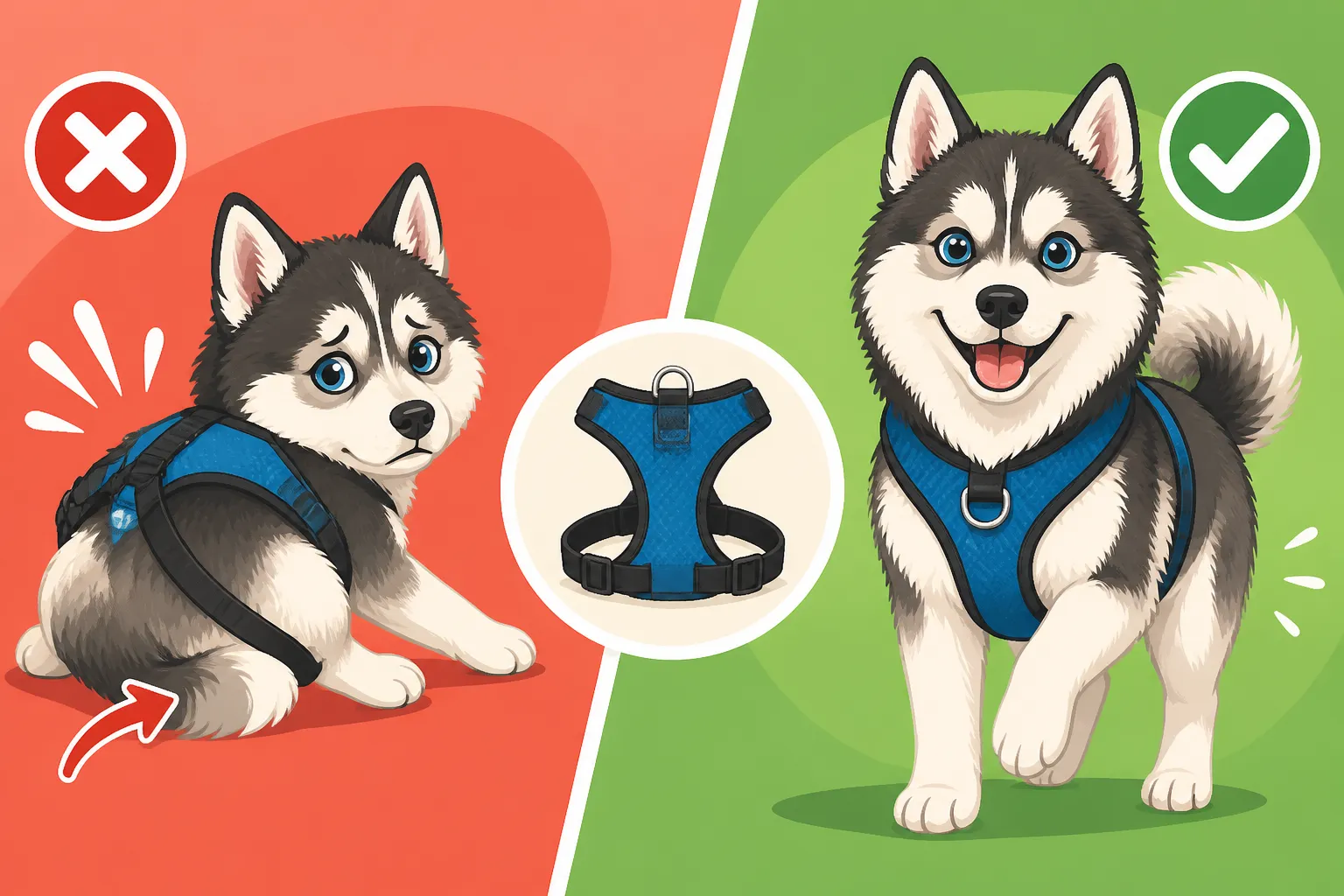
Consider a standard H-style harness. It has a loop around the neck and another around the girth, connected by a strap along the back and sometimes the chest. If the neck loop is too loose – which is common if you size based only on girth – a Pomsky can easily pull their head back, slip their shoulders through, and be free. The same goes for the girth strap; if it’s too far forward or too loose, they can compress their chest and slide out. Their deep chest means the girth strap needs to sit well behind the front legs to prevent chafing, but not so far back that they can wiggle out of it easily. It's a delicate balance.
The Limitations of Generic Sizing
One of the biggest frustrations for Pomsky owners is finding a harness that fits properly. They aren't a standardized breed with predictable dimensions. A Pomsky can range from a tiny 8-pound fluffball to a stockier 30-pound miniature Husky. This means that generic "small," "medium," or even breed-specific sizing charts often don't account for the unique proportions of a Pomsky. You might find a harness that fits around their chest perfectly, but the neck opening is far too wide, or vice-versa.
Many harnesses are designed for breeds with flatter chests and broader necks, or those that don't possess the same flexibility and determination to escape. Trying on a harness in a store or ordering online can be a gamble, leading to a drawer full of unused gear. The frustration is real when you've spent money on what looked like a good option, only to realize it's just another escape route waiting to happen. The goal is to find something that fits like a second skin, without being restrictive or uncomfortable for your dog.
Selecting and Fitting an Escape-Proof Harness
Since a Pomsky can often Whether a Pomsky Slips a Collar or back out of a standard harness, finding the right gear is paramount. It’s about more than just a brand name; it’s about specific design features that address their unique escape artist capabilities.
Key Features to Look For
When searching for a truly escape-proof harness for your Pomsky, you want to prioritize designs that offer multiple points of adjustment and a secure fit around both the neck and the chest/rib cage. Look for what are often called "triple-strap" or "two-point" harnesses. These typically feature an additional strap around the waist or a very secure, adjustable neck and girth strap system that prevents them from backing out.
Here are some features to consider:
- Multiple Adjustment Points: A harness should have at least two points of adjustment around the neck/chest area and two more around the girth. This allows for a truly customized fit for your Pomsky's specific proportions.
- Narrower Neck Opening: The neck opening should be snug enough that it cannot easily be slipped over their head when they pull back. However, it must not choke them when they are walking forward.
- Girth Strap Placement: The strap around the rib cage should sit a few inches behind the front legs to prevent chafing, but still be tight enough that they can't compress their chest and slide out.
- Durable, Non-Stretchy Materials: Opt for harnesses made from strong, non-stretchy nylon webbing or similar robust materials. Avoid elasticated sections that can give them the extra inch they need to escape.
- Secure Buckles and Fasteners: All buckles should be sturdy and made of high-quality plastic or metal, with secure locking mechanisms.
- Front-Clip Option (Optional but helpful): While not directly escape-proof, a front-clip attachment point on the chest can help deter pulling, which can reduce the initial momentum a dog uses to back out of a harness.
When shopping, popular online retailers like Amazon offer a vast selection of harnesses, often with customer reviews that can highlight how well certain designs work for "escape artists" or deep-chested breeds. Always check the return policy, as you may need to try a few styles before finding the perfect match.
The Importance of a Custom-Like Fit
Even the best-designed escape-proof harness is useless if it doesn't fit correctly. A custom-like fit is absolutely crucial. You should be able to fit two fingers comfortably between the harness straps and your Pomsky's body. Any more than that, and it's too loose; any less, and it's too tight and uncomfortable.
Here's a quick guide to fitting:
- Measure Accurately: Before buying, measure your Pomsky's neck circumference (where a collar would sit) and their chest girth (the widest part of their rib cage, usually just behind the front legs). Compare these measurements to the manufacturer's sizing chart.
- Adjust Neck First: Start by adjusting the neck strap so it's snug but not restrictive. You should be able to easily slide two fingers under it.
- Adjust Girth Second: Then, adjust the girth strap, again allowing for two fingers underneath. Ensure it sits well behind the elbows to prevent rubbing.
- Check All Straps: Wiggle the harness around. Have your Pomsky walk, sit, and lie down. See if any straps shift excessively or become loose. If your Pomsky backs up, try to gently replicate a backing-out motion to see if they can slip free.
- Consider Brands with Multiple Adjustments: Some brands specialize in harnesses that offer exceptional adjustability, making them suitable for hard-to-fit breeds. You might also look into custom harness makers if you truly can't find an off-the-shelf solution.
Remember, a snug fit is your best defense against an escape. It's an investment in your peace of mind and your Pomsky's safety.
Training and Safety Measures Beyond the Harness
While selecting the right harness is a huge step, it's just one part of keeping your Pomsky safe. Training, vigilance, and essential backup measures are equally important for preventing a runaway situation.
Acclimating Your Pomsky to Their New Gear
A new harness can feel strange to your Pomsky, especially if they're used to a different type. Rushing the introduction can lead to them trying even harder to get it off. Patience is key.
Start by letting your Pomsky sniff and investigate the new harness. Offer treats for positive interaction. Then, gently put the harness on for short periods indoors, praising and rewarding them. Let them wear it for a few minutes while you play or feed them, then take it off. Gradually increase the duration. Before you take them outside, practice attaching the leash and walking around the house. This positive association helps them accept the harness as a normal part of their routine. Teaching a Pomsky to Be Brushed is another area where early, positive acclimation makes a huge difference, much like with harness training. If you're looking for structured guidance on this and other training, online programs like BAXTER & Bella offer comprehensive resources for introducing new experiences and building positive behaviors with your puppy or adult dog.
Essential Backup Strategies
Even with the perfect harness and diligent training, it’s always wise to have backup safety measures in place. Pomskies are clever, and accidents can happen.
- Microchipping and ID Tags: This is non-negotiable. Ensure your Pomsky is microchipped and that your contact information is always up-to-date with the chip registry. A durable ID tag on their collar (worn in addition to the harness for walks) with your current phone number is also vital. This simple tag can be the fastest way for someone to contact you if your dog gets lost. You can learn more about this in Whether a Pomsky Should Be Microchipped Immediately.
- Dual Leashing: For high-risk areas or dogs with a strong escape history, consider dual leashing. This involves attaching one leash to their harness and a second, lighter leash to a flat collar. If they manage to slip the harness, you still have the collar as a backup.
- Reliable Recall Training: A strong recall is your ultimate safety net. Even if they do manage to slip free, knowing they will come back to you on command is invaluable. Work on this in low-distraction environments first, using high-value treats and enthusiastic praise. Gradually increase distractions. Remember, a Pomsky can be independent, so consistent, positive reinforcement is key to Building a Recall a Pomsky Answers.
- Situational Awareness: Always be aware of your surroundings when walking your Pomsky. Anticipate potential triggers like squirrels, other dogs, or loud noises that might cause them to startle or pull. Keep your leash short but loose in busy areas, and maintain a firm grip.
- Secure Environment: Beyond walks, ensure your home and yard are secure. Pomskies are known for their ability to jump and dig. If you have a yard, consider The Fence a Pomsky Actually Needs to prevent escapes.
Here's a comparison of common harness types and their suitability for a Pomsky:
| Harness Type | Description | Pros for Pomskies | Cons for Pomskies | Escape-Proof Rating (1-5, 5 best) |
|---|---|---|---|---|
| Standard H-Harness | Single neck loop, single girth loop, connected by straps. | Easy to put on, generally comfortable. | Neck loop often too loose, easy to back out of. | 1 |
| Y-Front Harness | Straps form a 'Y' over the chest, distributing pressure. | Good for trachea, comfortable for many dogs. | Still susceptible to backing out if neck/girth loose. | 2 |
| Step-In Harness | Dog steps into two leg holes, then clips on back. | Simple design, good for dogs who dislike things going over head. | Often very easy to back out of, minimal security. | 1 |
| Freedom No-Pull Harness | Girth strap sits further back, front clip, martingale loop on back. | Good for controlling pulling, harder to back out. | Requires proper fitting; back loop can still be slipped if not snug. | 3-4 |
| Balance Harness (2/3-Point) | Multiple adjustable straps, often with a neck and two girth straps. | Highly adjustable, very secure, difficult to back out of. | Can be more complex to put on, potentially bulkier. | 4-5 |
| Wonder Harness / Anti-Escape | Features an extra strap around the waist/abdomen for added security. | Specifically designed to prevent escapes, very secure. | Can be perceived as more restrictive, may need acclimation. | 5 |
By understanding your Pomsky's unique traits and carefully selecting and fitting the right harness, coupled with consistent training and backup safety measures, you can significantly reduce the risk of them performing their infamous escape act. Your goal is to make every walk a joy, not a heart-stopping adventure!
Disclaimer
This article is for general informational purposes only and does not constitute professional advice. Laws, prices and regulations vary by location and change over time. Consult a qualified professional for guidance on your specific situation.