Whether a Pomsky Bullies Smaller Dogs
It’s a truly valid concern for many Pomsky owners: you adore your energetic, charming little fluffball, but then you see them interact with a truly tiny dog, perhaps a Chihuahua or a toy poodle, and you start to wonder if their playful exuberance is actually tipping over into something more assertive, maybe even a little bit bully-ish. It's a tricky line to navigate, especially with a breed mix like the Pomsky that carries such a potent blend of personality from their Siberian Husky and Pomeranian parents. This guide is here to help you understand the nuances of Pomsky behavior around smaller dogs, recognize the warning signs, and equip you with the tools to ensure all interactions remain positive and safe for everyone involved.
Understanding the Pomsky's Temperamental Mix
The Pomsky is a captivating blend, and that blend includes a complex array of inherited traits that can significantly influence how they interact with other dogs, particularly those much smaller than themselves. It's not about good or bad, but about understanding their inherent wiring.
The Husky Influence: Energy and Independence
From their Siberian Husky lineage, Pomskies often inherit a robust energy level, a strong prey drive, and a deeply independent spirit. Huskies are powerful, playful dogs, often accustomed to interacting with dogs of similar size and strength. When a Pomsky carries this genetic blueprint, they might approach a smaller dog with the same boisterous energy they'd use with a full-sized Husky, not fully grasping the size disparity. This isn't malicious; it's often just a lack of understanding or an overwhelming urge to play in a way that feels natural to them. They might inadvertently bowl over a smaller dog, or their play style—which might include nipping, pawing, or body-slamming—could be completely overwhelming and frightening to a tiny companion. This can be especially true if they haven't been properly socialized from a young age to understand appropriate play boundaries with a variety of dog sizes. The Prey Drive a Pomsky Gets From the Husky is a really important read here, as that drive can be misdirected if not managed.
The Pomeranian Influence: Big Dog in a Small Body Syndrome
Then there's the Pomeranian side of the family. Don't let their small stature fool you; Pomeranians are often feisty, confident, and can have a surprisingly strong personality. They often carry what's affectionately known as "big dog in a small body" syndrome, meaning they don't always back down and can even be quite assertive with larger dogs. When this confidence is combined with the Husky's physical capabilities in a Pomsky, you can end up with a dog that is both physically capable of dominance and mentally inclined to assert themselves. This can sometimes manifest as resource guarding, excessive barking, or a general "bossy" attitude, especially if they perceive a smaller dog as something to be managed or even dominated. It’s crucial to remember that while adorable, a Pomsky isn't just a fluffy toy; they're a dog with complex instincts.
The Role of Early Socialization and Environment
No matter their genetic predispositions, a Pomsky's early experiences play a huge role in shaping their behavior. A puppy that wasn't exposed to a variety of dogs of different sizes, temperaments, and breeds during their critical socialization period (roughly 3-16 weeks) might not learn the subtle cues required for polite interaction. If they're only ever played with by similarly sized dogs, they won't learn to temper their play for a tiny dachshund or a delicate Cavalier King Charles Spaniel. Similarly, their home environment and how you manage interactions are paramount. If your Pomsky learns that pushing boundaries with smaller dogs gets them what they want, or if interactions are consistently unsupervised, problematic behaviors can easily take root and become habitual. Raising a Pomsky Puppy really delves into this critical early period.
Distinguishing Between Playful and Problematic Behavior
It's easy to misinterpret dog interactions, especially when your heart is telling you your Pomsky is just "playing." But there's a world of difference between appropriate, mutually enjoyable play and bullying. Learning to read the subtle (and sometimes not-so-subtle) cues is vital.
Red Flags in Interaction
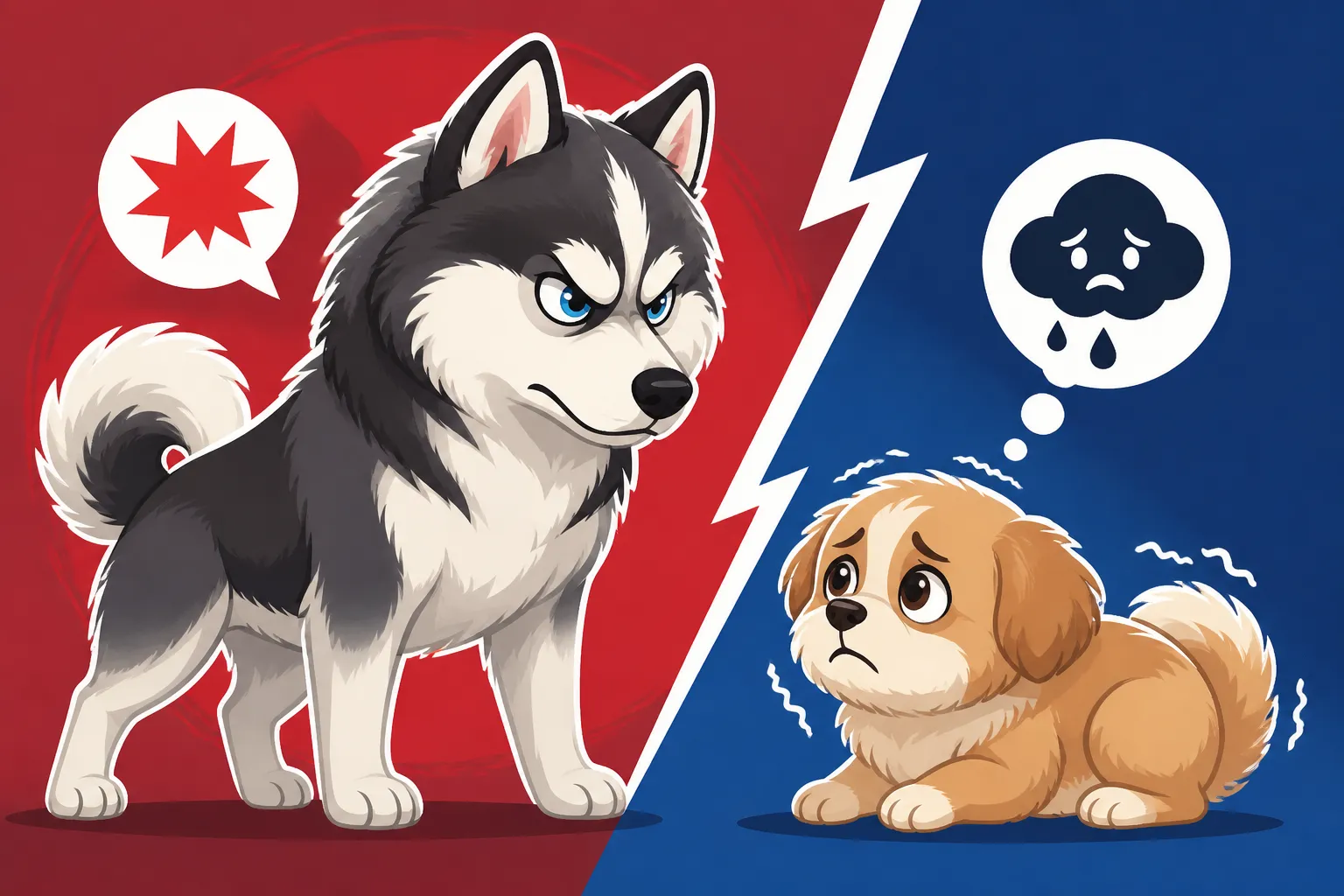
True play is reciprocal. Both dogs should be engaging, taking turns, and showing relaxed body language. When a Pomsky is bullying, the interaction becomes one-sided. Look for these red flags:
- Relentless pursuit: Is your Pomsky constantly chasing the smaller dog without giving them a break, even when the smaller dog is trying to disengage or hide?
- Excessive pinning or body slamming: While some rough-and-tumble is normal, if your Pomsky is repeatedly pinning the smaller dog down, standing over them, or body-slamming them without the smaller dog initiating or reciprocating, it's a concern.
- Ignoring distress signals: Is the smaller dog cowering, yelping, tucking their tail, trying to escape, or showing other signs of fear or stress (lip-licking, yawning, whale eye), and your Pomsky continues their behavior? This is a major red flag.
- Resource guarding: Does your Pomsky become possessive over toys, food, or even you when a smaller dog is around, displaying growling, snapping, or blocking behavior?
- Mouthiness that's too hard: Play biting should be inhibited. If your Pomsky is mouthing the smaller dog too hard, causing yelps, or leaving marks, it’s not appropriate.
Reading Body Language: Both Ways
Understanding canine body language is your superpower in these situations. Pay close attention to both dogs:
- The Pomsky's Body Language: Are they stiff, staring intently, with a high, wagging tail that's stiff or frantic rather than loose and flowing? Are their ears pinned back, or are they showing a "hard" gaze? These can indicate dominance or intensity, not just play. A truly playful Pomsky will often have a loose, wiggly body, a relaxed open mouth, and perform "play bows."
- The Smaller Dog's Body Language: This is often the most telling. Look for signs of stress or fear: tucked tail, ears back, panting even when not hot, lip-licking, yawning, turning away, trying to hide, whining, yelping, or even freezing in place. If the smaller dog is consistently trying to get away or seems uncomfortable, your Pomsky is likely being too much for them. Remember, a smaller dog's yelp isn't always a part of play; it's often a genuine sign of distress.
When Play Escalates
Sometimes, play starts out fine but quickly escalates. This is common with high-energy dogs. What begins as a fun chase can turn into a relentless pursuit, or a gentle wrestle becomes overly physical. It’s vital to intervene before it gets out of hand. Think of it like children playing: you step in when one child is clearly no longer having fun or when the game becomes too rough. With dogs, it's no different. Keep a close eye on the energy levels and ensure there are natural breaks. If one dog consistently tries to disengage and the other doesn't respect that, it's no longer healthy play.
Here's a quick comparison of healthy vs. bullying behaviors:
| Feature | Healthy Play | Bullying Behavior |
|---|---|---|
| Reciprocity | Both dogs engage, take turns, initiate play. | One-sided; one dog dominates the interaction. |
| Body Language | Loose, bouncy, relaxed, play bows, open mouth. | Stiff, intense gaze, tense muscles, often standing over. |
| Duration | Natural breaks, pauses, dogs disengage easily. | Relentless pursuit, no breaks, ignores disengagement. |
| Vocalizations | Happy barks, growls that don't indicate aggression, playful yelps. | Distress yelps from smaller dog, persistent growling/snapping from Pomsky. |
| Engagement | Both dogs seem to enjoy the interaction. | Smaller dog shows fear, tries to escape, hides. |
| Power Dynamics | Fluid, dogs switch roles of chaser/chased. | Consistent dominance by the Pomsky (pinning, blocking). |
Preventative Measures and Training for Harmony
Preventing bullying behavior is far easier than correcting it once it's entrenched. This involves a proactive approach to training, socialization, and supervision.
Supervised Interactions and Safe Spaces
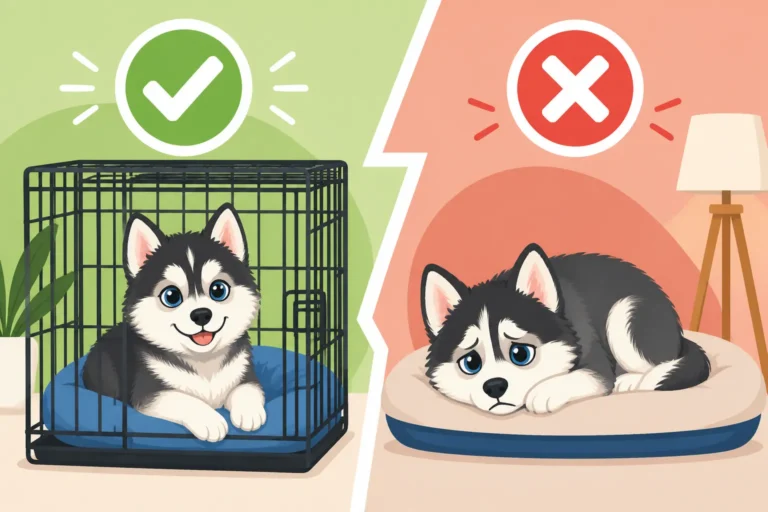
The golden rule for Pomskies and smaller dogs is: always supervise. This means actively watching, not just being in the same room. Be ready to step in at a moment's notice. For very small dogs, especially puppies, consider separate play sessions or even management tools like baby gates or crates to create safe zones. A playpen can be a wonderful way for a smaller dog to observe and interact safely from a distance before direct interaction. If you have resident smaller pets, make sure they have elevated spaces or escape routes your Pomsky cannot access. A Pomsky in a House With Children offers good advice on managing different members of the household, which can be extended to smaller furry residents.
Consistent Training and Boundaries
This is where positive reinforcement training really shines. A well-trained Pomsky with a solid foundation of obedience is much less likely to engage in bullying.
- Recall: A strong recall is your most important tool. If your Pomsky is getting too rough, you need to be able to call them away instantly. Practice this in increasingly distracting environments. Recall on a Pomsky Bred From a Dog That Runs is absolutely essential reading for any Pomsky owner.
- "Leave It" and "Drop It": These cues are invaluable for preventing resource guarding or redirecting your Pomsky if they become fixated on a smaller dog or object.
- "Go to Mat/Place": Teaching your Pomsky to settle on a designated mat or bed can provide a fantastic "off switch" during overexcitement, allowing the smaller dog a break.
- Impulse Control: Games that teach impulse control (like "wait" for food, or waiting at the door) can help your Pomsky learn to control their urges, which translates to better behavior around smaller dogs. Many online training platforms, like BAXTER & Bella, offer comprehensive puppy and dog training programs that focus heavily on these foundational skills in a positive way.
Remember, Pomskies can be quite Whether a Pomsky Is Stubborn or Independent, so consistency and high-value rewards are key to keeping them engaged in training.
Proper, Managed Socialization
Socialization isn't just about letting your dog "meet" other dogs. It's about controlled and positive exposure to a wide variety of stimuli, including different dog sizes, from a young age.
- Puppy Classes: Enroll your Pomsky puppy in well-run puppy classes that emphasize appropriate play and bite inhibition with dogs of various sizes. A good instructor will monitor interactions and intervene when necessary.
- "Friend" Playdates: Arrange playdates with calm, well-socialized dogs of different sizes, especially those known to be good at communicating boundaries gently.
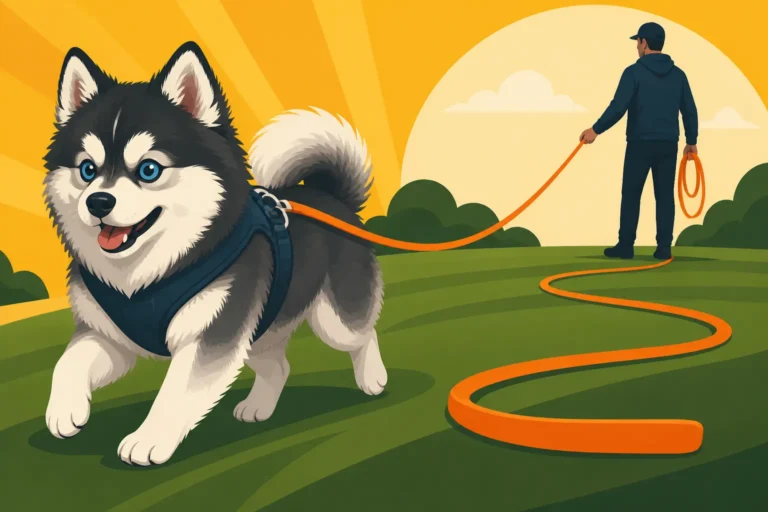
- Leash Introductions: When introducing your Pomsky to a new, smaller dog, keep both on leashes initially in a neutral territory. Allow brief, polite sniffing, then separate. Gradually increase the duration as long as both dogs are comfortable. You can find excellent quality harnesses and leashes for safe, controlled walks on platforms like Amazon, ensuring you have the right gear to manage your Pomsky effectively.
- Avoid Dog Parks (Initially, and with Caution): Dog parks can be chaotic and aren't always the best place for a Pomsky to learn polite manners with small dogs, especially if they have a tendency to be overbearing. If you do go, choose quieter times and be vigilant. Whether a Pomsky Is Safe at a Dog Park covers this in more detail.
Intervention Strategies When Things Get Too Much
Despite all your best efforts, there will be times when you need to step in. Knowing when and how to intervene is crucial for preventing negative experiences for both dogs.
When to Step In: Don't Wait Too Long
The moment you notice those red flags or the smaller dog showing signs of distress, it's time to intervene. Don't wait for a growl or a yelp. Early intervention teaches your Pomsky that you are in charge of managing interactions and that overly rough play is not acceptable. It also prevents the smaller dog from having a truly negative, potentially traumatizing experience. Your goal is to interrupt the behavior, create distance, and redirect your Pomsky to a more appropriate activity.
Effective Correction and Redirection
When you need to intervene, do so calmly and assertively, without yelling or punishing your Pomsky, which can create fear and anxiety.
- Interrupt: Use a clear, firm verbal cue like "Enough!" or "Break!" or a sharp clap of your hands. Sometimes a sudden, loud noise is enough to get their attention.
- Create Distance: Physically separate the dogs. This might mean gently but firmly taking your Pomsky by their harness or collar and leading them away, or stepping between the two dogs to create a buffer. Have a leash handy if needed.
- Redirection: Once separated, redirect your Pomsky to an appropriate activity. This could be a short training session (asking for sits, downs), a puzzle toy, or a chew that they enjoy. The idea is to shift their focus from the inappropriate interaction to something positive and calming.
- Time Out (If Needed): If your Pomsky is overly excited and struggles to calm down, a brief time-out in a crate or a separate room can be effective. This isn't a punishment, but a chance for them to decompress and learn that rough play leads to an end of fun.
It’s about teaching them what to do rather than just what not to do.
Seeking Professional Guidance
If you find that your Pomsky's bullying behavior is persistent, escalating, or you feel overwhelmed, don't hesitate to seek professional help. This isn't a sign of failure; it's a responsible step towards ensuring your dog's well-being and the safety of other animals.
- Certified Professional Dog Trainer (CPDT-KA): A trainer specializing in positive reinforcement and behavior modification can assess your Pomsky's specific issues and develop a tailored training plan. They can also help you read dog body language more accurately. Whether a Pomsky Needs a Professional Trainer is a good resource here.
- Veterinary Behaviorist (DACVB): For more severe cases of aggression, fear, or persistent bullying that might have a medical or deeply ingrained behavioral component, a veterinary behaviorist is a veterinarian with specialized training in animal behavior. They can prescribe medication if necessary and work in conjunction with a trainer.
Your Pomsky is a wonderful companion, and with the right understanding, training, and management, they can learn to interact politely and safely with dogs of all sizes. It just takes patience, consistency, and a keen eye on their interactions.
Disclaimer
This article is for general informational purposes only and does not constitute professional advice. Laws, prices and regulations vary by location and change over time. Consult a qualified professional for guidance on your specific situation.