Whether a Pomsky Digs the Yard
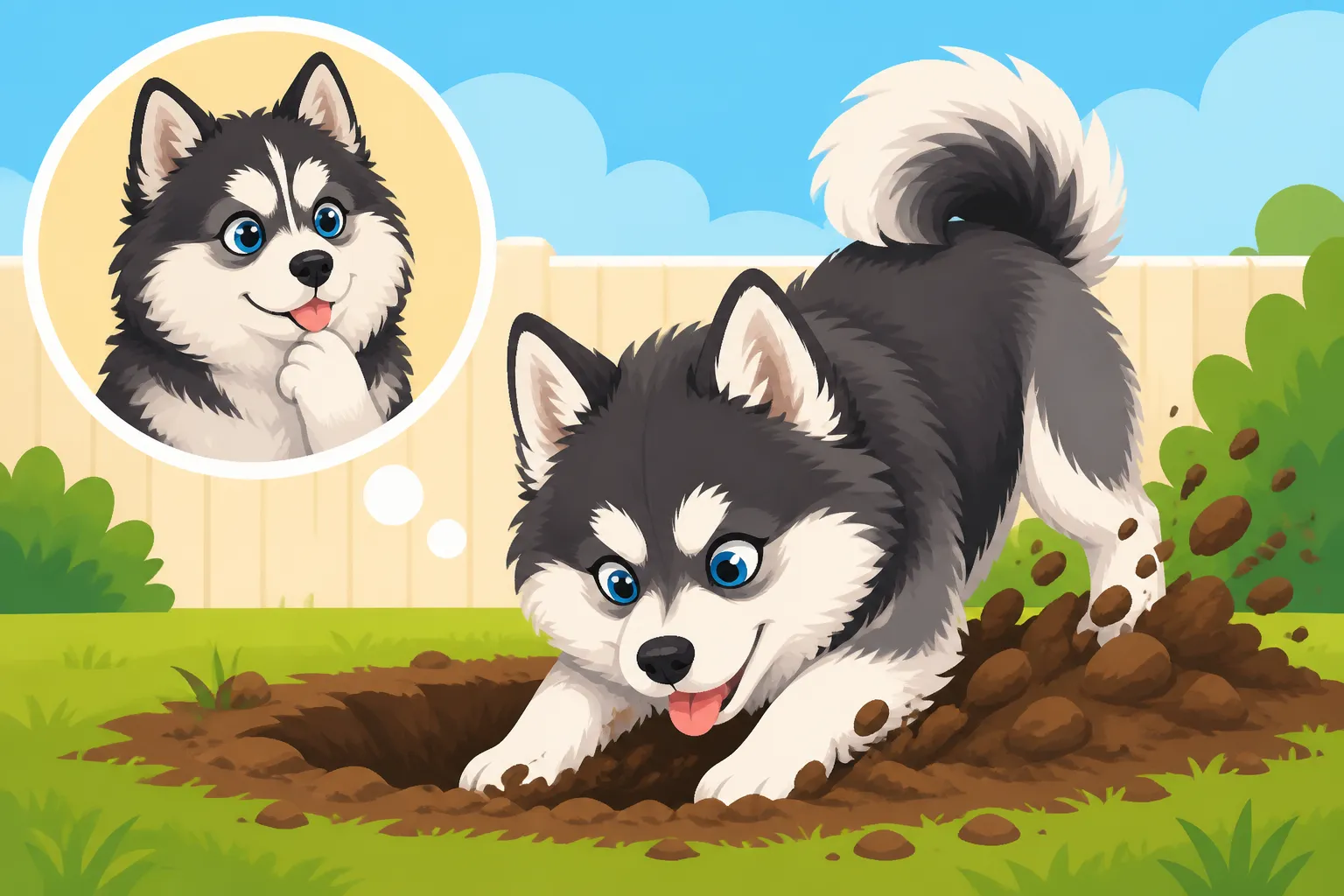
Oh, the joy of stepping into your beautifully manicured yard only to find a fresh, tell-tale crater where your prized petunias once stood, with your sweet Pomsky looking up at you, tail wagging, completely oblivious to the devastation. It’s a classic Pomsky parent moment, isn't it? That innocent face belies a powerful, instinctual urge to dig, and many of us find ourselves wondering if our furry friend is trying to tunnel to China. This guide is here to shed light on why your charming Pomsky might be turning your yard into a lunar landscape and, more importantly, what you can realistically do about it.
The Deep-Rooted Instinct to Dig in Pomskies
It’s easy to get frustrated when your Pomsky starts redecorating your garden with holes, but understanding why they do it is the first step toward a peaceful coexistence with their natural instincts. Remember, your Pomsky is a blend of two fascinating breeds: the Siberian Husky and the Pomeranian. While Pomeranians aren't typically known for extensive digging, the Husky side brings a strong, undeniable genetic predisposition to this behavior. They're not doing it to spite you; they're simply being dogs, drawing on thousands of years of ancestral wisdom.
Think about the Siberian Husky's origins. They were bred for endurance and survival in harsh, cold climates. Digging served multiple, vital purposes for them. They'd dig to create shelters from the wind and snow, effectively building their own little insulated den. In warmer weather, a shallow pit could offer a surprisingly cool spot to lie in, providing relief from the sun-baked ground. This isn't just a quirky habit; it’s a survival mechanism hardwired into their DNA, and it often manifests strongly in Pomskies, even in a cozy suburban backyard. It's a primal urge, far removed from the modern comforts of a dog bed, that still resonates deeply within them.
This inherent drive means that no matter how comfortable your Pomsky is indoors, or how plush their dog bed, the urge to dig in the yard will likely emerge at some point. It’s not a sign of poor training or unhappiness, but rather an expression of their heritage. You're not fighting against bad behavior as much as you're trying to redirect a deeply ingrained instinct. That's why simply telling them "no" often feels like shouting into the wind – they don't understand why this natural behavior is suddenly forbidden. It's a bit like asking a bird not to fly; it's simply what they're built to do.
Understanding the Different Reasons Why Your Pomsky Digs
Digging isn't a monolithic behavior; it comes in many forms, each driven by a distinct motivation. To effectively manage your Pomsky's digging habits, you first need to play detective and figure out why they're excavating your yard. Is it an urgent escape mission, a quest for comfort, a hunt for buried treasure, or just plain boredom? Each type of digging requires a different approach, and mistakenly addressing one motivation with a solution for another will likely leave you with more holes and a confused pup.
The Escape Artist's Tunneling Project
One of the most frustrating and potentially dangerous reasons a Pomsky digs is to escape. Like their Husky ancestors, Pomskies can be surprisingly adept at finding weaknesses in a fence line. They’re smart, determined, and possess a remarkable ability to assess their surroundings for potential breaches. A fence that seems perfectly secure above ground might just be an invitation to tunnel underneath for a curious Pomsky. This isn't just about exploring; it's about following an instinct to roam and investigate beyond their perceived boundaries.
You might notice this type of digging happening right along the fence line, often in the same spots repeatedly, suggesting a deliberate effort rather than random excavation. These escape tunnels can be quite deep and wide, clearly designed for passage. It's a behavior that can be incredibly worrying, particularly given their potential to bolt. Losing a Pomsky is a terrifying thought, and these escape routes pose a real risk. For more insights on how these clever canines can become escape artists, you might find The Pomsky Escape Artist in a Twenty Pound Body helpful. Furthermore, strengthening your fence foundation can be paramount, as discussed in Whether a Pomsky Tunnels Under Decking.
The Comfort Seeker's Cool Pit
Imagine a hot summer day. You're out in the yard, and the sun is beating down relentlessly. Your Pomsky, with its dense double coat, can feel the heat much more intensely than you do. What's a smart dog to do? Dig. By excavating a shallow pit, they can reach the cooler, moister soil underneath the top layer, creating a perfectly insulated, refreshing bed. This "comfort digging" is often found under shady trees, next to bushes, or in areas where the sun hits the ground directly. The holes are usually broad and shallow, just big enough for them to sprawl out in.
This digging isn't about escape or mischief; it's purely about seeking relief and making themselves comfortable. It’s their natural canine air-conditioning system. If you notice your Pomsky lying in these freshly dug holes, especially during warmer weather, it's a strong indicator that they're trying to cool off. Providing alternative cooling options, like a kiddie pool, a cooling mat, or simply ensuring they have ample shade, can help mitigate this behavior. Remember, their double coat, while beautiful, is designed for colder climates, making them more susceptible to overheating.
The Hunter's Hidden Cache
Pomskies often retain a strong prey drive from their Husky lineage. This can manifest in digging behaviors aimed at hunting subterranean creatures like voles, moles, gophers, or even just interesting bugs. If your yard has an active rodent population, your Pomsky might be digging with intense focus, nose-to-the-ground, ears perked, occasionally letting out a frustrated grunt. These holes tend to be narrow, deep, and often follow a specific tunnel or scent trail. It's a testament to their keen sense of smell and their natural predatory instincts.
Beyond hunting, some Pomskies will also dig to "cache" their treasures. This could be a favorite toy, a leftover chew, or a tasty bone. They instinctively want to protect their valuable possessions from other animals or perceived threats, burying them for safekeeping. You'll often find these "burial sites" scattered throughout the yard, sometimes marked by a half-chewed object protruding from the soil. This behavior is charming in its own way, but less so when it means constantly unearthing forgotten, muddy toys. For more on this instinct, read The Prey Drive a Pomsky Gets From the Husky.
The Boredom Buster's Project
Perhaps the most common reason for destructive digging is simple boredom or a lack of mental and physical stimulation. Pomskies are intelligent, energetic dogs. If they're not given enough appropriate outlets for their energy and brainpower, they will find their own entertainment – and that often involves digging. A Pomsky left alone in a yard for extended periods with nothing to do is a prime candidate for starting a digging project. It’s an easy, self-rewarding activity that relieves pent-up energy and provides mental engagement.
This type of digging is often less focused than escape or hunting digging. You might find multiple, seemingly random holes scattered across the yard, or large, unmethodical pits. It's their way of saying, "I'm bored! Entertain me!" If your Pomsky isn't getting enough daily walks, playtime, training sessions, or puzzle toys, digging can become their go-to activity. Understanding that this is a cry for more engagement can fundamentally shift your approach to managing the behavior. The amount of exercise a Pomsky needs is often underestimated, and The Exercise a Pomsky Needs Every Day delves into this crucial topic.
Proactive Strategies for a Dig-Free Yard (Mostly)
Now that we've dug into why your Pomsky is digging, let's talk about what you can actually do about it. Preventing or managing digging isn't about scolding or punishing; it's about understanding their needs and redirecting their natural instincts into more appropriate, less destructive channels. It's a journey of patience, consistency, and a little bit of creative problem-solving.
Environmental Modifications and Deterrents
Sometimes, the simplest solution is to make the digging spots less appealing. If your Pomsky is tunneling under the fence, you might need to reinforce your perimeter. Consider burying a layer of chicken wire or heavy-gauge hardware cloth a foot or two deep along the base of your fence, bending it into an L-shape facing inwards. This creates a barrier that discourages digging underneath. Large, heavy landscaping rocks placed directly along the fence line can also act as a physical deterrent. These are readily available at garden centers or through online retailers like Amazon. Remember, a secure fence is absolutely vital, and Whether a Pomsky Needs a Secure Fence offers more detailed advice.
For comfort digging, ensure your Pomsky has ample access to shade and cool spots, especially during warmer months. A simple kiddie pool with a few inches of water, a raised dog bed that allows air circulation, or even a cooling mat can make a world of difference. You could also strategically plant shrubs or provide awnings to create additional shaded areas. For boredom digging, consider placing large, flat pavers or stones in areas where your Pomsky frequently digs. This makes digging there less satisfying and might encourage them to seek out other forms of entertainment.
Boosting Exercise and Mental Enrichment
Many digging issues stem from a lack of adequate physical exercise and mental stimulation. Pomskies are active and intelligent. They need daily outlets for their energy. A quick trip to the backyard isn't enough. Aim for at least two vigorous walks or play sessions a day. This could involve brisk walks, running at a dog park (if they're socialized and have reliable recall), or playing fetch in a secure area. A tired Pomsky is often a well-behaved Pomsky. They are less likely to have excess energy to channel into destructive digging if they've already burned it off.
Beyond physical exercise, mental enrichment is crucial. Engage their clever brains with puzzle toys, training sessions, and interactive games. Teach them new tricks, practice obedience commands, or even try scent work games in the house or yard. Even short, consistent training sessions can make a huge difference in their overall behavior and satisfaction. Online platforms, such as those offered by BAXTER & Bella, provide structured puppy and dog training programs that can help you teach impulse control and redirect unwanted behaviors, offering a wealth of ideas for mental stimulation. What a Pomsky Learns in a Week can give you an idea of their learning capacity.
Creating a Designated Digging Zone
If your Pomsky's digging is primarily instinct-driven (like comfort or prey digging) and difficult to entirely eliminate, you might consider redirecting it to an acceptable area. Create a "digging zone" in a corner of your yard. A simple sandbox or a designated patch of loose soil can work wonders. Make it appealing by burying some of their favorite toys or treats in it to encourage them to dig there instead of your flower beds.
When you see them digging in an inappropriate spot, gently interrupt them, then lead them to their designated digging area. Encourage them to dig there with praise and perhaps another buried treat. The key is consistency. Make the digging zone the most rewarding place to dig. Over time, your Pomsky will learn that this is their special digging spot, and the rest of the yard is off-limits. This strategy works with their natural instinct rather than fighting against it, leading to a much happier outcome for both of you.
Tools and Training to Manage Digging
While prevention and redirection are primary, sometimes you need a few extra tools in your arsenal, both physical and educational, to manage a persistent digging habit. Remember, the goal is always to guide your Pomsky towards appropriate behavior, not to punish their natural instincts.
Harnessing Training and Positive Reinforcement
Effective training is at the heart of managing any undesirable behavior, including digging. Positive reinforcement methods are by far the most effective for Pomskies, who can be sensitive and respond poorly to harsh corrections. When you catch your Pomsky in the act of digging where they shouldn't be, don't yell or scare them. Instead, calmly interrupt the behavior. Call their name, clap your hands, or make a gentle noise to get their attention, then immediately redirect them to something positive: a designated digging spot, a favorite toy, or a short training exercise.
Reward them enthusiastically when they engage in the desired alternative behavior. If you're redirecting them to a sandbox, praise them when they start digging there. If you're calling them away from a forbidden spot, reward them when they come to you. Consistency is absolutely vital. Everyone in the household needs to be on the same page about how to respond to digging. Consider enrolling in an online puppy or dog training course, such as those offered by BAXTER & Bella. These programs can provide step-by-step guidance on impulse control, redirection, and strengthening your bond, which in turn makes your Pomsky more responsive to your cues.
Utilizing Physical Deterrents and Barriers
Sometimes, you need a little physical help to protect specific areas of your yard. If there's a particular flower bed or vegetable patch that your Pomsky seems determined to re-landscape, consider installing temporary barriers. Low garden fences, decorative edging, or even strategically placed thorny rose bushes (be careful with these) can act as deterrents. For serious digging hot spots, you can lay down chicken wire or hardware cloth flat on the ground and lightly cover it with soil or mulch. Your Pomsky won't enjoy digging through the wire, and it can deter them from that specific spot.
Another approach is to make the soil itself less appealing. Some dogs dislike the feel of pinecones or rough gravel under their paws. Spreading these materials in problem areas can sometimes make your Pomsky think twice before digging. However, always ensure that any deterrents you use are safe for your dog and won't cause injury. Always check products for pet safety, especially if purchasing online from retailers like Amazon. Avoid anything that could be ingested or cause cuts or scrapes.
Consulting with a Professional
If you've tried everything and your Pomsky's digging persists to the point of becoming a major problem or safety concern, don't hesitate to reach out to a professional dog trainer or a veterinary behaviorist. They can offer personalized advice, help identify underlying causes you might have missed, and develop a tailored plan to address the behavior. Sometimes, excessive digging can be a sign of anxiety or stress, and a professional can help you uncover and address these deeper issues.
A good trainer will use positive, humane methods and focus on understanding your dog's motivation rather than just suppressing the behavior. They can teach you advanced techniques for redirection, impulse control, and how to create an environment that satisfies your Pomsky's needs without sacrificing your garden. Remember, seeking professional help isn't a sign of failure; it's a responsible step toward ensuring both you and your Pomsky can live together happily and harmoniously.
Digging Motivations & Solutions At a Glance
Here’s a quick overview of common digging motivations and effective strategies:
| Motivation | Signs | Primary Solutions | Secondary Solutions |
|---|---|---|---|
| Escape | Along fence lines, deep, deliberate tunnels | Secure fence (buried wire, L-footing) | Supervise closely, The Fence a Pomsky Actually Needs |
| Comfort/Cooling | Broad, shallow pits under shade, especially in heat | Provide shade, cooling mats, kiddie pool | Ensure access to indoor cool areas |
| Prey Drive/Hunting | Narrow, deep holes following scents, intense focus | Manage yard pests, designated digging spot | Increase mental enrichment, The Prey Drive a Pomsky Gets From the Husky |
| Boredom/Lack of Stimulation | Multiple, random holes, high energy, destruction | Increase exercise, mental enrichment, training | Puzzle toys, interactive play, Whether a Pomsky Destroys Furniture When Bored |
| Burying Treasures | Shallow holes with toys/bones, scattered | Designated digging spot, redirect with chew toys | Supervise chew time, pick up valuables after use |
Successfully managing your Pomsky's digging habits requires a blend of patience, understanding, and consistent effort. It's not about making them stop being a dog; it's about channeling their innate behaviors into acceptable and safe outlets. By understanding their motivations, providing appropriate enrichment, and implementing smart environmental modifications, you can reclaim your yard and enjoy a much happier, less hole-filled life with your beloved Pomsky.
Disclaimer
This article is for general informational purposes only and does not constitute professional advice. Laws, prices and regulations vary by location and change over time. Consult a qualified professional for guidance on your specific situation.