Whether a Pomsky Grows Quieter With Age
It's a common hope, isn't it? When you're living with a particularly vocal Pomsky, you might find yourself wishing, perhaps even praying, that they'll eventually "grow out of it." The reality, however, is a bit more nuanced than a simple yes or no. This guide will delve into the complexities of a Pomsky's vocal tendencies, how age might influence them, and what practical steps you can take to manage their unique communication style throughout their lives.
Understanding the Pomsky's Vocal Heritage
To truly grasp why your Pomsky might be a certified chatterbox, we need to look at their remarkable heritage. These beautiful dogs are a blend of two distinct breeds, each bringing their own "voice" to the party, and it's rarely a quiet one.
The Husky's Howl and Talk
On one side of the family tree, you have the Siberian Husky, a breed renowned for its expressive vocalizations. Huskies don't typically bark much in the traditional sense; instead, they "talk." They howl, yip, grumble, and utter a vast range of sounds that can often sound eerily like human speech. It's captivating, often hilarious, but undeniably loud. This is deeply ingrained behavior, a remnant of their working past where communication within their pack was vital. If your Pomsky throws their head back and lets out a soulful bay, you're hearing their Husky ancestry loud and clear. This isn't just a random noise; it's a profound form of communication for them. The Husky Howl in a Pomsky offers more insight into this fascinating trait.
When a Husky is bored, excited, or just feeling chatty, they'll let you know with an impressive array of noises. Think of it as their natural language. A Pomsky inheriting this trait will often use these sounds to express displeasure, demand attention, or simply comment on the passing mail carrier. It's not usually malicious; it's just how they're wired to communicate with the world around them. Owners often find themselves having full-blown "conversations" with their Pomskies because of this rich vocal repertoire.
The Pomeranian's Alert Bark
Then there's the Pomeranian, a small dog with a famously big personality and an even bigger bark for its size. Pomeranians were originally bred to be alert dogs, and they take that job seriously. They're quick to sound the alarm at anything they deem suspicious – a leaf blowing past the window, a squirrel darting across the yard, or someone merely walking by on the sidewalk. Their bark tends to be high-pitched, sharp, and persistent.
So, when these two vocal powerhouses combine to create a Pomsky, you can imagine the potential for a truly expressive, and yes, often loud, companion. Your Pomsky might have the Husky's "talking" combined with the Pomeranian's alert barking, creating a symphony of sound that can be delightful or, let's be honest, a bit much. Understanding these inherent predispositions helps manage expectations about whether they'll ever truly "grow quieter" with age. Whether a Pomsky Barks Like a Pomeranian details more about this specific vocal trait.
Age and the Evolution of Vocalization
The question of whether a Pomsky grows quieter with age is complex because "quieter" can mean different things. It's not a switch that suddenly flips off, but rather a gradual evolution influenced by maturity, training, and environment.
Puppyhood: The Loud Learning Phase
Pomsky puppies are, without a doubt, a bundle of energy and noise. They vocalize for everything: hunger, attention, play, frustration, loneliness, and even just because they've discovered their own voice. This is a crucial learning phase where they test boundaries and learn what gets your attention. Early experiences heavily influence their lifelong vocal habits. If a puppy learns that barking or howling immediately gets them what they want, they'll continue that behavior.
Think of a young child. They cry when they need something, then they learn to talk, and as they mature, they learn when and how to communicate appropriately. Puppies are much the same. A Pomsky puppy might scream when restrained or when they don't get their way. This intense vocalization is often a plea for attention or a protest, and it's during this time that setting consistent boundaries and teaching alternative behaviors is most critical.
Adulthood: Mellowing Out, Not Silencing
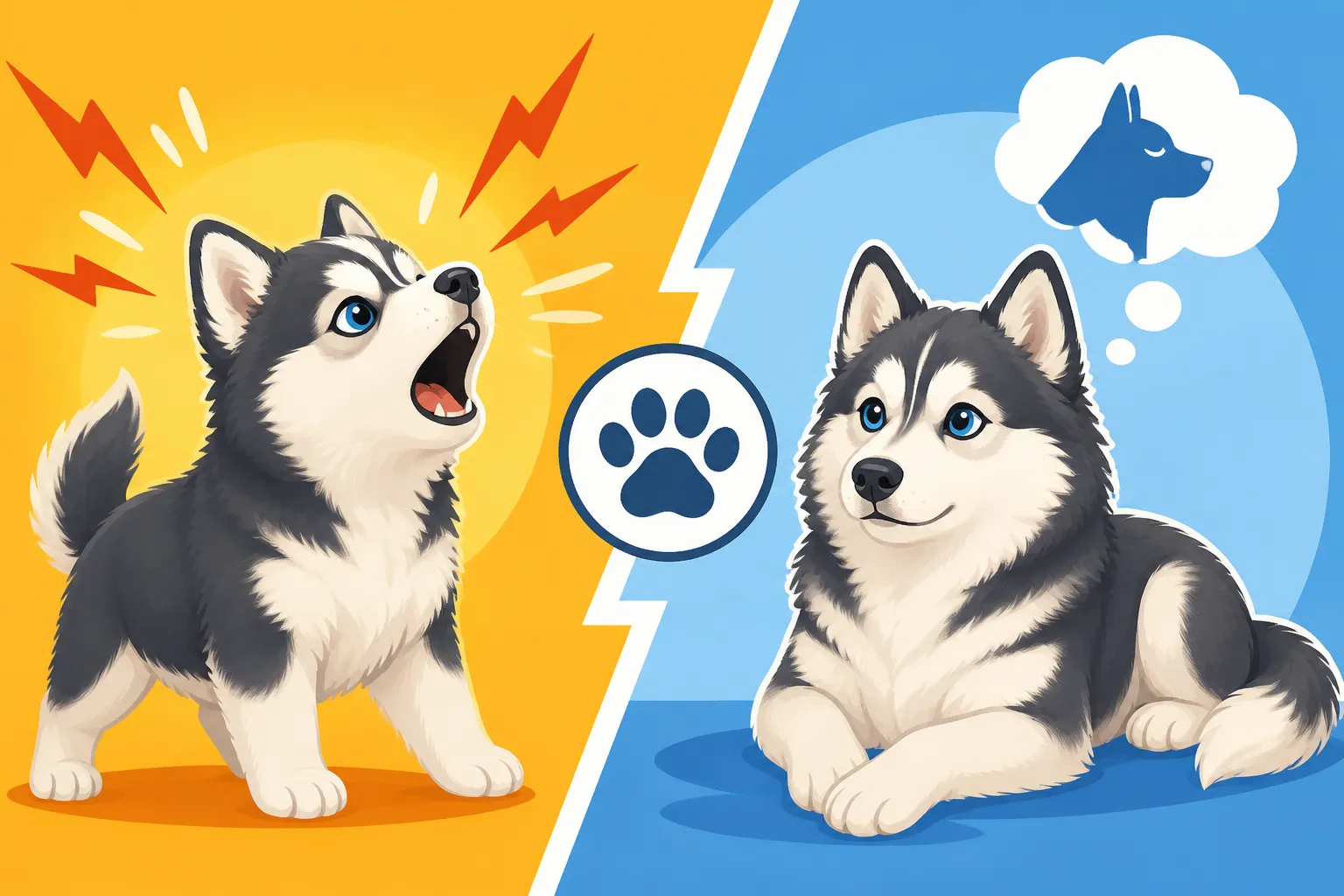
As a Pomsky transitions from puppyhood to adulthood, typically around 1-2 years of age, their vocalizations often do change, but it's rarely a complete silencing. What you often see is a reduction in indiscriminate noise rather than a cessation of all vocal communication. The frantic, attention-seeking barks or whines of puppyhood might lessen as they become more confident and understand routines.
They might still be highly vocal, but the context changes. Instead of barking at every shadow, they might reserve their alerts for genuinely new or concerning stimuli. The constant demand for attention might shift to more subtle nudges or softer "talks." They'll still howl at sirens, or "chat" when they're excited to see you, but the sheer volume and frequency of random noises can decrease. However, if they've learned that being loud works for them, that behavior is unlikely to disappear on its own with age. It will simply become more refined and habitual. Whether a Pomsky Grows Quieter With Age is a hopeful idea, but often requires intervention.
Factors Influencing Vocalization Beyond Age
While age plays a role, it's just one piece of the puzzle. Several other significant factors contribute to how vocal your Pomsky is, and how those vocalizations might change over time.
Training and Socialization
This is arguably the most impactful factor. A Pomsky that receives consistent, positive reinforcement training from a young age is far more likely to develop appropriate vocal habits. Teaching a "quiet" cue, rewarding calm behavior, and managing their environment can make a huge difference. Without proper training, vocal behaviors can become deeply entrenched. BAXTER & Bella, for example, offers online programs that can guide new puppy owners through early socialization and training, helping to shape a Pomsky's behavior from the start. They emphasize positive methods which are crucial for sensitive breeds.
Socialization also plays a critical role. A well-socialized Pomsky, exposed to various sights, sounds, people, and other dogs in a positive way, is less likely to be fearful or overly reactive, which often manifests as excessive barking. An undersocialized Pomsky might bark defensively out of anxiety or fear, a behavior that won't necessarily disappear with age without targeted intervention. Teaching a Pomsky a Quiet Cue is a valuable skill that requires consistent effort.
Environment and Stimulation
A Pomsky that is bored, under-exercised, or living in a highly stimulating environment is going to be more vocal. These dogs are intelligent and energetic; they need mental and physical outlets. If they don't get enough walks, playtime, or enrichment, they'll find their own "jobs," and often that involves making noise. A busy urban apartment with constant hallway traffic might provoke more alert barking than a quieter suburban home.
Consider their daily routine. Is there enough physical exercise to burn off their Husky energy? Are they getting enough mental stimulation from puzzle toys, training sessions, or scent work? A tired Pomsky is often a quieter Pomsky. If your Pomsky is routinely left alone for long periods without adequate exercise or mental engagement, they might develop separation anxiety, which often manifests as excessive barking and howling. Whether a Pomsky Suffers Separation Anxiety explores this in more detail. Providing enrichment toys, readily available on Amazon, can keep their minds busy.
Health and Comfort
Sometimes, an increase in vocalization, or a failure to quiet down with age, can be a symptom of an underlying health issue or discomfort. Pain, cognitive dysfunction (especially in older dogs), hearing loss, or even just general anxiety can lead a dog to vocalize more. For example, an older Pomsky experiencing arthritis might whine more due to discomfort. If your otherwise quiet Pomsky suddenly becomes very vocal, or a lifelong vocal Pomsky changes their patterns dramatically, a vet visit is always a good idea to rule out any medical causes.
Changes in routine or household dynamics can also cause stress, leading to more vocalization. A new baby, a different work schedule, or even just moving furniture can disrupt a sensitive Pomsky's world and increase their need to "talk" about it.
Strategies for Managing a Vocal Pomsky at Any Age
Instead of waiting for them to magically grow quieter, proactive management is key. You can certainly influence their vocal habits, even if you can't completely silence their natural propensity to communicate.
Consistent Training and Redirection
This is where you earn your stripes as a Pomsky owner. The moment you bring your puppy home, establish clear expectations around barking. When they bark excessively, don't reward it with attention, even negative attention. Instead, redirect their focus to an appropriate toy or a quiet activity. Teach a "quiet" cue by holding a treat to their nose, waiting for them to stop barking, and then rewarding the silence. Repeat, repeat, repeat. Consistency is your best friend here. Consider structured obedience classes or online programs like those from BAXTER & Bella to help you implement effective training techniques.
| Vocalization Type | Typical Age Range | Management Strategy |
|---|---|---|
| Attention Bark/Whine | Puppy – Senior | Ignore, redirect to appropriate behavior, reward calm. |
| Alert Bark | All ages | Identify trigger, teach "quiet," desensitize if possible. |
| Excitement Howl/Yip | All ages | Anticipate, manage greetings, redirect energy to a toy. |
| Separation Anxiety | All ages | Gradual desensitization, enrichment, consult professional. |
| Boredom/Frustration | All ages | Increase exercise, mental stimulation, puzzle toys. |
| Pain/Discomfort | Any age (more common in seniors) | Vet check-up immediately. |
| Siren Howling | All ages | Accept as natural, manage environment if bothersome. |
Environmental Management and Enrichment
Managing their environment can significantly reduce unnecessary vocalizations. If your Pomsky barks at everything outside the window, limit their access or use frosted film. Ensure they have plenty of appropriate chew toys and puzzle feeders, which can be found easily on Amazon, to keep them mentally stimulated when you're busy. Long-lasting chews can also provide a quiet activity.
Regular, vigorous exercise is non-negotiable for a Pomsky. A good run, a long walk, or active playtime in a secure yard can make them much calmer indoors. A tired Pomsky is less likely to have the energy or inclination for incessant barking. Remember, their Husky side needs to burn off that boundless energy, and their Pomeranian side needs mental engagement. The Exercise a Pomsky Needs to Stay Sane is a must-read for all owners.
Seeking Professional Guidance
If you've tried everything and your Pomsky's vocalizations are still overwhelming, don't hesitate to seek help from a certified professional dog trainer or a veterinary behaviorist. They can assess your specific situation, identify triggers, and develop a tailored behavior modification plan. Sometimes, what seems like stubbornness is actually a deeper behavioral issue that requires expert intervention.
It’s important to remember that asking for help isn’t a failure; it’s a smart and responsible move for the well-being of both you and your Pomsky. A professional can help decipher whether your Pomsky's noise is just breed-appropriate communication or something more concerning, such as Whether a Pomsky Gets Its Owner a Noise Complaint causing issues with neighbors. They can teach you techniques for Whether a Bark Collar Belongs on a Pomsky and discuss humane alternatives if needed.
Conclusion: Embracing the Pomsky's Voice
So, does a Pomsky grow quieter with age? The honest answer is: sometimes, to an extent, and largely with your consistent effort. While the frantic, demanding noises of puppyhood might naturally lessen with maturity and confidence, the inherent vocal nature of the breed will always be there. They are not typically silent dogs, and it's unrealistic to expect them to become completely quiet.
Instead of hoping for silence, focus on fostering appropriate vocalization. Teach them when it's okay to make noise (like an excited howl when you come home) and when it's not (like barking at every pedestrian). Embrace their unique "talking" ability, manage their environment, provide ample stimulation, and train them consistently. With understanding and effort, you can enjoy a well-adjusted, communicative Pomsky, even if they never quite become the "silent type."
Disclaimer
This article is for general informational purposes only and does not constitute professional advice. Laws, prices and regulations vary by location and change over time. Consult a qualified professional for guidance on your specific situation.