Whether a Slicker Reaches a Pomsky’s Skin
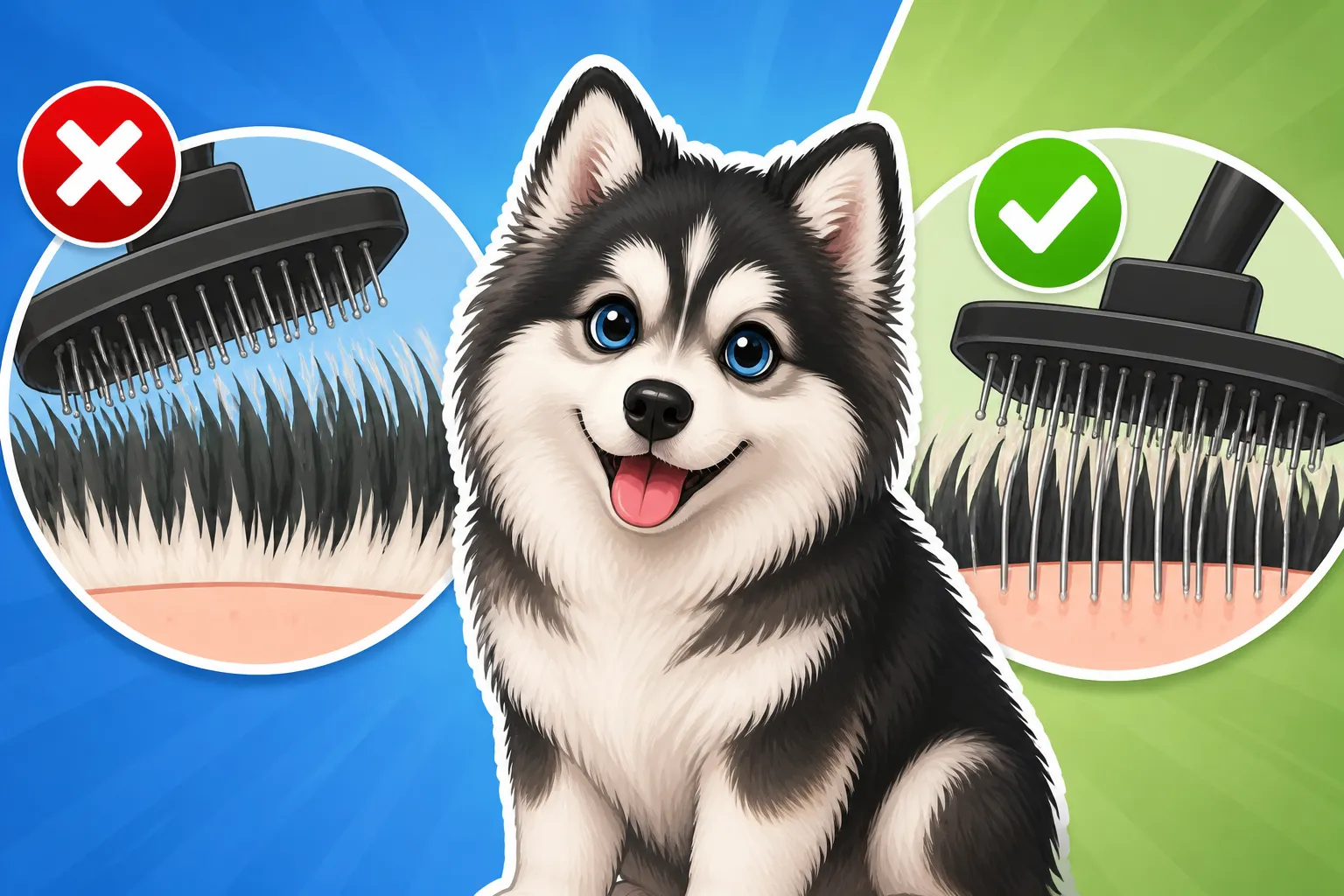
If you’re a Pomsky parent, you know the struggle is real when it comes to keeping that gorgeous double coat managed. You might find yourself brushing and brushing, only to feel like you’re barely scratching the surface, quite literally. This guide will dive deep into whether a slicker brush is truly effective for reaching your Pomsky's skin and what tools and techniques you really need to keep their coat healthy and tangle-free.
Understanding Your Pomsky's Double Coat
Before we even talk about brushes, we need to talk about that magnificent, yet sometimes maddening, coat your Pomsky sports. It's not just hair; it's a marvel of canine engineering designed for temperature regulation and protection. But understanding its structure is the first step to effective grooming.
The Anatomy of a Pomsky's Coat
Your Pomsky inherits its coat structure from both the Siberian Husky and the Pomeranian, and both are renowned for their incredible double coats. This means your furry friend has two distinct layers of fur. First, there's the outer layer, known as the guard hairs. These are longer, coarser, and somewhat stiffer hairs that protect your dog from the elements—think rain, snow, and even UV rays. They give your Pomsky that sleek or fluffy outer appearance.
Beneath those guard hairs lies the second, far denser layer: the undercoat. This is made up of soft, downy hairs that are incredibly effective at insulating your Pomsky, keeping them warm in winter and surprisingly helping to keep them cool in summer by trapping air. The sheer volume and density of this undercoat are what make Pomsky grooming such a unique challenge. This double-coat system is exactly why you hear so much about The Pomsky That Carries a Husky Coat at Twenty Pounds. The combination means a lot of fur, and a lot of grooming responsibility, especially when those seasonal changes hit.
Why Regular Brushing Is Non-Negotiable
Ignoring your Pomsky's coat for even a short period can lead to a cascade of problems. The dense undercoat, when not regularly brushed out, will shed but get trapped within the outer guard hairs. This quickly leads to matting, where the dead fur clumps together, forming tight, painful knots close to the skin. These mats aren't just unsightly; they pull on your dog's skin, causing discomfort and even pain.
Beyond the pain, matted fur can create a breeding ground for skin infections. Trapped moisture and lack of air circulation under a mat can lead to hot spots, irritation, and even parasites. Moreover, proper brushing helps distribute natural skin oils, promoting a healthy, shiny coat. And let's be honest, less loose fur on your furniture, clothes, and floors is a huge bonus! Your Pomsky will go through periods where they absolutely "blow" their coat, shedding an astonishing amount of fur, which makes regular brushing even more critical. If you've ever wondered Whether a Pomsky Blows Its Coat Twice a Year, the answer is a resounding yes, and sometimes it feels like they shed all year round!
The Role of a Slicker Brush in Pomsky Grooming
So, you've got this beautiful, fluffy creature with a dual-layer coat. Naturally, you reach for a slicker brush because that's what you often see recommended for many dog breeds. But how effective is it for a Pomsky?
What a Slicker Brush Is Designed For
A slicker brush is a grooming staple, recognizable by its rectangular or oval head covered in a multitude of fine, short, bent wire pins. These pins are designed to grab and remove loose hair from the coat, detangle minor knots, and help to smooth the outer layer of fur. They come in various sizes and pin densities, suitable for different coat types, from long and silky to curly and dense. For many breeds, a slicker brush is fantastic for daily grooming, removing surface shedding, and leaving the coat looking neat and tidy. It’s effective at picking up loose hairs and adding a bit of fluff and volume, making the coat appear well-maintained.
The Challenge with a Pomsky's Dense Undercoat
Here's where the rubber meets the road for Pomsky owners: while a slicker brush is excellent for surface work, it often struggles to penetrate the incredibly dense undercoat that your Pomsky possesses. Imagine trying to comb through a thick, deep pile carpet with a fine-toothed comb—you'll get the top fibers, but the deeper ones remain untouched. That's often what happens with a slicker brush on a Pomsky.
The fine, bent pins of a slicker brush are simply not long or strong enough to consistently reach through the guard hairs and down into the thick, woolly undercoat layer, especially when it's shedding heavily or starting to matt. You might feel like you're pulling out a lot of hair, but more often than not, it's just the loose guard hairs or the very top layer of the undercoat. The bulk of the dead, insulating undercoat, the stuff that causes matting and overheating, often remains deep within the coat, untouched by the slicker brush. This is why many experienced Pomsky owners rely heavily on a specific tool designed for this purpose: The Undercoat Rake a Pomsky Owner Lives With.
Reaching the Skin: Beyond Just a Slicker Brush
To truly groom a Pomsky effectively, you need a strategy that goes beyond a single tool. It's about combining the right instruments with the correct technique to ensure you're addressing both layers of that magnificent coat.
The Limitations of a Slicker for Deep Grooming
While a slicker brush does have a place in your Pomsky's grooming routine (we'll get to that!), relying solely on it for deep de-shedding or preventing mats can be a frustrating and ultimately ineffective endeavor. You might spend ages brushing, seeing tufts of fur come off, and think you're doing a great job. However, if you follow up with an undercoat rake, you'll often be shocked by how much more dead fur it pulls out. This is because the slicker brush just doesn't have the "reach" or the "grip" to pull out the truly embedded, dead undercoat close to the skin. It tends to skim over the top, removing what's already loose and accessible, but leaving the foundation of potential matting untouched.
This limitation is particularly noticeable during seasonal "blowouts" when your Pomsky is shedding prodigious amounts of undercoat. A slicker brush during these times is like trying to empty a swimming pool with a teacup – you're doing something, but it's not truly effective for the task at hand. For the real work of getting down to the skin and removing that dense, packed undercoat, you'll need a different set of allies in your grooming arsenal.
Essential Tools for Effective Undercoat Removal
To truly conquer your Pomsky's double coat, you need to arm yourself with the right tools. Think of it like this: different jobs require different tools, and a Pomsky's coat requires specialized equipment.
-
The Undercoat Rake: This is your absolute hero for getting deep into your Pomsky's coat. Undercoat rakes typically have long, widely spaced teeth, sometimes with a curved design, specifically engineered to penetrate the guard hairs and gently pull out the loose, dead undercoat without cutting the healthy hair. They come in various styles, from single-row to double-row teeth. For a Pomsky, you want one that can really get down to the skin. There are many excellent options available on Chewy or Amazon from brands that cater to double-coated breeds. If you're unsure Which Rake Suits a Pomsky's Undercoat, look for one with rotating pins or a gentle curved edge, as these are often more comfortable for your dog and less likely to snag.
-
The Force Dryer: While not a brush, a high-velocity force dryer is an indispensable tool, especially during a coat blow. These powerful dryers blow air at high speed, helping to separate the fur and literally blast out loose undercoat from deep within the layers. It's an incredible way to expedite the de-shedding process and ensure the skin is dry after baths, preventing hot spots. Many professional groomers swear by them, and while an initial investment, it can save you significant time and effort in the long run. If you're wondering Whether a Force Dryer Is Essential for a Pomsky, for deep de-shedding, many owners find it to be a game-changer.
-
Wide-Toothed Comb: After you've done the heavy lifting with the undercoat rake, a wide-toothed comb is fantastic for checking your work. It helps you ensure that there are no hidden mats close to the skin and that the coat is truly free of tangles. It also helps to smooth out the guard hairs and can be used for light detangling on the surface.
Proper Brushing Technique for a Double Coat
Having the right tools is only half the battle; knowing how to use them is crucial. For a double-coated Pomsky, a technique called "line brushing" is often the most effective way to ensure you're reaching the skin.
- Start with the Rake: Begin with your undercoat rake. Part your Pomsky's fur horizontally, starting from the bottom (e.g., a hind leg or flank) and working your way up. Hold the upper section of hair out of the way, exposing a "line" of fur.
- Brush in Layers: With short, gentle strokes, brush downwards through this exposed line of fur, ensuring the rake's teeth reach all the way to the skin. You'll literally be brushing out a "line" of fur at a time. Once you've brushed that section, move up slightly, part another line of fur, and repeat. Continue this process over the entire body. This layered approach ensures that no section of the dense undercoat is missed. It's truly the best way to ensure Line Brushing Reaches a Pomsky's Skin.
- Follow with the Slicker (Optional): Once you've thoroughly raked out the undercoat, you can then use your slicker brush for the top layer. This will remove any loose guard hairs, smooth the coat, and give it a polished finish. It's more of a "finishing touch" tool than a primary de-shedder for Pomskies.
- Finish with a Comb: Finally, use your wide-toothed comb to gently run through the entire coat, checking for any missed tangles or mats. If the comb glides smoothly from root to tip, you've done a fantastic job!
Consistency is key. Short, regular grooming sessions (even 10-15 minutes a few times a week) are far more effective and less stressful for your Pomsky than infrequent, long, arduous battles with mats.
Maximizing Grooming Effectiveness and Preventing Problems
It's all about working smarter, not harder, and understanding that your slicker brush is just one piece of a larger, essential grooming puzzle for your Pomsky.
Combining Tools for Best Results
Think of your Pomsky's grooming kit not as a collection of single-purpose items, but as a team working together. The slicker brush, while not the primary tool for deep undercoat removal, still has a valuable role. It's fantastic for:
- Post-Rake Smoothing: After you’ve done the heavy de-shedding with an undercoat rake, the slicker brush can help to smooth down the guard hairs, giving the coat a neat, finished look.
- Minor Tangle Removal: For small, surface-level tangles or stray pieces of debris, a slicker can quickly clean them up.
- Daily Touch-Ups: For a quick, daily spruce-up to remove surface loose hairs and keep the coat looking fresh between deeper sessions.
- Sensitive Areas: For areas where the fur might not be as dense, or for puppies still developing their adult coat, a slicker can be gentle and effective.
The real magic happens when you understand that The Rake, Slicker and Comb a Pomsky Needs are not interchangeable but complementary. Start with the rake to get deep, follow with the slicker for surface perfection, and finish with a comb to check your work.
The Importance of Regularity and Patience
Grooming a Pomsky isn't a "one-and-done" affair; it's an ongoing commitment. Their magnificent double coat demands regularity, especially during seasonal sheds. If you wait until you see mats or huge clumps of fur, the job becomes significantly harder and more uncomfortable for your dog.
Establishing a consistent routine from a young age is paramount. Even if your Pomsky is prone to being A Pomsky That Fights Being Brushed, patience and positive reinforcement are your best friends. Keep sessions short, offer high-value treats (perhaps some yummy Ollie dog food as a reward!), and end on a good note. Never force it, as this can create a negative association with grooming. If you make it a pleasant experience, your Pomsky will be far more cooperative. Regular brushing not only maintains their coat but also gives you a chance to check their skin for any lumps, bumps, or irritations.
When to Seek Professional Grooming
Sometimes, despite your best efforts, you might encounter a coat situation that's simply beyond your comfort or skill level. This is where professional groomers shine. They have specialized tools, techniques, and experience with double-coated breeds like Pomskies.
Consider a professional groomer if:
- Severe Matting: If your Pomsky has developed large, tight mats close to the skin, attempting to remove them yourself can be painful and risky. Groomers can often de-matt more effectively and safely.
- Seasonal Blowouts: During peak shedding seasons, a professional de-shedding treatment can be incredibly beneficial. They often use high-velocity dryers and specific shampoos that help release the undercoat, making subsequent home grooming much easier. If you're curious What a Deshedding Treatment Costs on a Pomsky, it's an investment that can save you hours of work and keep your dog much more comfortable.
- Time Constraints: Life gets busy! If you simply don't have the time for the thorough weekly or bi-weekly sessions your Pomsky needs, a professional can bridge the gap.
- Special Needs: If your Pomsky is older, has joint issues, or is particularly anxious about grooming, a professional might have specialized techniques to make the experience less stressful.
Remember, a professional groomer isn't a sign of failure, but a valuable partner in keeping your Pomsky healthy and happy. They can also offer advice tailored to your dog's specific coat type and needs, helping you better understand How Often a Pomsky Needs a Blowout and how to handle it at home.
| Tool Type | Primary Function | Effectiveness for Deep Undercoat | Best Used For |
|---|---|---|---|
| Slicker Brush | Removing surface tangles, loose guard hairs | Limited, often glides over | Finishing, surface smoothing, light shedding |
| Undercoat Rake | Penetrating dense undercoat, removing dead | High, designed for this purpose | Heavy shedding, de-matting, deep undercoat removal |
| Pin Brush | General brushing, untangling long hair | Low, doesn't remove undercoat | Long-coated areas, general tidying, fluffing |
| Force Dryer | Separating coat, blowing out loose hair | High, especially after brushing | De-shedding, drying, preventing hot spots |
| Wide-Tooth Comb | Checking for mats, detangling guard hairs | Limited for initial removal | Finishing, ensuring no mats remain, checking work |
Disclaimer
This article is for general informational purposes only and does not constitute professional advice. Laws, prices and regulations vary by location and change over time. Consult a qualified professional for guidance on your specific situation.