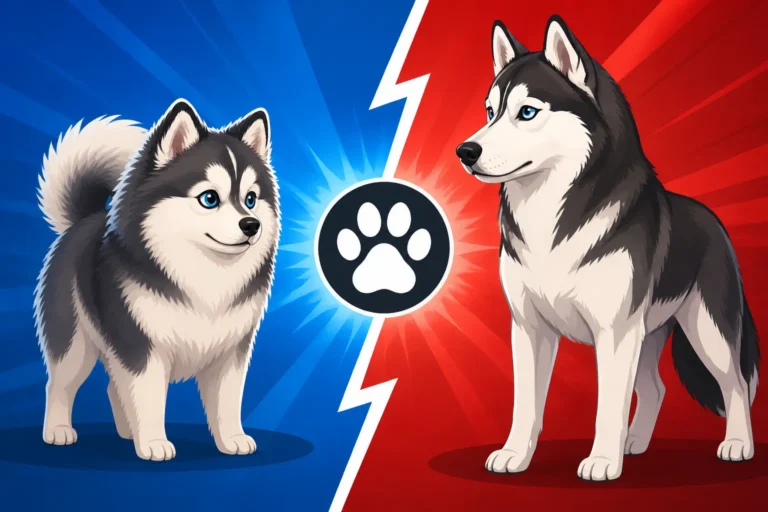
Whether Any Kennel Club Recognizes the Pomsky
It's a question that weighs on the minds of so many Pomsky parents: will our amazing, spirited companions ever truly be recognized? You love your Pomsky fiercely, you see their incredible personalities and unique beauty, and it feels a little frustrating, even dismissive, when you hear that major kennel clubs don't officially acknowledge them. This guide is here to shed light on exactly where the Pomsky stands in the world of canine organizations, why that is, and what it all means for you and your furry family member.
The Current Landscape: No Major Kennel Club Recognition
When you look at the official rosters of prestigious kennel clubs, like the American Kennel Club here in the States, you won't find the Pomsky listed among the recognized breeds. This isn't a slight against your dog or a judgment on their worth, but rather a reflection of how these organizations operate and the strict criteria a breed must meet to earn that coveted "official" status. It's a journey that often takes decades, sometimes even centuries.
The American Kennel Club's Stance
The American Kennel Club (AKC) is perhaps the most well-known and influential purebred dog registry in the United States. They maintain a comprehensive list of breeds, each with a detailed breed standard outlining ideal characteristics, temperament, and health considerations. For a breed to be recognized by the AKC, it must have a significant population across the country, a dedicated parent club that maintains a breed standard, and a demonstrated history of consistent breeding over many generations. The Pomsky, as a relatively new hybrid dog, doesn't yet fit this mold. They haven't been around long enough, nor have their traits stabilized to the degree required for AKC recognition. You might be able to register your Pomsky in the AKC Canine Partners program, which allows mixed breeds and non-registered purebreds to participate in certain performance and companion events, but it's not the same as full breed recognition.
International Kennel Clubs Around the World
It's not just the AKC; globally, major organizations like the Fédération Cynologique Internationale (FCI), the Kennel Club (UK), or the Canadian Kennel Club (CKC) also do not recognize the Pomsky as a distinct breed. The principles behind their recognition processes are very similar to the AKC's: a long history of consistent breeding, established breed standards, and genetic stability. Hybrid breeds, by their very nature, are a blend of two distinct purebreds, and while they can be wonderfully consistent within a litter, the genetic lottery involved still means a wider range of outcomes than you'd see in a well-established purebred. So, for now, across the board, the Pomsky remains an "unrecognized" breed in these formal circles.
Why the Lack of Official Recognition?
The primary reason behind the Pomsky's unrecognized status is rooted in its origin as a hybrid, or "designer," dog. Unlike purebreds, which have generations of selective breeding to achieve predictable traits, Pomskies are a cross between a Siberian Husky and a Pomeranian. This crossbreeding, while yielding delightful results, inherently introduces a level of genetic variation that kennel clubs typically seek to avoid in their recognized breeds.
Hybrid Vigor and Predictability
One of the big selling points of a hybrid dog is often the concept of "hybrid vigor," or heterosis, which suggests that crossing two genetically diverse purebreds can lead to healthier, more robust offspring. While there's some truth to this in terms of reducing the concentration of specific genetic diseases common to one parent breed, it doesn't mean hybrids are without their own health considerations. The challenge for kennel clubs, however, lies in predictability. When you breed a Siberian Husky to a Pomeranian, the puppies can inherit a wide array of traits from either parent in terms of size, coat type, temperament, and even health predispositions. Whether an F1 Pomsky Is Healthier Than an F2 delves into some of these generational differences. This unpredictability, though charming to individual owners who love the unique outcomes, is precisely what makes it difficult for a kennel club to establish a definitive "Pomsky standard." Imagine trying to write a rule book for a dog that might weigh anywhere from 10 to 35 pounds and could have a coat ranging from short and sleek to long and woolly!
Breeding Practices and Ethics
Another aspect that kennel clubs scrutinize is the breeding practices themselves. For purebreds, there are strict ethical guidelines, health testing protocols, and lineage tracking that help ensure the health and integrity of the breed. With Pomskies, because they are a hybrid, the breeding process itself is rather unique and requires careful consideration. Why a Pomsky Cannot Be Bred Naturally highlights the practical challenges, primarily the significant size difference between a male Pomeranian and a female Siberian Husky, which necessitates artificial insemination to ensure the safety of the mother. While many reputable Pomsky breeders adhere to high standards of health testing and responsible breeding, the relative newness of the cross means there isn't a universally accepted, enforced set of rules across all breeders, which is something major kennel clubs typically require before considering recognition. The early days of any developing breed often involve a wide spectrum of breeding quality, and kennel clubs usually wait for greater standardization.
The Unpredictable Nature of Early Generations
The very first generation (F1) of Pomskies, directly from a Husky and a Pomeranian, shows the most variation. Some might look like miniature Huskies, others more like larger Pomeranians, and many fall somewhere in between. Even within a single litter, you can see a range of appearances and temperaments. As breeders move into F2, F3, and multigen Pomskies (breeding Pomsky to Pomsky), there's an effort to stabilize these traits and produce more consistent puppies. However, this process takes many generations and dedicated, coordinated effort across numerous breeders. Until there's a widely accepted, predictable "look" and temperament that consistently breeds true, major kennel clubs will likely remain hesitant. This quest for consistency is a cornerstone of purebred dog breeding and something that is still very much in development for the Pomsky.
What Does "Recognition" Actually Mean?
When we talk about a dog breed being "recognized" by a kennel club, it's not a single, monolithic status. There are layers to it, and understanding these distinctions can help clarify why the Pomsky's current standing isn't necessarily a bad thing, just different. For many owners, the love and companionship their Pomsky provides far outweigh any official paperwork.
Full Breed Status vs. Companion Animal Registries
Full breed recognition from a major kennel club, like the AKC, means that the breed has met all the stringent requirements for inclusion in their official stud book. This includes a documented lineage, a consistent breed standard, and a history of breeding true (producing offspring that consistently resemble their parents and the breed standard). Dogs of fully recognized breeds can compete in conformation events, where they are judged against that ideal breed standard.
However, there are also various companion animal registries and associations that are more inclusive. These organizations might register mixed-breed dogs, or breeds that are still in development, allowing them to participate in a broader range of activities. These often focus on companion events rather than conformation. For example, some may register your Pomsky so they can get an official number to compete in agility or obedience trials. It's important to differentiate between these types of registries; one offers full breed recognition for showing purposes, while the others provide a way for any dog, including a Pomsky, to engage in organized canine sports and activities. Many Pomsky owners find that participation in these types of events, where the dog's ability and drive are paramount, is far more rewarding than conformation showing.
Performance Event Eligibility
While a Pomsky won't be competing in the Westminster Kennel Club Dog Show's breed ring anytime soon, that doesn't mean they're shut out of all competitive dog sports. Far from it! Many organizations that host performance events – think agility, obedience, rally, trick dog, flyball, or even therapy dog certification – are open to all breeds and mixed breeds. They often require dogs to be registered with their specific organization or a general canine registry, but this typically doesn't necessitate full breed recognition by a major kennel club.
In fact, Pomskies can excel in these areas because they inherit intelligence and athleticism from both parent breeds. Their Husky heritage brings drive and endurance, while the Pomeranian side contributes cleverness and often a desire to please (though sometimes with a stubborn streak!). If you're looking to get involved in dog sports with your Pomsky, you'll find plenty of avenues. You might register your dog with a performance-focused club, pay a small fee, and then your Pomsky is good to go. This allows owners to celebrate their dog's abilities and bond through shared activities, providing a fantastic outlet for their energy and brains.
How Breed Standards Develop and What It Means for Pomskies
The journey from an emerging crossbreed to a fully recognized purebred is a long and arduous one, marked by careful selection, documentation, and the establishment of a consistent breed standard. It’s not something that happens overnight, and for Pomskies, this process is still very much in its infancy.
The Long Road to Purity
The development of a new purebred dog breed typically begins with a vision: a desire to combine specific traits or to improve upon existing ones. Early breeders meticulously select foundation dogs, often from existing purebreds, and begin a program of selective breeding to enhance desired characteristics while minimizing faults. This involves generations of careful pairing, health testing, and observing offspring to ensure that traits are consistently passed down. Think of it like a long-term scientific experiment, but with wagging tails and lots of fur! They document every breeding, every litter, every health test result.
This process can take many, many decades—sometimes even a century or more—before a breed is considered stable enough for potential recognition by major kennel clubs. Organizations like the AKC look for a deep pedigree, a substantial gene pool, and a predictable outcome in terms of appearance, health, and temperament before they even consider moving a breed into their "Miscellaneous" class, which is a probationary step before full recognition. For the Pomsky, which only truly gained popularity in the 2010s The 2012 Litter That Made the Pomsky Real, this journey is just beginning. We are still in the relatively early stages of seeing which traits become dominant and how consistent they can truly become across a wider population.
Establishing Consistent Traits
One of the biggest hurdles for Pomsky recognition is establishing consistent traits. A breed standard is essentially a blueprint that describes the ideal characteristics of a breed, covering everything from head shape and ear set to coat texture, tail carriage, and gait. It defines the acceptable range of size, color, and markings. For a Pomsky, due to its diverse parentage (a small, Spitz-type Pomeranian and a medium-large, Nordic-type Siberian Husky), the range of possibilities is still quite broad.
Consider the potential for variations in size. What a Pomsky Actually Weighs notes that they can range from 10 to 35 pounds, a huge spread compared to the very narrow weight ranges typical for recognized breeds. The coat type can also vary wildly; some might have a relatively short, smooth coat, while others inherit the long, fluffy "wooly" coat that requires significant grooming. The Three Pomsky Coat Types explains these differences. To write a single breed standard that encompasses all these possibilities while still providing a clear ideal is incredibly challenging. Dedicated Pomsky breeders are working towards greater consistency, but it requires a unified effort and many more generations to solidify a predictable "type."
The Role of Breed-Specific Organizations
While major kennel clubs may not recognize the Pomsky, this doesn't mean there's no structure or effort to guide responsible breeding and promote the breed. Several breed-specific organizations have emerged, aiming to provide a framework for Pomsky breeders and owners.
The International Pomsky Association's Efforts
One of the most prominent organizations working to establish standards and promote responsible breeding practices for Pomskies is the International Pomsky Association (IPA). The IPA was founded with the goal of creating a unified standard for the breed, encouraging ethical breeding, and fostering a community for Pomsky owners. They offer registration services for Pomskies, providing a form of lineage tracking, and actively promote health testing among their member breeders.
The IPA's standards, while not recognized by the AKC, serve a crucial role in the development of the breed. They provide guidance on what an ideal Pomsky should look like, how it should behave, and what health screenings parents should undergo. The International Pomsky Association and What It Sets goes into more detail about their specific goals and guidelines. By providing this framework, the IPA helps to move the breed towards greater consistency and predictability, which are vital steps if the Pomsky were ever to pursue mainstream kennel club recognition in the distant future. It also gives breeders and owners a sense of community and a shared vision for the breed's future.
Registering a Pomsky Without AKC
Since the AKC does not offer full breed registration for Pomskies, owners often wonder what options are available. The IPA is one avenue, providing a pedigree and registration specific to the Pomsky breed. There are also various other registries that cater to hybrid or designer breeds. These often focus on providing official-looking papers that document the dog's parentage (Siberian Husky and Pomeranian) and sometimes include information about the litter and breeder.
These alternative registrations serve a different purpose than AKC papers. They acknowledge the dog's specific hybrid parentage and can be useful for tracking family lines within the Pomsky community, especially for breeders. For owners, it provides a sense of official documentation, although it won't allow entry into AKC conformation events. It's really about choosing the right fit for your goals; if you're looking to prove your dog's heritage and perhaps even participate in some hybrid-specific events, these registries are a valuable resource. It’s a good idea to check with your breeder about what kind of registration they provide and what it entails.
What Owners Can Do
So, what does all this mean for you, the proud owner of a magnificent Pomsky? Ultimately, the lack of mainstream kennel club recognition doesn't diminish the joy and companionship your dog brings into your life. In fact, it opens doors to embracing their unique qualities and participating in various activities that celebrate what makes them special.
Celebrating Your Pomsky's Unique Qualities
Instead of focusing on what a Pomsky isn't (a fully recognized purebred), Pomsky owners can revel in what they are: charming, intelligent, and often hilariously mischievous companions with a stunning appearance. Their hybrid nature means each Pomsky is truly individual, sometimes displaying the stoic independence of a Husky, other times the spirited boldness of a Pomeranian, and often a delightful blend of both. They are known for their "talkative" nature, a blend of Husky howls and Pomeranian barks, making for a very expressive companion. Why a Pomsky Talks Instead of Barking explains this trait beautifully.
Embrace the unpredictability of their looks and personalities. You might have a Pomsky with piercing blue eyes, an iconic Husky mask, or a fluffy, orange-sable coat. This variety is part of their charm. Many owners find joy in sharing their Pomsky's antics and beautiful photos online, connecting with a vast community of fellow Pomsky lovers who understand and appreciate these unique traits. Your dog's official status doesn't change the fact that they're a beloved member of your family and a source of endless entertainment and affection.
Participating in Unrecognized Events and Community
As mentioned earlier, the world of canine activities extends far beyond conformation shows. Pomskies can excel in a multitude of performance sports and events that welcome all breeds and mixes. Agility, obedience, rally, flyball, dock diving, even scent work—these are all fantastic avenues for channeling your Pomsky's energy and intelligence. Many local dog clubs and organizations offer classes and competitions for these sports. You'll likely just need a general registration number, easily obtainable through national all-breed registries or the specific organization hosting the event.
Beyond formal competitions, there's a thriving online and local community of Pomsky owners. Facebook groups, Instagram communities, and local meet-up groups allow owners to share experiences, ask questions, and celebrate their dogs. Many find these informal communities to be far more supportive and relevant than the rigid structure of traditional kennel clubs. You can swap tips on everything from grooming routines (those double coats shed a lot!) to finding the best toys on sites like Chewy. This sense of belonging, centered around the love for these unique dogs, is incredibly valuable.
Navigating Breeding and Ownership Responsibilities
For those interested in breeding, the lack of major kennel club recognition places an even greater emphasis on responsible and ethical practices. It means relying on breed-specific organizations like the IPA for guidance on health testing, breed standards, and ethical breeding protocols. It also means educating prospective owners about the Pomsky's unique needs, potential size variations, and temperament traits.
As an owner, regardless of whether your dog is recognized by a kennel club, your core responsibilities remain the same: provide excellent care, proper nutrition (finding the right food can sometimes be a journey, with options readily available at places like Chewy), consistent training, and preventative veterinary care. Understanding your Pomsky's potential health predispositions from both parent breeds is crucial. For instance, being aware of conditions like Slipping Kneecaps in a Pomsky (from the Pomeranian side) or The Eyes a Pomsky Gets From the Husky is vital for proactive care. The focus should always be on the well-being and happiness of your individual dog, not just their pedigree or official status.
| Aspect | Purebred (AKC-Recognized) | Pomsky (Hybrid) |
|---|---|---|
| Breed Standard | Strictly defined and consistent across generations. | In development; aims for consistency but wide variation still exists. |
| Kennel Club Recognition | Full recognition by major organizations (AKC, FCI, etc.). | Not recognized by major kennel clubs; some hybrid registries exist. |
| Breeding Predictability | High predictability in appearance, temperament, and size. | More variability in appearance, temperament, and size. |
| Conformation Shows | Eligible to compete in conformation events. | Not eligible for conformation events; judged against a standard. |
| Performance Events | Eligible for performance events (agility, obedience, etc.). | Eligible for performance events, often requiring a basic registration. |
| Health Testing | Mandated health testing often required by breed clubs. | Reputable breeders conduct health testing, but it's not universally mandated. |
| History | Decades to centuries of established lineage. | Relatively new breed, originating in the 2010s. |
| Parentage | Offspring of two dogs of the same recognized breed. | Offspring of a Siberian Husky and a Pomeranian. |
This table illustrates some key differences in how purebreds and hybrid dogs like Pomskies are viewed within the world of canine organizations. It highlights that while Pomskies don't have the same "official" status as a Golden Retriever or a Poodle, they are still wonderful, capable dogs who can lead full, active lives and participate in many aspects of the dog world.
Disclaimer
This article is for general informational purposes only and does not constitute professional advice. Laws, prices and regulations vary by location and change over time. Consult a qualified professional for guidance on your specific situation.