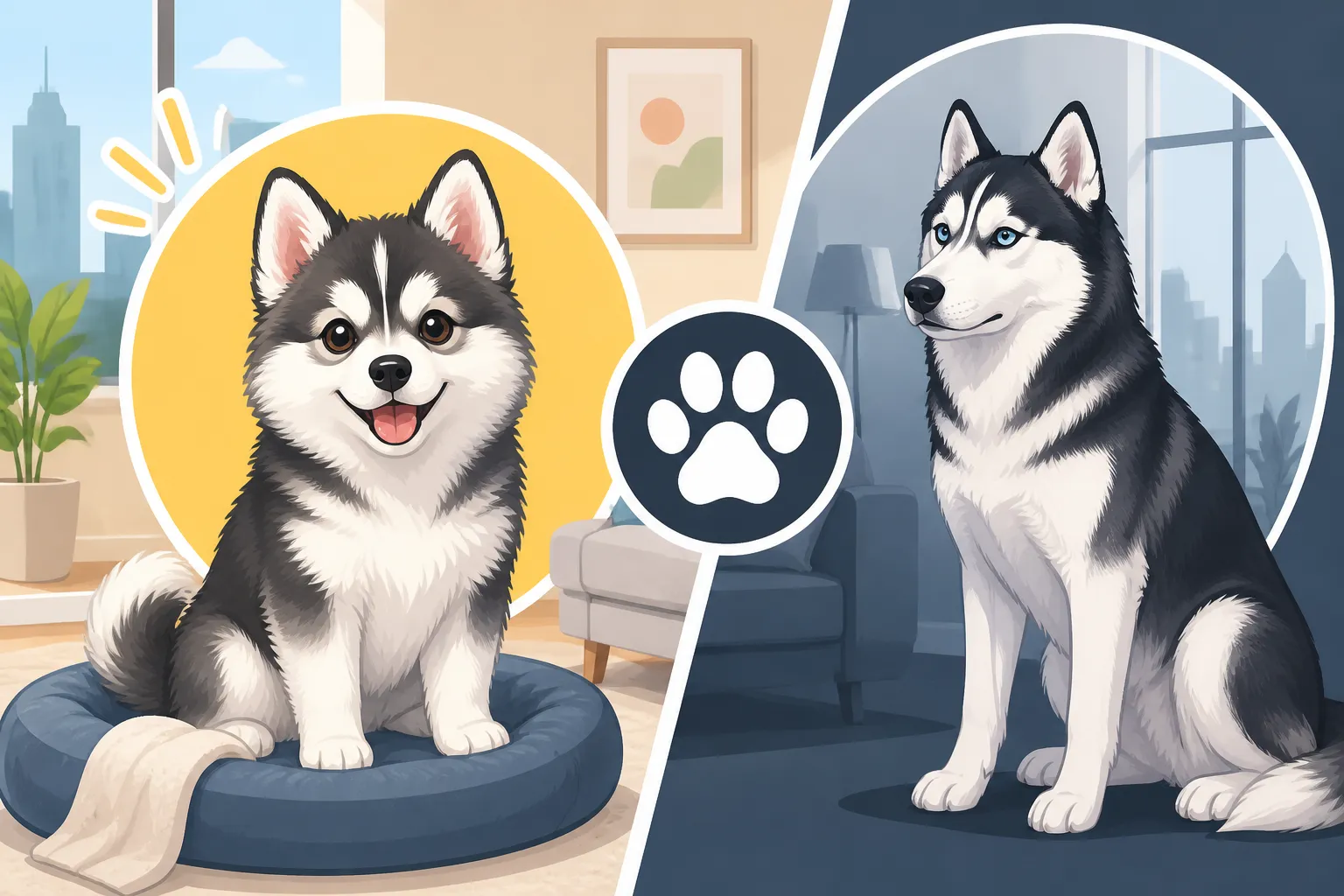
Pomsky or Husky for an Apartment
A Pomsky’s smaller size can make apartment living seem easier than sharing a home with a Husky, but square footage is only part of the story. Noise, exercise needs, shedding, escape attempts, and time alone can matter just as much. This guide compares both dogs and helps you judge which one is more likely to fit your building, schedule, and neighbors.
Pomsky or Husky for an apartment
Size helps, but it does not decide the question
Pomskies are generally smaller than Siberian Huskies, and that difference can make everyday apartment logistics easier. A smaller dog may take up less room, fit more comfortably in an elevator, and be easier to manage in a narrow hallway. But Pomskies vary in adult size, and their Husky heritage can bring plenty of energy and curiosity in a compact body. A small dog is not automatically a low-maintenance apartment dog.
Huskies are larger, athletic dogs bred for endurance. They often need substantial daily activity and room to move, though individual dogs differ. That can make apartment life more challenging, especially when the household routine consists of a couple of short walks and long stretches indoors. Still, a well-exercised Husky with a thoughtful routine may cope better than an under-stimulated Pomsky whose needs are being underestimated.
Before choosing either, think beyond a puppy’s current size. Ask about the parents, expected adult size, and the breeder’s explanation of how they estimate growth. Even a Pomsky advertised as small may grow larger than you expect. Whether a Pomsky Puppy's Size Can Be Predicted explores why puppy size estimates are uncertain.
Compare the day-to-day demands
| Apartment concern | Pomsky | Siberian Husky |
|---|---|---|
| Space | Usually takes up less room, but still needs places to rest and play | Larger body and high activity needs can make a small home feel more confining |
| Exercise | Needs regular walks, play, training, and mental activity; needs vary | Commonly needs sustained daily activity and opportunities to use energy |
| Noise | May bark, howl, whine, or “talk”; individual dogs vary | Howling and vocal behavior can be difficult in a building with shared walls |
| Shedding | Can shed heavily, particularly with a dense double coat | Typically sheds a substantial amount, including seasonal coat blowouts |
| Alone time | May struggle if left without gradual training and enrichment | May become noisy or destructive when bored, lonely, or under-exercised |
| Escape risk | Can be quick, clever, and curious; secure doors and leash habits matter | Athletic and driven to explore; reliable containment and supervision matter |
This comparison is a starting point, not a guarantee. A calm adult Husky may be quieter than a vocal young Pomsky, and a Pomsky with a dense coat may leave more fur around the apartment than an owner expected. Meet the individual dog when possible, and ask about its behavior in ordinary situations rather than relying only on breed labels.
Exercise, enrichment, and time alone
Daily activity matters more than a nearby dog park
Neither breed is likely to thrive on occasional outings alone. A Pomsky needs daily walks, play, training, and activities that engage its brain. A Husky usually needs even more purposeful movement, though the right amount depends on age, health, temperament, and conditioning. A fenced dog run can be useful, but it does not replace walks, training, and time with you.
Apartment owners often find that the hardest part is not the walk itself; it is fitting exercise around work, weather, and building routines. Imagine coming home after a long commute to a restless dog who has spent the day watching hallway activity and waiting for company. A quick trip around the block may not be enough to help that dog settle. Plan for a reliable routine that includes outdoor activity and indoor enrichment, such as short training sessions, food puzzles, scent games, or supervised play.
A yard is not a substitute for engagement, and apartment living does not automatically rule out an active dog. The practical question is whether you can meet the dog’s needs consistently, including on rainy days and busy weekdays. The Exercise a Pomsky Needs Every Day offers more detail on planning activity for this cross.
Alone time and noise can become neighbor problems
Both Pomskies and Huskies can vocalize. A dog may bark at footsteps in the hallway, howl when left alone, or whine when it wants attention. In a detached home, that can be frustrating; in a building with shared walls, it can lead to complaints and extra stress for the dog. Do not assume a smaller Pomsky will be quiet, or that every Husky will howl. Pay attention to the individual dog’s history and behavior.
Leaving a dog alone for a full workday without preparation can be difficult for either breed. Build alone-time skills gradually, provide a safe resting area, and make departures and returns low-key. If the dog becomes distressed, vocal, or destructive, more exercise alone may not solve the issue; anxiety, boredom, or a lack of gradual training may be involved. A camera can help you understand what happens after you leave, while a qualified trainer or veterinary professional can help address persistent problems.
Noise planning starts before adoption. Check building rules about barking, howling, pet numbers, and common-area behavior. Ask a foster caregiver or previous owner how the dog behaves when left alone, and arrange a realistic trial period if one is available. For more on vocal habits, see Why a Pomsky Talks Instead of Barking and The Husky Howl in a Pomsky.
Grooming, building rules, and practical logistics
Shedding and grooming are part of apartment life
Both breeds can have thick double coats, so fur may collect on rugs, clothing, furniture, and in corners. Pomsky coats vary, and a smaller body does not necessarily mean little shedding. Huskies are also known for substantial shedding, including periods when loose undercoat comes out in larger amounts. If you share a compact space, regular brushing and a realistic cleaning routine matter.
A weekly grooming habit can help you notice tangles, skin irritation, or loose coat before it spreads around the home. During heavier shedding periods, you may need to brush more often. Avoid shaving a double-coated dog just to reduce fur: coat care should focus on brushing, bathing when appropriate, and thorough drying rather than removing the coat. A groomer familiar with double coats can advise on the dog’s particular coat and comfort.
Think about where grooming will happen. If your apartment has limited room, brushing outside may be practical when weather and building rules allow. Keep a brush, comb, lint roller, and washable bedding in an easy-to-reach spot. If you buy food, grooming tools, or cleanup supplies through a retailer such as Chewy, compare product details with your dog’s coat, size, and sensitivities rather than choosing based only on breed labels. The Pomsky That Carries a Husky Coat at Twenty Pounds explains why a small Pomsky may still need serious coat care.
Apartment rules and everyday access can change the fit
Before bringing home either dog, read your lease and building policies carefully. Some buildings set limits based on weight, breed descriptions, or the number of pets. Others require approval, documentation, or specific leash rules in common areas. Ask for the relevant policy in writing so you are not making a major decision based on a casual conversation.
Also picture the ordinary routes your dog will take. Can you manage an excited dog in a crowded elevator? Is there a safe place nearby for bathroom breaks? Does the building have a long hallway where a dog might react to every passing neighbor? A smaller Pomsky may be easier to lift or guide in a tight space, but it can still pull, slip equipment, or bolt through a door if not trained and securely handled. Huskies can present the same challenges with greater strength and stamina.
Set up practical safeguards before the first walk: a well-fitted harness, secure leash, identification, and a plan for doors and elevators. Some Pomskies inherit a strong urge to explore, so reliable management matters even when the dog looks small. The Pomsky Escape Artist in a Twenty Pound Body is useful background for thinking through apartment exits and containment. For coat-related routines, The Undercoat Rake a Pomsky Owner Lives With can help you understand the grooming commitment.
How to choose the better fit for your home
Match the dog to your routine, not the idealized picture
A Pomsky may be the more manageable option if you want a smaller dog and can still provide consistent exercise, training, grooming, and company. That does not mean it will be quiet, low-energy, or suited to being alone all day. Its size can simplify some apartment tasks, but its temperament and coat may reflect either parent in ways that are difficult to predict.
A Husky may work in an apartment for an owner who has a strong activity routine, experience with energetic dogs, and a plan for noise and alone time. The challenge is that the dog’s exercise and enrichment needs can be demanding when there is no private yard. A larger home does not automatically solve those needs, either: a Husky left bored and under-stimulated may still become vocal or destructive.
Think about your actual week, not the version of yourself who has endless free time. If you work long hours, travel frequently, dislike shedding, or live somewhere with strict noise rules, those details should weigh heavily. If you are drawn to a Pomsky because you want a miniature Husky, remember that appearance does not reliably predict adult size, energy, or behavior. What Nobody Warns a Pomsky Buyer About offers a useful reality check before you decide.
Use a readiness checklist before bringing a dog home
Before committing, answer these questions honestly:
- Can I provide daily walks and meaningful activity? Include the days when the weather is unpleasant or your schedule is packed.
- Can I manage noise in a shared building? Consider both training and what you will do if the dog vocalizes when alone.
- Can I handle regular shedding and grooming? Plan for coat care, cleaning, and the possibility of heavier seasonal shedding.
- Does my building allow this dog? Confirm rules about size, breed, pet approval, and common areas.
- Can I prevent escapes? Think about the front door, elevator, leash handling, and identification.
- Do I have support? Consider a dog walker, trusted sitter, trainer, or nearby help if your routine changes.
- Have I considered an adult dog? An adult’s size, energy, and behavior at home may be easier to assess than a puppy’s future traits.
When speaking with a breeder, rescue, or foster caregiver, ask specific questions: How does the dog behave when left alone? Does it bark or howl at hallway sounds? How does it walk on leash? What grooming does its coat need? Has it lived in an apartment or a home with shared walls? The answers may help you identify a better match than a general promise that the dog is “good for apartments.”
For either breed, arrange a veterinary checkup and talk through exercise, weight, coat, and preventive care. Keep essentials organized in a small home; retailers such as Chewy can be one place owners look for routine supplies, but choose items that fit the individual dog rather than buying a generic breed bundle. A realistic setup, steady training, and a compatible daily schedule matter far more than the label on the dog.
Disclaimer
This article is for general informational purposes only and does not constitute professional advice. Laws, prices and regulations vary by location and change over time. Consult a qualified professional for guidance on your specific situation.