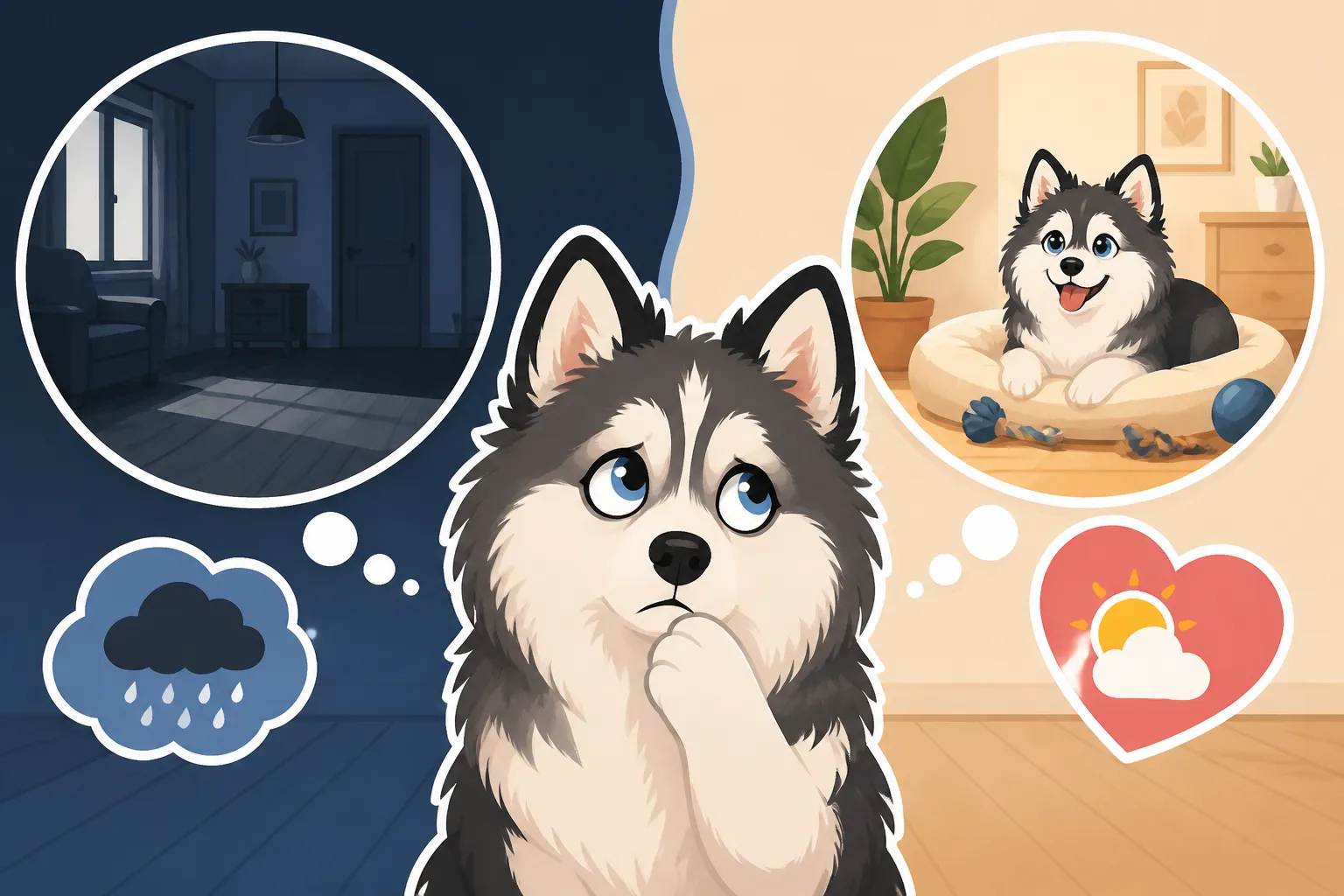
Whether a Pomsky Copes With an Empty House
A Pomsky may manage a quiet stretch at home, but being left alone can be harder for some than their size suggests. These dogs can be people-focused, energetic, and vocal, so a long workday without preparation may lead to barking, chewing, or genuine distress. This guide explains how to judge your Pomsky’s tolerance and build a safer, calmer routine.
What an empty house feels like to a Pomsky
A Pomsky’s independence varies from dog to dog
“Pomsky” describes a cross between a Pomeranian and a Siberian Husky, not a guarantee of one predictable personality. One dog may nap happily after a morning walk; another may follow its person from room to room and struggle when the front door closes. Age, temperament, early experiences, training, daily activity, and how the dog has learned to spend time alone all matter.
Both parent breeds can be alert and expressive. A Pomsky might bark at hallway sounds, howl when separated, or look for something to do when bored. None of those behaviors automatically means the dog has separation anxiety, but they can make alone time noisier or more challenging, especially in an apartment or home with close neighbors. For more on the vocal side of the breed, see The Husky Howl in a Pomsky.
Being alone is different from being under-stimulated
A dog that has had a predictable routine, a chance to toilet, and some suitable activity may settle down when the house empties. A dog left with excess energy and nothing to do may turn to digging, shredding, barking, or investigating things that are not safe to chew. Those behaviors can look like separation distress from the outside, but boredom and anxiety are not the same problem and may need different solutions.
Watch what happens before and after you leave. Does your Pomsky pace as soon as you pick up your keys? Does the dog settle after a few minutes, or remain distressed for much of your absence? A camera can help you see whether barking is brief or sustained and whether your dog rests, explores, or repeatedly tries to escape. That information is often more useful than discovering a chewed cushion after you return.
A quiet house can still have risks
Even a dog that seems relaxed needs a safe setup. Put away food, rubbish, medication, cords, small objects, and anything your Pomsky might swallow or pull down. Check that windows and doors are secure, and leave water where the dog can reach it. If you use a crate or gated area, it should be a place your dog already finds comfortable—not a new confinement introduced on the morning of a long absence.
Choose unsupervised toys carefully. A food puzzle or sturdy toy may help occupy a dog, but anything that can splinter, break apart, or be swallowed is a poor choice to leave alone. Some owners look at options at Chewy when choosing enrichment toys or storage for dog supplies; whatever the source, select items based on your individual dog’s chewing habits and supervise new toys before trusting them during an absence.
How long can a Pomsky be left alone
There is no single safe number for every Pomsky
Alone-time tolerance depends on more than breed. A young puppy needs frequent toilet breaks and supervision, while an adult dog may be able to relax for a longer stretch if alone time has been introduced gradually. A senior dog, a dog with medical needs, or one that becomes anxious when separated may need more frequent check-ins. The useful question is not simply “How many hours can a Pomsky stay alone?” but “Can this dog stay comfortable, safe, and able to meet basic needs during this particular absence?”
Consider the whole day, not just the time between leaving and returning. A long stretch after an early walk may be harder than a shorter absence following exercise, a toilet break, and calm settling time. If your workday keeps you away for much of the day, plan for support rather than expecting a puppy or an unpractised adult dog to manage it without a break. How Many Hours a Pomsky Can Be Left offers a closer look at the question of duration.
Puppies need a different plan from adults
Puppies have small bladders, limited experience being alone, and a strong need for routine and supervision. Leaving one for an extended period can mean accidents, frustration, or unsafe chewing—not because the puppy is being spiteful, but because the situation exceeds what it can manage. Arrange a trusted person to check in when needed, especially during the early weeks at home.
Build independence in small steps. Start with a brief separation while your puppy is relaxed in a safe area, then return before the puppy becomes overwhelmed. Gradually vary the length of time, keeping an eye on the puppy’s response. If every practice session ends in frantic barking or escape attempts, shorten the interval and make the setup easier rather than simply waiting for the puppy to “get used to it.” For broader context on separation difficulties, see Whether a Pomsky Suffers Separation Anxiety.
Use the dog’s behavior to set your routine
A rough planning guide can help you think through what kind of support might be needed, but it is not a promise that every Pomsky will cope for the same length of time.
| Situation | What to plan for | What to watch |
|---|---|---|
| Young puppy | Frequent toilet opportunities, supervision, and very gradual alone-time practice | Accidents, panic, or unsafe chewing |
| Adult new to being alone | Short practice absences that increase gradually | Whether the dog settles or stays distressed |
| Adult comfortable with a routine | A safe resting area, water, activity, and a realistic break plan | Changes in barking, pacing, or destruction |
| Dog with health needs or separation distress | Individual advice and support from a veterinarian or qualified behavior professional | Symptoms that persist or worsen |
If your schedule requires a longer absence than your Pomsky is coping with, arrange a midday visit, dog walker, or other reliable care. A second dog is not a dependable substitute for human support, and it does not automatically solve separation distress.
How to teach a Pomsky to feel comfortable alone
Practise departures in small, ordinary steps
Begin when your Pomsky is calm, not when the dog is already wound up. You can practise moving to another room, closing a door briefly, or stepping outside for a short period. Keep departures and returns low-key. The aim is to make separation a familiar part of life rather than a dramatic event that predicts hours of isolation.
Increase time in gradual increments, and step back if your dog shows distress. Signs may include persistent vocalizing, panting when it is not hot, pacing, drooling, scratching at exits, or being unable to settle. Don’t punish barking or damage discovered after the fact. Your dog will not connect punishment with an earlier behavior in a helpful way, and it may make anxiety worse.
Pair alone time with calm, safe activities
A walk, sniffing game, brief training session, or relaxed play before you leave can help a Pomsky settle, but strenuous activity is not the only answer. Many dogs benefit from predictable cues: a toilet break, water, a calm handoff to a safe resting spot, and then a quiet departure. Avoid turning the final moments before leaving into a frantic round of play that leaves your dog more excited.
Food-based enrichment can give some dogs a useful focus. Choose a puzzle or stuffed toy that your Pomsky has already tried safely while you are present. Chewy is one place owners may browse for puzzle feeders or treat-dispensing toys, but the important part is matching the item to your dog’s size and chewing style. A toy that is safe for one dog may be unsuitable for another, particularly if your Pomsky tears things apart or swallows pieces.
Make the home setup predictable
Some Pomskies relax better in a familiar room or gated area than with access to the whole house. Others find confinement upsetting, especially if they have not been taught to enjoy a crate or pen. Introduce any space gradually and positively, with your dog choosing to enter it and spending short, relaxed periods there before you use it during an absence. Whether a Pomsky Can Be Left Alone and Whether Crate Time Quiets a Pomsky cover related questions about alone time and confinement.
A camera can help you check whether the setup is working. If your dog spends the first few minutes exploring and then sleeps, that is very different from hours of pacing or vocalizing. If you use background sound, keep it gentle and test it while you are home. The goal is not to mask every outside noise at any cost, but to make the environment feel familiar and reduce startling distractions.
Signs your Pomsky needs more support
Distinguish a brief protest from ongoing distress
A few short barks after a person leaves do not necessarily mean a Pomsky cannot cope. Look at the pattern: Does the dog quiet down and rest, or does the vocalizing continue? Is there panting, repeated pacing, escape behavior, or damage around doors and windows? A home camera can reveal details that are easy to miss if you only see the aftermath.
The sound may also be disruptive even if the dog eventually settles. If neighbors report repeated howling while you are away, take it seriously rather than assuming the dog will grow out of it. Whether a Pomsky Howls When Left explores this particular behavior, while Whether a Pomsky Suits an Apartment may be useful if shared walls make noise a concern.
When to involve a professional
Talk with your veterinarian if your Pomsky’s distress is intense, new, or worsening, or if you notice signs that could also point to a health issue. A veterinarian can help rule out medical causes and advise whether further behavioral support is appropriate. A qualified, reward-based behavior professional can help you design a gradual plan suited to your dog and household.
In the meantime, avoid repeatedly leaving your dog in a situation that triggers severe distress when you can arrange another option. A trusted friend, pet sitter, dog walker, or family member may provide a break while you work on training. For a dog who cannot yet manage a full workday, that is a practical support plan—not a failure.
Adjust the plan as your Pomsky changes
A dog’s tolerance may change with age, a move, a new household schedule, illness, or a frightening experience. Revisit the routine when you notice new barking, accidents, destructive behavior, or trouble settling. Keep notes on how long you were away, what the dog did, and what helped; these details can make a conversation with your veterinarian or behavior professional more productive.
Also make sure your Pomsky’s day includes more than waiting for you to return. Regular exercise, sniffing, training, and social contact can help meet a dog’s needs, though no amount of activity guarantees that every Pomsky will enjoy being alone. The Exercise a Pomsky Needs to Stay Sane and Whether a Pomsky Needs a Job offer useful ideas for building a more satisfying routine.
Disclaimer
This article is for general informational purposes only and does not constitute professional advice. Laws, prices and regulations vary by location and change over time. Consult a qualified professional for guidance on your specific situation.