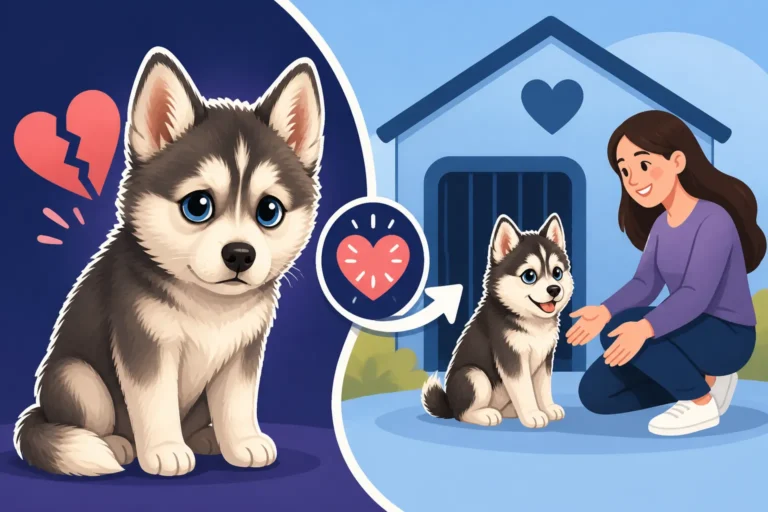
Why Pomskies Are Surrendered
It's a heartbreaking reality that many Pomskies end up in shelters or rescue organizations, not because they are "bad" dogs, but often due to unforeseen challenges and a mismatch between owner expectations and the reality of living with this unique hybrid breed. The initial allure of a miniature husky can sometimes overshadow the significant commitment involved, leading well-meaning owners to face the difficult decision to surrender their beloved companion. This guide aims to shed light on the most common reasons Pomskies are rehomed, helping prospective owners prepare thoroughly and offering empathy to those who've had to make such a tough choice.
The Dream Versus Reality: Why Pomsky Owners Face Heartbreaking Choices
When you first fall in love with the idea of a Pomsky, it's usually from seeing adorable photos online – a tiny, fluffy dog with piercing blue eyes, looking exactly like a pint-sized Siberian Husky. It's an intoxicating image, one that promises all the beauty and charm of a majestic northern breed, conveniently packaged in a manageable, apartment-friendly size. Who wouldn't want that? The problem is, sometimes that initial vision is built more on fantasy than on the intricate genetic tapestry that makes up a real Pomsky.
The journey from a viral photo to a living, breathing canine companion can be fraught with unexpected turns. Many people, understandably, get swept up in the novelty and cuteness without fully grasping the complexities of a designer breed that combines two very distinct working dogs. This disconnect between the idealized perception and the actual characteristics of the breed often lays the groundwork for future challenges, culminating in the difficult decision to surrender. It's rarely a lack of love, but often a lack of preparedness for the genuine needs of these unique dogs.
The Allure of the "Mini Husky" Myth
Let's be honest, the term "mini husky" is a marketing dream. It conjures images of a smaller, more docile version of the iconic sled dog, minus the enormous size and perhaps some of the intense energy. For urban dwellers or those with smaller homes, the prospect of a Husky-like dog that fits their lifestyle is incredibly appealing. People imagine a dog that looks like a Husky but acts more like a cuddly lapdog, or at least one that doesn't need miles of running every day.
The reality, however, is that while a Pomsky can resemble a miniature Husky, its temperament and needs are a true blend of both parent breeds – the Siberian Husky and the Pomeranian. This means you might get the Husky's independent spirit, its desire to explore, and its incredible stamina, all wrapped up in a smaller package that might still need significant exercise. The initial visual appeal often overshadows a deeper understanding of the behavioral traits that come with those striking looks. This misconception is a huge factor in why some Pomskies end up needing a new home.
When the Picture-Perfect Puppy Grows Up
Another common scenario involves a Pomsky puppy that, at eight weeks old, looks exactly like the miniature Husky everyone dreams of. But as puppies mature, their genetics truly kick in, and the initial appearance can change dramatically. Some Pomskies grow much larger than their owners anticipated, sometimes reaching up to thirty-five pounds or more, far surpassing the "toy" or "mini" size they were sold as. This can be a huge shock if you bought a puppy expecting it to stay under twenty pounds. You can read more about What a Pomsky Actually Weighs Full Grown to understand this variation better.
Beyond size, the coat, markings, and even eye color can shift as the puppy transitions into adulthood. A fluffy puppy might develop a coarser Husky-like double coat, or a short-coated Pomsky might surprise you with its shedding volume. What was once perceived as an adorable, manageable trait can become a significant challenge when the dog doesn't quite fit the picture the owner had in their mind, leading to frustration and, in some cases, the feeling that they didn't get the dog they thought they were adopting.
Living with the Wild Side: Unforeseen Behavioral Challenges
The adorable Pomsky is a melting pot of traits from two very different working breeds. The Siberian Husky is known for its independence, high energy, strong prey drive, and vocal nature, while the Pomeranian, though small, also possesses a bold, sometimes opinionated personality. When these traits combine, the result is a dog with a complex behavioral profile that can be incredibly challenging for unprepared owners. This isn't a simple "lap dog" by any stretch of the imagination, and many owners find themselves overwhelmed by the sheer force of character in their small canine companion.
The frustration often stems from a fundamental misunderstanding of what makes these breeds tick. People may assume that because the Pomsky is smaller than a Husky, its needs will also be proportionally smaller. This is a dangerous assumption. A twenty-pound Pomsky can possess the energy and drive of a full-sized Husky, demanding mental and physical stimulation that many owners are simply not equipped to provide, leading to destructive behaviors and an unhappy dog.
The Instinct to Roam and the Call of the Chase
One of the most persistent and challenging Husky traits that often manifests in Pomskies is their incredible wanderlust. Huskies were bred to run for miles, and this instinct to explore, to follow a scent, or simply to bolt for the sheer joy of it, is deeply ingrained. Many Pomsky owners are taken by surprise by just how strong this drive is, even in a smaller dog. This makes them notorious escape artists, capable of scaling fences, digging under them, or slipping collars with alarming ease. It's not uncommon for a new owner to find their Pomsky has vanished from what they thought was a secure yard, leading to panic and desperate searches.
This same instinct is tied to a powerful prey drive, inherited from both sides, but especially the Husky. A Pomsky might see a squirrel, a rabbit, or even a neighborhood cat, and that prey drive will kick in, making them deaf to commands and focused solely on the chase. This makes The Pomsky Escape Artist in a Twenty Pound Body a very real concern and means that off-leash walks in unsecured areas are a huge risk. For owners living in areas with wildlife or those who have other small pets, this can become an unbearable stressor, as managing this instinct requires constant vigilance and consistent training. Many owners find themselves unable to cope with the stress of a dog that constantly tries to run away or chases anything that moves.
Vocalizations and the Quest for Quiet
Pomskies are rarely quiet dogs. The Husky parentage blesses them with a wide range of vocalizations, from melodious howls to dramatic "woo-woos" and conversational grumbles. The Pomeranian side, meanwhile, contributes a propensity for sharp, insistent barking, often at anything that catches their attention. The combination means you often get a dog that is both a barker and a howler, making for a rather loud household. Many owners are simply not prepared for the sheer volume and frequency of their Pomsky's vocal expressions. You might find yourself learning Why a Pomsky Talks Instead of Barking, but that doesn't always make it quieter.
Living in an apartment or a close-knit neighborhood can become a nightmare when your Pomsky decides to serenade the mail carrier, the neighbor's cat, or simply the moon. Noise complaints can arise, straining relationships with landlords and neighbors. While some find their Pomsky's talking endearing, for others, it's a relentless source of stress, especially if they work from home or have young children. Training a quiet cue is possible, but it takes time, consistency, and a deep understanding of what triggers your Pomsky's vocal tendencies. Without that commitment, the constant noise can push owners to their breaking point.
Training Tangles: Independence vs. Obedience
Both Huskies and Pomeranians are intelligent breeds, but they are also known for their independent and sometimes stubborn streaks. This means that while a Pomsky can be trained, it's often not a straightforward process. They thrive on positive reinforcement and engagement, but boring, repetitive drills will quickly see them "tune out." Many first-time dog owners, or those used to more biddable breeds, find themselves at a loss when their Pomsky decides that obeying a command simply isn't worth their while. This independence can be endearing, but it can also be incredibly frustrating when you're trying to teach basic manners or prevent unwanted behaviors.
This inherent independence means that training often feels like a constant negotiation rather than a clear command-and-response dynamic. Owners might struggle with leash pulling, jumping, or house-training issues because their Pomsky is more interested in its own agenda. For families with children, this can be particularly challenging, as a poorly trained Pomsky might accidentally knock over a child or nip during play if boundaries aren't consistently enforced. The commitment required for consistent, positive-reinforcement training throughout a Pomsky's life is often underestimated, leading to behavioral issues that owners feel ill-equipped to handle, such as a strong Recall on a Pomsky Bred From a Dog That Runs being notoriously difficult to establish.
A Blizzard of Fur: The Realities of Pomsky Grooming and Shedding
One of the most defining characteristics of a Pomsky is its magnificent double coat. Derived from both the Siberian Husky and the Pomeranian, this coat is designed for insulation, keeping them warm in winter and cool in summer. It’s also incredibly soft and beautiful. However, this beautiful coat comes with a significant trade-off: shedding, and a lot of it. Many new Pomsky owners are simply not prepared for the sheer volume of fur that these dogs can produce, leading to household challenges and a realization that grooming is far more than just a quick brush.
The double coat requires consistent, thorough care to remain healthy and prevent matting. Without proper grooming, a Pomsky's coat can quickly become tangled and uncomfortable, potentially leading to skin issues. What begins as a minor inconvenience can rapidly escalate into a major chore, consuming significant time and effort, and for some, becoming an overwhelming aspect of daily life that they simply cannot manage, particularly during seasonal "blowouts."
The Double Coat's Demands: More Than Just Brushing
A Pomsky's double coat consists of a soft, dense undercoat and longer, protective guard hairs. This combination means that regular brushing isn't just about surface tidiness; it's about reaching deep into the undercoat to remove loose fur and prevent mats. Owners quickly discover that a simple slicker brush isn't enough. They need specialized tools like an undercoat rake and a pin brush, and they need to use them frequently. During seasonal "blowouts" – which typically happen twice a year, in spring and fall – the shedding becomes truly epic. You can read more about Whether a Pomsky Blows Its Coat Twice a Year.
During these periods, it feels like the fur is everywhere: clinging to clothes, carpeting furniture, and accumulating in drifts on the floor. Daily, extensive grooming sessions are often required just to keep up, and even then, it can feel like a losing battle. Professional grooming, including de-shedding treatments and high-velocity drying, becomes a necessity for many, adding to the financial burden and time commitment. For individuals with busy schedules or those who underestimated the dedication required, the constant battle with fur can become deeply frustrating and a major reason for considering rehoming.
Unexpected Allergies and Household Havoc
While no dog is truly "hypoallergenic," some breeds shed less or produce less dander, which can be a relief for allergy sufferers. The Pomsky, with its dense double coat, is decidedly not one of those breeds. Many owners or family members discover, much to their dismay, that they develop or experience exacerbated allergies once a Pomsky moves in. What started as sniffles can turn into full-blown allergic reactions, making living with the dog incredibly uncomfortable or even untenable. This often comes as a crushing blow, as the attachment to the dog has already formed.
Beyond personal allergies, the sheer volume of hair can create constant household havoc. Fur can clog vacuum cleaners, necessitate daily cleaning routines, and make it difficult to maintain a tidy home. For people who prioritize cleanliness or who live in smaller spaces where fur is more noticeable, the relentless shedding can become a constant source of stress and resentment. The image of a fluffy companion quickly gives way to the reality of a never-ending fur cleanup operation, which for some, is simply too much to handle.
The Budget Breakers: Financial Pressures of Pomsky Ownership
Bringing a new dog into your life always involves a financial commitment, but with a breed like the Pomsky, those costs can quickly escalate beyond what many prospective owners anticipate. The initial purchase price is often just the tip of the iceberg, and the ongoing expenses for food, grooming, veterinary care, and other supplies can create a significant strain on a household budget. This isn't just about the occasional treat; it's about the consistent, unavoidable costs that accumulate over the dog's entire lifespan.
Many people budget for the obvious expenses but overlook the recurring or unexpected ones. When these costs pile up, especially during tough economic times or unforeseen personal emergencies, otherwise devoted owners may find themselves in a precarious position. The choice between providing for their family and adequately caring for their Pomsky becomes a heartbreaking dilemma, leading to the decision that the dog would be better off in a home that can fully meet its financial needs.
The Never-Ending Food Bowl and Vet Bills
While Pomskies aren't giant breeds, they are active and often require high-quality food to maintain their energy levels and coat health. What a Pomsky eats monthly can vary, but skimping on nutrition can lead to other health issues down the line. Beyond daily kibble, there are treats, supplements (especially if they have specific dietary needs like a zinc supplement), and sometimes specialized diets if the dog develops allergies or sensitivities. Brands like Ollie can provide high-quality fresh food options, but these often come at a premium. The cost of keeping a Pomsky well-fed and healthy adds up steadily over the months and years.
Even with good nutrition, vet bills are an inevitable part of pet ownership. Pomskies, being a hybrid breed, can inherit health predispositions from both Huskies and Pomeranians. This means potential issues like Slipping Kneecaps in a Pomsky, Dental Crowding in a Pomsky's Small Mouth, or various eye conditions. Routine check-ups, vaccinations, parasite prevention, and unexpected emergencies can quickly become very expensive. While pet insurance companies like Healthy Paws can help mitigate these costs, many owners don't invest in it, or find that pre-existing conditions aren't covered, leaving them facing substantial out-of-pocket expenses when their beloved pet falls ill or needs surgery. The financial shock of a major vet bill can be a breaking point for many families.
Hidden Costs: Grooming, Training, and Pet Care
Beyond food and basic vet care, there are numerous "hidden" costs that can take owners by surprise. As discussed, professional grooming is often a necessity for a Pomsky's double coat, and The Grooming Bill on a Double Coated Pomsky can be substantial, especially for de-shedding services. Add to that regular nail trims, ear cleaning supplies, and specialized brushes (which can be found on sites like Chewy), and the grooming budget grows.
Then there's training. While some owners successfully handle training themselves, many Pomskies benefit greatly from professional classes or private sessions to manage their strong will and energy. These can range from basic puppy classes to advanced obedience or behavior modification, and the costs can add up quickly. Furthermore, if you travel, boarding fees or pet-sitting services are necessary, and these can be quite expensive, especially for longer trips. Even seemingly small purchases like toys, beds, leashes, harnesses (a necessity to protect their windpipe), and enrichment items contribute to the overall financial picture. When unforeseen expenses stack up against a tight budget, the difficult choice to surrender can feel like the only option.
Here's a quick look at common Pomsky expenses:
| Category | Description | Frequency | Potential Cost Implications |
|---|---|---|---|
| Food | High-quality kibble, fresh food, treats, supplements | Monthly | Varies based on brand, diet type, and Pomsky's size. |
| Vet Care | Annual check-ups, vaccinations, parasite prevention, emergency care, spay/neuter | Annually/As Needed | Significantly higher for emergencies or chronic conditions. |
| Grooming | Professional de-shedding, bathing, nail trims, at-home tools | Monthly/Quarterly | Especially costly during seasonal coat blows. |
| Training | Puppy classes, obedience courses, private sessions | As Needed | Essential for managing behavior, can be a significant upfront cost. |
| Pet Insurance | Coverage for accidents, illnesses, routine care (optional) | Monthly | Reduces out-of-pocket costs for major health events. |
| Supplies | Collar, harness, leash, bed, crate, toys, bowls | One-time/As Needed | Initial setup cost, ongoing replacement for wear and tear. |
| Pet Sitting/Boarding | When owners travel | As Needed | Varies by location and length of stay. |
Health Surprises and Size Discrepancies
Part of the appeal of "designer breeds" like the Pomsky is often the hope of combining the best traits of two parent breeds while minimizing genetic health issues through hybrid vigor. Unfortunately, this isn't always the case. Pomskies can inherit health problems from both the Siberian Husky and the Pomeranian, and because it's a newer crossbreed, long-term health data isn't as robust as for established purebreds. This uncertainty, coupled with the wide range in expected adult size, can lead to significant disappointments and unexpected financial burdens for owners.
When a dog doesn't grow to the anticipated size or, more critically, develops an expensive or debilitating health condition, owners can feel blindsided. This isn't just about appearances; it's about the practical implications for their living situation, their finances, and their emotional capacity to care for a dog whose needs dramatically differ from what they were prepared for.
Battling Genetic Predispositions
Despite the theory of hybrid vigor, Pomskies are still susceptible to many of the genetic health issues found in their parent breeds. This includes concerns like juvenile cataracts, hip dysplasia, and patellar luxation (slipping kneecaps), which are common in Huskies and Pomeranians respectively. While responsible breeders will screen parent dogs for these conditions, there's never a 100% guarantee that a puppy will be free of them, especially in a relatively young crossbreed. When a Pomsky develops an expensive or chronic health problem, the financial and emotional toll on owners can be immense.
Imagine discovering your vibrant young Pomsky needs surgery for The Collapsing Trachea a Pomsky Gets From the Pomeranian, or is suffering from Slipping Kneecaps in a Pomsky. These conditions require specialized veterinary care, medication, and potentially costly surgeries. Owners who were unprepared for such expenses, or who find themselves unable to provide the extensive care needed, may feel they have no choice but to seek a new home for their dog where its medical needs can be adequately met. This is a particularly painful reason for surrender, as it stems from a place of genuine concern for the dog's well-being.
When "Mini" Becomes "Medium": Size Beyond Expectations
One of the biggest selling points for Pomskies is their "miniature" size, but this is also one of the most unpredictable aspects of the breed. Reputable breeders strive for consistency, but genetics are complex, and a Pomsky puppy's adult size can be a significant surprise. It's not uncommon for a Pomsky sold as a "toy" or "mini" to grow into a medium-sized dog, sometimes weighing thirty pounds or even more. This can happen even when the parents were within the expected size range. You can read more about What Happens When a Pomsky Grows Bigger Than Sold.
This size discrepancy can create numerous problems. An owner might have chosen a Pomsky specifically because they live in an apartment with weight restrictions, or they simply don't have the space for a larger dog. When their beloved puppy outgrows these constraints, it forces them into an impossible situation. Furthermore, larger Pomskies often have higher energy needs and consume more food, further straining resources. The feeling of being misled, combined with practical difficulties, can lead to the difficult decision to find a new home better suited for a larger canine companion.
Life's Unpredictable Turns: When Owners Can No Longer Provide
Sometimes, even the most prepared and dedicated Pomsky owners find themselves in situations beyond their control that necessitate rehoming their dog. Life is unpredictable, and unforeseen circumstances can dramatically alter an owner's ability to provide the stable, loving home a Pomsky needs and deserves. These situations are particularly heartbreaking because they often have nothing to do with the dog's behavior or health, but rather with the shifting realities of human life.
It's important to approach these situations with empathy, as no owner sets out to surrender their pet. Often, the decision comes after prolonged struggle and a desperate search for alternatives. Understanding that these external pressures contribute significantly to why Pomskies are surrendered helps to remove judgment and fosters a more supportive environment for both owners and dogs in transition.
Major Life Changes and the Impact on Pet Ownership
Life has a way of throwing curveballs, and many of these can directly impact a person's ability to care for a pet. A sudden job loss can make pet ownership financially unsustainable, especially with the ongoing costs of a Pomsky. Relocation for work, a new relationship, or a change in housing can also be major factors. Moving to a new apartment that doesn't allow dogs, or specifically a breed like a Pomsky, immediately puts an owner in a difficult position. The housing crisis in many areas means finding pet-friendly rentals is already a challenge, let alone for a breed that might be perceived as high-energy or prone to barking.
Similarly, significant family changes, such as the arrival of a new baby or a divorce, can dramatically alter household dynamics and available time and resources. A once-attentive owner may find they no longer have the capacity to meet their Pomsky's exercise and training needs, leading to behavioral issues born out of neglect or lack of attention. When these life events happen, the well-being of the dog often becomes a paramount concern, and if an owner genuinely believes they can no longer provide the best life for their Pomsky, seeking a new home can be an act of selfless love, however painful.
Seeking a Second Chance: The Role of Rescue Organizations
When an owner realizes they can no longer care for their Pomsky, rescue organizations dedicated to the breed or broader animal shelters often become the next step. These organizations play a crucial role in providing a safety net for dogs whose owners can no longer keep them. They take in Pomskies who might be perfectly wonderful dogs, but whose previous homes simply couldn't accommodate their needs or circumstances. It's important to remember that most dogs entering rescue are not "bad" dogs; they are simply dogs in need of a second chance due to human limitations.
Rescue groups work tirelessly to assess the Pomsky's temperament, address any immediate health needs, and then carefully match them with a new family that is a better fit for their specific requirements. This process is often thorough, ensuring that the next home understands the breed's needs and is prepared for the long-term commitment. It's a testament to the resilience of both dogs and the compassion of people that so many Pomskies find their happy forever homes through these dedicated efforts, proving that even a difficult surrender can lead to a brighter future.
Disclaimer
This article is for general informational purposes only and does not constitute professional advice. Laws, prices and regulations vary by location and change over time. Consult a qualified professional for guidance on your specific situation.