What a Force Dryer Costs for a Pomsky
If you're a Pomsky owner, you know the struggle: that beautiful, fluffy double coat is a dream until it's bath time. Trying to dry it with towels feels like an endless, soggy battle, often leaving damp spots that can lead to skin issues. This guide is here to walk you through everything you need to know about investing in a force dryer, breaking down the costs and why it's truly a game-changer for keeping your Pomsky healthy and happy.
Why a Force Dryer Becomes a Must-Have for Pomsky Owners
Let's be honest, that adorable fluff is also a monumental task when wet. Many new Pomsky parents don't quite grasp the sheer volume of fur that needs drying until they're neck-deep in towels and a still-damp dog. A force dryer isn't just a luxury; it's practically a necessity for proper coat care and overall well-being.
The Double Coat Dilemma: Why Towels Just Don't Cut It
Your Pomsky inherits that magnificent, dense double coat from both its Siberian Husky and Pomeranian ancestors. This coat is designed to keep them warm in cold climates, with a soft, thick undercoat providing insulation and longer, coarser guard hairs protecting it. When this coat gets wet – whether from a bath, a romp in the rain, or even melting snow – it absorbs an incredible amount of water. Towel drying, no matter how vigorous, really only tackles the outer guard hairs, leaving the crucial undercoat still damp, sometimes for hours.
This lingering dampness is more than just an annoyance; it's a serious health concern. A perpetually damp undercoat creates the perfect breeding ground for bacteria and yeast, leading to uncomfortable and often painful skin conditions like hot spots, dermatitis, or fungal infections. These issues can rapidly escalate, requiring veterinary intervention, medicated shampoos, and even antibiotics. Investing in a tool that properly dries The Pomsky That Carries a Husky Coat at Twenty Pounds is a preventative measure, protecting your pup from unnecessary discomfort and you from unexpected vet bills.
Saving Time and Sanity During Grooming
Think about how long it takes to towel dry your Pomsky. Maybe 30 minutes? An hour? And still, they feel a bit clammy, right? A force dryer dramatically cuts down this time, often getting a thoroughly wet Pomsky completely dry in 15-30 minutes, depending on their size and coat density. This isn't just about speed; it's about efficiency and effectiveness. The powerful, concentrated airflow from a force dryer literally forces water out of the coat, separating the hairs and getting right down to the skin.
Beyond the practical time-saving, there's the mental and physical relief. Wrestling a squirming, damp dog with towels can be exhausting for both of you. A force dryer makes the process more controlled and, once your Pomsky is accustomed to it, often more pleasant. It transforms a dreaded chore into a manageable routine, allowing you to regularly bathe your Pomsky as needed without the added stress of an inadequate drying process. Considering How Often a Pomsky Should Be Bathed, this efficiency makes a huge difference in your household routine.
Breaking Down the Cost of a Force Dryer
When you first start looking at force dryers, the price tags can sometimes be a little startling. But just like any specialized piece of equipment, there's a range, and understanding what influences that cost can help you make an informed decision for your Pomsky.
Initial Purchase Price: What to Expect
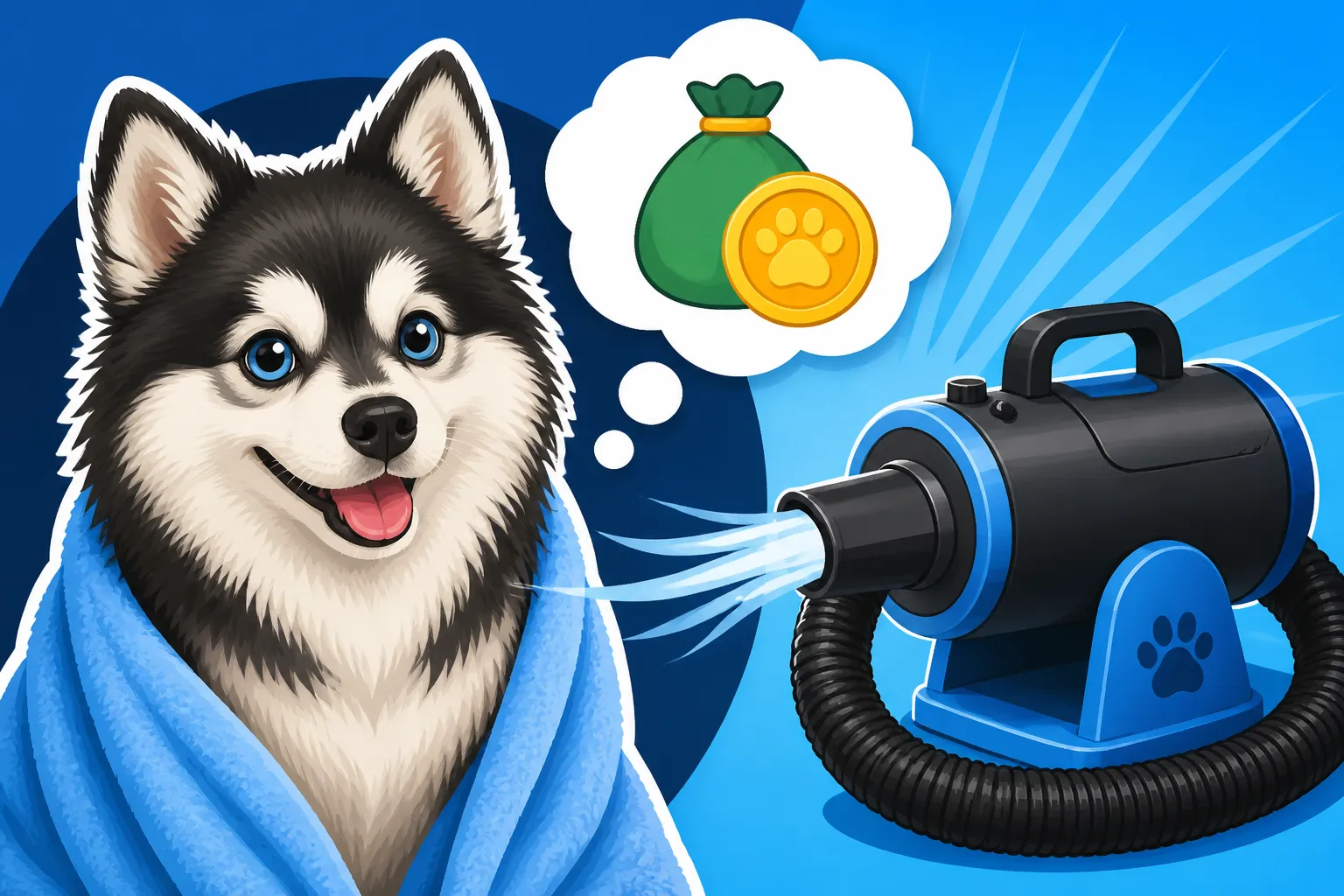
The cost of a force dryer can vary quite a bit, typically ranging from entry-level consumer models to professional-grade machines used by groomers. You'll find a wide range of options at online retailers, including pet supply giants like Chewy, which often stock various brands and models to suit different needs and budgets.
- Entry-Level Models (Lower Price Range): These dryers are usually smaller, less powerful, and might have fewer features. They can be a good starting point for smaller Pomskies or if you only need to bathe your dog infrequently. However, for a dense double coat, they might take longer to dry the dog completely and may not be as durable for frequent use. Expect decent airflow, but potentially less raw power to blast through thick undercoat.
- Mid-Range Models (Moderate Price Range): This is often the sweet spot for many Pomsky owners. These dryers offer a significant step up in power and durability, often featuring stronger motors, adjustable speed and heat settings, and a good selection of nozzles. They strike a great balance between performance and cost, making the drying process much more efficient and effective for a typical Pomsky coat. Many of these models are robust enough for regular home grooming.
- Professional-Grade Models (Higher Price Range): These are the workhorses used in busy grooming salons. They boast extremely powerful motors, robust construction designed for continuous use, and often very precise controls for airflow and temperature. While they come with a higher price tag, they offer unparalleled drying speed and efficiency. If you have multiple Pomskies, a very large Pomsky, or simply want the best performance and longevity, a professional model might be a worthwhile investment in the long run.
Factors like brand reputation, motor wattage, CFM (cubic feet per minute) of airflow, noise reduction technology, and included attachments all play a role in the initial purchase price. It’s worth reading reviews to see what other Pomsky owners recommend, as their experiences with specific models can be very insightful.
Running Costs and Maintenance
Once you've made the initial investment, the ongoing costs of a force dryer are thankfully quite minimal. This is where you really start to see the savings compared to frequent professional grooming, which includes What a Deshedding Treatment Costs on a Pomsky.
- Electricity Usage: Force dryers, especially the more powerful ones, do draw a fair amount of electricity while in use. However, because they significantly cut down drying time, the actual energy consumption per bath is often less than you might expect. Most household circuits can handle them, and the impact on your monthly electric bill will likely be negligible, especially when compared to the cost of repeatedly taking your Pomsky to a professional groomer for blowouts.
- Filter Replacement: Most force dryers have air filters that protect the motor from dog hair and dust. These filters need to be cleaned regularly – usually after every few uses or monthly, depending on how often you groom. Some filters are washable, while others are disposable and need occasional replacement. Disposable filters are a minor, recurring cost, but vital for maintaining the dryer's efficiency and lifespan. Neglecting filter cleaning can lead to the motor overheating and premature failure.
- Hose and Nozzle Replacement: The flexible hose and various nozzles that come with your dryer are subject to wear and tear over time. Hoses can crack or develop holes, and nozzles can get lost or damaged. While not a frequent expense, you might need to replace these components eventually. Many manufacturers offer replacement parts, keeping your dryer fully functional for years.
- Professional Servicing: For high-quality, professional-grade dryers, some owners might opt for occasional professional servicing, much like you would with a vacuum cleaner or other appliance. However, for most home users, basic cleaning and filter maintenance are usually sufficient. The robust design of many mid-to-high range force dryers means they are built to last without needing constant repair.
Ultimately, the running costs are quite low, making the force dryer a cost-effective solution for long-term Pomsky care, especially when you consider Whether Grooming a Pomsky at Home Saves Money.
Choosing the Right Force Dryer for Your Pomsky and Your Budget
Selecting the perfect force dryer isn't just about picking the most expensive or cheapest one on the market. It's about finding the right balance of features, power, and price to suit your Pomsky's specific needs and your lifestyle.
Key Features to Consider Beyond Price
When you're sifting through different models, keep these critical features in mind. They make a huge difference in the user experience for both you and your fluffy companion.
- Motor Power and CFM (Cubic Feet per Minute): This is arguably the most important specification for a Pomsky. CFM indicates the volume of air the dryer can move, which directly translates to its drying power. For a Pomsky's dense double coat, you want a dryer with a high CFM. Entry-level models might be around 60-80 CFM, while professional ones can exceed 200 CFM. A higher CFM means the air penetrates the undercoat more effectively, blasting out water and shedding hair, ultimately speeding up the drying process. Don't compromise too much here, or you'll be back to spending ages on drying.
- Heat vs. No Heat: Many force dryers offer an optional heating element. While some heat can speed up drying, it's crucial to use it cautiously with double-coated breeds like Pomskies. Their thick coats can quickly overheat, potentially leading to skin burns or discomfort. Most professional groomers prefer using room-temperature air with high velocity. The friction of the air itself generates a slight warmth. If you opt for a dryer with heat, always use the lowest setting and ensure the nozzle is constantly moving and kept a safe distance from your dog's skin. You want to ensure your Pomsky is completely dry, but not overheated, especially considering whether a Pomsky's double coat works in both seasons.
- Noise Level: Pomskies, like many dogs, can be sensitive to loud noises. Force dryers are, by nature, noisy. However, some models incorporate noise reduction technology or quieter motors. Look for dryers that explicitly mention lower decibel ratings. A less noisy dryer will make the desensitization process much easier for your Pomsky and be more comfortable for you. It's a small detail that can make a huge impact on your dog's willingness to tolerate grooming.
- Attachments and Nozzles: A good force dryer will come with a variety of nozzles. A flat, wide nozzle is great for general drying and "blowing out" shed undercoat. A narrower, concentrator nozzle provides more focused airflow for specific areas or for finishing touches. A cone or round nozzle can be useful for shaping or fluffing. Having a selection allows you to adapt the dryer to different parts of your Pomsky's body and various stages of the drying process. Just as you might use The Rake, Slicker and Comb a Pomsky Needs for different grooming tasks, so too do different nozzles serve different purposes.
- Durability and Warranty: This is an investment. Look for brands known for their reliability and good customer service. A solid warranty can provide peace of mind, covering potential defects. Reading reviews about how well a dryer holds up over time is invaluable. You want a tool that will last through years of Pomsky baths, not one that gives up after a few uses.
Balancing Quality and Affordability
It's tempting to go for the cheapest option, but with a force dryer for a Pomsky, it's often a false economy. An underpowered dryer will frustrate you, take too long, and might not even dry the undercoat properly, leaving your dog susceptible to skin issues. On the flip side, you don't necessarily need the most expensive professional model unless you're grooming multiple dogs daily.
For most Pomsky owners, a mid-range model offers the best value. It provides sufficient power, good durability, and helpful features without an exorbitant price tag. Consider it an investment in your Pomsky's health and your own sanity. The money you save on professional grooming, especially considering whether a Pomsky needs professional grooming at all, could easily justify the cost of a quality home dryer within a year or two. Moreover, preventing skin infections from incomplete drying saves on potential vet visits. By ensuring your Pomsky's coat is always thoroughly dry, you minimize the risk of hot spots and yeast overgrowth. While pet insurance, such as a policy from Healthy Paws, can certainly help with unexpected health issues, preventing them in the first place is always the goal.
Getting Your Pomsky Used to the Force Dryer
Even the most powerful, quietest force dryer is useless if your Pomsky is terrified of it. Introducing this new, potentially intimidating tool requires patience, positive reinforcement, and a gradual approach.
Gradual Introduction and Positive Reinforcement
The key to success here is low and slow. Don't just turn on the dryer full blast next to your Pomsky after their first bath. That's a recipe for fear and resistance.
- Start with Sound: Begin by simply turning the dryer on in another room, far away from your Pomsky, while they are engaged in a favorite activity or enjoying a treat. The goal is to let them hear the sound without associating it with anything scary. Gradually move the dryer closer over several days or weeks, always observing their reaction. If they show any signs of stress, move it back further.
- Introduce the Sensation: Once your Pomsky is comfortable with the sound, turn the dryer on a low setting and direct the airflow away from them. Let them investigate the device on their own terms. Then, gently, from a distance, direct the very low airflow onto your hand or arm, letting them sniff and see that it's not harmful. Slowly, gradually, move the airflow towards their body, starting with an area they are less sensitive about, like their back or hindquarters, always keeping the nozzle a good distance away.
- Pair with Treats and Praise: Every step of this process should be heavily rewarded with high-value treats and enthusiastic praise. Make it a game! Turn the dryer on for a few seconds, give a treat. Turn it off. Repeat. Gradually increase the duration. The goal is for your Pomsky to associate the dryer with good things. Getting a Pomsky Used to a Force Dryer takes time, but it’s worth the effort.
Safety Tips and Best Practices
Once your Pomsky is comfortable, maintain a consistent routine and always prioritize their safety and comfort.
- Maintain Distance: Always keep the nozzle moving and at least 6-12 inches away from your Pomsky's skin, especially if you're using any heat. Concentrated, still heat or intense airflow can cause discomfort or even skin irritation. You want to "float" the hair and blast the water out, not cook or assault their skin.
- Protect Ears and Eyes: The noise of a force dryer, even a quiet one, can be intense for a dog's sensitive ears. Consider using a Happy Hoodie or cotton balls in their ears (just remember to remove them!). Be very careful around their face and eyes; you can use your hand to shield them from the direct blast of air. Many dogs dislike direct air on their face, so work around it.
- Work in Sections: Don't try to dry your entire Pomsky all at once. Work in sections, drying one area completely before moving to the next. This helps keep the process manageable and less overwhelming for your dog. For example, dry one side, then the other, then the legs, then the tail.
- Monitor for Overheating: Even with cool air, the powerful force can generate friction and warmth. Keep an eye on your Pomsky for any signs of overheating, like excessive panting, bright red gums, or frantic behavior. Take breaks as needed. Remember, Whether a Pomsky Overheats More Than a Husky is a valid concern, and their dense coat can make them prone to it.
- Ensure a Secure Surface: Grooming tables with non-slip surfaces and grooming loops are ideal for keeping your Pomsky secure and stable during drying. This prevents them from jumping down and potentially injuring themselves or damaging the dryer. If you're on the floor, ensure it's non-slip.
- Check for Damp Spots: After you think you're done, run your fingers deep into the undercoat, especially in thicker areas like the ruff, hindquarters, and tail. Feel for any lingering dampness. Any moisture left behind can still lead to problems like Whether a Damp Pomsky Undercoat Causes Hot Spots. A truly dry coat will feel light, fluffy, and completely free of any moisture.
By carefully integrating a force dryer into your grooming routine, you'll ensure your Pomsky's coat stays healthy, clean, and free from matting, making both your lives much easier and more enjoyable. It’s an investment in their comfort and your peace of mind.
| Feature | Entry-Level Force Dryer | Mid-Range Force Dryer | Professional-Grade Force Dryer |
|---|---|---|---|
| Typical Cost | Lower end of the price range | Moderate price range | Higher end of the price range |
| Motor Power/CFM | Moderate (e.g., 60-80 CFM) | Good (e.g., 100-150 CFM) | Excellent (e.g., 180-220+ CFM) |
| Drying Time | Longer, might struggle with very dense coats | Significantly faster, efficient for most Pomskies | Very fast, ideal for multiple or very thick coats |
| Noise Level | Can be louder, less noise reduction | Moderate, some noise reduction features | Often quieter due to advanced engineering |
| Heat Settings | Often basic on/off or low heat options | Adjustable heat, often with "no heat" option | Precise temperature control, strong "no heat" option |
| Attachments | Basic set of 1-2 nozzles | Good variety of 3+ nozzles for different tasks | Comprehensive set of specialized nozzles |
| Durability | Suitable for occasional home use | Durable for regular home use, often robust construction | Built for continuous daily use, heavy-duty components |
| Best For | Small Pomskies, infrequent bathing, tight budgets | Most Pomsky owners, balancing performance and cost | Multiple Pomskies, grooming enthusiasts, ultimate efficiency |
Disclaimer
This article is for general informational purposes only and does not constitute professional advice. Laws, prices and regulations vary by location and change over time. Consult a qualified professional for guidance on your specific situation.