Whether a Pomsky Opens Doors and Gates
You know that heart-stopping moment when you glance over, and the gate you swore was latched is inexplicably open, or the back door stands ajar when you were certain it was closed? If you own a Pomsky, you've likely experienced this unique brand of panic. These clever, often mischievous little powerhouses have a reputation for being escape artists, and figuring out how to open doors and gates is surprisingly high on their list of specialized skills. This guide will dive deep into why your Pomsky might be a master of egress and, more importantly, how you can outsmart their Houdini-like tendencies to keep them safely where they belong.
The Crafty Canine Mind Behind the Pomsky's Escapades
It’s easy to dismiss your Pomsky's ability to open doors as just being "naughty," but it's far more complex than that. This behavior stems from a fascinating blend of intelligence, curiosity, and an inherent drive passed down from their parent breeds. Understanding these roots is the first step to truly mitigating the problem.
Inherited Intelligence: The Husky and Pomeranian Influence
Let's face it, both the Siberian Husky and the Pomeranian are breeds known for their smarts, even if sometimes those smarts are directed at getting their own way. Huskies are notoriously intelligent problem-solvers, capable of intricate thinking when it comes to navigating their environment, often with an impressive aptitude for escape. They can figure out latches, climb fences, and generally see a "barrier" as merely a suggestion or a puzzle to be solved. Their agility and physical prowess are often combined with a keen observational capacity – they watch how you open things.
The Pomeranian, while much smaller, contributes a sharp, often sassy intelligence. Poms are quick learners, agile, and certainly not lacking in determination. They might not have the sheer physical strength of a Husky, but their tenacity and cleverness are formidable. When you combine these two genetic blueprints, you get a Pomsky: a dog with the brainpower to observe, learn, and then execute complex actions like manipulating a door handle, often with surprising dexterity for their size. It’s not just a fluke; it's a genetic predisposition to being incredibly smart and resourceful.
The Drive for Exploration and Problem-Solving
Beyond pure intelligence, Pomskies often possess a strong innate drive to explore and solve problems. This isn't necessarily about malicious intent; it’s about a dog being a dog, driven by curiosity and a desire to understand their surroundings. A closed door isn't just a barrier; it's an opportunity. What's on the other side? Is it a new smell, a squirrel, another dog, or perhaps just the room where you are? This drive is amplified if they're under-stimulated. A bored Pomsky is a creative Pomsky, and creativity in a dog often translates to finding novel ways to get out or get into mischief.
Think of it like a game for them. They might initially try batting at a handle, notice it jiggles, and then through trial and error, learn the precise movement needed to release the latch. This isn't just luck; it's observation, experimentation, and a successful outcome reinforcing the behavior. They remember what works. For many Pomskies, the reward isn't just freedom, but the intellectual satisfaction of having figured out a challenge. This problem-solving nature makes them incredibly engaging companions but also requires owners to be equally vigilant and proactive in securing their environment.
Decoding the Types of Doors and Gates a Pomsky Can Master
It’s easy to think all doors are created equal when it comes to dog-proofing, but your Pomsky's ability to open them can vary significantly based on the type of handle or latch. Knowing which mechanisms are most vulnerable is key to effective prevention.
Lever Handles: The Easiest Target
Without a doubt, lever-style door handles are the absolute weakest link in your home's security against a determined Pomsky. These handles are designed for ease of use by humans, requiring only a downward push or pull. For a dog, especially one with a good vertical leap or the ability to stand on its hind legs (which many Pomskies can do quite easily), it's often a simple matter of batting or pulling the lever with a paw or even nudging it with their nose. Once they figure out the motion, the door swings open.
I've heard countless stories of Pomskies launching themselves at lever handles, pawing at them until they click, or even jumping up and hanging from them briefly until the mechanism disengages. It's a learned behavior, but once learned, it's incredibly difficult to unlearn without modifying the environment. The smooth, easy action of a lever handle provides very little resistance, making it an irresistible challenge for a curious and intelligent Pomsky. You might find yourself locked out of rooms that your dog has confidently locked itself into.
Knob Handles and Sliding Doors: A Greater Challenge
Traditional round doorknobs present a slightly higher degree of difficulty for a Pomsky, but don't underestimate them. While dogs lack opposable thumbs to grip and turn a knob, some particularly clever individuals have figured out how to use their muzzle or paws to twist them. This usually involves a combination of biting, pushing, and twisting motions, often requiring more coordination and persistence than a lever handle. However, it's not impossible, especially for a Pomsky that has observed its human parents turning the knob repeatedly.
Sliding doors, like those leading to a patio or deck, can also fall victim to a Pomsky's ingenuity. They might paw at the edge, use their nose to push the door along its track, or even learn to manipulate the latch mechanism. Many sliding doors have simple thumb-turn locks or a foot-operated bolt, both of which can be surprisingly easy for a resourceful dog to disengage if they're motivated enough and have watched you do it. The key here is friction and observation – if the door slides easily, and they've seen you interact with the lock, they might put two and two together.
Gate Latches and Locking Mechanisms
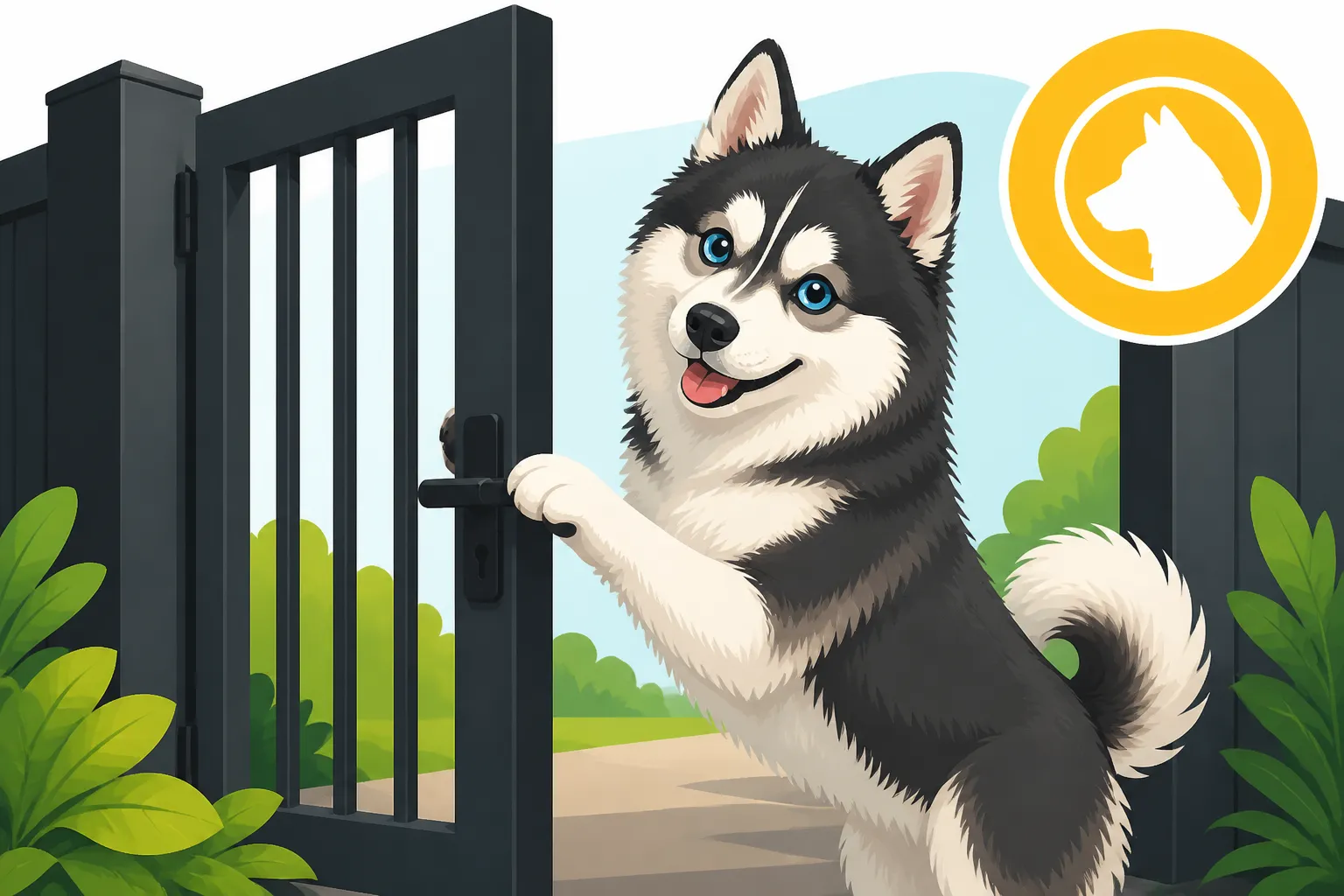
Indoor and outdoor gates, whether baby gates or garden gates, are another common point of failure for Pomsky owners. Simple hook-and-eye latches, gravity latches, or even some pressure-mounted baby gates can be no match for a smart Pomsky. They can learn to lift hooks with their nose, push against pressure gates until they pop out, or even jump clean over them if they're not tall enough. The Pomsky Escape Artist in a Twenty Pound Body details just how inventive these dogs can be when it comes to getting where they want to go.
More complex mechanisms, like spring-loaded gate latches or deadbolts, should theoretically be more secure. However, a persistent Pomsky can still surprise you. I've known dogs who figured out how to depress the button on a spring latch with one paw while simultaneously pushing the gate open with their body or other paw. For outdoor gates, a standard wooden fence gate with a simple latch can be compromised by a dog pushing against it or even digging under it if there isn't a secure footing. This is where truly secure, multi-step locking mechanisms become essential.
Why Your Pomsky Becomes a Door-Opening Houdini
It’s rarely just about the physical act of opening a door or gate. There's almost always an underlying motivation driving your Pomsky's desire for freedom. Addressing these root causes is crucial for long-term success in keeping your furry friend contained and safe.
Boredom and Lack of Mental Stimulation
Imagine being incredibly intelligent and energetic, but having nothing to do all day. That's often the reality for a Pomsky left without adequate mental and physical stimulation. Huskies are working dogs, and Pomeranians are clever little companions who thrive on engagement. A Pomsky combines these traits, meaning they need more than just a quick walk and a chew toy. If their minds aren't challenged, they will find their own "work," and that often involves problem-solving how to get out.
A bored Pomsky might start exploring boundaries, sniffing out weaknesses in doors, or experimenting with handles. It's a way for them to occupy their time and engage their brains. Without appropriate outlets like puzzle toys, training sessions, interactive play, or sufficient exercise, their innate intelligence and drive for activity can be redirected into escaping. This isn't them being "bad"; it's them being a smart dog with unmet needs. Thinking about The Exercise a Pomsky Needs Every Day is really important here, as physical activity often burns off the excess energy that might otherwise fuel escape attempts.
Separation Anxiety and the Need to Follow
For some Pomskies, the drive to open doors isn't about adventure, but about anxiety. If your Pomsky suffers from separation anxiety, their attempts to open doors might stem from a desperate need to be with you. They aren't trying to run away; they're trying to find you. This manifests as frantic efforts to get through any barrier that stands between them and their beloved human. You might notice excessive whining, destructive chewing, or even accidents in the house when you're gone, in addition to the door-opening attempts.
The stress of being left alone can fuel an incredible determination. They might push, paw, jump, and scratch at a door for extended periods, driven by panic rather than curiosity. This is a particularly heartbreaking scenario because their escape attempts are a cry for help. Addressing separation anxiety requires a multi-faceted approach, often involving desensitization training, counter-conditioning, and sometimes even professional guidance. Simply securing the door won't resolve the underlying distress, and they might just find another destructive outlet. Whether a Pomsky Suffers Separation Anxiety offers more insights into this challenging behavior.
High Prey Drive and the Allure of the Outside World
Both Huskies and Pomeranians have a history of hunting and a relatively high prey drive, and this trait is often passed on to Pomskies. That squirrel scampering across the yard, the rabbit hopping through the bushes, or even the neighborhood cat sauntering by can become an irresistible siren song. If your Pomsky sees or smells something enticing outside, that door or gate suddenly becomes a hurdle to overcome, not a permanent barrier.
Their focus on the "prey" can be so intense that they become incredibly motivated to figure out how to get to it. They're not necessarily trying to escape permanently; they're trying to chase. This is why recall on a Pomsky can be so challenging, as discussed in Recall on a Pomsky Bred From a Dog That Runs. Even if they're usually well-behaved, the sight of a small animal can trigger an instinctual response that overrides all training and ignores any physical barriers you've set up. This drive highlights the importance of securing your property, as even a momentary lapse can lead to a dangerous chase.
Fortifying Your Home Against Your Clever Escape Artist
Once you understand why your Pomsky is trying to open doors and gates, the next step is to make it physically impossible (or at least incredibly difficult) for them to succeed. This involves a combination of physical barriers and smart home management.
Enhancing Security: Latches, Locks, and Baby Gates
For lever handles, the simplest and most effective solution is to install child-proof lever handle locks. These typically wrap around the handle, requiring a human hand to depress buttons on either side to operate the lever, a maneuver impossible for a dog's paw or snout. You can find many effective options on platforms like Amazon. For knob handles, child-proof covers that make the knob too wide or difficult to grasp for a dog can work wonders.
For sliding doors, investing in a robust secondary lock, like a security bar or a specialized sliding door lock that physically pins the door in place, is far more reliable than relying on the standard latch. Remember, a Pomsky can learn to manipulate simple latches, so you need something that requires a multi-step or more complex action.
Outdoor gates are often the biggest vulnerability. If your Pomsky is adept at opening a simple gate latch, consider upgrading to a self-latching gate or adding a heavy-duty bolt lock that requires more force or a specific lifting-and-pulling motion. You might even need to consider a second, higher latch or one that's out of their reach. The Fence a Pomsky Actually Needs emphasizes that true security for a Pomsky involves more than just height; it includes preventing digging and climbing, and certainly, gate security is a huge part of that.
Here's a quick comparison of common door/gate security options:
| Security Type | Description | Pros | Cons |
|---|---|---|---|
| Child-Proof Lever Lock | A plastic cover that snaps over lever handles, requiring simultaneous thumb-and-finger pressure to operate. | Highly effective for lever handles; easy to install; affordable. | Only works on lever handles; can be a bit awkward for humans to use. |
| Child-Proof Knob Cover | A plastic dome that encases round doorknobs, preventing grip. | Good for preventing paw/mouth manipulation; affordable. | Some determined dogs might still manage to move it; less effective than lever locks. |
| Sliding Door Bar/Lock | A bar that braces against the sliding panel or a separate lock mechanism that bolts it to the frame. | Very secure; prevents both opening and forcing the door. | Can be a visual obstruction; may require drilling for some models. |
| Heavy-Duty Gate Latch | More complex latches (e.g., two-way self-latching, keypad entry, or double-bolt). | Much harder for dogs to manipulate; provides greater peace of mind. | Can be more costly; may require professional installation; still needs regular checking. |
| Pressure-Mounted Gate | A gate that expands to fit a doorway, held by tension. | Easy to install and remove; no drilling required; versatile. | Can be pushed out by determined dogs; some dogs learn to climb them; less sturdy. |
| Hardware-Mounted Gate | A gate screwed into the door frame or wall. | Extremely secure; cannot be pushed over or knocked out. | Requires drilling; less portable. |
Management and Environmental Enrichment
Physical barriers are only part of the solution. You also need to manage your Pomsky's environment and provide adequate enrichment to reduce their motivation to escape. This means a daily routine that includes plenty of physical exercise. A tired Pomsky is less likely to be a destructive or escape-artist Pomsky. Long walks, runs, fetch, or even dog park visits can burn off that boundless energy.
Mental stimulation is equally vital. Engage their clever brains with puzzle toys that dispense treats, sniffari walks where they can explore new scents, or regular training sessions. Positive reinforcement training can be an excellent way to bond and provide mental challenge. Consider a program like BAXTER & Bella, which offers comprehensive online training resources, including guidance on managing undesirable behaviors and building a strong foundation of obedience. These programs can help you channel your Pomsky's intelligence into constructive activities, rather than focusing on how to break out of the house. Teaching them new tricks or even basic obedience commands for just 10-15 minutes a day can make a huge difference in their overall contentment and reduce boredom-driven escapes.
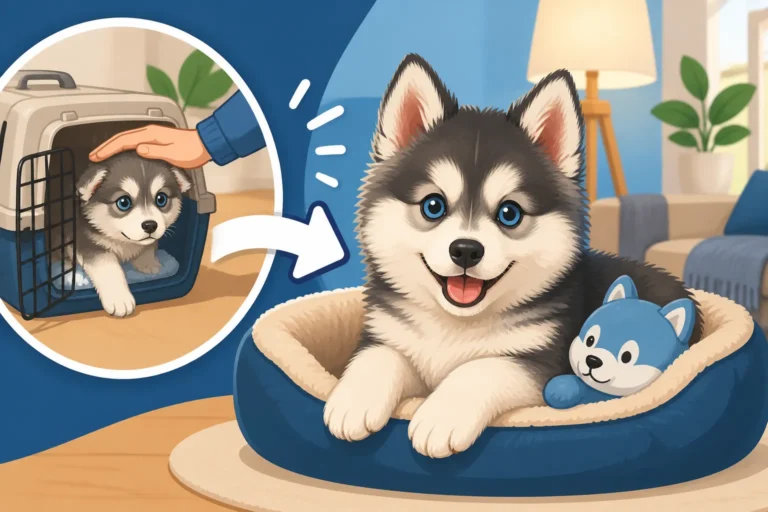
Furthermore, ensure your Pomsky has a comfortable, safe space where they feel secure when left alone. A properly crate-trained Pomsky might be a good option for periods when you cannot supervise them, as it prevents them from practicing their door-opening skills. Just make sure the crate is sturdy and they are comfortable in it, not using it as a punishment. Whether a Pomsky Can Be Left Alone touches on the importance of managing their environment when you're not there.
Training Strategies to Deter Door and Gate Opening
While physical security is paramount, incorporating training into your strategy can further reinforce the desired behavior and reduce your Pomsky's desire to become an escape artist. This isn't about punishing them, but about teaching them alternative, more acceptable behaviors and building their confidence in their safe space.
Teaching "Stay" and Boundary Awareness
One of the most powerful tools in your training arsenal is a solid "stay" command, especially when practiced around doors and gates. Start in a low-distraction environment, teaching your Pomsky to "stay" for short periods. Gradually increase the duration and add distractions, including walking towards a door or gate. The goal is for them to understand that the boundary (the open doorway, the gate) is still a "stay" zone, even if it's not physically closed.
Practice opening and closing doors and gates while your Pomsky is on a "stay." Reward them heavily with high-value treats and praise for remaining in place. Over time, they should learn that rushing the door or trying to open it themselves doesn't get them what they want (freedom, attention) as quickly as patiently waiting for your release cue. This requires immense consistency and patience, particularly with a breed known for its independent streak, as highlighted in Whether a Pomsky Is Stubborn or Independent. You're teaching them impulse control around exits, which is a life skill, not just a trick.
Addressing Underlying Behavioral Issues
As mentioned earlier, door-opening behavior can often be a symptom of a deeper issue, like boredom or separation anxiety. If you suspect these are the root causes, training needs to extend beyond just "stay." For boredom, increase their exercise and mental stimulation. This might mean longer walks, more vigorous play sessions, or incorporating activities like scent work or agility training, which truly engage their minds. A program like BAXTER & Bella can provide structured guidance for these enrichment activities. A Pomsky that has had its physical and mental needs met is generally a much calmer and less mischievous dog. Whether a Pomsky Needs a Job speaks to their need for purpose and activity.
If separation anxiety is the driver, consult with a professional dog trainer or a veterinary behaviorist. They can help you develop a desensitization and counter-conditioning protocol. This might involve gradually increasing the time you leave your Pomsky alone, providing special treats or toys only when you're gone, and creating a calming routine for departures and arrivals. Simply scolding or punishing a dog for anxiety-driven behavior will only exacerbate their distress. The training should aim to build their confidence and comfort with being alone, not just stop the door-opening.
When Your Pomsky Does Make a Break for It: Safety Measures
Despite your best efforts, even the most secure home or the most well-trained Pomsky can sometimes find a way out. It’s crucial to have a backup plan in place for when (not if) this happens, ensuring their safety and your peace of mind.
Microchipping and ID Tags
This is non-negotiable for any dog, but especially for a breed known for its escape artistry. A microchip is a permanent form of identification implanted under your Pomsky’s skin. If they are found and taken to a shelter or vet, the chip can be scanned, linking them back to your contact information. Always make sure your registration details are current and linked to the correct phone number and address. It's easy to forget to update these after a move or a phone change, but it's critically important.
In addition to a microchip, your Pomsky should always wear a collar with an up-to-date ID tag. This tag should include your current phone number and your dog's name. While a microchip requires a scanner, an ID tag offers immediate identification, allowing a good Samaritan to contact you directly and quickly. Some owners also include a "reward if found" message on the tag, which can further incentivize someone to reach out. These simple, inexpensive measures are the first line of defense if your Pomsky gets out and wanders.
GPS Trackers and Emergency Protocols
For breeds prone to bolting or escaping, a GPS tracker can be a game-changer. These small devices attach to your dog's collar and allow you to track their location in real-time via an app on your smartphone. While they come with a subscription fee, the peace of mind they offer is invaluable, especially if your Pomsky makes a quick dash for freedom. Whether a Pomsky Should Have a GPS Tracker provides more details on these helpful devices. They can be particularly useful if your dog is prone to long-distance excursions or exploring unfamiliar territories.
Beyond technology, have an emergency protocol in place. This includes knowing What to Do When a Pomsky Bolts. Inform your immediate neighbors that your dog is an escape artist and ask them to call you if they see your Pomsky loose. Keep a recent photo of your Pomsky handy on your phone to share with local shelters, veterinary offices, and on social media if they go missing. Have a list of emergency contact numbers for animal control, local shelters, and friends or family who can help search. The quicker you act, the higher the chance of a safe reunion. It's a sobering thought, but preparedness can make all the difference in a stressful situation.
Disclaimer
This article is for general informational purposes only and does not constitute professional advice. Laws, prices and regulations vary by location and change over time. Consult a qualified professional for guidance on your specific situation.