Whether a Pomsky Should Have a GPS Tracker
Oh, the sheer terror of realizing your beloved Pomsky has slipped out the gate or darted off the leash! It’s a fear every Pomsky parent knows deep in their bones, especially with these clever, spirited little escape artists. Given their unique blend of adventurous Husky spirit and the cunning intelligence of a Pomeranian, keeping tabs on them can feel like a full-time job. This guide is here to walk you through why a GPS tracker isn't just a gadget, but often an essential tool for peace of mind, exploring the different options available and how to make the best choice for your furry family member.
Why Pomskies Are Prone to Escaping
Let's be honest, Pomskies are absolutely adorable, but they come with a hefty dose of independence and curiosity, traits inherited from both sides of their family tree. This combination makes them particularly adept at finding ways to explore the world beyond your yard or even your watchful eye on a walk. It’s not that they don’t love you; it’s just that the world is an exciting place, and they feel a strong pull to see what’s out there.
The Husky Influence: Drive to Roam
Think about the Siberian Husky. These dogs were bred to pull sleds over vast distances, often in challenging conditions, relying on their intelligence and incredible stamina. That inherent desire to run, to explore, and to cover ground is deeply ingrained in their DNA, and a significant portion of it gets passed down to the Pomsky. Even in a smaller package, that instinct remains incredibly strong. Your Pomsky isn't necessarily running away from you; it's often running towards adventure, following an interesting scent, a rustling bush, or simply the thrill of the chase. This powerful wanderlust means that a simple distraction, an open gate, or an unnoticed gap in the fence can quickly turn into a full-blown search party. This is a common concern that feeds into discussions like What a Pomsky Actually Weighs Full Grown because even a twenty-pound dog can cover impressive distances quickly.
This deep-seated desire to roam means that recall training, while vital, is always an ongoing challenge for many Pomsky owners. They might know "come," but if a squirrel darts across the path or a fascinating smell hits their nose, that instinct to follow can override even the best training. It's not stubbornness, exactly, but rather a powerful, ancient drive that can be incredibly hard to overcome. You might find yourself marveling at their ability to seemingly ignore your calls when something more stimulating captures their attention, which is a classic Husky trait shining through.
The Pomeranian Agility and Cleverness
Now, let's mix in the Pomeranian side. While Poms aren't known for covering miles like their Husky cousins, they are incredibly clever, agile, and often possess a surprising amount of tenacity for their size. They can squeeze into small spaces, navigate tight spots, and are quick-witted problem solvers. A Pomsky often inherits this mental sharpness. They're not just strong-willed; they're smart. This means they can figure out how to unlatch gates, slip through loose collar fittings, or even dig under obstacles if given enough time and motivation. Whether a Pomsky Opens Doors and Gates is a very real question for many owners!
Their intelligence isn't always about grand escapes; sometimes it’s about subtle, opportunistic moments. Maybe they learn the exact timing of when the front door opens for the mail carrier, or they notice a weak spot in the fence that you haven't seen. This blend of Husky wanderlust and Pomeranian cleverness creates a dog that can be both physically capable and mentally determined to go on an adventure, making them formidable escape artists.
Small Size, Big Ambition: Slipping Through Gaps
One of the biggest misconceptions about Pomskies is that because they're smaller than Huskies, they're easier to contain. While they might not be jumping six-foot fences like some larger breeds, their compact size actually presents a unique set of challenges. They can easily slip through gaps in fencing that a larger dog wouldn't even consider. A loose picket, a gap under a gate, or even just an accidentally ajar door can be an invitation to freedom for a determined Pomsky. This is why discussions around How High a Pomsky Can Jump a Fence and Whether a Pomsky Digs Under a Fence are so important.
Their small-to-medium stature makes them masters of stealthy exits. You might turn your back for a second, and they’ve vanished. It’s not always a dramatic bolt; sometimes it's a quiet, efficient disappearance. This can be incredibly frustrating and anxiety-inducing for owners who constantly feel like they need to be one step ahead of their furry Houdini. A GPS tracker provides a critical layer of defense against these disappearing acts.
The Peace of Mind a GPS Tracker Offers
Knowing your Pomsky has a GPS tracker attached can fundamentally change how you experience dog ownership, especially for a breed notorious for its adventurous spirit. It's more than just a gadget; it's a profound sense of security in a world full of unpredictable moments.
Immediate Location for Lost Pups
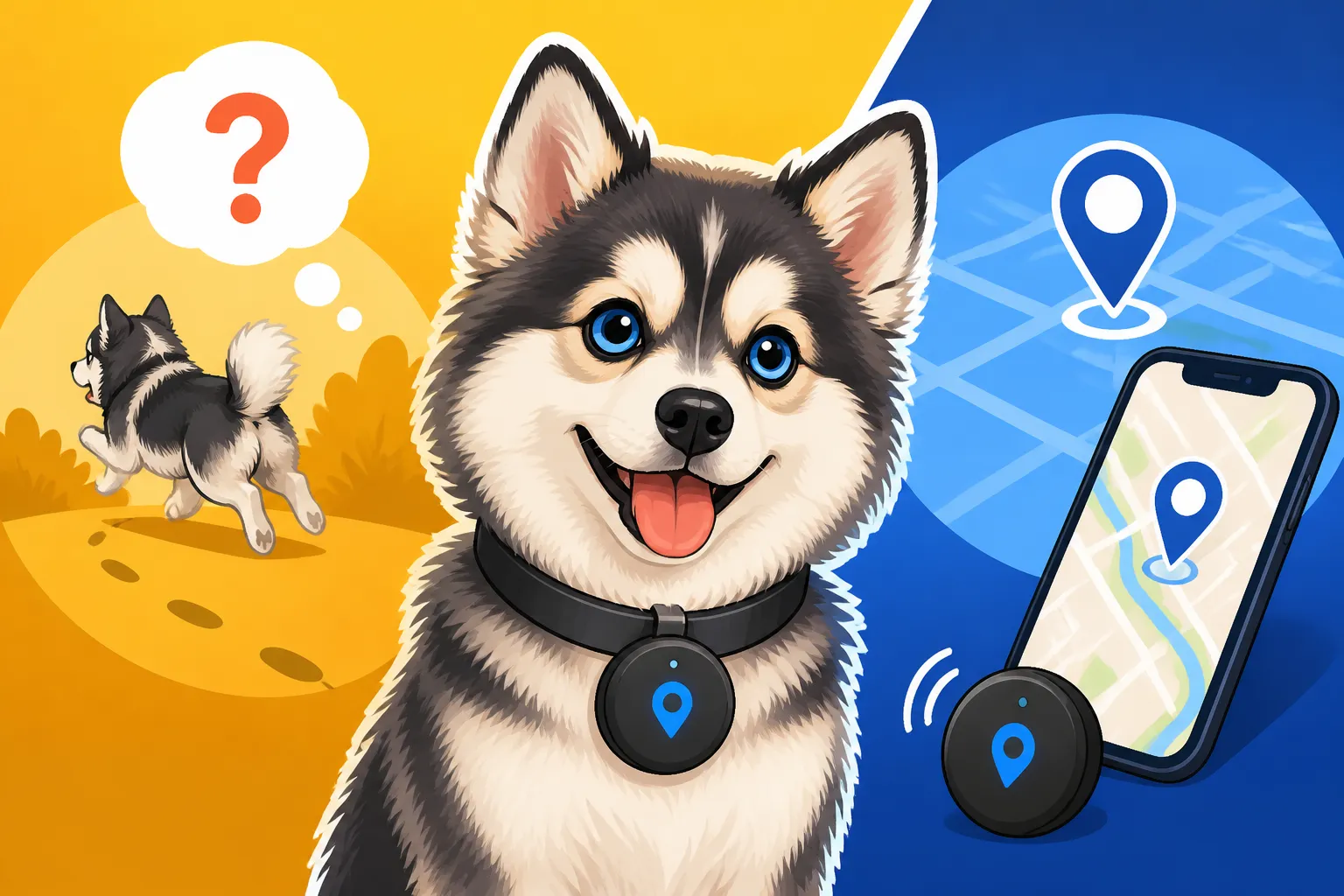
The moment you realize your Pomsky is gone, panic can set in like a cold wave. Every second feels like an hour as you frantically call their name and search the immediate vicinity. Without a tracker, you're relying on luck, the kindness of strangers, and the hope that they haven't gone too far. With a GPS tracker, that initial wave of terror is significantly mitigated. Instead of blindly wandering, shouting their name, and growing increasingly desperate, you can pull out your phone and see their location on a map, often in real-time. This immediate information allows you to direct your search efforts precisely, reducing the agonizing uncertainty and greatly increasing the chances of a swift reunion. This is especially true if they've given you the runaround like The Pomsky Escape Artist in a Twenty Pound Body.
Imagine the scenario: you're at the dog park, and your Pomsky spots a rabbit, taking off at top speed. Your heart leaps into your throat as they disappear into the trees. With a tracker, you can immediately see if they're still in the park, headed towards a nearby street, or if they've decided to explore the woods behind the park. This kind of immediate, actionable information is invaluable and can turn a potentially hours-long, anxiety-ridden search into a much shorter, more focused effort.
Reducing Search Anxiety
The emotional toll of a lost pet is immense. The worry, the guilt, the fear of the unknown – it can be overwhelming. A GPS tracker doesn't eliminate all anxiety, but it dramatically reduces the intense distress associated with not knowing where your dog is. Instead of picturing all the worst-case scenarios, you have a concrete tool that tells you, "They're here. I can go get them." This shifts your emotional state from helpless panic to proactive retrieval.
This reduction in anxiety isn't just for the immediate aftermath of an escape. It also lessens the background worry you might carry with you every day. When you know your Pomsky has that little device on their collar, you might feel more comfortable letting them explore a bit further in a safe, fenced area, or relax slightly more when you're out and about. It's a layer of security that allows you to enjoy your time with your Pomsky more fully, rather than constantly feeling on edge about a potential escape. For many, it's an investment in their own mental well-being as much as their dog's safety.
Data for Understanding Roaming Habits
Beyond simply locating a lost dog, many advanced GPS trackers offer historical data on your dog's movements. This might seem like an extra feature, but for a curious breed like the Pomsky, it can be incredibly insightful. By reviewing their past routes, you might notice patterns: do they always head for the neighbor's prize-winning rose bush? Do they consistently try to find a way to the nearby creek? Are there specific weak points in your fence line they repeatedly test?
This data can be instrumental in identifying potential problem areas or understanding the motivations behind their escapes. For example, if you see a recurring pattern of them trying to get to a certain area, you can then take steps to secure that specific boundary or enrich their environment in a way that makes that forbidden zone less appealing. This proactive approach to managing their roaming tendencies can help prevent future escapes and improve your overall containment strategy, making you a more informed and effective Pomsky parent. It’s also a good way to gauge if your existing solutions, like The Fence a Pomsky Actually Needs, are truly sufficient.
Types of GPS Trackers for Pomskies
The market for pet GPS trackers has expanded considerably, offering a variety of technologies and service models. Understanding the differences is key to choosing the best option for your Pomsky's specific needs and your lifestyle.
Cellular-Based GPS Trackers
These are perhaps the most common and generally the most reliable type of pet GPS tracker for broad coverage. They work by using a built-in cellular chip to communicate your Pomsky's location to your smartphone or computer. This means they rely on cellular networks (just like your phone) to transmit data, giving you location information over virtually any distance where there's cell service. If your Pomsky makes a break for it and travels several miles, a cellular tracker can still pinpoint their location, provided they're not in a cellular dead zone.
The major advantage here is range. You're not limited by line of sight or Bluetooth distance. The trade-off is that these devices almost always require a monthly or annual subscription fee, similar to a cell phone plan, to cover the cost of data usage. You can find many reputable options on platforms like Amazon, but always check their specific coverage maps and subscription details. They often come with features like geofencing (setting virtual boundaries) and activity monitoring, giving you a holistic view of your Pomsky's whereabouts and well-being.
Bluetooth and Radio Frequency Alternatives
While not strictly "GPS" in the same way, Bluetooth and radio frequency (RF) trackers are alternatives for owners who need shorter-range tracking or prefer a one-time purchase without recurring fees. Bluetooth trackers, like many popular key finders, connect to your phone via Bluetooth and typically have a range of up to a few hundred feet, sometimes relying on a network of other users to report location if your pet goes out of range. They're excellent for finding a pet hiding in the house or yard, or if they've just slipped away nearby.
RF trackers use radio signals and come with a handheld receiver. You follow the signal, which gets stronger as you get closer to your pet. The range can be a few blocks, sometimes more depending on the terrain. The downside for both Bluetooth and RF is that if your Pomsky, with their Husky-derived wanderlust, truly bolts and covers a significant distance, these technologies quickly become less effective. They are a good choice if your primary concern is locating a pet within a contained area or a very close proximity, but for a true "runaway" scenario, their limitations become apparent. They don't require subscriptions but offer a different kind of safety net.
Subscription vs. One-Time Purchase Models
When considering a GPS tracker, one of the biggest decisions revolves around the pricing model. Do you opt for a device with a recurring subscription, or a one-time purchase?
Subscription-Based Models: These are typically the cellular GPS trackers. The initial cost of the device itself might be moderate, but you commit to a monthly or annual fee. This fee covers the cost of the cellular data plan that allows the tracker to send location information to your phone. Think of it like a tiny, dedicated cell phone for your dog. The benefits are clear: wide area coverage, real-time tracking, often with advanced features like geofencing, activity monitoring, and historical data. For a Pomsky known for bolting, this continuous connectivity across distances is usually the most robust solution. The ongoing cost can add up, so it's important to factor that into your long-term budget.
One-Time Purchase Models: This category generally includes Bluetooth and RF trackers. You buy the device, and that's usually it. There are no ongoing fees. This is appealing for those on a tighter budget or those whose primary concern is finding a pet within a relatively small, localized area. However, as discussed, their range is limited. If your Pomsky gets truly lost and wanders beyond a few hundred feet, or a few blocks for RF, these devices become significantly less useful for actual retrieval. For a breed like a Pomsky with a strong urge to roam, relying solely on a short-range, one-time purchase tracker might leave you feeling underprepared for a more serious escape scenario.
| Feature | Cellular GPS Tracker | Bluetooth Tracker | Radio Frequency (RF) Tracker |
|---|---|---|---|
| Range | Unlimited (where cell service exists) | Short (up to ~300 ft, crowdsourced often) | Medium (few blocks, line of sight impacts) |
| Cost Model | Device + Monthly/Annual Subscription | Device (one-time) | Device + Handheld Receiver (one-time) |
| Tracking Type | Real-time location on map | Proximity, last known location | Directional signal, "hot/cold" approach |
| Connectivity | Cellular network | Bluetooth to smartphone | Dedicated radio signal |
| Best Use Case | Wide area escapes, long-distance roaming | Finding pet nearby (home, yard, park) | Localized search, dense foliage |
| Key Advantage | Extensive coverage, peace of mind | No subscription, good for local | No subscription, no cell signal needed |
| Key Disadvantage | Subscription cost, needs cell signal | Limited range, relies on crowdsourcing | Limited range, requires active search |
What to Look for in a Pomsky GPS Tracker
Choosing the right GPS tracker involves more than just picking the first one you see. Pomskies, being a unique blend of small-to-medium size with high energy and escape artistry, have specific needs that should guide your selection.
Battery Life and Durability for Active Dogs
A tracker is only useful if it’s working when you need it most. For an active Pomsky, battery life is paramount. Imagine your dog goes on an unscheduled adventure, and the tracker dies after only a few hours. That defeats the whole purpose! Look for devices that boast several days of battery life on a single charge, especially if you can't guarantee you'll remember to charge it every night. Some models even have power-saving modes that extend battery life, or alert you when the battery is running low.
Durability is another non-negotiable. Pomskies love to play, explore, and sometimes get into mischief. Their tracker needs to withstand mud, rain, bumps, and general wear and tear. Look for features like waterproof ratings (IPX7 or higher is ideal), rugged casing, and secure attachments. If your Pomsky is prone to chewing, you might need to consider a tracker that can be safely integrated into a more chew-resistant collar or harness. You don't want a flimsy device that breaks off the first time they decide to roll in the dirt or roughhouse with another dog.
Geofencing and Alert Features
Geofencing is a game-changer for Pomsky owners. This feature allows you to set up virtual boundaries around specific areas – your yard, a dog park, or even a friend's house. If your Pomsky crosses these digital fences, the tracker immediately sends an alert to your phone. This can give you precious extra minutes to intervene before they get too far. For a breed known for its speedy escapes, those few minutes can make all the difference between a quick retrieval and a frantic search.
Beyond geofencing, look for other alert features. Low battery warnings are crucial so you can charge the device before it becomes useless. Some trackers also offer "safe zone" or "danger zone" alerts, letting you know if your dog enters an area you've designated as potentially hazardous. Some even track activity levels, which, while not directly related to escapes, can provide valuable insights into your dog's overall health and energy expenditure, helping you ensure they're getting The Exercise a Pomsky Needs Every Day to stay content and less prone to finding their own entertainment (which can sometimes involve escaping!).
Size and Comfort for a Small-to-Medium Dog
Pomskies are a small-to-medium breed, typically ranging from 15 to 35 pounds. This means the tracker needs to be appropriately sized. A device that’s too bulky or heavy can be uncomfortable, rub against their neck, or even interfere with their movement. It could also get snagged more easily. A lightweight, compact design is essential.
Consider how the tracker attaches to their collar or harness. Does it clip on securely? Is it integrated into the collar itself? You want a fit that’s snug enough to prevent it from flopping around or getting lost, but not so tight that it causes irritation. Always check the dimensions and weight specifications of a tracker before purchasing, and read reviews from other small-to-medium dog owners to ensure it's a comfortable fit. A well-fitting tracker is one your Pomsky won't mind wearing, ensuring it's always there when you need it.
Integrating a GPS Tracker into Your Pomsky's Routine
Getting your Pomsky accustomed to wearing a new device is key to its effectiveness. A tracker won't do much good if your dog manages to chew it off or simply refuses to wear it. With a bit of patience and positive reinforcement, it can become a seamless part of their daily life.
Collar or Harness Attachment
Most GPS trackers are designed to attach to a standard dog collar or harness. For a Pomsky, this attachment needs to be secure and comfortable. If your Pomsky is known for backing out of collars, or if you prefer the added security and comfort for walks, attaching it to a harness might be a better option. Whether a Pomsky Slips a Collar is a legitimate concern for many, so a secure harness provides double assurance. Ensure the tracker is positioned in a way that doesn't dangle excessively or interfere with their natural movement.
When you first attach it, keep an eye on your Pomsky. Are they scratching at it? Trying to bite it? If so, try adjusting its position. Some owners find that integrating the tracker into a sturdy, wider collar works well, spreading the weight more evenly. If using a harness, make sure it’s one that fits snugly but doesn’t restrict their shoulder movement. The goal is for the tracker to feel like a natural extension of their existing gear, not an annoying new addition.
Acclimatizing Your Pomsky to the Device
Introducing any new item to a dog requires a positive approach, especially for intelligent and sometimes wary breeds like Pomskies. Start by letting them sniff and investigate the tracker when it's off the collar. Offer treats and praise when they interact with it calmly. Then, attach it to their collar or harness for short periods, always under supervision. Distract them with play, a walk, or a puzzle toy so they associate the new sensation with positive experiences.
Gradually increase the time they wear it, always making sure it's comfortable and not causing any distress. Pair it with their favorite activities – mealtime, playtime, or going for a walk. If they try to chew or scratch at it, gently redirect their attention rather than scolding them. Consistency and positive reinforcement are your best friends here. Soon, they'll barely notice it's there, and you'll have the peace of mind knowing it's securely in place for their safety. This positive association is crucial, much like when you're training for recall or other commands. For general training guidance, resources from places like BAXTER & Bella can offer structured approaches that use positive reinforcement.
Testing the Tracker Regularly
A GPS tracker is a safety device, and like any safety device, it needs to be tested regularly to ensure it’s working correctly. Don’t wait for an emergency to discover the battery is dead, the app isn't connecting, or the subscription has expired.
Make it a habit to check the app once a week. Verify its location reporting, check the battery level, and ensure any geofence alerts are still active. If your tracker has activity monitoring, review that data to make sure it's updating. Take it on a short walk with your Pomsky and confirm that the tracking is accurate. This proactive approach ensures that when the unexpected happens – and with a Pomsky's knack for adventure, it often will – your tracker will be ready to perform its critical function. Treat it like a fire drill; you hope you never need it, but you're prepared if you do.
Beyond the Tracker: Comprehensive Escape Prevention
While a GPS tracker is an excellent safety net, it's just one piece of a larger puzzle when it comes to keeping your Pomsky safe and contained. A truly comprehensive approach involves a multi-layered strategy that addresses their innate drives and strengthens your preventative measures.
Secure Fencing and Containment
No matter how great your GPS tracker is, the first line of defense against escapes is always a physically secure environment. For a Pomsky, this means thinking beyond what might contain a less adventurous dog. Consider both height and depth for your fencing. While they might not be scaling six-foot walls, many Pomskies are agile jumpers, so a fence that is at least five to six feet high is recommended. But don't forget the ground level! Whether a Pomsky Digs Under a Fence is a very real possibility. Huskies are notorious diggers, and many Pomskies inherit this trait. Burying the fence line, adding concrete footings, or using L-footer fencing can prevent them from tunneling out.
Regularly inspect your fence for any weak spots, loose boards, or gaps that your Pomsky could squeeze through. Remember, they are clever and persistent. Even a small opening can become an escape route if they work at it. Double-gating critical entry points and ensuring latches are secure and out of paw's reach can also prevent opportunistic escapes. Think like a Pomsky: where would you try to get out?
Training for Recall and Boundary Awareness
While a GPS tracker helps you find your Pomsky after they've escaped, solid training can help prevent the escape in the first place or ensure a quick return. Impeccable recall is paramount. For a breed like a Pomsky, whose Husky lineage gives them a strong drive to run, "come" needs to be more than just a command; it needs to be an instinct. This requires consistent, positive reinforcement training, often starting in low-distraction environments and gradually increasing the challenge. Building a Recall a Pomsky Answers takes time and dedication.
Teaching boundary awareness is also crucial. This involves training them to understand the limits of your property, even without a physical fence. While this isn't a substitute for a secure fence, it adds another layer of mental containment. This could involve "place" training around the perimeter or using positive reinforcement to reward them for staying within designated areas. Resources like those from BAXTER & Bella can provide excellent guidance on structured training programs that build these essential skills. Remember, training is an ongoing process, especially with a breed as intelligent and independent as a Pomsky.
Microchipping as a Backup ID
A GPS tracker is fantastic for active tracking and immediate location, but it's an electronic device that can fail, be lost, or have a dead battery. This is where microchipping comes in as an invaluable, permanent backup. A microchip is a tiny device implanted under your Pomsky's skin, typically between the shoulder blades. It contains a unique identification number that links to your contact information in a national database.
If your Pomsky is found by a stranger and taken to a vet clinic or animal shelter, they will scan for a microchip. If one is present, they can access your contact details and reunite you. It's a one-time procedure, generally inexpensive, and provides a lifetime of identification that can't be lost, chewed off, or run out of battery. Think of the GPS tracker as your active search tool and the microchip as your passive, permanent identification. Every Pomsky should be microchipped, alongside their collar tags, as a fundamental layer of safety. Whether a Pomsky Should Be Microchipped Immediately is a resounding yes from most vets and rescue organizations. Also, be aware of What Chipping and Licensing Cost a Pomsky Owner so you can budget for these important items.
By combining the immediate location capabilities of a GPS tracker with robust physical containment, consistent recall training, and the permanent identification of a microchip, you create the most secure environment possible for your adventurous Pomsky. This comprehensive approach ensures that whether they're exploring in the yard or on an unexpected journey, you have the best possible chance of keeping them safe and bringing them home.
Disclaimer
This article is for general informational purposes only and does not constitute professional advice. Laws, prices and regulations vary by location and change over time. Consult a qualified professional for guidance on your specific situation.