Teaching a Pomsky to Stop Howling
If you've ever found yourself wondering if your Pomsky is trying to communicate with wolves in the distant forest, or perhaps just practicing for an opera career, you're not alone. The unique, often insistent howling of a Pomsky can be a delightful quirk, but it can also be a source of frustration, especially if you live with close neighbors or just crave a moment of peace. This guide is here to unravel the mystery behind your Pomsky's vocalizations and arm you with practical, compassionate strategies to help your furry friend understand when a little quiet time is needed.
Understanding Your Pomsky's Howl – It's More Than Just Noise
It's easy to feel like your Pomsky is deliberately trying to be noisy, but it’s crucial to remember that howling is a deeply ingrained part of canine communication. It's not usually a malicious act; it's a form of expression that comes from their very core. To effectively manage it, we first need to understand where it comes from and what it might mean.
The Husky Influence – A Legacy of Vocalization
Let's face it, one half of your Pomsky's heritage is the majestic, often incredibly vocal Siberian Husky. Huskies are famous for their varied repertoire of sounds: howls, yips, grumbles, and that distinct "woo-woo" sound that makes it seem like they're having a full-blown conversation with you. This isn't barking in the traditional sense; it's a more ancient, melodic form of communication, often used to communicate over long distances or within a pack.
When you bring a Pomsky into your home, you're inviting a piece of that wild, vocal heritage right along with them. It’s not uncommon for a Pomsky to "sing" along with a passing siren, or to greet every arrival at the door with a dramatic, drawn-out vocalization. These aren't usually signs of aggression or fear, but rather a natural, albeit sometimes inconvenient, expression of their Husky genes. You can often hear The Husky Howl in a Pomsky quite distinctly. While you might not be able to suppress this entirely – it's part of their charm, after all – understanding its origin can help you approach management with more patience and realistic expectations.
The Pomeranian Contribution – Alertness and Demand Howls
Now, let's not forget the other side of the family tree: the feisty and often opinionated Pomeranian. While Poms are more renowned for their enthusiastic barking, their alertness and tendency to be quite demanding can also translate into howling in a Pomsky. These howls are often higher-pitched, more insistent, and tend to occur when your Pomsky wants something specific.
Think about it: have you ever been preparing dinner, and your Pomsky starts letting out a series of urgent howls, perhaps punctuated with a little hop? Or perhaps they use that distinct vocalization to demand immediate playtime or to tell you they really need to go outside, right now? This kind of howling is less about their inner wolf and more about their learned ability to manipulate you (in the most adorable way, of course!). This is a behavioral loop – they howl, you respond, and they learn that howling gets results. It's often where the tendency for a Pomsky to bark more like a Pomeranian also comes into play. Whether a Pomsky Barks Like a Pomeranian can shed more light on this side of their vocal nature.
Identifying the Why Behind the Howl
Before we can tackle the "how," we absolutely must figure out the "why." A howl can mean a dozen different things, and trying to stop it without understanding its root cause is like trying to fix a leaky faucet without knowing if it's a pipe burst or just a loose washer.
Howling as Communication: Alerting and Seeking Attention
One of the most common reasons a Pomsky might howl is simply to communicate. They see something, they hear something, and they want you to know about it. This is their way of being a tiny, fluffy sentinel. It could be the mail carrier walking past the window, a squirrel scampering up a tree, or even just a neighbor stepping out onto their porch. Your Pomsky, with its keen senses and inherent desire to alert, might let out a howl to inform you that "something's happening!"
Beyond alerting, many Pomskies learn that howling is a surefire way to get your attention. If they feel ignored, or if you're busy on the phone, watching TV, or simply not engaging with them, a strategic howl can often get your eyes on them. They've likely figured out that a quiet nudge might go unnoticed, but a full-throated howl is impossible to ignore. This often makes us wonder Whether a Pomsky Alerts to Strangers with its distinct vocalizations. The trick here is to teach them that calm, quiet behavior is what earns them your attention, not the incessant vocalizations.
Separation Anxiety and Boredom Howls
This is a tough one for many Pomsky owners, and it's often the reason why neighbors start sending polite (or not-so-polite) notes. If your Pomsky's howling primarily occurs when you're not home, or when they are otherwise left alone, it could be a sign of separation anxiety or profound boredom. Pomskies are intelligent, social dogs who bond deeply with their families. Being left alone, especially for long stretches, can be genuinely distressing for them.
A dog with separation anxiety isn't howling to be mischievous; they're genuinely experiencing panic and distress. The howling is a desperate cry for their "pack" (you!) to return. Alternatively, if they're simply understimulated – meaning they haven't had enough physical exercise or mental engagement – that pent-up energy and boredom can manifest as howling. They might also be destructive, pacing, or even having accidents in the house. This type of vocalization definitely warrants a more involved approach, as simply ignoring it can make the underlying anxiety worse. Understanding Whether a Pomsky Suffers Separation Anxiety is crucial here.
Environmental Triggers: Sirens, Other Dogs, and Novel Sounds
Some howls are simply instinctual responses to specific environmental cues. Have you ever noticed your Pomsky "singing" along to an ambulance siren in the distance? Or perhaps they join in with a chorus of neighborhood dogs barking and howling? This isn't uncommon and is a remnant of their ancestral communication patterns. Wolves and wild canids often howl communally as a form of social bonding or to announce their presence to other packs. Your Pomsky might just be feeling that ancestral pull to join the "choir."
These triggers are often less about distress and more about an automatic, almost reflexive, vocalization. They might hear another dog's distant howl or a siren, and their brain just says, "Respond!" It's less about you and more about their genetic programming. While you can't control every siren or every dog in the neighborhood, you can learn to manage your Pomsky's reaction to these unavoidable sounds. We often see this when contemplating Whether a Pomsky Howls at Sirens, a classic Pomsky trait.
Actionable Strategies to Reduce and Manage Howling
Alright, now that we've dug into the "why," let's talk about the "how." Tackling howling requires a multi-pronged approach, focusing on management, training, and addressing the root cause. Patience and consistency are your best friends here.
Management and Environmental Adjustments
Sometimes, the simplest solutions involve modifying your Pomsky's environment to minimize triggers. This isn't a permanent fix for all types of howling, but it can significantly reduce opportunities for it to occur, giving you a baseline to work from.
- Physical Barriers for Visual Triggers: If your Pomsky howls at everything passing by the window, consider using blinds, curtains, or even privacy film on lower windows. "Out of sight, out of mind" can be remarkably effective for alert howlers. If they can't see the mail carrier or the neighbor's cat, they're less likely to feel the need to announce their presence.
- Sound Masking: For sound-triggered howls (like sirens or other dogs), creating a "sound buffer" can help. White noise machines, fans, or even playing calming music or talk radio can help mask external noises that might set your Pomsky off. Think of it as creating a little bubble of calm sound in your home. These can be found on Amazon easily enough, often quite affordably.
- Safe Spaces and Enrichment: Ensure your Pomsky has a comfortable, secure "den" where they can retreat. This could be a crate covered with a blanket or a specific room. Providing engaging puzzle toys (again, Amazon has a great selection of these!), long-lasting chews, or snuffle mats can redirect their energy and focus when you need quiet time, or when you're away. Mental stimulation goes a long way in reducing boredom-related howling.
- Adequate Exercise: A tired Pomsky is often a quieter Pomsky. Seriously. These dogs have energy to burn, even the smaller ones. Ensure they're getting enough physical exercise, not just a quick potty break. Long walks, playtime in a secure yard, or even dog park visits (if appropriate for your Pomsky) can make a huge difference. Don't forget mental exercise too, like training sessions or sniff games. For more on this, check out The Exercise a Pomsky Needs to Stay Sane.
Training for a "Quiet" Cue and Redirection
This is where you actively teach your Pomsky what you do want them to do instead of howling. This takes time, consistency, and a whole lot of positive reinforcement.
- Teaching a "Quiet" Command: This is perhaps the most direct approach for attention-seeking or alert howls. The goal is to teach them to stop vocalizing on cue.
- Start by rewarding silence. When your Pomsky is quiet, simply say "Quiet" in a calm voice and immediately give them a high-value treat. Repeat this many, many times.
- Next, provoke a mild howl (e.g., ring the doorbell softly, or have someone walk past the window).
- The moment they howl, let them do it for a second, then calmly say "Quiet."
- The instant they stop howling (even for a split second), mark that moment with a "Yes!" or a clicker, and immediately reward with a treat. The timing is crucial. You're rewarding the cessation of the howl.
- Gradually increase the duration of silence required before the reward. You can learn more specific techniques for this in Teaching a Pomsky a Quiet Cue.
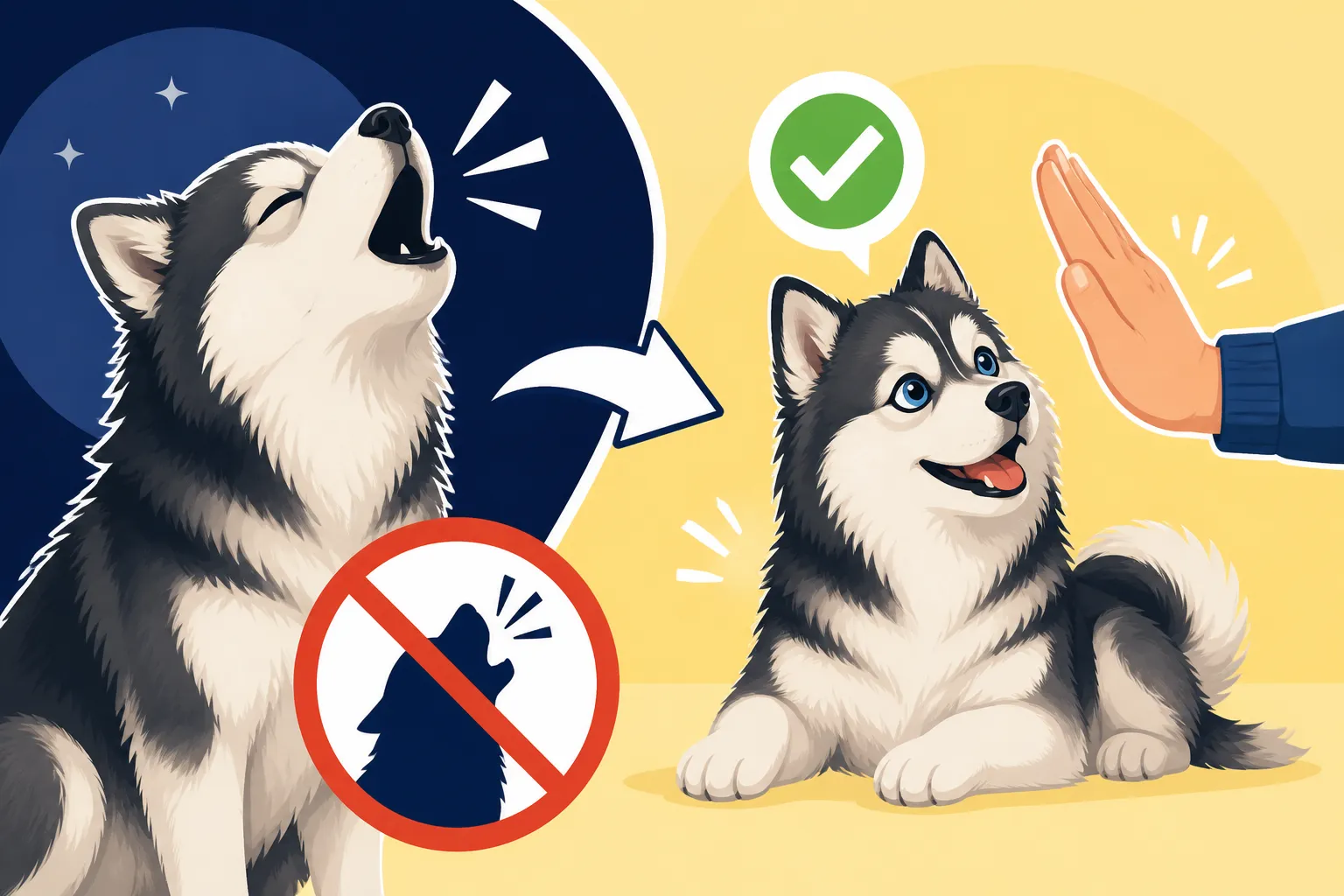
- Redirection: When your Pomsky starts to howl, you can interrupt them with a sharp, positive sound (like a clap or a whistle) and immediately redirect them to a specific, incompatible action. Ask for a "sit," a "down," or a "come" (if they are close). The moment they perform that action, reward them lavishly. This teaches them that the alternative, quiet behavior gets them what they want (your attention and a treat), not the howling.
- Ignoring Attention Howls: This is the hardest part for many owners, but it's paramount for attention-seeking howls. If your Pomsky howls for attention, do not look at them, do not speak to them, and do not touch them. Turn your back, walk out of the room, or completely ignore them. The moment they are quiet for a few seconds, then you can calmly approach and give them attention. If they start howling again, immediately disengage. This takes incredible discipline, but it teaches them that howling makes you disappear, while quiet makes you appear.
Addressing Separation-Related Howling
If your Pomsky howls when left alone, this needs a very specific and often more intensive approach. This isn't just a behavioral nuisance; it's often rooted in genuine anxiety.
- Gradual Departures: Start with extremely short absences. Leave the house for literally 5-10 seconds, then return before they have a chance to howl. Don't make a big fuss when you leave or return. The goal is to build their confidence that you always come back, and that your departures are no big deal. Gradually increase the time you're away, always aiming to return before they start to get anxious and howl.
- Desensitize Pre-Departure Cues: Dogs are smart; they pick up on routines. If putting on your shoes and grabbing your keys always means you're leaving, these actions become triggers. Practice these actions without actually leaving. Pick up your keys, walk to the door, then sit back down and read a book. Put on your coat, then go make a coffee. This helps break the association between these cues and your departure.
- Enrichment During Alone Time: Always provide a special, long-lasting chew toy or a food puzzle (like a stuffed Kong) only when you leave. This creates a positive association with your departure and gives them something engaging to do while you're gone.
- Consider Professional Online Training: For more structured guidance on separation anxiety and general obedience, programs like those offered by BAXTER & Bella can be incredibly helpful. They often provide step-by-step video tutorials and expert support that can guide you through the process of desensitizing your Pomsky to being alone, or for general puppy training. This can be especially good if you're struggling with how long a Pomsky puppy takes to house train or similar issues. How Many Hours a Pomsky Can Be Left is a key concern for many owners.
When to Seek Professional Help and Setting Realistic Expectations
Even with the best intentions and consistent effort, some howling issues can feel overwhelming. It's okay to admit when you need an extra hand, and it's also important to set realistic expectations for a breed that is naturally vocal.
Recognizing When You Need a Professional Trainer or Behaviorist
If you've diligently applied these strategies for several weeks or months, and you're still not seeing significant improvement, or if the howling is accompanied by other worrying behaviors (like destructive chewing, frantic pacing, self-harm, or persistent house-soiling when left alone), it's absolutely time to call in the professionals.
A certified professional dog trainer or a veterinary behaviorist can observe your Pomsky's behavior, identify underlying issues you might have missed, and develop a tailored training plan. They can differentiate between simple attention-seeking and genuine anxiety, which requires a different approach. Don't feel like a failure for seeking help; it's a responsible and compassionate choice for both you and your Pomsky. They can help you implement strategies that truly work for your specific situation. This is particularly true if you're asking Whether a Pomsky Needs a Professional Trainer for general behavioral challenges.
Realistic Expectations for a Vocal Breed
Here's the honest truth: your Pomsky, with its wonderful Husky and Pomeranian ancestry, is likely never going to be a completely silent dog. Their genetic makeup predisposes them to vocalization. The goal isn't to silence them completely, but rather to manage and reduce inappropriate or excessive howling.
Embrace their "talk" during appropriate times, and celebrate the moments of quiet you achieve through consistent training and management. Understand that some howls are just part of their charm, like the happy howl when you come home from work. The aim is to teach them when vocalization is acceptable and when it's time to be quiet, creating a harmonious home life for everyone. You're teaching them manners, not turning them into a mime.
Here's a quick overview of different howling types and typical responses:
| Type of Howl | Common Triggers | What it Communicates | Management Strategy |
|---|---|---|---|
| Attention-Seeking | You're busy, eating, trying to relax | "Hey! Look at me! I want something!" | Ignore until quiet, then reward calm attention. |
| Alert Howl | Mail carrier, stranger, outdoor animals | "Intruder alert! Something's out there!" | Redirection, block view, teach "Quiet" cue. |
| Separation Distress | Being left alone, pre-departure cues | "I'm scared/lonely! Where are you?" | Gradual departures, enrichment, professional help. |
| Environmental Response | Sirens, other dogs howling | "Joining the chorus! Responding to pack!" | Distraction, sound masking, positive desensitization. |
| Boredom | Lack of physical or mental stimulation | "I have nothing to do! I need a job!" | Increased exercise, puzzle toys, regular training. |
Disclaimer
This article is for general informational purposes only and does not constitute professional advice. Laws, prices and regulations vary by location and change over time. Consult a qualified professional for guidance on your specific situation.