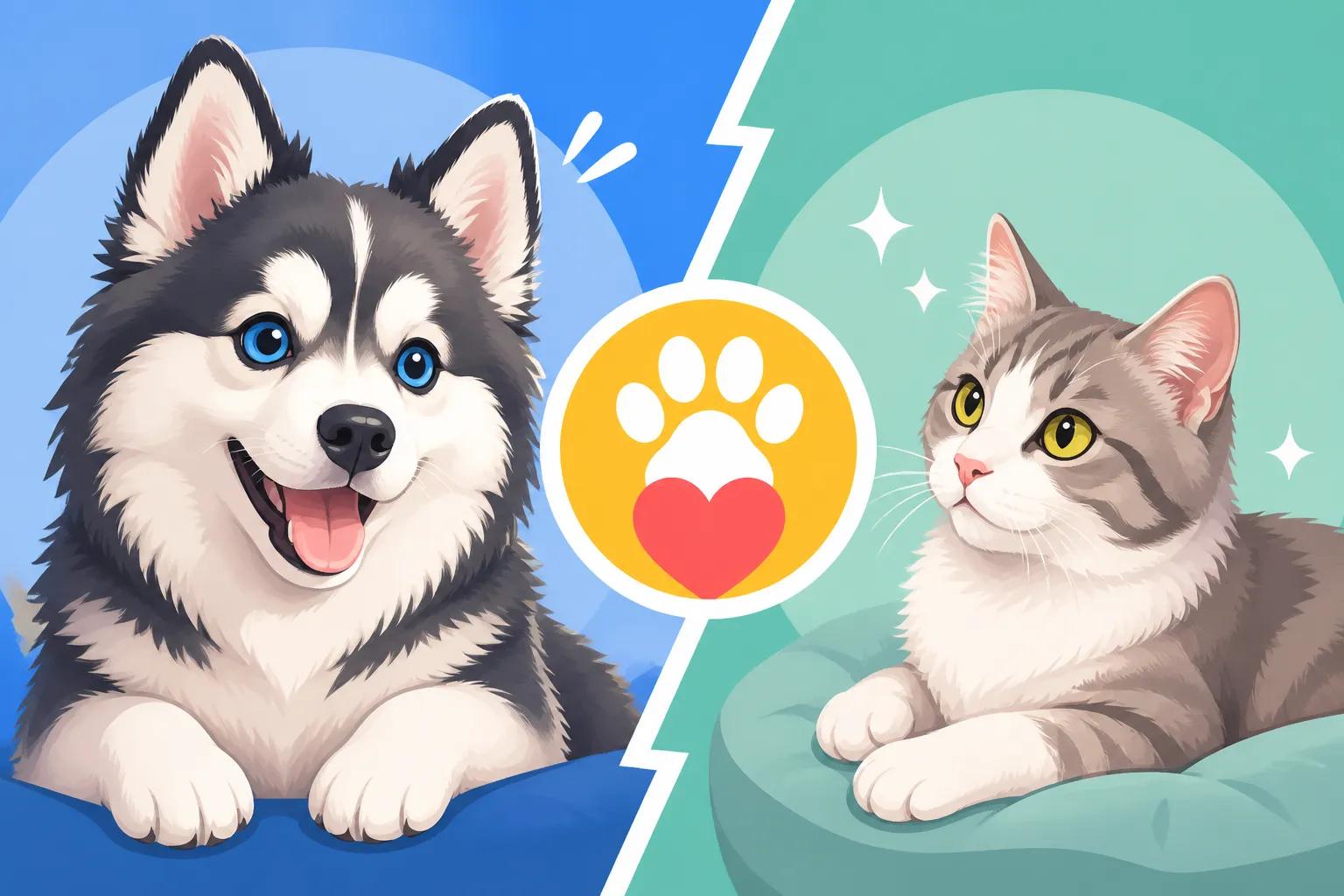
Whether a Pomsky Can Live With a Cat
It's a common dream for many aspiring Pomsky owners: picturing your adorable fluffy dog curled up peacefully with your resident feline. You see the heartwarming social media posts, and your heart melts. But the reality of introducing a Pomsky to a cat, or bringing a Pomsky into a home that already has a cat, is often far more complex than those idyllic scenes suggest. It can be a journey filled with anxiety, management challenges, and, frankly, some serious stress if not approached with caution and a deep understanding of what makes a Pomsky tick.
Understanding the Pomsky's Instincts When It Comes to Cats
Let's be real, the idea of a tiny Husky-Pomeranian mix living in harmony with a cat can be misleading. While Pomskies are undeniably charming, they inherit a potent mix of instincts from both parent breeds that can make cat introductions particularly challenging. This isn't about judging your dog's character; it's about acknowledging their hardwired genetic predispositions.
The Dual Heritage: Husky's Prey Drive Meets Pomeranian's Sass
When you bring a Pomsky into your life, you're essentially getting a genetic lottery ticket. You don't know exactly which traits will shine through more brightly. On one hand, you have the Siberian Husky, a breed known for its strong prey drive, bred to chase and hunt small game. They're fast, agile, and often possess an innate desire to pursue anything that moves quickly. This instinct isn't about malice; it's simply how they're wired. Many a Husky owner has lamented the sudden disappearance of a squirrel or rabbit in their yard.
Then there's the Pomeranian, a breed renowned for its bold, often fearless personality, despite its tiny size. Poms can be quite territorial and, if not properly socialized, can be prone to bossiness or even aggression towards other animals, including cats. While they might not have the raw predatory strength of a Husky, their confidence and tendency to stand their ground can create conflict. So, a Pomsky might inherit a high-energy chase instinct from the Husky side and a tenacious, sometimes confrontational, attitude from the Pomeranian. This combination can spell trouble for a calm coexistence with a cat. You're trying to integrate two species with very different communication styles and natural inclinations.
The Reality of Predatory Chase Instincts
The term "prey drive" sounds intense, and it absolutely can be. For a Pomsky, it manifests as an intense desire to chase, capture, and, in some cases, kill small, fast-moving animals. Cats, with their quick movements, sudden dashes, and playful antics, can unfortunately trigger this instinct. It’s not that your Pomsky hates cats; it's that the cat's behavior is interpreted by the dog's primal brain as "prey."
This isn't something that can simply be trained out of a dog entirely, although it can certainly be managed and redirected. A Pomsky might fixate on a cat, stalk it, or give chase the moment the cat moves. Even if your Pomsky is just "playing," the force and intensity of a dog's play can be terrifying, and potentially dangerous, for a much smaller, more fragile cat. A simple nip from a Pomsky could cause serious injury to a cat. We're talking about dogs that can easily hit 20-30 pounds, sometimes more, with the strength and speed of a sled dog in a compact body. Consider The Prey Drive a Pomsky Gets From the Husky for a deeper dive into this instinct.
What "Prey Drive" Actually Looks Like in a Home
Imagine your Pomsky, a blur of fur, suddenly lunging at your cat as it calmly walks across the living room. Or perhaps your cat jumps onto the counter, and your Pomsky becomes laser-focused, barking incessantly, trying to figure out how to get to it. This isn't just a minor annoyance; it's a constant state of alert for your cat, which can lead to significant stress, anxiety, and even fear-based aggression in the feline.
A Pomsky with a high prey drive might also:
- Stalk the cat, even when the cat is resting.
- Become overly excited or agitated whenever the cat is visible.
- Ignore commands when the cat is present, focusing entirely on the chase.
- Attempt to mouth or "herd" the cat, which can escalate to biting.
- Obsessively watch the cat, even from a distance, making the cat feel unsafe in its own home.
This isn't just about whether a Pomsky can live with a cat; it's about whether both animals can live a good, stress-free life under the same roof. The goal is coexistence, not just survival. And honestly, it's often a much bigger uphill battle than people anticipate, especially if you have a Pomsky who inherited a heavy dose of that Husky chase instinct. If you're wondering Whether a Pomsky Chases Cats, the answer is often a resounding yes.
Introducing a Pomsky to a Feline Housemate: It's Not a Quick Hello
Bringing a Pomsky and a cat together successfully requires immense patience, careful planning, and a commitment to a slow, controlled process. It’s not something you can rush, and expecting them to just "figure it out" is a recipe for disaster and potential injury.
The Importance of Early Socialization for Puppies
If you're starting with a Pomsky puppy, you have a distinct advantage. Puppies are generally more adaptable and open to new experiences than adult dogs. Early socialization is paramount. This means exposing your Pomsky puppy to a wide variety of sights, sounds, people, and well-behaved, dog-savvy cats in a positive and controlled manner. However, "socialization" doesn't mean letting your puppy freely chase or annoy a cat. It means teaching the puppy appropriate, calm behavior around cats from a young age.
A good puppy class, like those offered by BAXTER & Bella, can be incredibly helpful in teaching bite inhibition and impulse control, which are crucial when dealing with a smaller, more fragile housemate. The idea is to teach the puppy that cats are part of the household environment, but they are not toys, and they are not to be chased. This involves rewarding calm behavior when the cat is present, and immediately redirecting any attempts to chase or harass. It's about setting clear boundaries and managing their environment from day one. You're essentially shaping their perception of cats from a blank slate. More broadly, understanding Raising a Pomsky Puppy is key to success in many areas, including inter-species harmony.
Gradual Introductions: Slow and Steady Wins the Race
This is where most people get it wrong. They let the dog and cat meet face-to-face too soon. Instead, think of it like a meticulous, multi-stage operation.
- Scent Swapping: Start by getting them used to each other's scent without direct visual contact. Swap blankets, toys, or even just pet one, then the other, without washing your hands. This allows them to associate pleasant things (your scent) with the other animal's smell.
- Sight Without Contact: Use baby gates (tall ones are best, easily found on Amazon) or crates to allow them to see each other from a distance, without physical interaction. Feed them on opposite sides of a baby gate. This creates a positive association with the other's presence. Keep sessions short and positive. If either animal shows signs of stress (hissing, growling, lunging, ears back), increase the distance or cut the session short.
- Supervised Brief Encounters: Only when both animals are completely calm and showing no signs of stress during visual contact, you can try brief, controlled, leashed encounters in a large room. Keep your Pomsky on a leash, ready to intervene instantly. Reward calm behavior heavily. This is where you really need to teach your Pomsky impulse control. Forcing interaction will only make things worse.
- Increasing Freedom: Gradually increase the duration and decrease the restrictions, always supervising closely. Never leave them unsupervised until you are absolutely, 100% confident they are safe together—and even then, many owners choose to separate them when away from home for safety.
This process can take weeks, months, or even longer. There's no set timeline. It depends entirely on the individual personalities of your Pomsky and your cat.
Creating Safe Spaces for Both Animals
One of the most critical aspects of successful multi-species households is ensuring both animals have their own retreats where they feel completely safe and undisturbed.
For your cat:
- Vertical Space: Cats thrive on height. Provide plenty of tall cat trees, shelves, and window perches that your Pomsky cannot reach. These offer escape routes and vantage points, allowing your cat to observe safely from above. Amazon has a fantastic selection of sturdy cat trees for every budget.
- Dog-Free Zones: Install baby gates or cat doors that only allow the cat access to certain rooms (e.g., a spare bedroom, the laundry room). This is where your cat can eat, sleep, and use the litter box without any fear of canine intrusion.
- Hiding Spots: Boxes, tunnels, and under-bed spaces provide crucial hiding spots if your cat feels overwhelmed or stressed.
For your Pomsky:
- Crate Training: A comfortable crate can be a safe den for your Pomsky, a place where they can relax away from the cat, especially during initial introduction phases or when you're not actively supervising.
- Designated Dog Beds/Areas: Ensure your Pomsky has its own beds and toys that are respected as its personal space.
This isn't about separation forever; it's about giving both animals autonomy and control over their environment, which significantly reduces stress and potential conflict. Without these safe havens, your cat's quality of life will plummet, and your Pomsky might not learn appropriate boundaries.
Managing Day-to-Day Life with a Pomsky and a Cat
Even after a successful introduction, living with a Pomsky and a cat requires ongoing management and vigilance. This isn't a "set it and forget it" scenario. You are the conductor of this household orchestra, and it's your job to ensure harmony.
Supervision is Non-Negotiable
For the foreseeable future, if not forever, direct, active supervision is critical whenever your Pomsky and cat are together in the same room. This means no leaving them alone, even for a quick trip to the bathroom, especially in the early stages or if there's any history of chasing or conflict.
- Leash Management: Keep a leash on your Pomsky indoors during periods of integration. This allows you to quickly and safely intervene if necessary without having to physically grab your dog.
- Gate Control: Utilize baby gates to create physical barriers when you can't actively supervise. If you need to step out, even for a moment, ensure they are separated.
- Reading Body Language: Learn to recognize the subtle cues of stress or predatory intent in your Pomsky (stiff body, fixed gaze, tail held high and stiffly wagging) and fear in your cat (flattened ears, puffed tail, crouching, hissing). Intervention should happen before an incident occurs.
It's a lot of work, and it can feel like you're constantly on guard, but it's the only way to genuinely protect your cat and prevent behavioral problems from escalating. Remember, even a single negative incident can undo weeks or months of progress. When considering Whether a Pomsky Can Be Left Alone in a general sense, adding another species into the mix only complicates this.
Training for Coexistence: Focus on Impulse Control
Beyond simply preventing incidents, active training is essential. You need to teach your Pomsky that the cat is not for chasing or playing with.
- "Leave It" Command: This is perhaps the most vital command. Teach your Pomsky to ignore tempting distractions, especially the cat. Practice it with high-value treats and gradually introduce the cat into the training environment, always starting at a distance where your Pomsky can succeed.
- "Place" or "Settle" Command: Teach your Pomsky to go to a designated bed or mat and stay there calmly, even when the cat is moving around. This provides a clear directive for appropriate behavior and gives your Pomsky a job to do.
- Recall: While perhaps more for outdoor safety, a rock-solid recall can be a lifesaver if your Pomsky ever does break chase indoors. Practicing Building a Recall a Pomsky Answers is a lifelong endeavor, but invaluable.
- Reward Calmness: Whenever your Pomsky is calmly coexisting with the cat – lying down, looking away, or simply ignoring it – generously reward that behavior with quiet praise or a small, high-value treat. You're building positive associations with the cat's presence.
- Mental and Physical Exercise: A well-exercised and mentally stimulated Pomsky is less likely to be bored and therefore less likely to seek "entertainment" by harassing the cat. Ensure your Pomsky gets adequate daily walks, playtime, and puzzle toys. Consider The Exercise a Pomsky Needs Every Day to ensure you're meeting their needs.
These training efforts require consistency and patience. Pomskies can be incredibly intelligent but also notoriously stubborn or independent, which makes training a continuous effort. You might even find that Whether a Pomsky Is Stubborn or Independent plays a significant role in how quickly they adapt.
Maintaining Separate Feeding and Play Zones
To minimize resource guarding and ensure both animals feel secure, maintaining separate zones for essential activities is crucial.
- Feeding: Always feed your cat and Pomsky in separate rooms or at least in separate, secure areas where they cannot access each other's food bowls. Cats and dogs have different dietary needs, and food guarding can lead to serious fights. Your cat's food should ideally be on a high surface that the Pomsky cannot reach.
- Litter Boxes: Keep litter boxes in a dog-free zone. Not only is cat waste unhygienic for a dog to consume (yes, many dogs find it appealing!), but a dog bothering a cat in its litter box is a huge source of stress for the cat and can lead to inappropriate elimination outside the box.
- Playtime: Engage in separate, dedicated play sessions with each animal. This ensures both get their individual needs met without competition or potential conflict. Your Pomsky needs vigorous play that satisfies its chase instincts with appropriate toys, not with the cat. Use interactive toys, flirt poles, or fetch to fulfill their energy requirements.
This separation of resources communicates clearly to both animals that their needs will be met without needing to compete with the other, fostering a more relaxed environment overall.
| Action Item | Do This | Don't Do This |
|---|---|---|
| Initial Contact | Swap scents, then allow sight through barriers. | Let them meet face-to-face immediately. |
| Supervision | Actively supervise every interaction, especially initially. | Leave them alone, even for a short time, until trust is absolute. |
| Safe Spaces | Provide high perches and dog-free rooms for the cat. | Force the cat to share all common spaces with the Pomsky. |
| Training Focus | Teach "leave it," "place," and reward calm coexistence. | Punish chasing without teaching an alternative behavior. |
| Resource Management | Feed separately, keep litter boxes inaccessible to the dog. | Allow free access to each other's food or the litter box. |
| Interaction Quality | Keep interactions positive, short, and controlled. | Force prolonged interactions or assume they'll "work it out." |
| Physical Needs | Ensure both pets get adequate individual exercise and enrichment. | Neglect exercise, leading to a bored Pomsky seeking interaction with the cat. |
When It Doesn't Work: Recognizing Red Flags and Seeking Help
Despite your best efforts, sometimes a Pomsky and a cat simply aren't meant to live together in peace. It's a hard truth to face, but recognizing when the situation is untenable is crucial for the well-being of both animals and your own sanity.
Signs Your Pomsky and Cat Aren't a Match
It's important to differentiate between typical adjustment issues and genuine incompatibility.
Red flags that indicate a serious problem include:
- Persistent Aggression: Your Pomsky consistently lunges, growls, snaps, or attempts to bite the cat, even after months of careful introductions and training.
- Cat's Chronic Stress: Your cat exhibits ongoing signs of fear or stress: hiding constantly, refusing to eat, excessive grooming, inappropriate urination/defecation, aggression towards you, or severe weight loss/gain.
- Pomsky's Obsession: Your Pomsky remains obsessively focused on the cat, unable to relax in its presence, ignoring all commands when the cat is around.
- Physical Injury: Any incident that results in physical harm to either animal is a clear warning sign that the current living arrangement is dangerous.
- Inability to be Unsupervised: If you can never leave them together, even for short periods, without immense anxiety or actual incidents, the stress on you and the animals is unsustainable long-term.
- Lack of Improvement: Despite consistent effort over a significant period (months), you see no improvement in their relationship or the Pomsky's behavior towards the cat.
Living in a constant state of tension is unhealthy for everyone involved. It’s not fair to the cat to live in fear, nor is it fair to the Pomsky to be constantly corrected or restrained for acting on natural instincts.
The Emotional Toll on Both Pets and Owners
It's easy to focus on the animals, but this kind of living situation can take a huge toll on you as an owner. The stress of constantly monitoring, intervening, and worrying about the safety of your pets can be exhausting. It can strain your relationship with your animals, as you might start to resent the dog for its behavior or feel guilty for the cat's unhappiness.
For the cat, chronic stress can lead to serious health problems, including urinary tract issues, immune system suppression, and behavioral problems that make them difficult to live with. For the Pomsky, constant correction and restraint can lead to frustration, anxiety, and a strained bond with you. Nobody wins in a perpetually tense household. It’s crucial to consider this emotional cost alongside the physical safety of your pets.
Professional Help: When to Call in the Experts
If you've tried everything within your power – the slow introductions, consistent training, environmental management – and are still facing significant challenges, it's time to bring in professional help. This isn't a sign of failure; it's a responsible step towards finding a solution.
- Certified Professional Dog Trainer (CPDT-KA): A trainer specializing in positive reinforcement and behavioral modification can provide an objective assessment of your Pomsky's behavior and offer tailored strategies for impulse control, desensitization, and counter-conditioning around the cat. They can help you refine your training techniques and identify subtle cues you might be missing. You might even find that Whether a Pomsky Needs a Professional Trainer is a resounding yes in this situation.
- Veterinary Behaviorist (Dip ACVB): For more severe cases, especially if aggression or deep-seated fear is involved, a board-certified veterinary behaviorist is the highest level of expertise. They are veterinarians who have specialized in animal behavior, understanding both the medical and behavioral aspects. They can diagnose underlying issues, prescribe medication if necessary (to help manage anxiety or reactivity in either animal), and create comprehensive behavior modification plans.
An expert can help you understand the true potential for success in your specific situation. They can also help you make the difficult decision if coexistence simply isn't possible, and guide you through rehoming options if that becomes the safest and kindest path for one of your beloved pets. Sometimes, recognizing that two animals are incompatible and making a plan to ensure both live happy, safe lives – even if it's in separate homes – is the most responsible act of love.
Disclaimer
This article is for general informational purposes only and does not constitute professional advice. Laws, prices and regulations vary by location and change over time. Consult a qualified professional for guidance on your specific situation.