Whether Food Beats Freedom for a Pomsky
You call your Pomsky, they cock their head, you know they heard you, but that fascinating scent on the breeze or the distant flutter of a bird's wing is just so much more compelling than whatever you're offering. It's a classic Pomsky parent frustration: that deep-seated independence that makes you wonder if anything, even their absolute favorite treat, can truly outweigh their desire for freedom. This guide dives deep into the Pomsky psyche, exploring whether the power of food can genuinely overcome their inherent wanderlust and strong will, and how you can harness it to build a more reliable connection and recall.
Understanding the Pomsky's Independent Spirit and What Drives It
It's easy to look at your adorable, fluffy Pomsky and forget that inside that compact body is a blend of two very distinct breeds, each with strong traits that contribute to their unique — and sometimes challenging — personality. When we talk about their love for "freedom," we're really talking about a complex interplay of instinct, intelligence, and a dash of stubbornness.
The Husky Influence: A Strong Desire for Autonomy
Let's be real: one half of your Pomsky is a Siberian Husky. And what do Huskies do best? They run. They were bred for endurance, for pulling sleds over vast, open landscapes, often making decisions independently of their musher. This isn't just a quirk; it's deeply ingrained genetics. When a Husky sees an open field or a trail to explore, their brain lights up with an ancient drive to cover ground, to chase, to discover. Your Pomsky, even at a fraction of the size, inherits a significant portion of this drive.
This means that "freedom" to a Pomsky often translates to the opportunity to follow their nose, to sprint, to explore without human constraint. It's not that they don't love you; it's that their instincts are incredibly powerful. This can manifest as an alarming tendency to bolt if a door or gate is left ajar, or a sudden disinterest in your calls if something more stimulating captures their attention. You've probably experienced that moment when your Pomsky has that "look in their eye" – a distant gaze, ears swiveling, nose twitching – indicating their brain has already mapped out an escape route or a fascinating pursuit. It’s why topics like The Pomsky Escape Artist in a Twenty Pound Body are so prevalent among owners.
The Pomeranian Sass: Smart and Opinionated
Then there's the Pomeranian side – small, yes, but certainly not meek. Pomeranians are incredibly intelligent, often quite bold, and possess a surprising amount of sass. They aren't just lapdogs; they're alert, curious, and can be quite opinionated. This intelligence means they quickly learn patterns, and if they discover that ignoring your call sometimes leads to a more exciting adventure, they'll lean into that. They're not necessarily disobedient; they're calculating whether the reward for staying is greater than the perceived reward of chasing that leaf, that squirrel, or that distant scent.
This combination of Husky wanderlust and Pomeranian intelligence can make for a formidable challenge when it comes to recall. They're smart enough to know what you want, but often independent enough to weigh their options and choose what they want instead. They're not always looking for direct confrontation; sometimes, they're just quietly deciding that the rules apply to everyone else. This isn't a flaw in their character; it's simply how their unique genetic makeup expresses itself. Many owners describe their Pomsky as Whether a Pomsky Is Stubborn or Independent, and the answer is often a bit of both!
Why "Freedom" is Such a Big Deal for Them
For a Pomsky, "freedom" isn't just about escaping; it's about engaging all their senses. It's the thrill of the chase, the rich tapestry of smells, the feeling of the wind in their fur as they sprint. These are primal instincts that have been bred into their Husky ancestors for generations. When they're off-leash in an interesting environment, they are fulfilling those deep-seated needs. It's a huge dopamine hit for them.
Consider the sensory overload: a hundred new smells from critters, other dogs, plants, and even discarded food. The visual stimulation of moving objects. The sheer joy of being able to bound and explore without the physical restraint of a leash. Against this backdrop, your voice, even when paired with a good treat, has stiff competition. The challenge for us as owners is to make our presence and our rewards consistently more enticing than the allure of the unknown.
The Power of High-Value Rewards: Can Food Really Compete?
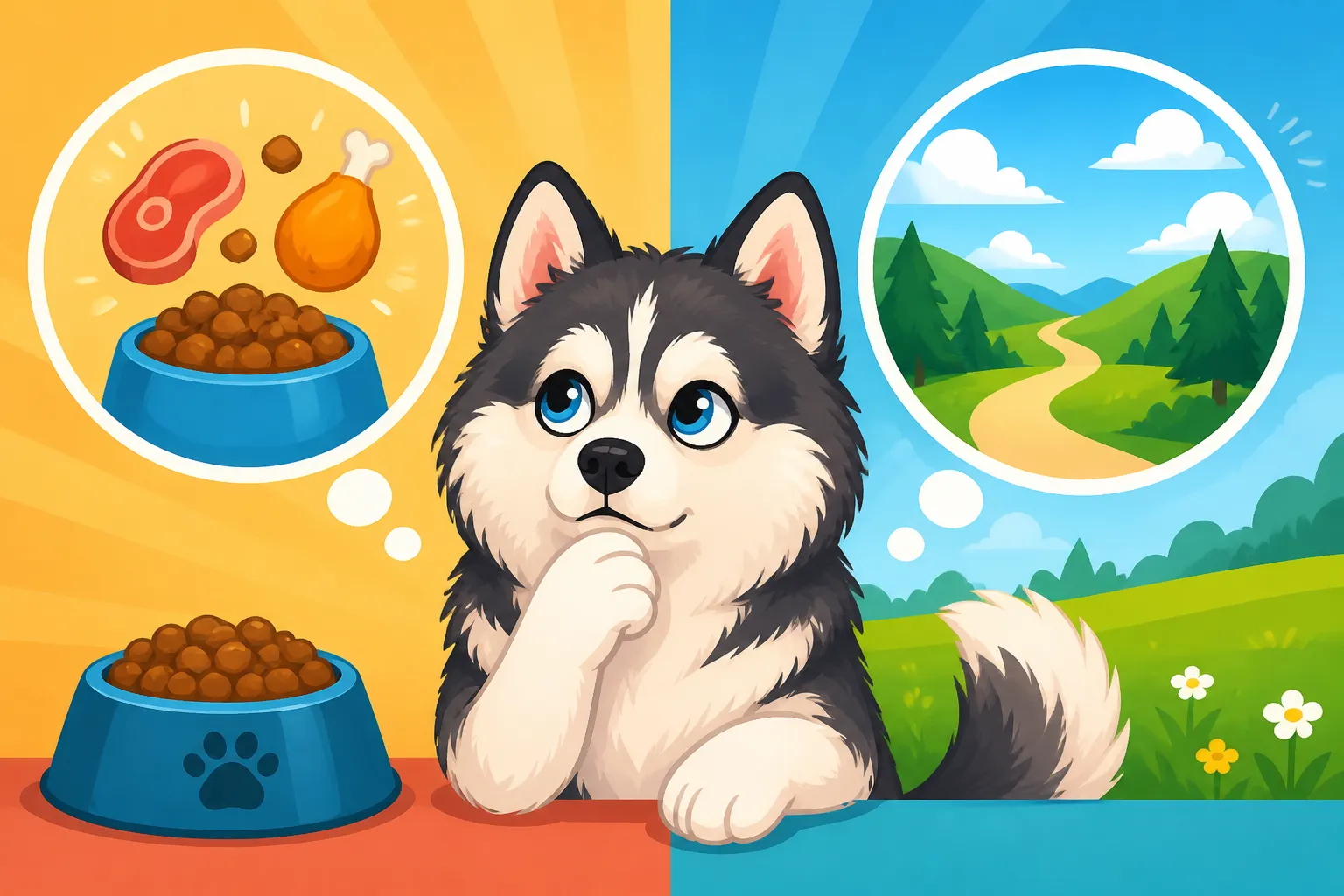
So, can food beat freedom for a Pomsky? The short answer is: sometimes, and with a lot of strategic effort. It's not just about any food; it's about the right food, delivered at the right time, with the right enthusiasm. You're essentially trying to compete with millennia of instinct, and your weapon is a perfectly timed, highly desirable morsel.
Identifying Your Pomsky's Ultimate Motivators
Not all treats are created equal in the eyes of a Pomsky. While kibble might work for a "sit" in the living room, it's rarely enough to pull them away from a high-stakes distraction. You need to identify what makes your individual Pomsky's eyes light up, what they would practically sell their soul for. This often means moving beyond standard dry biscuits.
Think about soft, smelly, and unique options. Small pieces of cooked chicken, cheese, hot dogs, even liverwurst can be incredibly motivating. Some Pomskies go wild for freeze-dried salmon or training treats specifically designed to be high-value. Experiment to find their "gold standard" treat. This isn't about feeding them a whole meal of these things, but rather tiny, pea-sized pieces that are quickly consumed, leaving them wanting more and ready for the next reward. Remember, the goal is impact, not volume. What a Pomsky will work for might surprise you, so don't be afraid to try different things.
The Art of Timing and Consistency
The effectiveness of even the highest-value treat diminishes if the timing is off. For a recall, the treat needs to appear almost instantly when your Pomsky turns towards you or starts to come back. If there's a delay, they might not associate the treat with the desired action, or they might get distracted again. "Marking" the desired behavior with a verbal cue like "Yes!" or a clicker the moment they make the right choice, followed immediately by the treat, is crucial. This helps bridge the gap between action and reward.
Consistency is another non-negotiable. Every single time you call your Pomsky and they respond, they should be rewarded, especially in the initial stages of training. If sometimes they get a treat and sometimes they don't, they'll quickly learn that your call is a gamble, and their innate desire for freedom will usually win out. This means carrying treats with you on every walk, even short ones, and being prepared to reward generously.
Beyond Kibble: Elevating Your Reward Game
To truly make food a compelling argument against the call of the wild, you need to think strategically about your reward hierarchy.
| Reward Level | Example Treats | Typical Value | Use Case |
|---|---|---|---|
| Low Value | Dry kibble, standard biscuit treats | Low | Basic commands in a quiet environment |
| Medium Value | Store-bought soft treats, small chewy morsels | Medium | Known commands with minor distractions |
| High Value | Cooked chicken, cheese, hot dogs, liverwurst | High | Challenging commands, strong distractions, recall |
| Jackpot Reward | A handful of various high-value treats, a favorite toy, enthusiastic praise | Very High | Exceptional responses, overcoming major distractions |
When you're working on something as critical as recall, you almost always need to be operating in the "High Value" or "Jackpot" territory. If your Pomsky isn't responding, it's often not because they're being "bad," but because your current reward isn't compelling enough to overcome the distraction they're facing. This isn't just about food; it's about making you the most rewarding presence in their environment.
Consider using novel food items that they rarely get. If chicken is a daily treat, it might lose some of its allure. Save the absolute highest value items for the most important commands, like their recall. You can also vary the delivery of the treat – sometimes hand-fed, sometimes tossed a short distance for them to chase (adding to the fun), or even hidden for a quick "find." This keeps things exciting and unpredictable, which Pomskies, with their intelligent and curious nature, tend to love.
Building a Rock-Solid Bond and Reliable Recall
While food is an incredibly powerful tool, it's just one piece of the puzzle. The stronger your bond and the more you establish yourself as the source of all good things, the more likely your Pomsky is to choose you over the thrill of the chase.
Making Yourself More Interesting Than the Environment
This is perhaps the hardest, but most crucial, part. If you're consistently boring on walks, just letting your Pomsky sniff while you scroll through your phone, why would they choose you over a fascinating squirrel? You need to become the most exciting thing on four legs (or two, in your case!).
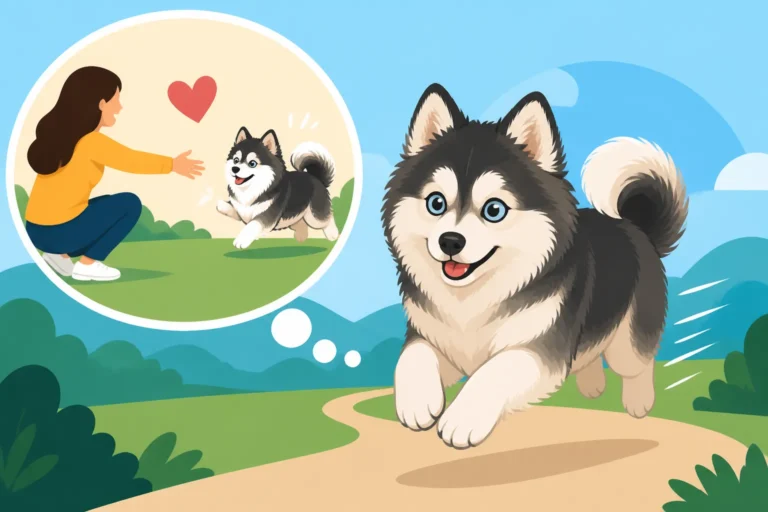
This means active engagement: playing quick games of "find the treat" in the grass, randomly changing direction, speeding up, slowing down, praising them enthusiastically, and constantly rewarding check-ins. Make coming back to you a party! Use a happy, excited tone of voice, even if you're secretly fuming. If your tone is angry or frustrated, they'll associate coming to you with negativity, making them less likely to return. Consider taking an online training course from a reputable source like BAXTER & Bella to learn engagement techniques that go beyond basic commands. These programs often emphasize building a strong bond and making training fun and interactive, which is exactly what a Pomsky needs.
Gradual Exposure and Controlled Environments
You wouldn't ask a novice swimmer to cross an ocean, so don't ask your Pomsky for a perfect recall in a wide-open park filled with distractions on day one. Start in low-distraction environments like your quiet backyard. Once they're reliably coming back there, gradually increase the challenge: a fenced dog park during off-peak hours, then a quiet hiking trail on a long line.
A Whether a Pomsky Should Be Walked on a Long Line is an indispensable tool for recall training. It gives them the illusion of freedom while giving you control and the ability to prevent successful escapes. Every time they ignore your call and successfully run off, they are self-rewarding the wrong behavior, making it harder to break. The long line allows you to gently reel them in, ensuring they always complete the recall and get their reward. Only when they have a nearly 100% reliable recall on a long line in varied environments should you even consider supervised off-leash time, and even then, understand the risks.
Combining Food with Other Reinforcers (and when to fade it)
While food is powerful, it shouldn't be your only reward. Combine it with enthusiastic praise, a quick game with a favorite toy, or even a scratch behind the ears if they enjoy it. This makes the reward experience richer and less predictable, keeping your Pomsky engaged.
As your Pomsky becomes more reliable, you can start to "fade" the constant food rewards for every single recall. This doesn't mean stopping them entirely, but moving to an intermittent reinforcement schedule, which can actually make a behavior stronger in the long run. Sometimes they get a huge jackpot of treats, sometimes a single high-value treat, sometimes just praise and a quick tug of their favorite toy. They never know when the big prize is coming, so they stay motivated to keep trying. However, for a Pomsky and recall, you will likely always need to have high-value treats on hand for those crucial moments or highly distracting environments. You might also want to look into Whether a Pomsky Can Ever Be Off Leash for more insights on this topic.
When Freedom Still Wins: Realistic Expectations and Safety Measures
Let's be realistic: some Pomskies, despite the best training and the highest-value treats, will never have a 100% reliable recall in every situation. Their Husky heritage is simply too strong, and the call of the wild too alluring. It's not a failure on your part, but an acknowledgment of their unique breed traits.
Accepting the Limits of Off-Leash Freedom
It's vital to understand that "food beats freedom" is a goal, not a guarantee, especially for a Pomsky. There will be situations where the smell of a deer trail, the sight of a rabbit, or the excitement of another dog is simply too overwhelming, and no amount of cooked chicken will override that primal urge. Accepting this reality means making responsible choices for your dog's safety.
For many Pomskies, true off-leash freedom in unfenced areas may never be a safe option. This isn't a negative; it's simply a fact of living with a breed that carries such strong prey drive and wanderlust. It doesn't mean your Pomsky can't live a full, happy, and well-exercised life; it just means adapting your expectations and management strategies.
Essential Tools for Safety and Management
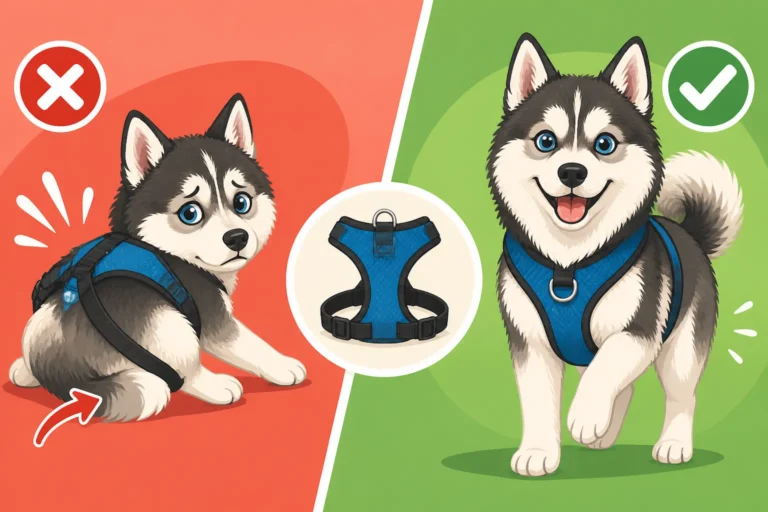
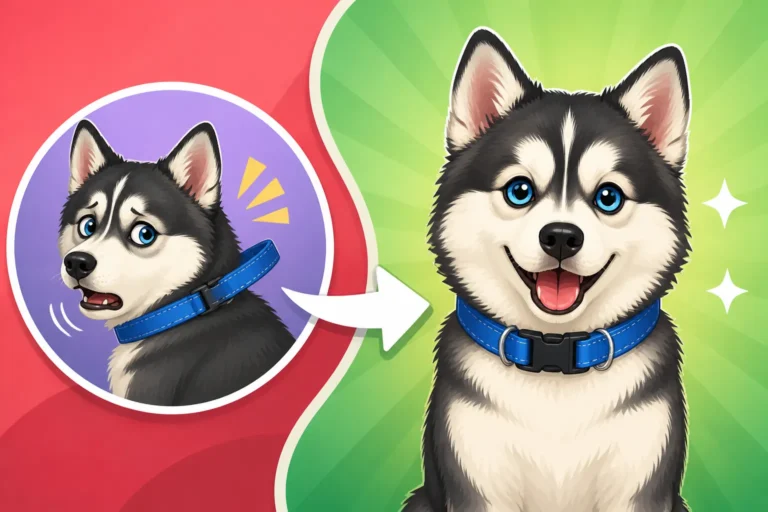
Because of their strong desire to explore, having the right gear is critical. A well-fitting harness (not just a collar, as they can often slip out of collars) is essential for walks, especially when paired with a good quality leash. Many Pomsky owners swear by a GPS tracker, often found on platforms like Amazon, attached to their harness or collar, as an added layer of security. This is particularly useful if your Pomsky is prone to escaping or if you ever encounter a situation where they manage to get loose. Topics such as Whether a Pomsky Should Be Microchipped Immediately and Whether an AirTag Works on a Pomsky explore these safety measures further.
Always ensure your yard is secure, with fences high enough to prevent jumping and footings deep enough to deter digging. Even a small gap can be an invitation for a curious Pomsky. These management tools aren't a substitute for training, but rather a vital backup plan to keep your adventurous companion safe.
Continuing Education and Professional Support
Training is not a one-and-done event, especially with intelligent and independent breeds like Pomskies. It's an ongoing process that requires continuous reinforcement, new challenges, and consistent engagement. Attending advanced obedience classes, trying dog sports like agility or scent work, or even just regularly practicing known commands in new environments can keep their minds sharp and reinforce your bond.
If you're consistently struggling with recall despite your best efforts, don't hesitate to seek help from a certified professional dog trainer who has experience with northern breeds or independent dogs. They can offer personalized strategies, help identify specific triggers for your Pomsky, and guide you through advanced training techniques. Sometimes, an objective eye can spot subtle cues or missed opportunities that can make all the difference. Remember, the goal isn't just a compliant dog, but a safe and happy companion who chooses to be with you.
Reward Value Comparison for Pomskies
To help you strategize your training, here's a quick comparison of various reward types and their likely effectiveness for a discerning Pomsky.
| Reward Type | Examples | Typical Pomsky Value | When to Use |
|---|---|---|---|
| Standard Kibble | Their everyday dog food | Low | Very low distraction environments, simple known commands |
| Dry Training Treats | Hard, crunchy, store-bought biscuits | Low to Medium | Moderate distractions, for duration work (e.g., stay) |
| Soft Chewy Treats | Soft, often meat-flavored, small pieces | Medium | General obedience, some distractions, maintaining attention |
| Cooked Meats | Boiled chicken, lean roast beef, hot dogs | High | Recall training, high distraction environments, new behaviors |
| Cheeses | Small cubes of cheddar, string cheese | High | High-value rewards for critical commands or breakthroughs |
| Novel & Strong Smells | Liverwurst, sardine paste, freeze-dried salmon | Very High | Emergency recall, proofing in extremely distracting settings |
| Favorite Toy | Squeaky ball, tug toy | Medium to High | Playful rewards, for dogs more motivated by play than food |
| Verbal Praise/Petting | "Good boy!", scratches, tummy rubs | Low to Medium | Always combine with other rewards, maintain enthusiasm |
This table isn't exhaustive, but it provides a framework. Your Pomsky might have their own unique preferences, so always pay attention to what motivates them the most.
Disclaimer
This article is for general informational purposes only and does not constitute professional advice. Laws, prices and regulations vary by location and change over time. Consult a qualified professional for guidance on your specific situation.