Whether a Pomsky Gets Dry Eye
Pomsky dry eye, medically known as Keratoconjunctivitis Sicca, causes chronic discomfort and potential corneal damage from insufficient tear production.

Pomsky dry eye, medically known as Keratoconjunctivitis Sicca, causes chronic discomfort and potential corneal damage from insufficient tear production.

Pomsky watery eyes in wind result from natural tear production protecting against dust and dryness, influenced by Husky and Pomeranian traits.

A veterinary ophthalmologist performs a Canine Eye Registry Foundation exam to detect inherited eye conditions in a Pomsky.

Heterochromia in Pomskies explains the genetics, health implications, and complete or sectoral eye color variations in this crossbreed.

Pomsky eye color genetics and Siberian Husky heritage explained, showing how genes like ALX4 control blue eyes without causing health problems.
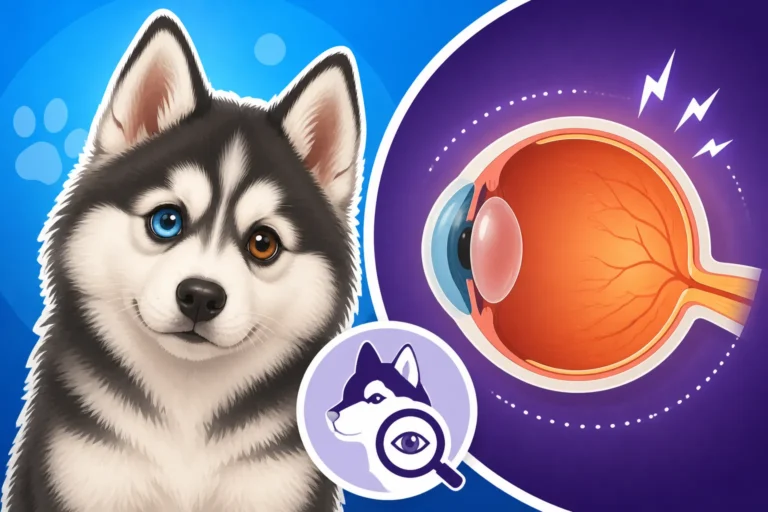
Glaucoma in Pomskies explains primary and secondary types, optic nerve damage, high eye pressure, and treatment options.
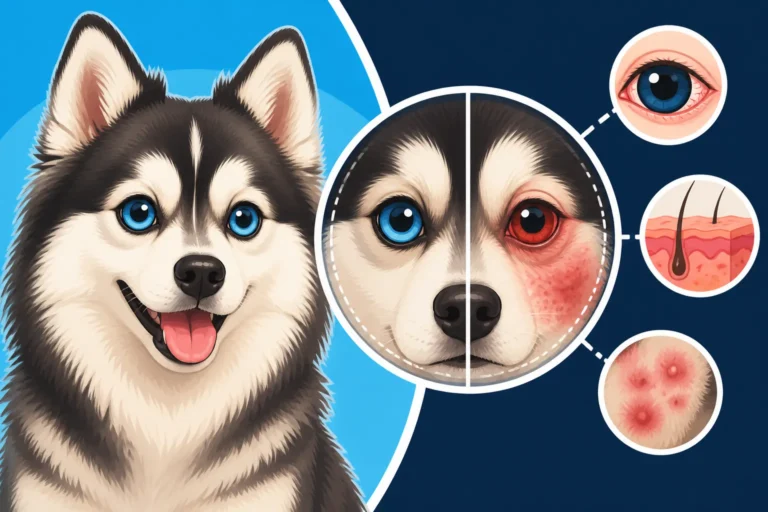
Uveodermatologic syndrome in Pomskies is an autoimmune disorder causing severe eye inflammation and skin depigmentation.

Corneal dystrophy causes cloudy eye deposits and inherited vision changes in Pomskies, affecting the outer, middle, or inner layers.

Corneal dystrophy in Pomskies causes white, grey, or bluish-white cloudy patches on the eye due to lipid or calcium deposits.

Pomsky cataract surgery considerations, genetic causes, and visible signs help owners decide if this vision procedure is appropriate.