Whether a Pomsky Needs a CAER Exam
It's completely normal to feel a bit overwhelmed when it comes to specialized health screenings for your furry family member. As Pomsky owners, we often navigate a unique path, blending the health considerations of two distinct breeds. One question that frequently pops up is whether a CAER exam is truly necessary for your beloved Pomsky. This guide will meticulously break down what a CAER exam entails, why it’s so important for a mixed breed like the Pomsky, and what you can expect, helping you make an informed decision for your companion's long-term eye health.
Understanding the Canine Eye Registry Foundation CAER Exam
When we talk about keeping our Pomskies healthy, our minds often jump to vaccinations, diet, and exercise. But for a breed with such a unique genetic background, specialized screenings, especially for their eyes, are incredibly important. The CAER exam is one such vital tool that can offer immense peace of mind.
What Exactly Is a CAER Exam?
A CAER exam, which stands for Canine Eye Registry Foundation, is a standardized eye examination performed by a board-certified veterinary ophthalmologist. Think of it as a comprehensive, deep dive into your dog's ocular health, far beyond what a general veterinary check-up might cover. This specialized vet has undergone extensive additional training and certification to become an expert in the diagnosis and treatment of eye diseases in animals. The exam is governed by the American College of Veterinary Ophthalmologists (ACVO), ensuring consistent, high-quality standards across the board.
The primary purpose of a CAER exam is to identify inherited eye conditions that dogs might carry or develop. This isn't just about whether your dog can see a treat tossed across the room; it’s about meticulously checking for subtle abnormalities that might be genetic and could worsen over time or be passed on to offspring. The ophthalmologist uses specialized equipment to thoroughly inspect every part of the eye, from the eyelids and tear ducts to the cornea, lens, and retina. The findings are then recorded and, if desired, registered with the OFA (Orthopedic Foundation for Animals) Eye Certification Registry (formerly the CAER program), creating a searchable database of canine eye health.
Why Proactive Eye Health Screening Matters for Pomskies
For Pomskies, whose genetic makeup is a delightful blend of Siberian Husky and Pomeranian, proactive eye health screening isn't just a good idea – it's crucial. Both parent breeds are known to carry predispositions to various eye conditions, meaning your Pomsky could inherit any number of these. Unlike purebreds where specific breed clubs often mandate certain health tests, the Pomsky is a newer crossbreed, and while responsible breeders do extensive health checks, the sheer mix of genes means an individual Pomsky's exact genetic blueprint for eye health can be a bit of a mystery without proper screening.
Early detection through a CAER exam can be a game-changer. Imagine catching a condition like juvenile cataracts at an early stage. While it might still progress, knowing about it early allows you to monitor it closely with your vet, discuss potential treatments, or even make lifestyle adjustments to support your dog. Without this proactive approach, an inherited eye condition might only become apparent when it's already significantly impacting your dog's vision or causing discomfort, leading to more advanced, and often more costly, interventions. Identifying these issues early can potentially spare your Pomsky unnecessary pain and vision loss, and certainly save you, the owner, from the emotional and financial burden of an unexpected, severe eye problem.
Inherited Eye Conditions Common in Pomsky Parent Breeds
Understanding the potential genetic baggage your Pomsky might carry from their Siberian Husky and Pomeranian lineage is key to appreciating the value of a CAER exam. Both breeds contribute a unique set of predispositions to various eye conditions, making comprehensive screening all the more critical for their mixed-breed offspring.
Eye Conditions from the Siberian Husky Side
The Siberian Husky is known for its striking blue eyes, but also for carrying a propensity for several significant eye conditions. A Pomsky inheriting more from their Husky side, or simply carrying the right (or wrong!) combination of genes, could be at risk for these issues.
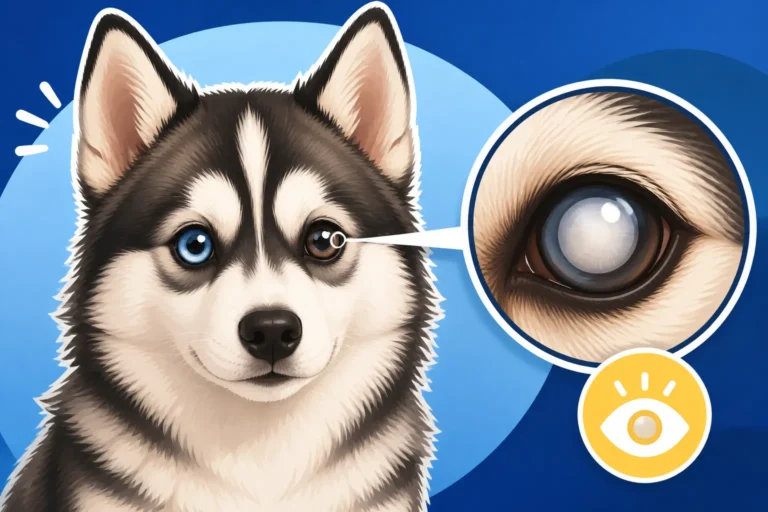
One of the most talked-about conditions is The Juvenile Cataracts a Pomsky Gets From the Husky. These aren't the age-related cataracts you might expect in older dogs; juvenile cataracts can develop in puppies or young adult dogs, sometimes progressing quickly and severely enough to cause significant vision impairment or even blindness. The CAER exam is designed to spot the earliest signs of these lens opacities. Another serious condition is progressive retinal atrophy. This is a group of degenerative diseases affecting the retina, gradually leading to complete and irreversible blindness. While there's no cure, early diagnosis allows owners to prepare and adapt their homes to help their dog cope with vision loss.
Beyond these, Huskies can also be prone to Corneal Dystrophy in a Pomsky, which involves abnormal deposits in the cornea that can cause cloudiness and sometimes discomfort, though usually not blindness. Glaucoma, a painful condition characterized by increased pressure within the eye, can also be a concern. The sudden onset of glaucoma can be an emergency, leading to rapid, irreversible blindness if not treated promptly. Having an understanding of The Eyes a Pomsky Gets From the Husky is crucial for any Pomsky owner.
Eye Conditions from the Pomeranian Side
While perhaps less renowned for their eye issues compared to Huskies, Pomeranians contribute their own set of potential challenges to the Pomsky genetic pool. Many of these conditions can cause chronic irritation, discomfort, and potentially secondary infections if left unaddressed.
One common finding in Pomeranians is distichiasis, where extra eyelashes grow from abnormal locations on the eyelid margin, often rubbing against the cornea. This can lead to chronic irritation, corneal ulcers, and pain. Similarly, entropion (eyelids rolling inward) or ectropion (eyelids rolling outward) are structural issues that can cause problems. Entropion is particularly irritating as it causes the eyelashes and surrounding fur to constantly rub against the sensitive surface of the eye. Dry eye, or keratoconjunctivitis sicca (KCS), is another condition seen in Pomeranians where the eyes don't produce enough tears, leading to chronic irritation, redness, and potential infections.
While not as famously linked to PRA or severe cataracts as Huskies, Pomeranians can still carry genetic predispositions for these conditions. A thorough CAER exam will look for these and other more general ocular issues that might manifest due to the Pomeranian influence.
The Importance of Screening for Both Lines
Given that a Pomsky is a true hybrid, inheriting a mosaic of genes from both parent breeds, it's impossible to predict which specific eye conditions they might be predisposed to without proper screening. Your Pomsky could inherit the potential for juvenile cataracts from their Husky ancestor and distichiasis from their Pomeranian lineage. This genetic "lucky dip" makes the CAER exam incredibly valuable. It's not just checking for Husky eyes or Pomeranian eyes; it's checking for Pomsky eyes, considering all possibilities.
For breeders, this screening is indispensable. Responsible breeders use CAER results to make informed decisions about breeding pairs, aiming to reduce the incidence of inherited eye diseases in future generations. For pet owners, it's about gaining comprehensive knowledge. Knowing your Pomsky's specific risks allows you to be proactive in their care, work closely with your veterinarian, and potentially seek out early interventions that could preserve their vision and quality of life for years to come. This commitment to understanding a dog's health profile is also something often supported by pet insurance providers like Healthy Paws, who advocate for preventative care to keep pets healthier longer.
What to Expect During a CAER Exam for Your Pomsky
Knowing what actually happens during a CAER exam can alleviate a lot of the unknowns and make the process smoother for both you and your Pomsky. It's not just a quick peek; it's a methodical and thorough examination by a highly skilled specialist.
The Examination Process Step-by-Step
When you bring your Pomsky in for a CAER exam, you'll be seeing a veterinary ophthalmologist – a vet who has dedicated years to studying animal eyes. The appointment typically begins with a thorough history taking, where you'll discuss your Pomsky's general health, any eye-related concerns you've noticed, and their family history if known.
Next, the ophthalmologist will usually perform a preliminary examination of your Pomsky's eyes in a normally lit room, checking the eyelids, conjunctiva, and tear production (often using a Schirmer tear test). After this, your Pomsky will likely receive dilating eye drops. These drops take about 15-20 minutes to work, temporarily enlarging the pupils so the ophthalmologist can get a clear view of the deeper structures of the eye, like the lens and retina. During this waiting period, your Pomsky might become a bit light-sensitive, so keeping them in a dimly lit area is helpful.
Once the pupils are fully dilated, the main examination begins, typically in a darkened room to optimize visibility. The ophthalmologist will use specialized equipment, including an indirect ophthalmoscope (which gives a wide-field view of the retina) and a slit lamp biomicroscope (which provides magnified, three-dimensional views of the front and middle parts of the eye, such as the cornea, iris, and lens). They will meticulously examine these structures for any signs of inherited or acquired conditions, looking for subtle changes, opacities, or structural abnormalities. The entire process is non-invasive and generally well-tolerated by most dogs. Finally, the findings are recorded on an official CAER form, and if all is clear, your Pomsky receives a "Normal" certification. If abnormalities are found, they will be classified as "Affected" or "Breeder Option" with detailed notes.
When and How Often Should a Pomsky Have a CAER Exam?
The recommended age for an initial CAER exam for a Pomsky is typically around 12-18 months of age, once they've reached skeletal maturity. However, some inherited conditions can manifest earlier, so puppies from high-risk lines might have an initial screening closer to 6-8 months, with a follow-up later. For breeding animals, annual CAER exams are strongly recommended to ensure they remain clear of inherited eye diseases before each breeding. This helps prevent the inadvertent spread of genetic conditions.
Even for companion Pomskies not intended for breeding, an annual eye check-up by a general vet is always a good idea. However, whether a full CAER exam with an ophthalmologist is needed every single year depends on your individual dog's health history, any findings from previous exams, and advice from your vet. If your Pomsky's initial CAER was clear and there are no new concerns, your general vet might advise a less frequent specialized exam, perhaps every 2-3 years. If any concerns arise, however, a prompt re-evaluation by an ophthalmologist is warranted. Remember, early detection is key, and regular monitoring, including Whether a Pomsky Needs a Yearly Eye Exam, helps maintain optimal vision. Proactive annual check-ups, including specialized exams like CAER, are exactly the kind of preventative care that pet insurance providers like Healthy Paws often encourage, as it can catch issues before they become major, costly problems.
Interpreting the Results and Next Steps
Once the ophthalmologist completes the exam, they will discuss their findings with you. The results will be recorded on the official CAER form, which can be submitted to the OFA.
- Normal: This is the best possible outcome! It means your Pomsky shows no clinical signs of inherited eye disease at the time of the examination. This is fantastic news and provides a strong foundation for future eye health.
- Affected: This indicates that an inherited eye disease was identified. The ophthalmologist will explain the specific condition, its potential progression, and any recommended treatments or management strategies. This diagnosis doesn't mean your Pomsky's life is over; many conditions can be managed to maintain a good quality of life. For example, some forms of corneal dystrophy might just require monitoring, while others might need medication.
- Breeder Option: This category is less common for pet owners and usually applies when a minor anomaly is found that is thought to be inherited but is not severely vision-impairing, and its genetic significance is unclear. The breeder, in consultation with the ophthalmologist, must then decide whether to proceed with breeding.
Regardless of the outcome, the ophthalmologist will provide clear guidance on the next steps. For an "Affected" diagnosis, this might involve medication, regular follow-up visits, or even surgical options in some cases, such as for advanced cataracts. For "Normal" results, it reinforces the importance of continued routine care and consideration for future CAER exams, especially if your Pomsky is part of a breeding program. Having this kind of detailed health record can also be beneficial if you have pet insurance, helping you understand what conditions might be covered and guiding your preventative care strategy with providers like Healthy Paws.
The Value Proposition of a CAER Exam for Pomsky Owners
Deciding whether to pursue a CAER exam for your Pomsky ultimately comes down to understanding the significant benefits it offers, not just for your pet's vision, but for your peace of mind and for the future health of the breed.
Peace of Mind and Early Detection
The primary, and arguably most valuable, benefit of a CAER exam is the immense peace of mind it offers. As pet parents, we constantly worry about our furry companions, and vision problems can be particularly distressing. Knowing that a board-certified ophthalmologist has thoroughly examined your Pomsky's eyes and found them healthy allows you to relax, confident that you've been proactive in their care. Conversely, if an issue is detected, knowing about it early is a huge advantage.
Early detection means you can prepare. You can research the condition, understand its prognosis, budget for potential treatments, and make necessary adjustments to your home to support your Pomsky. This proactive approach can significantly impact the progression of certain diseases and enhance your dog's quality of life. Think about it: catching early signs of something like progressive retinal atrophy means you can start training your dog with verbal cues and tactile signals before their vision significantly declines, making the transition smoother for them. Without a CAER exam, you might not discover these issues until they are advanced and causing significant distress, leading to reactive, often more expensive, and sometimes less effective, interventions.
Supporting Responsible Breeding Practices
For those who acquired their Pomsky from a reputable breeder, understanding the importance of the CAER exam also highlights the breeder's commitment to ethical and responsible practices. A responsible Pomsky breeder will always conduct comprehensive health screenings on their breeding dogs, and a CAER exam is a critical component of that. It’s not just about producing cute puppies; it’s about ensuring those puppies have the best possible chance at a long, healthy life, free from preventable genetic diseases.
When breeders screen their dogs and share those results, they are actively working to reduce the incidence of inherited eye conditions in the Pomsky population. This benefits every future Pomsky owner. When you look into The Health Tests a Pomsky Breeder Should Show, a CAER exam should absolutely be on that list. This level of investment and transparency speaks volumes about a breeder's integrity and dedication. It's a significant part of What a Pomsky Breeder Spends Before a Litter Exists to ensure healthy litters. Furthermore, organizations like the International Pomsky Association (IPA) often encourage or require such health testing for registered dogs, giving more credence to What an IPA Registered Pomsky Guarantees. Responsible breeders, often supported by organizations like the International Pomsky Association (IPA), invest in these exams, which ultimately reduces the risk of serious health problems down the line for pet parents, potentially saving on future vet bills that even the best pet insurance, such as from Healthy Paws, can't always fully mitigate.
Long-Term Health and Quality of Life
Ultimately, the decision to get a CAER exam for your Pomsky is an investment in their long-term health and overall quality of life. Our dogs are family members, and we want them to be as happy and comfortable as possible throughout their lives. Healthy eyes are fundamental to a dog's ability to navigate their world, play, explore, and interact with us.
Even seemingly minor conditions, if left undiagnosed and untreated, can lead to chronic pain, irritation, or anxiety for your dog. For instance, untreated distichiasis can cause painful corneal ulcers. A CAER exam addresses these potential issues head-on, allowing for appropriate management and treatment, ensuring your Pomsky can enjoy clear vision and comfortable eyes for as long as possible. It helps answer critical questions like Whether Blue Eyed Pomskies See Worse or other common concerns. By being proactive, you're not just preventing potential problems; you're actively ensuring your Pomsky's well-being, allowing them to truly thrive as a cherished member of your family.
| Eye Condition | Parent Breed Link (Primary) | How CAER Helps Detect It | Potential Impact on Pomsky |
|---|---|---|---|
| Juvenile Cataracts | Husky, Pomeranian | Direct visualization of lens opacities during dilated exam | Progressive vision impairment, potential blindness |
| Progressive Retinal Atrophy | Husky, Pomeranian | Retinal examination for degeneration, sometimes ERG needed | Irreversible blindness |
| Corneal Dystrophy | Husky | Slit lamp examination for corneal opacity | Vision impairment, discomfort |
| Distichiasis/Ectopic Cilia | Pomeranian | Eyelid examination for abnormal eyelash growth | Eye irritation, corneal damage |
| Entropion/Ectropion | Pomeranian | Eyelid examination for abnormal lid positioning | Chronic irritation, infections |
| Glaucoma | Husky | Intraocular pressure measurement (tonometry) | Pain, rapid irreversible blindness |
| Dry Eye (KCS) | Pomeranian | Schirmer Tear Test (while not strictly CAER, often checked) | Chronic irritation, infection, vision loss |
Disclaimer
Please remember that the information provided in this guide is for informational purposes only and does not constitute veterinary advice. Always consult with a qualified veterinarian or a board-certified veterinary ophthalmologist for any health concerns or before making any decisions about your pet's medical care.