Whether a Multigen Pomsky Is More Predictable
Multigenerational Pomsky puppies offer increased predictability in appearance, size, and temperament compared to earlier generations.
Is this the right one for you?
Origins and temperament, size and coat, what living with one is actually like, and how it compares to the breeds people weigh against it.

Multigenerational Pomsky puppies offer increased predictability in appearance, size, and temperament compared to earlier generations.
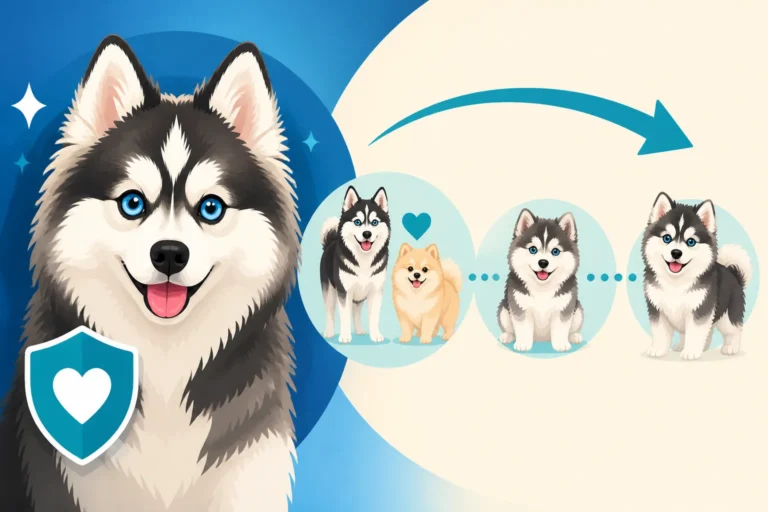
Pomsky breeders prefer F2 and multigenerational crosses to achieve greater predictability in size, appearance, and temperament.

An F1 Pomsky is a first-generation puppy with one purebred Siberian Husky parent and one purebred Pomeranian parent.

The Pomsky designer crossbreed lacks a formal written standard and kennel club recognition because it is a hybrid dog.

Pomsky official recognition status by major kennel clubs explains why hybrid dogs lack registry by organizations like the American Kennel Club.

An International Pomsky Association registration guarantees verified parentage and pedigrees through DNA proof from breeders.

The International Pomsky Association provides breed standards, health testing, and a registry to structure the Pomsky community.

Canine DNA tests explain how Siberian Husky and Pomeranian heritage determines the lineage of a designer Pomsky.

Pomsky rescue dogs are rare because the 4 to 7 pound Pomeranian sire and Husky dam require artificial insemination to breed.

Pomsky breeding requires artificial insemination because extreme size differences make natural mating and pregnancy extremely dangerous.