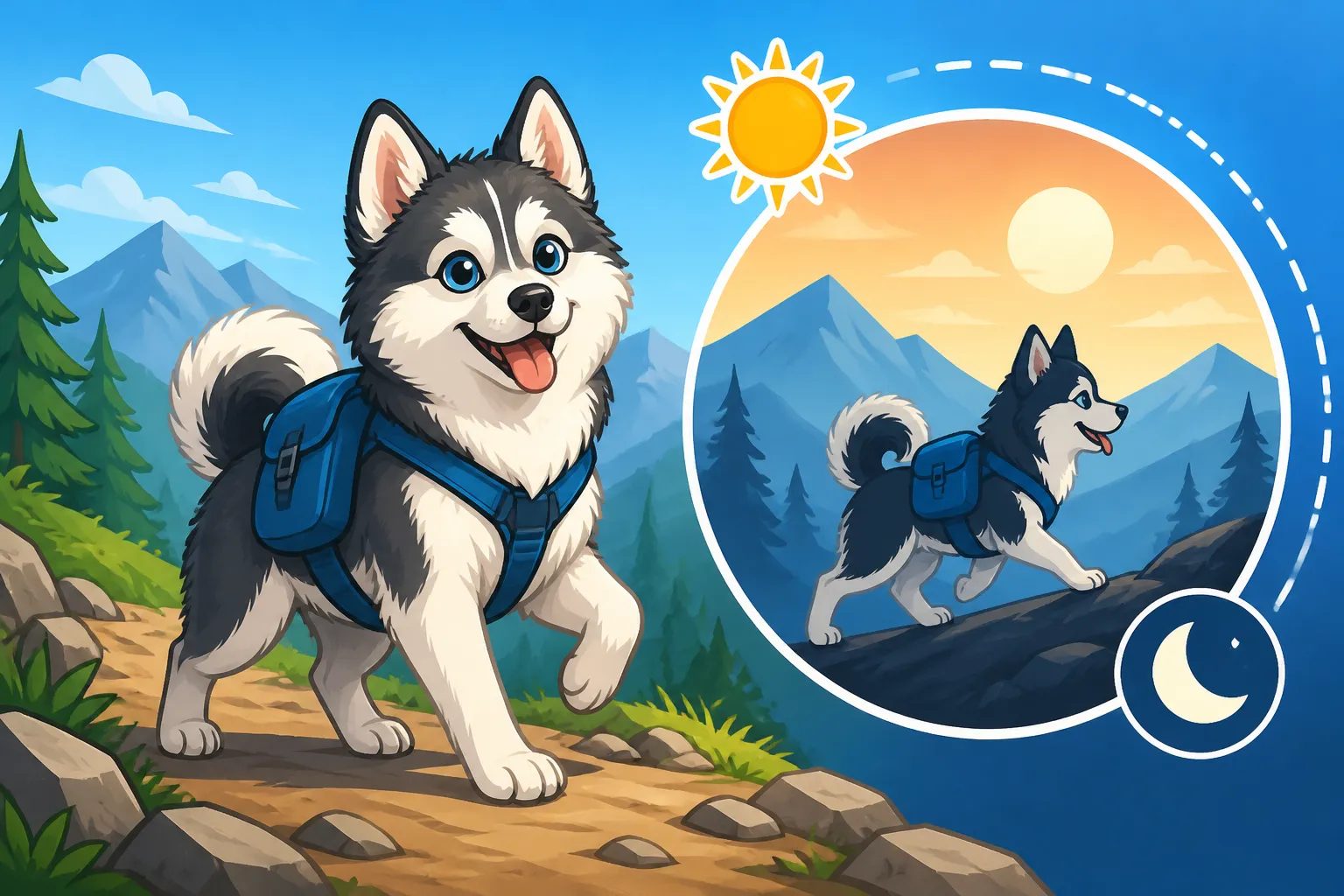
Whether a Pomsky Can Hike All Day
It's a dream for many Pomsky owners to lace up their hiking boots and hit the trails with their furry companions, picturing endless miles of shared adventure. But then reality sets in: your compact, double-coated canine isn't a full-sized Siberian Husky, and you start to wonder if those "all-day" excursions are truly realistic or just a recipe for exhaustion, injury, or worse. This comprehensive guide will walk you through everything you need to know about hiking with your Pomsky, helping you understand their limits, prepare properly, and enjoy the great outdoors safely and happily.
Understanding Your Pomsky's Athletic Profile
When you bring a Pomsky into your life, you're essentially getting a marvelous mix of two distinct breeds: the energetic Siberian Husky and the charming Pomeranian. This genetic lottery means every Pomsky is a unique individual, and their physical capabilities for an activity like hiking can vary dramatically. It's crucial to understand the traits inherited from each parent breed to set realistic expectations for your trail buddy.
The Husky Influence: Energy and Endurance
The Siberian Husky is renowned for its incredible endurance, built for pulling sleds over vast, frozen landscapes. They possess an almost boundless energy, a thick double coat that thrives in cold climates, and a strong desire to run and explore. Many Pomskies inherit this adventurous spirit and a significant portion of their Husky parent's drive. They love being outdoors, exploring new scents, and moving their bodies. You'll see it in their gait, their enthusiasm when the leash comes out, and their general zest for life. This Husky influence makes them willing partners for outdoor activities, often seeming ready for anything you throw at them.
However, it’s vital to remember that while they might have the spirit of a Husky, they don't have the body of one. A twenty-pound Pomsky might feel like they can go all day, but their smaller frame and shorter legs simply aren't designed for the same kind of sustained mileage as a 50-pound sled dog. Their double coat, while excellent for colder weather, also means they can be prone to overheating much more quickly than you might expect, especially in direct sunlight or during strenuous activity. If you've ever wondered Whether a Pomsky Overheats More Than a Husky, the answer often comes down to their body size not being able to dissipate heat as effectively as their larger ancestors, despite having the same insulation.
The Pomeranian Contribution: Stamina and Structure
On the flip side, the Pomeranian is a delightful, feisty toy breed known for its vivacious personality and spirited nature, but certainly not for being a long-distance runner. Poms are small, with delicate bone structures and short strides. While they are surprisingly agile and active for their size, their stamina for prolonged physical exertion is inherently limited. This means that a Pomsky with a stronger Pomeranian leaning in terms of size or build will naturally have a lower tolerance for long hikes.
Beyond general stamina, the Pomeranian lineage can introduce certain structural predispositions that directly impact hiking ability. For instance, Slipping Kneecaps in a Pomsky, also known as patellar luxation, is a concern. A dog with even a mild grade of this condition might be fine for short walks but could experience pain, discomfort, or even acute lameness on a strenuous hike. Similarly, while more commonly associated with larger breeds, Hip Dysplasia in a Twenty Pound Pomsky can also affect them, especially if the Husky parent had genetic predispositions or if growth was impacted. These conditions, which can range from mild to severe, can make any kind of sustained high-impact activity, like navigating uneven terrain on a long hike, quite risky for your Pomsky's joint health.
Genetic Variability in Pomskies
The beauty and challenge of owning a Pomsky lies in their genetic variability. Unlike purebred dogs with generations of predictable traits, Pomskies are a relatively new hybrid, meaning their characteristics can be quite diverse, even within the same litter. You might have one Pomsky that is lean, leggy, and robust, resembling a miniature Husky, while their sibling is more compact, stout, and fluffy, taking after the Pomeranian. This variability directly affects their physical prowess.
An individual Pomsky’s exact genetic makeup will dictate its potential for hiking. Some might inherit the longer legs and stronger bone structure that allows for more endurance, while others might have a more delicate build better suited for short bursts of activity and lots of cuddles on the couch. This is one reason why An F1 Pomsky Is Not the One Breeders Want for consistency in breeding programs; the first generation often shows the most variation in size, coat type, and temperament, which naturally extends to physical capabilities. A responsible breeder should provide health clearances for the parents and give you an idea of the projected size and build, but ultimately, observing your individual dog's limits and consulting with your vet is the best approach.
Factors to Consider for Pomsky Hiking
Deciding whether your Pomsky can embark on an "all-day" hike isn't a simple yes or no. It involves a careful assessment of several critical factors beyond just their breed mix. Ignoring these can lead to injury, discomfort, or even a dangerous situation for your beloved companion.
Age and Health
A Pomsky's suitability for hiking is heavily dependent on their age and overall health. Puppies, no matter how energetic, should not be taken on long, strenuous hikes. Their growth plates are still open, and excessive impact or mileage can cause irreversible damage to their developing joints, potentially leading to issues like hip or elbow dysplasia later in life. It's best to keep walks short and playful for puppies, gradually increasing duration as they mature. Always consult your vet about when your Pomsky is physically mature enough for longer excursions, which is usually after their growth plates have closed, around 12-18 months of age.
Similarly, senior Pomskies require special consideration. Just like humans, older dogs can develop arthritis, experience decreased stamina, or have underlying health conditions that make long hikes inappropriate. Exercise for an Old Pomsky should focus on gentle, consistent activity rather than long, challenging treks. Regular veterinary check-ups are essential throughout your Pomsky's life, but especially as they age, to catch any potential issues early. Furthermore, Pomskies can inherit a predisposition to conditions like The Collapsing Trachea a Pomsky Gets From the Pomeranian. While this might not be apparent in a young, healthy dog, strenuous exercise, especially in warm weather or with an ill-fitting collar, can exacerbate or even trigger symptoms. Always ensure your vet has given your dog a clean bill of health before tackling ambitious hikes.
Weather Conditions
The weather can be a game-changer for any hike, but it's particularly critical for a double-coated breed like the Pomsky. Their thick fur, designed to keep them warm in cold climates, can quickly become a liability in warmer temperatures. They are prone to overheating, and a sunny, warm day that feels pleasant to you can be dangerously hot for your Pomsky. Signs of overheating include excessive panting, drooling, lethargy, bright red gums, or even stumbling. You might be interested to read more on Signs a Pomsky Is Overheating to recognize these symptoms quickly.
If you live in a region with hot summers, like Whether a Pomsky Copes in a Southern Summer, you'll need to adjust your hiking schedule dramatically. Early mornings or late evenings are often the only safe times for outdoor activity, and even then, shorter distances are advisable. Always carry plenty of water for both of you and offer it frequently. In contrast, while their double coat makes them more resilient in cold weather, extreme cold, ice, or deep snow still pose risks. Their paws can get cold or accumulate snowballs, and prolonged exposure can lead to hypothermia. Always be mindful of the ambient temperature, humidity, and sun exposure, and never hesitate to turn back if conditions become unfavorable.
Terrain and Distance
The type of terrain you're hiking on plays a huge role in your Pomsky's endurance and safety. Flat, well-maintained paths are far less taxing than steep, rocky, or uneven trails. Jagged rocks, slippery mud, or deep sand can strain joints, cause paw injuries, or lead to falls. Always inspect the trail ahead and be aware of potential hazards. A Pomsky's smaller size means they have to work harder to navigate obstacles that a larger dog might bound over effortlessly.
As for distance, while an "all-day" hike might mean 10-15 miles for an experienced human or a large, conditioned hiking dog, it will be significantly less for most Pomskies. A good rule of thumb for starting out might be a couple of miles, gradually building up to 5-7 miles for a well-conditioned adult Pomsky, depending on their individual build and the difficulty of the trail. Breaks are not just recommended, they're essential. Plan for frequent stops for water, rest, and a chance for your Pomsky to sniff around at their leisure. It’s not a race; it’s about enjoying the journey together.
Preparing Your Pomsky for the Trail
Successfully taking your Pomsky on hikes, especially longer ones, requires more than just showing up at the trailhead. Proper preparation is key to ensuring both their safety and enjoyment. This includes physical conditioning, equipping them with the right gear, and maintaining vigilance throughout your adventure.
Conditioning and Training
You wouldn't run a marathon without training, and your Pomsky shouldn't attempt a long hike without proper conditioning either. Start small and gradually increase the distance, duration, and difficulty of your walks. Begin with short, brisk walks in your neighborhood and slowly extend them over weeks or months. Pay attention to how your Pomsky recovers after each outing. Are they still energetic, or are they completely wiped out? This will help you gauge their current fitness level.
Beyond physical conditioning, some basic training is paramount for trail safety. A reliable recall is perhaps the most important command. Even if you plan to keep your Pomsky leashed, accidents happen, and a strong recall could be a lifesaver if they slip away or dart after wildlife. Training a reliable Building a Recall a Pomsky Answers is challenging, especially with their independent Husky heritage and strong prey drive, but it's essential. Work on it in various environments with increasing distractions. Leash manners are also crucial, preventing them from pulling you off balance on uneven terrain or becoming tangled around other hikers. Practice walking on different surfaces and around distractions to ensure they are well-behaved.
Essential Gear and Supplies
Having the right gear makes all the difference for a comfortable and safe hiking experience. Here’s a checklist of what you’ll want to consider:
- Harness: Always opt for a well-fitting harness over a collar for hiking. Collars can put pressure on your Pomsky's delicate trachea, especially if they pull, which can be particularly risky for breeds prone to issues like a collapsing trachea. A Y-front harness distributes pressure more evenly across their chest. Why a Pomsky Should Wear a Harness is not just about comfort; it's about their respiratory health.
- Water and Bowl: This is non-negotiable. Carry more water than you think you'll need, along with a collapsible bowl. Brands like Chewy offer a variety of portable bowls perfect for hiking.
- Food/Treats: High-energy treats or a small portion of their regular food (like a meal from Ollie, known for fresh, nutrient-dense options) can provide a much-needed boost during a long hike.
- First-Aid Kit: A basic pet first-aid kit should include antiseptic wipes, gauze, vet wrap, tweezers (for splinters or ticks), paw balm, and any personal medications your dog needs.
- Paw Protection: Depending on the terrain, dog boots can protect sensitive paw pads from sharp rocks, hot pavement, or abrasive surfaces.
- Leash: A sturdy, fixed-length leash (4-6 feet) is usually best for control on trails. Avoid retractable leashes as they offer less control and can be dangerous on uneven terrain.
- Waste Bags: Pack it in, pack it out!
- GPS Tracker: Given the Pomsky's Husky heritage, they can be escape artists with a strong desire to roam. A small, lightweight GPS tracker attached to their harness can provide immense peace of mind. Many hikers consider Whether a Pomsky Should Have a GPS Tracker essential for their adventurous pups. You can find many options on Amazon.
| Item | Purpose | Considerations |
|---|---|---|
| Y-Front Harness | Comfort & safety, prevents trachea pressure | Ensure snug fit, no chafing. |
| Water & Collapsible Bowl | Hydration | Carry more than you think; offer frequently. |
| High-Value Treats/Food | Energy boost, reward | Easily digestible, pack in a secure bag. |
| Pet First-Aid Kit | Emergency care for minor injuries | Include paw balm, antiseptic, gauze, tape, tweezers. |
| Paw Protection (Boots) | Shield from rough terrain, hot/cold surfaces | Introduce slowly, ensure comfort. |
| Fixed-Length Leash | Control on trails | Avoid retractable leashes for safety on uneven ground. |
| Waste Bags | Responsible waste disposal | Always pack out what you pack in. |
| GPS Tracker | Locate lost dog, peace of mind | Essential for breeds with a strong prey drive or tendency to roam. |
Monitoring Your Pomsky on the Hike
Even with the best preparation, continuous monitoring is crucial. Your Pomsky can't tell you they're tired or in pain, so you need to be their advocate. Watch for subtle cues:
- Panting: While normal, excessive or labored panting (especially without much exertion) can indicate overheating or respiratory distress.
- Lagging Behind: If your Pomsky starts to fall behind or repeatedly stops, they might be tired or in pain.
- Limping or Favoring a Paw: Stop immediately and inspect their paw pads for cuts, thorns, or blisters. Check for any signs of discomfort in their joints.
- Changes in Demeanor: Unusual lethargy, reluctance to move, or seeking shade more frequently are all red flags.
- Refusal to Drink: Dehydration is a serious risk. If your dog won't drink, try offering water with a treat or a little broth.
Always prioritize your Pomsky's well-being over your hiking goals. If you notice any concerning signs, it's time to turn back or find a safe spot for an extended rest. Pushing them too hard can lead to serious health consequences, and a ruined hike is far better than an injured dog.
Realistic Expectations and Alternatives
The idea of a picturesque, all-day hike with your Pomsky is certainly appealing, but it's important to differentiate between an ideal and a realistic outcome. Most Pomskies, while active and adventurous, simply aren't built for true "all-day" excursions, at least not in the same way a larger, endurance-bred dog might be.
How Far is "All Day" for a Pomsky?
For the average human, an "all-day" hike might easily span 10 to 15 miles or more. For most adult, well-conditioned Pomskies, a truly "all-day" hike is probably closer to 5 to 7 miles, split into a couple of sessions with significant rest breaks in between, especially if the terrain is challenging. This might mean a longer morning hike, a leisurely mid-day break, and a shorter evening stroll. The key is quality over quantity and ensuring your dog is enjoying the experience, not just enduring it.
Remember, what you consider a brisk pace might be a full-out trot for your Pomsky's shorter legs. They're working harder than you are to cover the same distance. Factors like elevation gain, loose gravel, or even constantly stopping to sniff new smells (which is great mental enrichment!) all add to their exertion. It's about finding that sweet spot where they get great exercise and mental stimulation without pushing them past their physical limits. Don't compare your Pomsky to the larger dogs you see on trails; compare them to themselves and their own unique capabilities.
Alternatives to All-Day Hiking
If true "all-day" hiking isn't a fit for your Pomsky, don't despair! There are countless ways to enjoy the outdoors and keep your furry friend happy and healthy. The goal is to provide adequate physical and mental stimulation, which doesn't always have to come in the form of a grueling trek. The Exercise a Pomsky Needs Every Day can be achieved through a variety of activities.
Consider shorter, more frequent walks throughout the day, exploring different local parks or nature trails. "Sniffari" walks, where you let your Pomsky take their time to thoroughly investigate scents, are fantastic for mental enrichment. Dog parks (if appropriate for your dog's temperament) offer opportunities for bursts of high-energy play with other dogs. Urban exploration, with its new sights and sounds, can also be stimulating without being overly strenuous. If you encounter particularly tough sections of a trail or your Pomsky tires out, a dog carrier backpack, easily found on Amazon, can be a game-changer. It allows them to rest while still enjoying the scenery and spending time with you. This way, you can extend your own adventure without over-exerting your dog.
Enjoying the Outdoors Safely
Ultimately, the most important aspect of any outdoor activity with your Pomsky is their safety and well-being. Always err on the side of caution. If you're ever in doubt about a trail's suitability or your Pomsky's ability to handle it, choose a shorter, easier option. Consult with your veterinarian regularly, especially if you plan to increase their activity level or notice any changes in their gait or energy. They can offer tailored advice based on your individual Pomsky's health.
The bond you share with your Pomsky is built on trust and care. By understanding their unique needs, respecting their physical limits, and preparing thoroughly, you can create countless happy memories exploring the natural world together, even if "all day" for a Pomsky means something a little different than it does for you. Focus on the joy of shared adventure, the wagging tail, and the happy panting of a dog who has had a wonderful, appropriate outing.
Disclaimer
This article is for general informational purposes only and does not constitute professional advice. Laws, prices and regulations vary by location and change over time. Consult a qualified professional for guidance on your specific situation.