Whether a Pomsky Sheds Less Than a Husky
A Pomsky may leave less hair around the house than a full-size Siberian Husky, but that is not a dependable promise. Pomskies can inherit a dense double coat and shed heavily, especially during seasonal coat changes. This guide explains what affects shedding, how to compare an individual Pomsky with a Husky, and how to keep loose undercoat manageable without damaging the coat.
Do Pomskies Shed Less Than Huskies
A Pomsky’s size does not tell the whole story
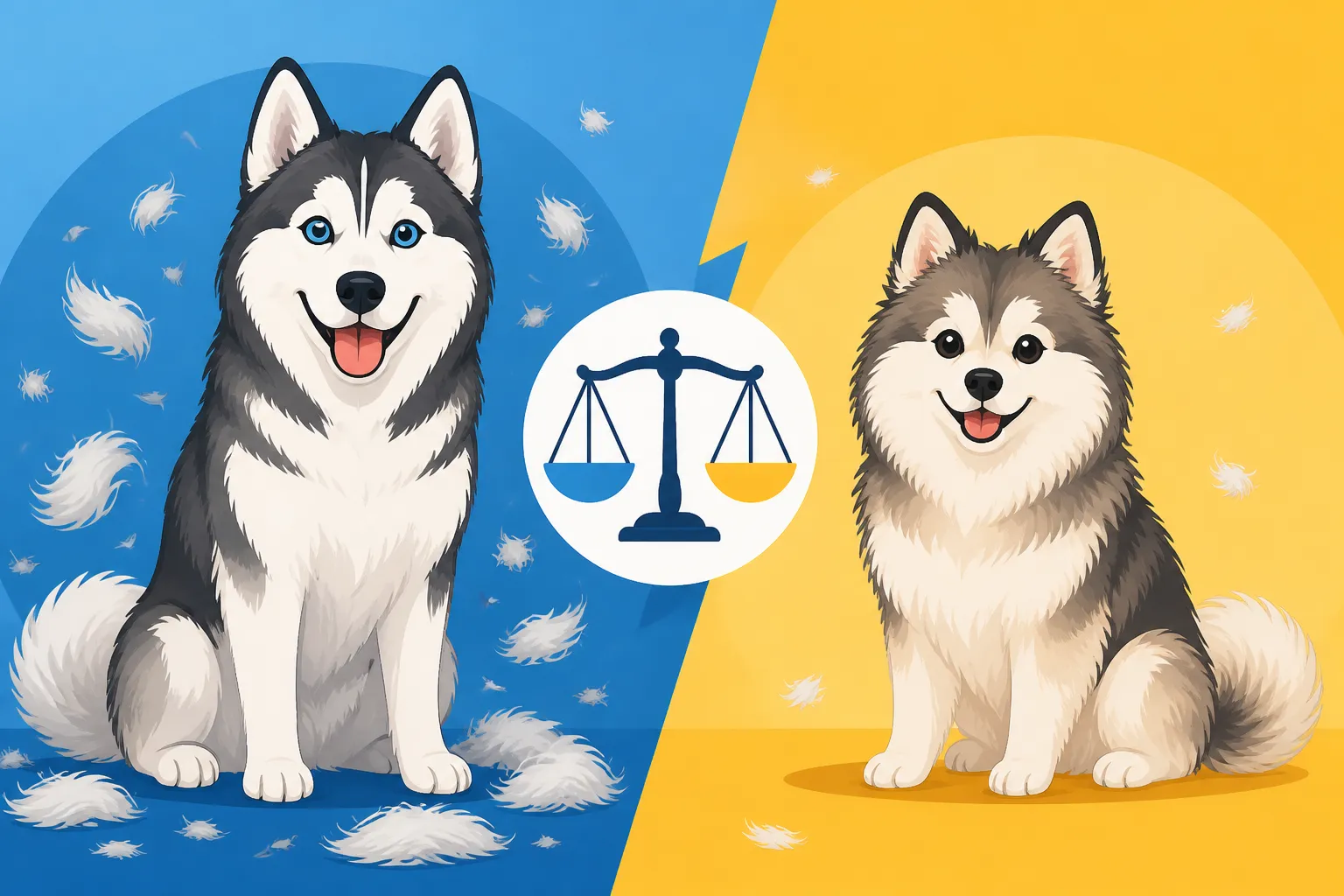
Because Pomskies are often smaller than Siberian Huskies, they may shed less total hair simply because there is less dog. But that does not mean they shed only a little, or that their coat is automatically easier to maintain. A small Pomsky with a thick, Husky-like undercoat can still release a surprising amount of fur.
It helps to separate two questions: how much hair comes off, and how noticeable that hair is in your home. A large Husky may produce more loose hair overall, while a smaller Pomsky may shed enough to collect on dark clothing, couch cushions, and the corners of a room. The Pomsky’s smaller body is no guarantee that you will spend less time vacuuming.
There is also substantial variation between Pomskies. Coat length, density, and inherited traits can differ even between puppies from the same litter. One may have a plush, dense coat, while another has a shorter or less substantial coat. The breed’s range of coat types is explored in The Three Pomsky Coat Types.
Parentage does not provide a simple shedding forecast
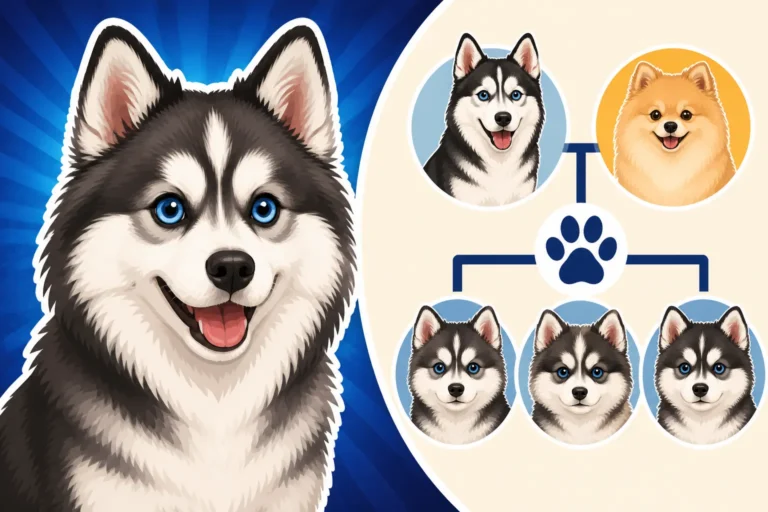
A Pomsky inherits traits from both Pomeranians and Siberian Huskies, but you cannot reliably predict its shedding level by looking at a puppy’s parents or generation label alone. A Pomsky that looks small or has a puppy-soft coat can still develop a thick adult undercoat. In general, appearance at a young age is an imperfect guide to the coat the dog will have as an adult.
The coat may also change as a Pomsky matures. Puppy fluff gives way to an adult coat, and changes in texture or density can make shedding seem different over time. If you are choosing a puppy, ask about the coats and grooming needs of mature relatives, while keeping in mind that family history is useful context rather than a guarantee. Whether a Pomsky’s Coat Type Shows at Eight Weeks explains why early predictions can be uncertain.
If someone promises a Pomsky will shed less than a Husky, ask what they mean by “less.” Are they comparing the amount of fur in a home, the frequency of grooming, or the amount of hair released during a seasonal shed? Those are different things, and no simple description of a Pomsky’s size, color, or generation settles them. Even a lower-shedding individual may still be a poor fit for a household that needs a reliably low-shed dog.
What Affects How Much Hair a Pomsky Leaves Behind
Coat density and coat type matter more than looks alone
A Pomsky’s visible outer coat is only part of the picture. Many have a double coat, with longer guard hairs over a softer undercoat. The undercoat helps insulate the dog, and loose undercoat is a major reason double-coated dogs leave hair around the house. Two dogs can look similarly fluffy but have different coat density beneath the surface.
A short coat is not automatically a low-shedding coat, either. Short hairs can be easier to overlook on a light floor but may work their way into fabric and upholstery. Longer hair can be more visible because it gathers into clumps, while dense undercoat may come out in larger amounts during a blowout. The practical experience depends on the dog, your flooring, your furnishings, and how often you groom.
The coat’s appearance can change as a Pomsky grows, so a fluffy puppy is not a dependable indicator of adult shedding. For a closer look at how coat changes can unfold, see Whether a Pomsky’s Coat Gets Thicker With Age. Whatever the coat type, it is wise to plan for regular brushing rather than assume a Pomsky will be low-maintenance.
Seasonal shedding and daily hair are different challenges
Many double-coated dogs shed throughout the year and also release more undercoat during seasonal coat changes. Owners often call this a “blowout” because loose undercoat can come away in noticeable amounts over a relatively concentrated period. The timing and intensity can vary with the individual dog and its living environment.
Outside those heavier shedding periods, you may still find hair on a brush, dog bed, or favorite spot on the sofa. A change in routine can make the difference feel dramatic: a Pomsky that seemed manageable in winter may leave more hair during a seasonal shed. The shedding pattern is not necessarily a sign that something is wrong, but a sudden change, bald patches, itching, or irritated skin deserves veterinary attention.
| What you notice | What may be behind it | Helpful response |
|---|---|---|
| Hair on clothes and furniture year-round | Normal ongoing shedding | Keep up with routine brushing and cleaning |
| A sudden surge of loose coat | Seasonal undercoat release | Brush more often and remove loose hair gently |
| Tangled hair behind the ears or in the leg furnishings | Friction and missed brushing | Check these areas regularly and work through tangles carefully |
| Bald areas, redness, or persistent itching | A possible skin or health problem | Contact a veterinarian rather than treating it as ordinary shedding |
How To Manage Pomsky Shedding Without Damaging the Coat
Use a consistent brushing routine
Regular brushing helps lift loose hair before it settles around the house and gives you a chance to notice tangles or skin irritation. For many Pomskies, a few short brushing sessions each week are easier to maintain than one long session after mats have formed. During a heavy shed, you may need to brush more frequently, adjusting to what your dog tolerates and what the coat actually needs.
Brush gently and work in manageable sections. Rather than dragging a tool over the surface, part the coat so you can see whether you are reaching the undercoat without scraping the skin. Pay particular attention to friction-prone areas such as behind the ears, under the collar or harness, and around the legs. If brushing turns into a struggle, pause and make sessions shorter, rewarding calm cooperation.
The right tool depends on the individual coat. A slicker brush, comb, or undercoat rake may be useful, but a tool that is too harsh or used carelessly can irritate skin or break hair. If you need to assemble basic grooming supplies, retailers such as Chewy can be one place to compare brushes and combs; choose based on your dog’s coat and how the tool feels in your hands. The Rake, Slicker and Comb a Pomsky Needs covers the roles these tools can play.
Bathe and dry the coat thoroughly
Bathing can loosen some dead hair, but it does not replace brushing. Use products made for dogs, rinse thoroughly, and avoid bathing so often that the skin becomes dry or irritated. After a bath, the coat needs to be dried completely down to the skin. A damp undercoat can stay wet longer than the surface suggests, especially in dense areas, and trapped moisture can contribute to skin trouble.
Some owners use a high-velocity dryer to help loosen and remove dead undercoat, but dryers can be noisy and startling. Introduce the sound gradually and stop if your dog is frightened. If drying at home is not practical, a groomer familiar with double-coated dogs can help with routine coat maintenance. A second trip to Chewy for suitable grooming basics may be convenient, but product choice should not replace careful handling or professional help when the coat is difficult to manage.
Do not shave a Pomsky just to reduce shedding. Shaving removes the coat that helps insulate and protect the skin, and regrowth may be uneven or take a long time. If mats are too close to the skin to brush out safely, ask a groomer or veterinarian for help instead of cutting into them with scissors. For more on why shaving is not a simple fix, see Why a Pomsky Must Never Be Shaved and Whether Shaving a Pomsky Damages the Coat.
Choosing a Pomsky If Shedding Is a Concern
Ask specific questions instead of relying on a promise
If you are considering a Pomsky and hoping for less shedding than a Husky, ask the breeder about the coats and grooming routines of adult dogs in the line. Ask what the adult coats are like, when the dogs shed most, and how often they need brushing. A clear description of the dogs’ everyday care is more useful than a broad claim that a puppy is “low-shed.”
Try to meet mature Pomskies if possible, and look closely at coat density rather than judging only by length or fluffiness. Ask what happens during seasonal shedding and whether owners need professional grooming to keep the coat manageable. Answers should help you picture everyday life with the dog, not just how the puppy looks in a photo.
It is also sensible to plan for hair before bringing a dog home. Consider whether anyone in the household has allergies, how much dog hair you are comfortable seeing on furniture, and whether you can keep up with regular brushing. Pomskies should not be treated as hypoallergenic simply because they are smaller than Huskies or have a different mix of coat traits. Whether a Pomsky Is Hypoallergenic offers more context if allergies are part of your decision.
Set realistic expectations for the home
Even if an individual Pomsky sheds less total hair than a Husky, there is no guarantee it will feel like a low-shedding pet. You may still need a vacuum that handles pet hair, washable throws for favorite resting places, and a routine for brushing and cleaning. Keeping a brush near the spot where your Pomsky relaxes can make grooming easier to remember, while a lint roller by the door can help with last-minute clothing cleanup.
If you shop for grooming supplies through Chewy or another retailer, focus on tools that suit your dog’s coat and that you can use comfortably and consistently. A good routine is usually more helpful than buying a large collection of products. For homes with lots of fabric furniture, a few practical habits—brushing before the dog settles on the sofa, washing bedding regularly, and vacuuming high-traffic areas—can make shed hair less frustrating.
The realistic answer is that a Pomsky may shed less than a Husky in total, but its size does not guarantee less visible hair or less grooming work. Coat density, seasonal shedding, and the individual dog all matter. If you love the breed, go in prepared for regular coat care rather than choosing a Pomsky on the assumption that it will be a low-shed version of a Husky.
Disclaimer
This article is for general informational purposes only and does not constitute professional advice. Laws, prices and regulations vary by location and change over time. Consult a qualified professional for guidance on your specific situation.