Whether a Pomsky’s Coat Gets Thicker With Age
One of the biggest questions new Pomsky parents have is about their puppy's coat – how fluffy will it stay? Will it look like the picture-perfect miniature husky they envisioned? It's completely normal to feel a bit anxious, especially when your adorable, wispy-haired puppy starts looking a bit… scraggly. This guide is here to walk you through the fascinating journey of your Pomsky's coat development, explaining why it absolutely gets thicker with age and what to expect along the way.
The Puppy Fluff Illusion: Early Coat Development in Pomskies
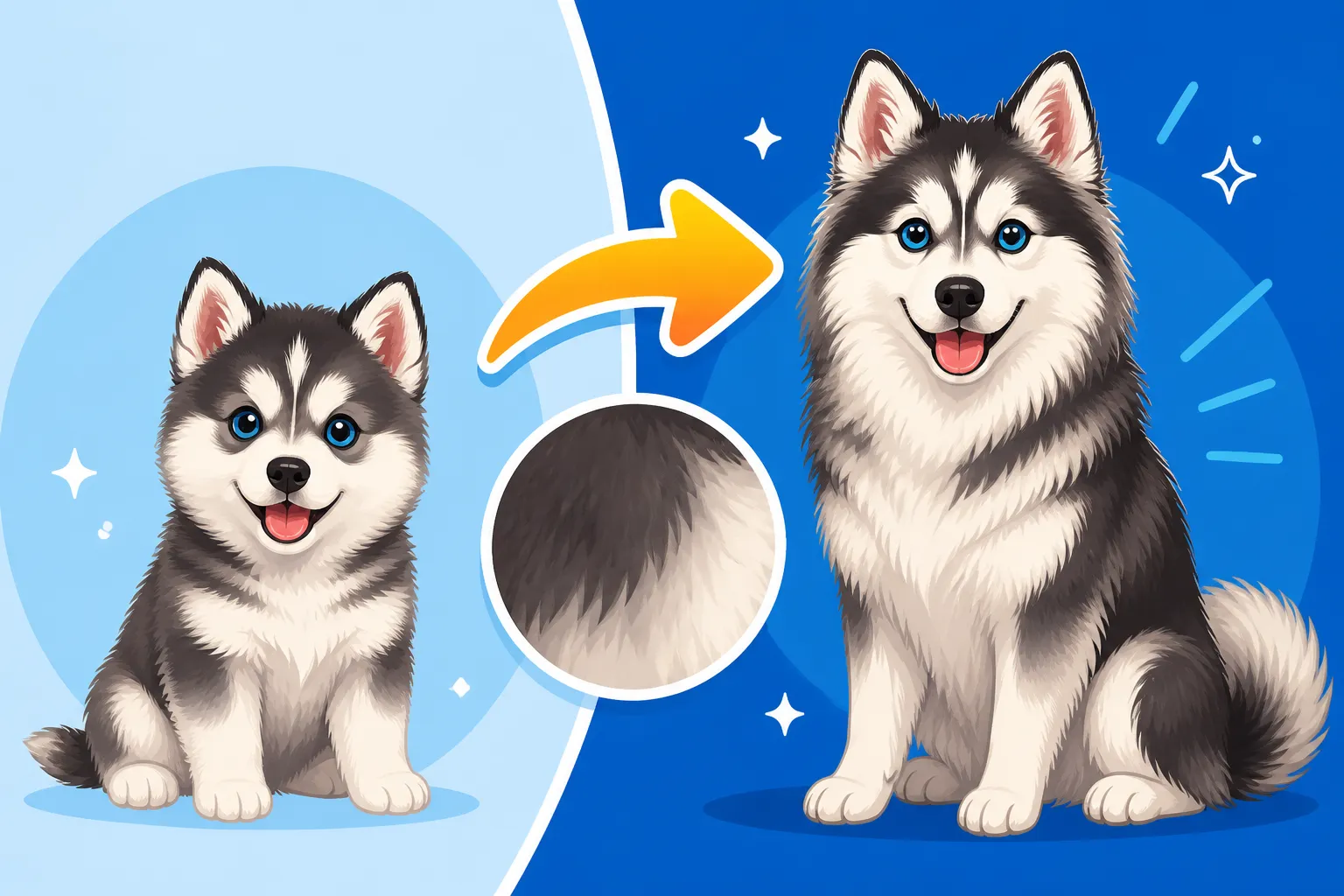
When you first bring home a Pomsky puppy, they are typically a ball of soft, downy fluff. This "puppy coat" is incredibly endearing, but it’s often not a true indicator of the dense, double coat they will develop as adults. Many owners are surprised by how much their puppy's appearance changes over the first year or two, and this initial fluffiness can certainly create expectations that the adult coat will somehow retain that ethereal quality. The reality, however, is a much more robust and functional coat designed for resilience and insulation.
From Wispy Puppy Hair to Emerging Undercoat
That incredibly soft, fine hair your Pomsky puppy sports is essentially their baby coat. It's not nearly as dense or as long as their adult fur will be, nor does it have the defining characteristics of a true double coat yet. Think of it like a human baby's fine hair versus a teenager's thicker, more mature locks. This puppy coat feels almost weightless to the touch, and while it might keep them warm indoors, it wouldn't offer the same protection as their future adult coat in varied weather conditions.
As your Pomsky grows, usually starting around 3-6 months of age, you'll begin to notice a subtle shift. The existing puppy fluff will start to shed, making way for the emergence of the coarser guard hairs and the denser, softer undercoat. This transition isn't always uniform; you might see patches where the new coat is coming in, looking a bit uneven next to the remnants of the puppy coat. This is a crucial stage where their coat is literally building its protective layers, morphing from that light, airy fluff into something much more substantial. This period is a testament to the genetics at play, signaling the true nature of their double-coated heritage.
The "Ugly Phase" and Coat Changes
Ah, the "ugly phase." It's a term often used in the dog world, particularly for double-coated breeds, and it perfectly captures what many Pomsky owners experience during their dog's adolescence. Around six months to a year, or sometimes even stretching a bit longer, your beautiful fluffy puppy might start to look a little… disheveled. Their coat might appear patchy, uneven, and less vibrant. You might even worry that something is wrong, or that your Pomsky won't develop the gorgeous coat you admire in adult Pomskies.
This phase is entirely normal and is simply a manifestation of their adult coat pushing out the last of the puppy fluff. It's a bit like a human teenager's awkward growth spurt – everything seems to be growing at different rates. The guard hairs, which are longer and more protective, might come in unevenly with the dense undercoat developing beneath them. Sometimes, the puppy coat will shed out in clumps, leaving sparse areas before the new, thicker coat fills in. Patience is key during this time. Rest assured, this is a natural part of their development, and with proper care, their full, glorious double coat will emerge on the other side. This awkward stage is just a temporary bridge to their mature beauty.
Maturation and the Double Coat's True Nature
Once your Pomsky moves past the initial puppy fluff and the "ugly phase," their coat truly begins to reveal its full, magnificent form. This is where you see the blend of their Husky and Pomeranian ancestry come to life, culminating in a dense, resilient double coat that is one of their most defining features. Understanding this maturation process helps you appreciate the functional beauty of their fur and how it serves them so well.
The Full Extent of the Double Coat
The Pomsky's double coat is a marvel of nature, expertly designed for insulation, protection, and temperature regulation. Unlike many single-coated breeds, a double coat consists of two distinct layers. The outer layer is made up of longer, coarser guard hairs. These hairs are typically straighter and somewhat water-resistant, acting as a shield against the elements—be it rain, snow, or harsh sunlight. This is the layer that often carries the vibrant colors and markings seen in Pomskies.
Beneath this protective outer layer lies the dense, soft undercoat. This is the real secret to a Pomsky's luxurious thickness. The undercoat is incredibly fine and woolly, designed to trap air, providing superb insulation that keeps them warm in cold weather and helps to regulate their body temperature in warmer climates by creating a buffer. As your Pomsky matures, this undercoat will become significantly thicker and more abundant than their puppy coat ever was. This genetic gift, primarily from their Husky lineage, means your small companion carries a serious amount of protective fur, essentially a The Pomsky That Carries a Husky Coat at Twenty Pounds. It's this dense undercoat, combined with the longer guard hairs, that gives the adult Pomsky its characteristic plush, full appearance, which is a far cry from their wispy puppy beginnings.
Factors Influencing Coat Thickness and Density
While genetics play the most significant role in determining your Pomsky's ultimate coat thickness and type, several other factors can influence how dense and healthy that coat becomes. It's not just about waiting for nature to take its course; you can certainly support your dog in developing the best coat possible.
Firstly, the specific genetics inherited from both the Husky and Pomeranian parents are paramount. Some Pomskies will lean more towards the denser, longer Husky coat, while others might have a slightly shorter, albeit still double, coat more reminiscent of a Pomeranian. A reputable breeder will often provide information on the parents' coat types, which can offer a clue, though puppy coats are notoriously tricky to predict. You might notice, for example, that one littermate has a much fuller "wooly" coat while another has a more standard coat.
Secondly, diet and nutrition are absolutely critical. A high-quality diet rich in essential fatty acids, vitamins, and minerals provides the building blocks for healthy skin and a robust coat. Dogs fed on poor-quality food, or those with nutritional deficiencies, often exhibit dull, sparse, or brittle coats, regardless of their genetic potential. Look for foods with good sources of Omega-3 and Omega-6 fatty acids, often found in fish oils or flaxseed, which are known to promote skin and coat health. Brands available on platforms like Chewy or specialty fresh food services like Ollie often offer formulations designed with coat health in mind. A well-nourished Pomsky will almost certainly have a thicker, more lustrous coat than one whose diet is lacking. Think of it like human hair – a healthy body supports healthy hair growth. Feeding a Twenty Pound Pomsky
Finally, environmental factors and overall health can also play a part. A Pomsky living in a consistently cold climate might develop a slightly denser undercoat over time compared to one in a warm climate, purely as an adaptive mechanism. However, this isn't a guarantee and genetics are still the primary driver. More importantly, underlying health issues can manifest as poor coat quality. Skin conditions, allergies, hormonal imbalances (like hypothyroidism), or parasites can all lead to thinning, dullness, or patchy coat growth. Regular veterinary check-ups are essential to rule out any medical reasons for unusual coat changes.
When Does a Pomsky's Coat Reach Its Peak?
The journey from wispy puppy fluff to a magnificent double coat isn't an overnight process. It's a gradual transformation that unfolds over months, often surprising owners with the sheer volume and density their adult Pomsky eventually achieves. Understanding this timeline and the natural cycles of their coat can help manage expectations and ensure you're providing the best care at every stage.
The Timeline of Coat Maturation
For most Pomskies, their coat will continue to develop and thicken well into their first year, and often even beyond. While the "ugly phase" might start around 6 months, the true peak density and length of their double coat usually isn't fully realized until they are between 18 months and 2 years old. Some Pomskies, particularly those with a very dense or "wooly" coat type, may even continue to fill out slightly until they are around three years of age.
During this maturation period, you'll see a noticeable increase in both the length of the guard hairs and the density of the undercoat. The puppy fluff will be completely replaced, and the texture will become much more substantial and resilient. Instead of a soft, fine feel, you'll feel the robustness of their protective layers. It's during this time that the full majesty of their double coat truly shines, showcasing the stunning blend of their Husky and Pomeranian heritage. Each Pomsky is an individual, so while these timelines are general guidelines, some may develop faster or slower.
Seasonal Changes and "Blowing Coat"
Even once a Pomsky's coat has fully matured, its thickness isn't static. It undergoes significant changes throughout the year, primarily driven by seasonal cycles. This phenomenon is famously known as "blowing coat," and it's a profound experience for both the dog and their owner. Twice a year, typically in the spring as temperatures rise and in the fall as winter approaches, your Pomsky will shed their entire undercoat.
During a "blowout," as it's often called, the dense undercoat detaches in large quantities. This is where you might feel like you're drowning in dog hair! For a few weeks, sometimes longer, your Pomsky will shed profusely, seemingly losing vast amounts of fur every day. As this old undercoat sheds out, it makes way for a new, seasonally appropriate undercoat to grow in. In the spring, they shed their heavy winter coat to grow a lighter summer coat, and in the fall, they shed their summer coat to grow a denser, warmer winter coat. Whether a Pomsky Blows Its Coat Twice a Year
So, while the overall structure of their double coat remains, its actual thickness and density will fluctuate throughout the year. During a blowout, it might feel temporarily less thick as the old fur falls away. However, it will then grow back, adjusting to the needs of the upcoming season. This natural cycle means that while a Pomsky's coat definitely gets thicker with age and reaches a mature density, that density will ebb and flow with the changing seasons, a constant reminder of their ancestral adaptations to extreme temperatures.
| Age Stage | Coat Characteristics | Thickness Development | Care Considerations |
|---|---|---|---|
| 0-6 Months | Soft, fine, wispy "puppy fluff" | Minimal density, single-layered appearance | Gentle brushing, early positive grooming experiences |
| 6-18 Months | Patchy, uneven, "ugly phase," guard hairs emerge | Undercoat starts to develop, increasing in density but still inconsistent | Regular brushing to remove puppy coat, monitor for mats, ensure good nutrition |
| 18 Months – 2+ Years | Full double coat, distinct guard hairs & undercoat | Reaches full genetic thickness and density, robust | Consistent grooming, attention during seasonal blowouts, proper diet |
| Adult (Seasonal) | Fluctuates with seasons | Denser in winter, lighter in summer (post-blowout) | Adapt grooming frequency to seasonal shedding, maintain overall health for coat quality |
Caring for a Developing and Mature Pomsky Coat
Ensuring your Pomsky's coat reaches its full, glorious potential isn't just about waiting for them to grow up; it also involves dedicated care and a proactive grooming routine. A healthy, thick coat is a sign of a healthy dog, and providing the right support can make all the difference in its luster and density.
Essential Grooming for Optimal Coat Health
Grooming is paramount for a double-coated breed like the Pomsky, especially as their coat develops and thickens. It's not just about aesthetics; it's about health and comfort. Regular brushing is the cornerstone of Pomsky coat care. Without it, the dense undercoat can quickly mat, leading to skin irritation, hot spots, and discomfort. During the "ugly phase" when their coat is transitioning, and particularly during seasonal blowouts, daily brushing might be necessary.
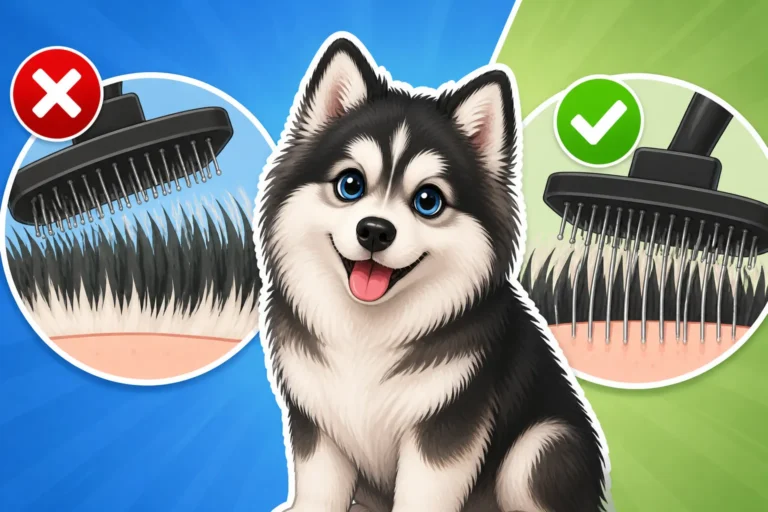
You'll need specific tools to effectively manage a Pomsky's double coat. A good quality undercoat rake is essential for reaching deep into the coat and pulling out loose undercoat without damaging the guard hairs. Many excellent options are available on Amazon that Pomsky owners swear by. A slicker brush can help detangle and smooth the outer coat, while a metal comb is perfect for checking for any missed tangles, especially behind the ears, in the armpits, and on the tail. Consistent brushing helps to distribute natural oils, promoting a healthy sheen and preventing mats from forming. The Undercoat Rake a Pomsky Owner Lives With
Bathing your Pomsky needs to be done correctly to avoid skin issues. While they don't need frequent baths, perhaps every 4-8 weeks or when visibly dirty, the key is thoroughness. Use a shampoo specifically formulated for dogs, and make sure to rinse every last bit of product from their dense coat. The most crucial part of bathing a double-coated dog is drying. Their undercoat can hold moisture for a long time, leading to skin infections. A high-velocity dryer is highly recommended to blow out all the water, right down to the skin. If you don't have one, allow ample time for air drying in a warm, well-ventilated area, and continue brushing through the coat as it dries to ensure it's completely dry and tangle-free. Never, ever shave your double-coated Pomsky, as this can permanently damage their coat's ability to regulate temperature and may lead to a poor re-growth of only undercoat.
Nutritional Support for a Lustrous Coat
What goes into your Pomsky's body directly impacts the health and appearance of their coat. A high-quality diet is fundamental for developing and maintaining a thick, lustrous coat. Look for dog foods that list a named meat source as the first ingredient, and avoid those with excessive fillers or artificial additives. Different brands, whether dry kibble from places like Chewy or fresh food options like Ollie, offer varying nutritional profiles. It's worth researching and choosing one that provides a balanced diet tailored to an active, medium-sized breed.
Beyond a solid base diet, certain supplements can significantly boost coat health. Omega-3 and Omega-6 fatty acids are renowned for their benefits to skin and coat. Fish oil supplements, rich in EPA and DHA, can help reduce shedding, add shine, and contribute to a healthier, denser coat. Many Pomsky owners find these supplements make a visible difference. Whether a Pomsky Needs Fish Oil Always consult with your veterinarian before adding any supplements to your dog's diet to ensure they are appropriate for your specific Pomsky's needs and health status.
Hydration also plays a vital role. Ensure your Pomsky always has access to fresh, clean water. Dehydration can lead to dull, dry skin and a brittle coat. A healthy coat is a reflection of overall health, so a comprehensive approach that includes a nutritious diet, plenty of fresh water, and appropriate supplements will work in tandem with genetics and diligent grooming to help your Pomsky's coat get as thick and magnificent as it's meant to be.
Disclaimer
This article is for general informational purposes only and does not constitute professional advice. Laws, prices and regulations vary by location and change over time. Consult a qualified professional for guidance on your specific situation.