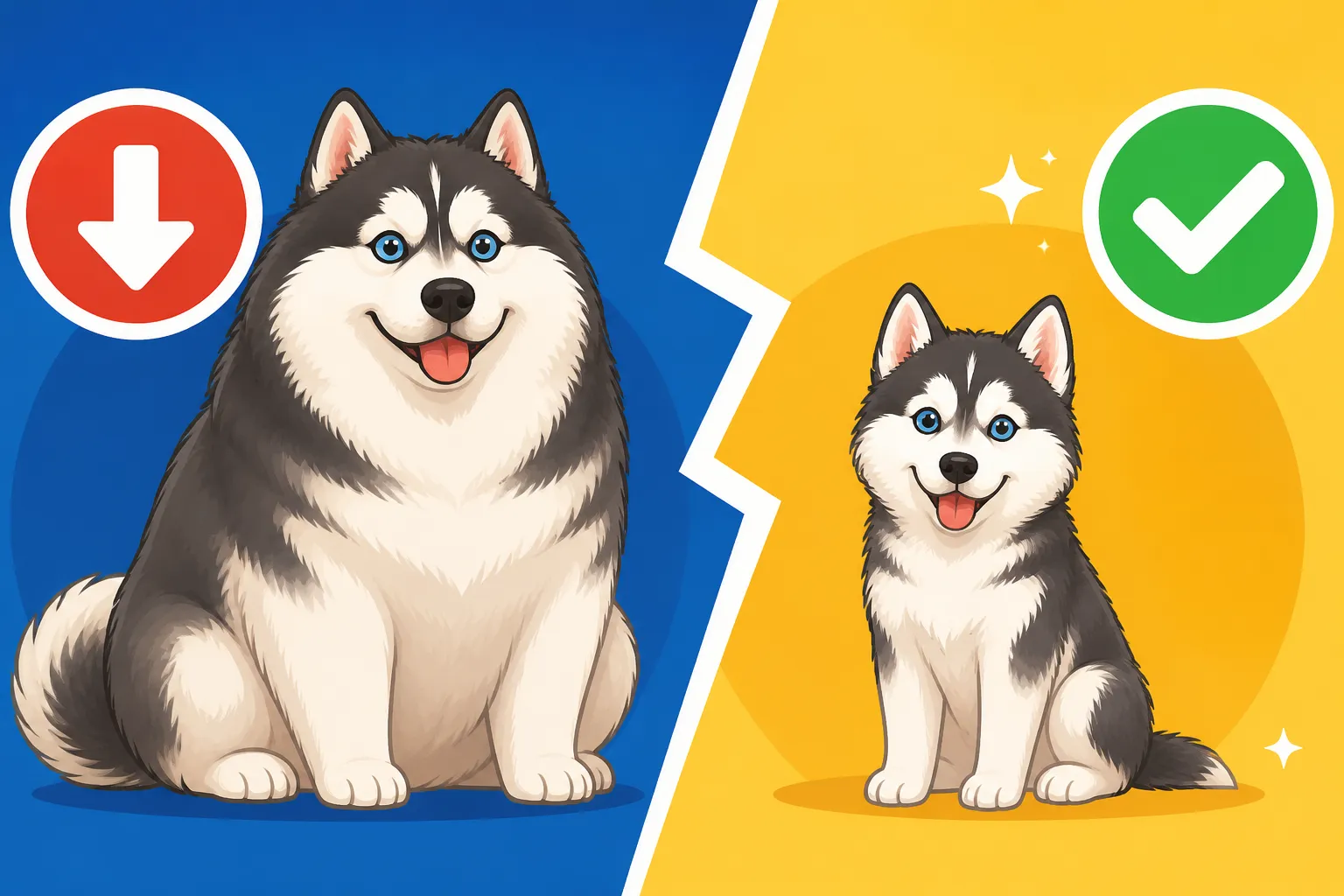
Whether an Oversized Pomsky Is Worth Less
It’s a common scenario that many aspiring Pomsky owners find themselves dreaming of: a compact, fluffy companion that perfectly marries the striking looks of a Husky with the manageable size of a Pomeranian. But sometimes, reality throws a curveball, and your adorable Pomsky puppy grows up to be a bit… bigger than you expected. This can lead to a lot of questions about whether your beloved pet, despite all its charm and personality, is somehow "worth less" because it didn't fit the mold. This guide is here to tackle that exact frustration, exploring the emotional, practical, and financial aspects of owning an oversized Pomsky.
The Initial Expectation Versus Reality of Pomsky Size
When you first start looking into Pomskies, it's easy to get caught up in the vision of a pint-sized Husky prancing by your side. Those initial viral images and charming photos often showcase the smaller end of the Pomsky spectrum, setting a particular expectation.
The Allure of the Miniature Husky Dream
Let's be honest, a huge part of the Pomsky's appeal is the idea of a miniature Husky. People fall in love with the piercing blue eyes, the striking facial masks, and the thick, luxurious double coat, but often desire it in a package that's more suitable for apartment living or simply easier to manage than a full-sized Siberian Husky. Breeders often market "toy" or "mini" Pomskies, further cementing this ideal in the minds of prospective owners. You might spend a significant amount of money, perhaps The Fifteen Hundred to Five Thousand a Pomsky Costs, with the understanding that you're investing in a specific size range. When the dog then exceeds that range, it can feel like you didn't get what you paid for, creating a sense of disappointment that can translate into questions of "value."
Why Pomsky Size is Inherently Unpredictable
The truth about Pomsky size is that it’s a beautiful, yet often unpredictable, genetic lottery. Being a hybrid breed, Pomskies don't "breed true" in the same way purebred dogs do. This means that even if both parents are Pomskies, or if you're getting an F1 (first generation) cross, there's a wide genetic pool from both the Siberian Husky and the Pomeranian influencing the puppies. Some might inherit more of the Husky's stature, while others lean more towards the Pomeranian's small frame. It's a spectrum, not a fixed point. This is why even when you’re told you're getting an F1 Pomsky, which is often mistakenly thought to be the most predictable, the size can still vary dramatically. Whether an F1 Pomsky Is Not the One Breeders Want often delves into this unpredictability. Experienced and ethical breeders can provide estimates based on parentage and previous litters, but a 100% guarantee on adult size is simply impossible. You might be told your puppy will be 15-20 pounds, only to find them filling out to 30 or even 35 pounds as an adult, which technically falls outside many people's initial expectation of a "small" Pomsky.
The Financial Impact of an Oversized Pomsky
When a Pomsky grows larger than expected, it's natural to wonder about the financial implications. Does it impact the initial cost, or perhaps the ongoing expenses? Let's break down where the money aspect truly comes into play.
Purchase Price and Breeder Contracts
The initial purchase price of a Pomsky is usually agreed upon long before you know its final adult size. Many breeders will provide a weight estimate, but few will offer a concrete guarantee that comes with financial repercussions if the dog exceeds it. What Happens When a Pomsky Grows Bigger Than Sold is a common concern. Some breeder contracts might have clauses regarding health guarantees, but it's rare to find one that offers a partial refund or compensation solely because a healthy dog grew larger than the projection. The "value" in the eyes of the breeder often hinges on the lineage, health screenings of the parents, and the quality of care provided to the puppies, not an exact weight prediction. While you might feel disappointed that your puppy is not the tiny companion you envisioned, if the dog is healthy and well-adjusted, most contracts won't offer financial recourse for size discrepancies. This is why reading the fine print of any contract, especially concerning size guarantees, is so crucial before you put down a deposit. Whether a Contract Covers an Oversized Pomsky is a must-read before committing.
Increased Ongoing Costs
One area where an oversized Pomsky can genuinely impact your finances is in the ongoing cost of ownership. A larger dog, even if only by 10-15 pounds, typically requires more resources.
- Food: This is often the most noticeable difference. A 30-pound dog needs more calories and, consequently, more food than a 15-pound dog. This means your monthly food bill will likely be higher. Brands like Chewy offer bulk options and subscription services that can help manage costs, but the volume itself will still be greater. You might also consider feeding a fresh food diet from a company like Ollie, which can be fantastic for their health but will scale in cost with their weight. What Feeding a Pomsky Costs Monthly is a good article to review to understand how these costs add up.
- Grooming: Pomskies, regardless of size, are double-coated dogs with significant shedding. A larger Pomsky simply has more fur to maintain. This could mean using more shampoo, conditioner, and de-shedding tools, or higher fees if you use a professional groomer. More fur means more brushing, more time, and potentially more expense during those seasonal "blowouts." What Grooming a Pomsky Costs a Year will give you a detailed breakdown of these expenses.
- Supplies: Larger dogs need larger everything – larger crates, bigger beds, more robust harnesses, and sometimes bigger toys. While these are often one-time or infrequent purchases, they do represent a higher upfront cost compared to buying for a truly miniature dog.
- Vet Care: While not drastically different, certain vet procedures, especially those involving anesthesia or medication dosages (like flea and tick preventatives), are often priced by weight. So, a larger Pomsky might incur slightly higher costs for these services over its lifetime. It’s a minor difference, but worth noting in the grand scheme of things.
Resale or Rehoming Value Considerations
The concept of a dog's "resale value" is often a difficult one, as pets are family members, not commodities. However, if circumstances change and an owner needs to rehome a Pomsky, its size can sometimes play a role in how quickly it finds a new home or, in rare cases, its adoption fee through a private sale.
It's a harsh reality that dogs, regardless of their initial purchase price, rarely fetch the same amount on a "resale" market. When people search for Pomskies, many are specifically looking for that smaller, "miniature Husky" look. If a Pomsky grows to be significantly larger than that ideal, it might be perceived as less desirable by a specific segment of potential buyers who prioritize small size above all else. This can sometimes translate to a lower asking price if you're trying to rehome the dog yourself.
However, this isn't about the dog's inherent worth. It's about market perception and the specific desires of potential new owners. An oversized Pomsky is still a wonderful companion, but its unique size might mean it takes a little longer to find a family who appreciates it for exactly who it is, rather than holding it against a preconceived size standard. Why Pomskies Are Surrendered often touches on how unmet expectations, including size, can unfortunately lead to rehoming situations, though it's rarely the sole reason.
The Emotional and Practical Value Beyond Size
While the financial considerations and initial expectations about size are valid, it’s crucial to remember that a dog's true value extends far beyond its weight or a price tag. The emotional and practical benefits often far outweigh any size-related disappointments.
The Bond That Transcends Expectations
The bond you form with your dog is, without a doubt, the most profound and valuable aspect of pet ownership. Whether your Pomsky is 15 pounds or 35 pounds, the love, companionship, and joy they bring into your life are immeasurable. An oversized Pomsky is still the same individual dog with the same wagging tail, silly antics, and unwavering loyalty. Many owners who initially felt a pang of disappointment about their Pomsky's size soon find that their dog's unique personality and the deep connection they share completely eclipse any notions of physical ideals. The moments of comfort, the shared adventures, and the unconditional affection—these are the things that truly matter and aren't diminished by a few extra pounds. Focus on the playful energy and intelligence that make Pomskies so special, regardless of whether they fit neatly into a "toy" category.
Practical Adaptations for a Larger Pomsky
Sometimes, the worry about an oversized Pomsky stems from practical concerns about living arrangements or activity levels. While these are understandable, they are often easily adaptable.
- Living Space: Many people choose a Pomsky hoping for a dog that can thrive in an apartment. Even a larger Pomsky, say 30-35 pounds, can still be a fantastic apartment dweller, provided they receive adequate exercise and mental stimulation. They're still considerably smaller than a full-sized Husky! The key is always exercise and engagement, not just square footage. You might need a slightly larger crate or bed, but your home likely won't feel overcrowded.
- Exercise Needs: While a larger Pomsky might have a bit more energy to burn, the fundamental exercise needs of the breed remain consistent. They still require daily walks, playtime, and mental challenges. The Exercise a Pomsky Needs Every Day is a crucial read. A 30-pound Pomsky might be able to keep up with you on longer hikes or jogs than a smaller counterpart, which could be a bonus for active individuals! They are still incredibly smart and can excel at activities like obedience or agility.
- Training and Management: A stronger, larger dog might require a bit more consistency in leash training and general obedience, but this is true for any dog. Investing time in positive reinforcement training will ensure your Pomsky, regardless of its size, is a well-behaved and manageable member of the family. Tools like a sturdy harness are beneficial for all Pomskies, especially those who might try to pull.
Health and Temperament are Paramount
When evaluating the "worth" of any dog, health and temperament should always be at the top of the list. These factors have a far greater impact on your life with your pet than a few pounds of difference. A well-bred, healthy Pomsky with a stable temperament is invaluable, regardless of its exact size.
Reputable breeders prioritize these traits above all else, conducting health screenings on parent dogs to minimize the risk of hereditary conditions. The Health Tests a Pomsky Breeder Should Show is an excellent resource for understanding what to look for. An oversized Pomsky that is healthy and has a fantastic personality is infinitely more "valuable" than a perfectly sized one riddled with health issues or behavioral problems. For ongoing peace of mind, consider pet insurance from providers like Healthy Paws. Such policies focus on covering eligible veterinary expenses for accidents and illnesses, ensuring your Pomsky receives the best care regardless of its size or whether it exceeded a breeder's estimate. This kind of protection truly adds value to your ownership experience, far more than hitting a specific weight target.
Managing Expectations and Embracing Your Unique Pomsky
Coming to terms with a Pomsky that didn't quite hit the size target you envisioned is all about shifting your perspective and embracing the wonderful companion you have.
Redefining "Value" for Your Companion
It’s easy to get caught up in the commercial aspects of pet acquisition, especially with designer breeds like the Pomsky where appearances and specific traits are often heavily marketed. However, the true "value" of a dog cannot be quantified in dollars or pounds. It's found in the wag of their tail when you walk through the door, the comforting presence beside you on the couch, the laughter they bring with their silly antics, and the unconditional love they offer. An oversized Pomsky doesn't lose any of these intrinsic qualities. If anything, their slightly larger stature might just mean there's more of them to love and cuddle! When you bought your Pomsky, you were bringing a living, breathing individual into your home, not a product with precise specifications. Learning to appreciate them for who they are, rather than mourning what you thought they would be, is a key part of dog ownership. This approach helps you move past the initial disappointment and focus on the joy and companionship your unique Pomsky brings.
The Importance of Thorough Research Before Purchase
For anyone considering a Pomsky, the experience of owners with "oversized" dogs highlights the critical importance of diligent research before committing. Understand that breeders provide size estimates, not guarantees, because of the inherent genetic variability in a hybrid breed. Always ask about the size and weight of both parent dogs, and if possible, previous litters. Whether a Pomsky Puppy's Size Can Be Predicted can offer some insight, but remember it's an estimate. Engage with reputable breeders who are transparent about potential size ranges and who prioritize health and temperament over specific aesthetics or size guarantees. Ask about their breeding practices, their health testing protocols, and the overall temperament of their breeding dogs. Don't be swayed solely by a breeder's promise of a "teacup" or "miniature" Pomsky without understanding the genetics at play. The International Pomsky Association (IPA) aims to set standards and provide guidance for responsible breeding, and understanding The International Pomsky Association and What It Sets can help you make more informed decisions. By managing your expectations from the outset, you'll be better prepared to welcome whatever size Pomsky joins your family.
Learning to Love the Pomsky You Got
Ultimately, the best way to determine "whether an oversized Pomsky is worth less" is to look into the eyes of your Pomsky. The love they give, the joy they inspire, and the unique personality they bring to your life are priceless. The minor adjustments in food budget or harness size pale in comparison to the years of companionship ahead. Many stories from Pomsky owners share how they initially wanted a tiny dog but ended up with a larger one, only to find themselves completely smitten with their magnificent, not-so-miniature companion. Your Pomsky, regardless of its size, deserves your love and commitment. Instead of viewing its size as a flaw, see it as a testament to its unique genetic makeup and a reminder that true value in a pet comes from the heart, not the tape measure. Embrace your Pomsky for exactly what it is: a loving, playful, and loyal member of your family. Whether a Pomsky Was a Mistake addresses the deeper questions of regret, but a slightly larger-than-expected dog is rarely the reason for true dissatisfaction once the bond is formed.
Disclaimer
This article is for general informational purposes only and does not constitute professional advice. Laws, prices and regulations vary by location and change over time. Consult a qualified professional for guidance on your specific situation.