Signs a Pomsky Is Carrying Too Much Weight
It's a common dilemma we Pomsky parents face: one minute your furry friend is a cute, fluffy ball of energy, and the next, you're wondering if those extra pounds are just winter fluff or something more concerning. It can be tricky to tell with their gorgeous double coats, but letting your Pomsky carry too much weight can have serious implications for their health and happiness. This guide will walk you through the clear, actionable signs to look for, both visible and subtle, so you can help your beloved companion stay at their optimal weight.
Why Pomskies Are Prone to Weight Gain and Why It Matters
You might think a little extra cushion is harmless, but for a Pomsky, carrying even a few extra pounds can put a significant strain on their small to medium-sized frames. These aren't huge dogs, so those small increments of weight really add up, leading to a host of potential health issues down the road. It’s not just about aesthetics; it's about their quality of life.
The Metabolism Mix-Up: Husky vs. Pomeranian
Pomskies are a fascinating blend, inheriting traits from both the Siberian Husky and the Pomeranian. This genetic lottery can lead to a metabolic mix-up that makes weight management particularly challenging. On one hand, you have the Husky, a breed known for its incredibly efficient metabolism, designed to run for miles on minimal fuel. They often carry a leaner build and are not typically prone to obesity if given adequate exercise. On the other, the Pomeranian is a much smaller companion breed, and while active, doesn't require the same intense energy output as a Husky. Their metabolic rate can be slower, and they can put on weight more easily if not carefully managed.
When these two breeds combine, a Pomsky can inherit a metabolism that's neither as efficient as a Husky's nor as straightforward as a Pomeranian's. You might end up with a dog that has a Husky's appetite but a Pomeranian's lower energy needs, or vice versa. This variability means that what works for one Pomsky might not work for another. Owners often feed based on what they think their Pomsky needs, perhaps seeing the Husky hunger, without fully accounting for their individual, often smaller, body size and energy expenditure.
Owner Tendencies: Loving Them a Little Too Much
Let's be honest, it's hard to say no to those adorable Pomsky eyes when they're begging for a treat or a bite of your dinner. We love our dogs, and food often feels like a way to show that love. However, this tendency to overfeed, especially with calorie-dense treats or human scraps, is one of the leading causes of weight gain in Pomskies. We might underestimate just how few calories a 20-pound dog needs compared to, say, a 50-pound Husky. A single piece of cheese or a few extra kibbles can make a big difference over time.
Portion control is another huge factor. Many owners simply fill the bowl without actually measuring, or they rely on guidelines that might be too generous for their particular dog's metabolism and activity level. Think about it: a Pomsky that spends its day mostly lounging will need far fewer calories than one that's tearing around a large yard or going on long hikes. The "just a little bit more" mentality, compounded by rich treats and inadequate exercise, creates a perfect storm for creeping weight gain. It’s a common frustration, because you just want to see them happy, but sometimes, tough love with the food bowl is the kindest thing you can do.
The Visible Telltale Signs Your Pomsky Might Be Overweight
While their luxurious double coats can act as a clever disguise, there are several key visual and tactile cues that can help you determine if your Pomsky is carrying too much weight. Getting hands-on with your dog is crucial here, as sight alone can be deceiving with all that fluff.
The Rib Check and Waistline Woes
One of the most reliable methods to assess your Pomsky's weight is the "rib check." Gently run your hands along your Pomsky's sides, over their rib cage. If your Pomsky is at a healthy weight, you should be able to feel their ribs quite easily, almost like the knuckles on your hand, but they shouldn't be visible to the naked eye. You should be able to feel each rib individually without pressing hard. If you have to press firmly to feel the ribs, or if you can't feel them at all beneath a layer of fat, that's a significant red flag that your Pomsky is overweight.
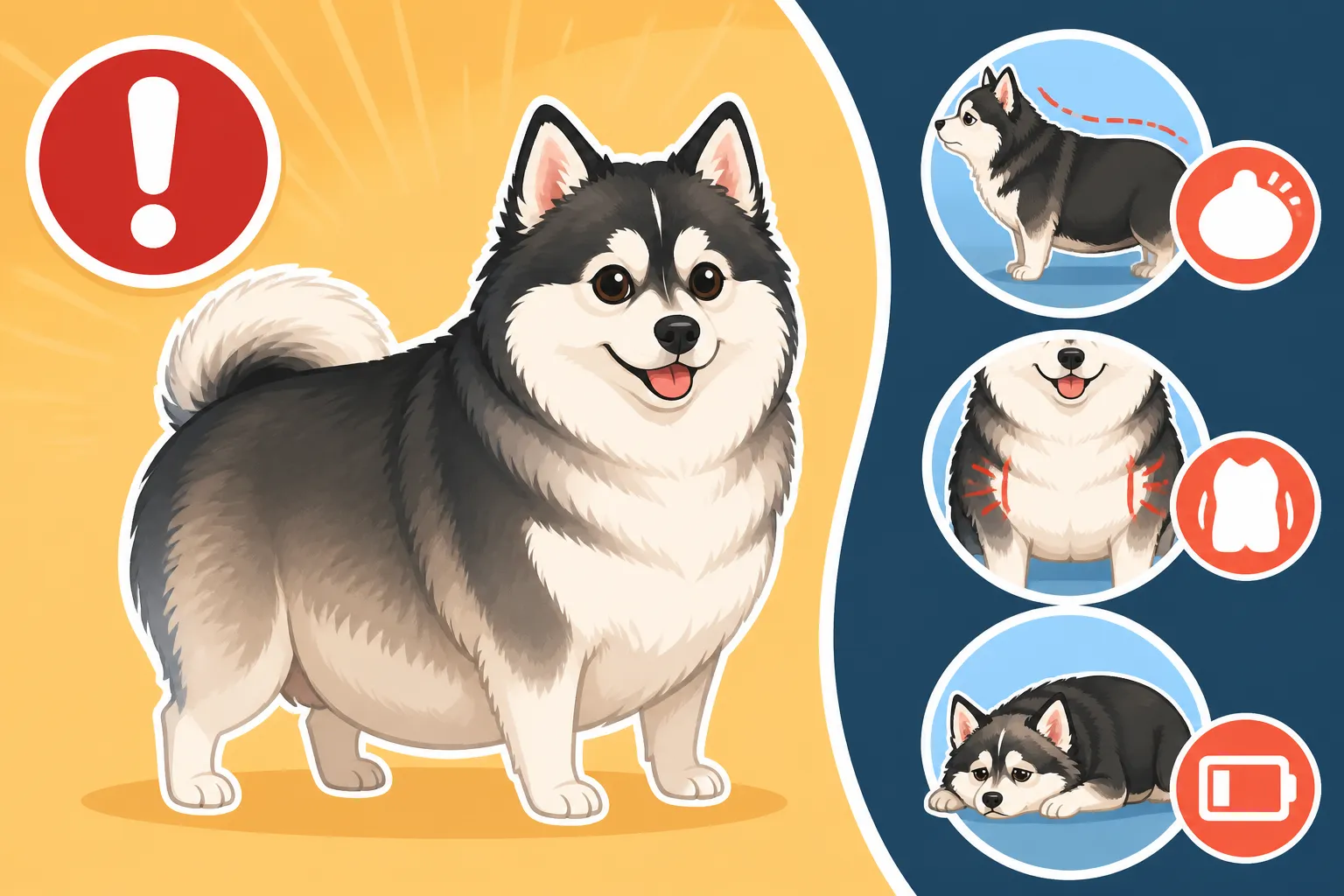
Next, observe their waistline. When viewed from above, a healthy Pomsky should have a discernible waist that tucks in slightly behind their ribs, like an hourglass figure (though perhaps a fluffy hourglass!). When viewed from the side, they should have an abdominal tuck – their belly should slope upward from their chest to their hind legs, rather than hanging low or appearing parallel to the ground. If your Pomsky looks more like a furry cylinder from above, or if their belly hangs down, resembling a "pot belly," they are very likely carrying excess weight. This loss of a defined waist can be surprisingly hard to spot through thick fur, so combining visual inspection with the rib check is key. When you look at Keeping a Pomsky's Weight in Range, you'll see why these indicators are so important.
The Dreaded "Poodle Butt" or Loss of Definition
Despite their thick fur, a Pomsky's body should still have a certain athletic definition. When they become overweight, this definition starts to disappear, particularly around the hindquarters and base of the tail. Sometimes, owners notice what they jokingly call a "poodle butt" – not because their Pomsky looks like a poodle, but because the natural muscle and bone structure around the hips and tail base become obscured by fat, giving a rounded, less angular appearance.
You should be able to feel the bony protrusions of your Pomsky's hips and the base of their tail without much effort. If these areas feel padded or excessively soft, it indicates too much fat. The fat deposits can also accumulate around the neck and shoulders, making their body appear more blocky and less streamlined. These are areas where the double coat might hide some of the fat, but a thorough tactile examination will reveal the true story. You might also notice a broadening of their back and a general lack of a distinct division between their chest and abdomen.
Changes in Movement and Activity Levels
One of the most heartbreaking signs of an overweight Pomsky is a noticeable change in their physical capabilities and enthusiasm for activity. What might have once been a tireless, bouncy companion could become lethargic and reluctant to engage in play or walks. You might notice they are slower to get up or lie down, or that they struggle with activities they once loved.
For instance, an overweight Pomsky might huff and puff after a short walk that they used to handle with ease. They might be less inclined to chase a ball, jump onto the couch (which, incidentally, you want to discourage anyway to protect their joints, as discussed in Whether a Pomsky Should Jump Off Furniture), or even climb stairs. Their stamina might significantly decrease, and they might appear to tire out much more quickly. This isn't just about them being lazy; it's a sign that their body is working harder to carry the extra weight, putting strain on their heart, lungs, and joints. Issues like Slipping Kneecaps in a Pomsky and Hip Dysplasia in a Twenty Pound Pomsky can be exacerbated by excess weight, turning a minor joint issue into a major problem.
Beyond the Visual: Subtle Behavioral and Health Indicators
While the visible signs are often the first things we notice, sometimes the subtle shifts in your Pomsky's behavior and overall health can be even more telling when it comes to weight gain. These aren't always immediately obvious, but they can significantly impact your dog's well-being.
Labored Breathing and Decreased Stamina
An often-overlooked sign of excess weight in Pomskies is a change in their breathing patterns and overall stamina. If you find your Pomsky panting excessively after only mild exercise, or even while resting, it could be a sign that their cardiovascular system is working overtime to support an overweight body. Imagine carrying a backpack filled with bricks all day – that's what extra weight feels like to your dog. This added strain can put undue stress on their heart and lungs, making even simple activities feel like a monumental effort.
You might also notice changes in their sleep. Overweight dogs are more prone to snoring, or their breathing might sound heavier or more congested than usual. This is because fat deposits can accumulate around the throat and chest cavity, restricting airflow. If your Pomsky, who once romped tirelessly, now wants to cut walks short or takes frequent breaks, it's worth considering their weight as a potential factor. It's a clear signal that their body is struggling to keep up with the demands of daily life.
Skin and Coat Issues (Yes, Really!)
Believe it or not, an overweight Pomsky can even experience more frequent skin and coat issues. Extra rolls of fat can create skin folds, particularly around the neck, chest, and groin areas. These folds can trap moisture, dirt, and oils, creating an ideal breeding ground for bacteria and yeast. This can lead to skin infections, hot spots, and general irritation, especially in a breed already prone to dense undercoats and potential skin sensitivities. It's a vicious cycle where discomfort can lead to more licking and scratching, further exacerbating the problem. For example, Hot Spots Under a Pomsky's Undercoat can become more prevalent and harder to treat when there are deeper skin folds involved.
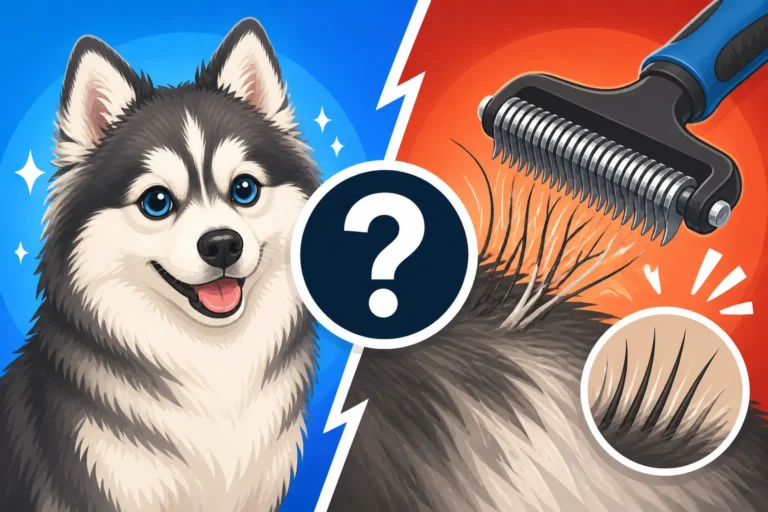
Furthermore, the overall quality of their coat might decline. When a dog is overweight, their body's resources are diverted to maintaining the extra mass, sometimes at the expense of healthy skin and coat production. You might notice duller fur, excessive shedding that isn't part of a normal Whether a Pomsky Blows Its Coat Twice a Year cycle, or even a greasy feel to their skin. These subtle changes might seem minor, but they are indicators that your Pomsky's internal systems are under stress.
Reluctance to Groom and Reach Certain Areas
Pomskies are generally clean dogs, and self-grooming is a natural behavior. However, an overweight Pomsky might find it physically difficult to properly groom themselves, especially around their hindquarters, back, and genital areas. The stiffness and bulk of extra fat can make it challenging for them to twist and reach all parts of their body.
This can result in mats forming in hard-to-reach places, a dirty rear end, or even an increase in skin irritation because they can't effectively clean or itch themselves. You might notice them attempting to groom but giving up quickly, or simply avoiding certain areas altogether. As the owner, this means you'll have to pick up the slack, but it's also a clear sign that their mobility is compromised due to their weight. When a Pomsky cannot comfortably perform basic self-care, it’s a strong indicator that their physical condition needs attention.
Taking Action: What to Do If You Suspect Your Pomsky is Overweight
Discovering your Pomsky is overweight can feel daunting, but the good news is that with a proactive approach, you can help them shed those extra pounds and significantly improve their health and quality of life. It’s a journey, not a sprint, and consistency is key.
Consulting Your Veterinarian
The very first step, and arguably the most crucial, is to schedule an appointment with your veterinarian. While you might suspect your Pomsky is overweight based on the signs we've discussed, a professional veterinary examination is essential. Your vet can accurately assess your dog's Body Condition Score (BCS), weigh them, and rule out any underlying medical conditions that might be contributing to weight gain or making weight loss more complicated. Sometimes, conditions like Whether a Pomsky Gets Hypothyroidism can mimic weight gain, and these need to be addressed medically.
Your vet can also help you establish a realistic target weight for your Pomsky, taking into account their age, breed mix, and activity level. They can then work with you to create a safe and effective weight management plan, which might include specific dietary recommendations or an exercise regimen tailored to your dog's current physical state. Think of them as your primary guide in this journey – their expertise is invaluable for your Pomsky's long-term health. The Screening a Pomsky Should Have Yearly often includes a weight check, which is a great opportunity to discuss any concerns.
Reassessing Diet and Portion Control
Once you have your vet's guidance, it's time to take a hard look at your Pomsky's diet. This is usually the biggest piece of the puzzle. Start by being incredibly precise with food portions. Use a dedicated measuring cup and stick to the recommended caloric intake provided by your vet or the food manufacturer (adjusting for weight loss). It’s easy to eyeball portions, but even a slight overestimate daily adds up significantly over weeks and months.
Consider the type of food you're offering. Sometimes, simply switching to a lower-calorie or weight-management formula can make a big difference. Many quality brands offer specific formulas designed for weight control. For instance, you can find a wide range of options through retailers like Chewy, often with detailed nutritional information that can help you compare. For those who prefer fresh food, companies like Ollie can provide pre-portioned, human-grade meals that are customized to your dog's caloric needs, which can be an excellent way to control intake while providing nutrient-dense food. Remember to factor in all calories, including treats. Opt for low-calorie treats, or better yet, use small pieces of plain cooked vegetables like carrots or green beans as healthy alternatives.
Upping the Exercise Game (Safely!)
Diet is paramount, but exercise plays a vital supporting role in weight loss and overall health. If your Pomsky is currently quite sedentary, start slowly and gradually increase their activity level. Don't go from zero to marathon runner overnight, especially if their joints are already stressed by extra weight. Begin with shorter, more frequent walks and slowly extend the duration or intensity. For example, instead of one 20-minute walk, try two 15-minute walks.
Incorporate more playtime into their day. Fetch, tug-of-war, or even just exploring the yard can get their heart rate up. If your Pomsky loves to run, consider a long line in a safe, open area to let them stretch their legs without the risk of them bolting, as discussed in Recall on a Pomsky Bred From a Dog That Runs. Mental stimulation through puzzle toys can also burn calories and keep them engaged. Remember, The Exercise a Pomsky Needs Every Day is crucial, and it’s not just about physical health; it keeps them mentally stimulated and happy. If they have joint issues, consult your vet about low-impact exercises like swimming or gentle leash walks to avoid further strain.
The Role of Regular Weigh-Ins
Monitoring your Pomsky's progress with regular weigh-ins is essential for staying on track. This isn't just about the initial weigh-in at the vet; it's about consistent check-ins to ensure your efforts are paying off. Depending on your Pomsky’s size, you can use a baby scale at home, or simply weigh yourself, then weigh yourself holding your Pomsky, and subtract the difference. Many veterinary clinics also offer "weigh-in Wednesday" or similar programs where you can pop in for a quick, free weight check.
Keep a log of your Pomsky's weight, along with any changes you've made to their diet or exercise routine. This data can be incredibly helpful for you and your vet to see what's working and what might need adjusting. Seeing those numbers go down, even slowly, can be a great motivator! If you're looking for an affordable and convenient option for home monitoring, places like Amazon offer a variety of pet scales suitable for smaller dogs that can make regular weigh-ins a breeze.
| Indicator | Healthy Pomsky (Ideal Weight) | Overweight Pomsky (Needs Attention) |
|---|---|---|
| Rib Check | Ribs easily felt with light pressure, not visible. | Difficult to feel ribs without firm pressure, or not at all. |
| Waistline (Top View) | Distinct hourglass shape, waist tucks in behind ribs. | Body appears more cylindrical, little to no waist definition. |
| Abdominal Tuck (Side View) | Belly slopes upward from chest to hind legs. | Belly hangs low or is parallel to the ground; no upward tuck. |
| Base of Tail/Hips | Bony protrusions of hips felt easily, tail base firm. | Padded, soft feel around hips and tail base; loss of angularity. |
| Energy & Movement | Enthusiastic, active, good stamina, jumps easily (when allowed). | Labored breathing after exertion, reluctance to play/move, slower. |
| Breathing | Quiet, regular breathing at rest. | Excessive panting after mild exertion, snoring at rest. |
Disclaimer
This article is for general informational purposes only and does not constitute professional advice. Laws, prices and regulations vary by location and change over time. Consult a qualified professional for guidance on your specific situation.