Whether Breeders Add Other Breeds to Pomsky Lines
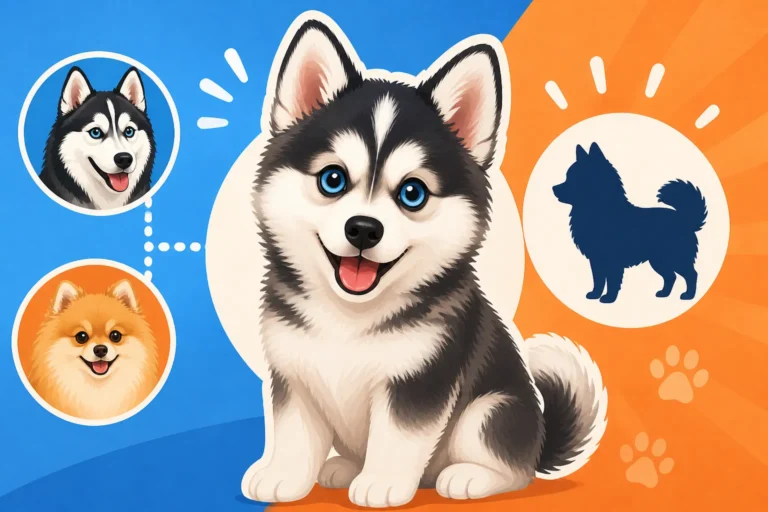
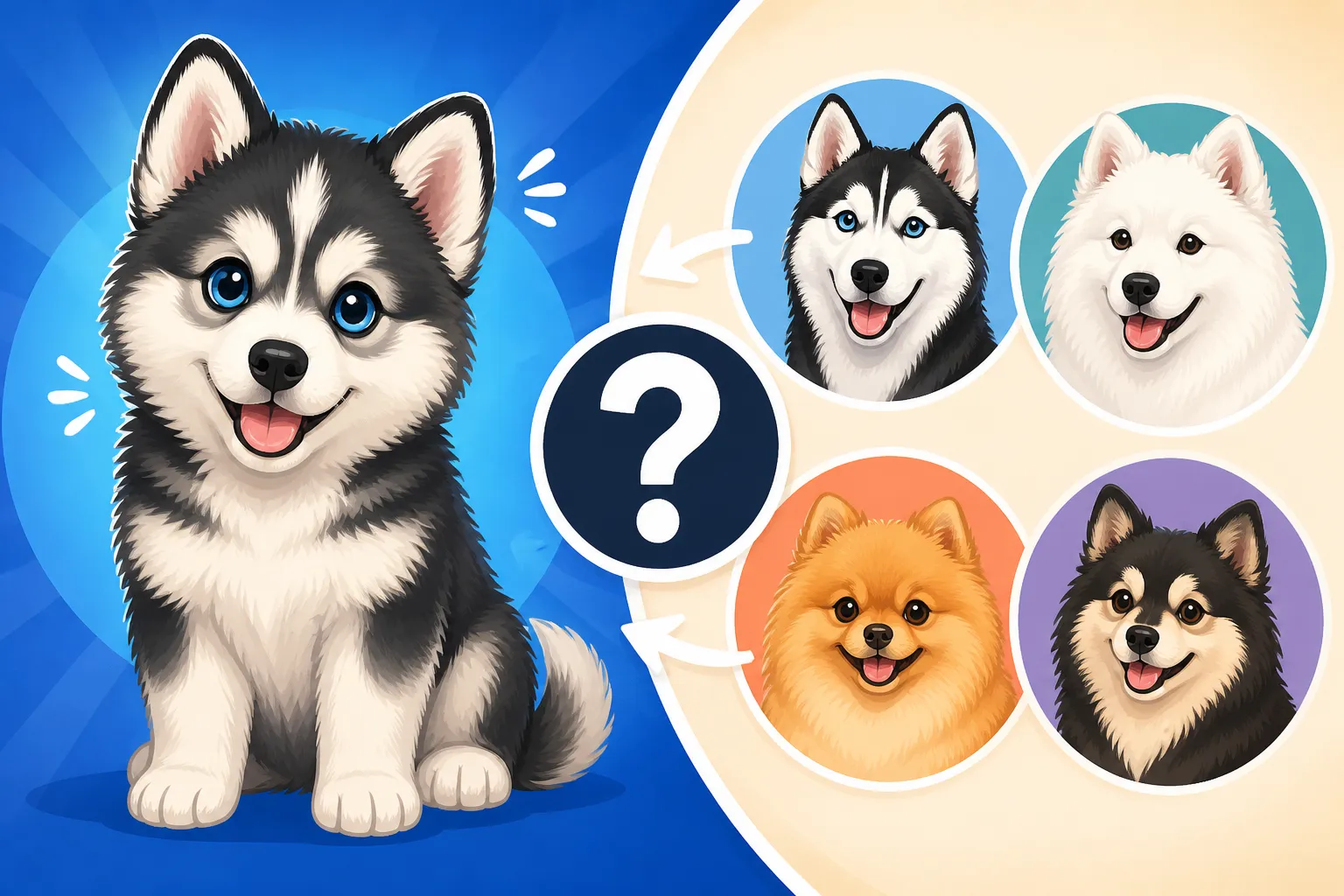
A Pomsky is meant to be a cross between a Siberian Husky and a Pomeranian, but some breeders may introduce a third breed into their lines. That does not automatically mean a puppy is unhealthy or misrepresented. The important questions are what was crossed, why it was done, how clearly the breeder explains it, and whether the puppy’s records match the sales claims.
What it means to add another breed to a Pomsky line
A Pomsky can have more ancestry than its name suggests
The name “Pomsky” describes a Husky–Pomeranian cross, but it does not, by itself, prove that those are the only breeds in a dog’s ancestry. A breeder may intentionally cross a Pomsky with another breed, then continue breeding descendants while still using the Pomsky label. That is different from a puppy having an unexpected breed in its background because its parents’ ancestry was unknown.
There are reasons a breeder might consider an outcross, such as seeking a particular physical trait or increasing genetic diversity within a small breeding population. Those goals do not guarantee a better outcome. An added breed can also introduce traits, health risks, or adult size and coat characteristics that buyers were not expecting.
This is why a clear description matters more than the label alone. Ask which breeds are in the puppy’s documented ancestry, how the breeder knows, and whether the new cross was deliberate. If the breeder says “Pomsky” but cannot give a consistent account of the parents and generations, it is reasonable to pause before paying a deposit.
A new generation is not automatically a new breed
Generation labels can be confusing. An F1 Pomsky is generally the first-generation cross between a Pomeranian and a Siberian Husky. An F2 is generally produced by breeding two F1 Pomskies. Those labels describe the relationship between generations; they do not prove that a dog has only two breeds somewhere in its wider pedigree. For background, see What an F1 Pomsky Is and What an F2 Pomsky Is.
A breeder can also breed Pomsky descendants across several generations without adding another breed. Conversely, a dog may have a third breed in its ancestry even if the breeder describes it as multigenerational. “Multigen” tells you something about the breeding history, but the word alone is not a complete pedigree.
That distinction is useful when evaluating claims about predictability. Generations may help explain how a breeder has planned a line, but they cannot make every puppy identical in size, coat, or temperament. A multigenerational label does not establish that a third breed was or was not used. See Whether a Multigen Pomsky Is More Predictable for why those labels do not guarantee a uniform result.
Outcrossing is different from crossing back to a parent breed
A breeder may mate a Pomsky to a Pomeranian or a Husky to move a line toward one parent breed’s traits. This is a backcross to one of the breeds already in the Pomsky’s ancestry; it is not the same as introducing a third breed. A cross to a different breed adds another ancestry to the line.
These distinctions can be lost in casual descriptions. A breeder may say a puppy is “more Husky” or “more Pomeranian,” but that phrase does not tell you whether the dog was backcrossed, bred from two Pomskies, or crossed to another breed. Ask for the exact parentage and generation rather than relying on appearance or shorthand.
The following table can help organize what you are being told:
| Breeding description | What it generally indicates | What it does not prove |
|---|---|---|
| F1 Pomsky | First-generation Pomeranian and Siberian Husky cross | That the puppy will have a predictable adult size or coat |
| F2 Pomsky | A later generation, commonly two F1 Pomskies bred together | That no other breed appears in the wider pedigree |
| Backcross | A Pomsky descendant bred to one of its original parent breeds | That the dog is a third-breed cross |
| Outcross to another breed | A different breed has been intentionally introduced | That the resulting puppies are automatically healthier or easier to predict |
| Multigenerational Pomsky | A line has continued beyond the initial cross | Exactly which breeds appear without supporting records |
Why breeders might add another breed
A breeder may be trying to change a trait
A breeder could consider an outcross to influence size, coat, structure, or temperament. But traits do not come as a guaranteed package. A cross intended to produce a smaller dog, for example, does not ensure that every puppy will stay small. Inherited features vary, and puppies in the same litter can develop differently.
This is particularly important for buyers drawn to a specific look. A fluffy puppy with a Husky-like mask may grow into a dog with a different coat texture, adult size, or facial appearance than expected. If another breed has been introduced, ask the breeder to explain what traits they hoped to influence and what variation they have seen in previous litters.
A responsible explanation should include uncertainty. “We hoped to influence coat type” is more credible than a promise that every puppy will have a specific adult appearance. If the breeder can show records and discuss the range of outcomes in related litters, you can make a more informed decision.
A small breeding population can prompt outcross discussions
Some breeders may say an outcross is intended to increase genetic diversity. That can be a legitimate breeding consideration, but the phrase itself is not evidence that the pairing was carefully planned or that health outcomes will improve. The breeder should be able to explain what was evaluated before the mating and how the offspring will be assessed.
Ask what health screening was appropriate for both parents and for the breed or breeds involved. Also ask whether the breeder tracks health information from earlier litters and how they make decisions about which offspring are retained for breeding. The focus should be on documented, thoughtful practice—not a vague claim that crossing breeds automatically creates “hybrid vigor.”
If the breeder discusses a third breed but will not identify it, or refuses to share basic parent information, treat that as a reason to ask more questions. A buyer should not have to guess about a dog’s ancestry from its markings or from an online advertisement.
The Alaskan Klee Kai question needs specific answers
The Alaskan Klee Kai is often brought up in conversations about Pomsky ancestry because both dogs can have a northern, spitz-like appearance. Similar looks do not prove that a Klee Kai was used in a particular Pomsky line. A claim about ancestry needs to be evaluated through the breeder’s records and the history of the individual dogs, not appearance alone.
If a breeder confirms that a Klee Kai or another breed was intentionally introduced, ask when the cross occurred and whether it is disclosed in the puppy’s registration or sales paperwork. The ethical issue is not simply that a third breed exists in the pedigree. It is whether the breeder is honest about it and whether buyers are given a fair account of the dog they are purchasing. Related reading includes Whether a Pomsky Is Ever Part Klee Kai and Whether Crossing Klee Kai Into Pomsky Lines Is Honest.
How to check a breeder’s claims
Ask for a pedigree and a plain-language explanation
Request the names and breeds of the puppy’s parents, the generations the breeder is using, and any known outcrosses in the line. Ask the breeder to explain the family tree in ordinary language. If the answer relies on unfamiliar abbreviations, ask what each one means rather than assuming the labels tell the whole story.
Then compare that explanation with the written records. The puppy contract, registration information, health documents, and breeder’s description should not contradict one another. A registration may document a dog within a particular system, but it should not be treated as a substitute for asking about the actual pedigree or health practices. You can learn more about the limits of documentation in Whether Pomsky Pedigrees Can Be Verified and Whether Pomsky Registration Requires Health Testing.
A breeder who has deliberately outcrossed may be willing to discuss the reasoning and the possible trade-offs. A breeder who becomes defensive about basic questions, changes the story, or describes every puppy as guaranteed to have a particular size or temperament deserves careful scrutiny.
Treat DNA results as one piece of information
A canine DNA breed test can offer clues about ancestry, but it is not the same thing as a verified pedigree. Results are estimates based on the test provider’s reference information and methods. They may help prompt useful questions, but they cannot replace a breeder’s records or independently establish every detail of a dog’s family tree.
If you already own a Pomsky and are curious about its ancestry, a DNA test may be one tool to discuss with your veterinarian or breeder. For a buyer, the more practical approach is to ask what documentation exists before choosing a puppy. For a deeper look at what testing can and cannot establish, see Whether Embark or Wisdom Panel Confirms a Pomsky.
Remember that DNA testing does not tell you everything you may want to know. It does not predict a puppy’s adult weight with certainty, guarantee health, or reveal how carefully a breeder selected the parents. Those questions require records, honest conversations, and veterinary guidance.
Use a repeatable set of questions before placing a deposit
A calm, specific conversation can reveal more than a polished listing. You might ask:
- What breeds appear in this puppy’s known ancestry?
- Has any breed other than the Pomeranian and Siberian Husky been deliberately introduced?
- If so, when did the cross happen, and why was it made?
- What generation labels are being used, and how does the breeder define them?
- Can I review the parents’ health records and the puppy’s written paperwork?
- What range of adult sizes, coats, and temperaments has appeared in related litters?
- What happens if the puppy’s adult traits differ from the breeder’s estimate?
Pay attention to whether the answers are direct and consistent. A breeder does not have to claim that every puppy will be identical; in fact, realistic discussion of variation is a good sign. Be cautious when a seller uses a breed label as a guarantee, avoids sharing parent information, or pressures you to decide before you can review the records.
What a third-breed ancestry means for a puppy buyer
It changes what you should expect, not whether the dog can be loved
A puppy with a documented third breed can still be a wonderful companion. The practical difference is that you should understand what you are bringing home. A different ancestry may affect likely size, exercise needs, coat care, or inherited health considerations. None of those outcomes can be confidently inferred from a puppy photo or a catchy label.
Ask the breeder what care needs they have observed in that line and confirm health questions with your veterinarian. Once your dog is home, keep records of food, grooming, behavior, and veterinary visits. If you are comparing food options, Chewy can be one place to review product ingredient information, but your veterinarian should guide diet choices for your individual dog. The same applies when changing food: discuss a gradual transition that suits your puppy rather than switching abruptly based on a marketing claim.
Coat care is another area where appearance can be misleading. Ask what brushing routine the breeder recommends and what the puppy’s parents’ coats are like. If you are looking for grooming tools, Chewy may help you compare product descriptions, but a groomer familiar with double coats can advise whether a tool is appropriate for your dog. When planning routine supplies, Chewy can also be a convenient place to compare basics; choose products for your dog’s actual size and needs rather than assuming every Pomsky requires the same setup.
Transparency is the key standard
There is no need to assume that every breeder who has introduced another breed is acting improperly. The key is whether the breeder tells you clearly, provides records that support the explanation, and avoids promises that genetics cannot guarantee. A disclosed outcross and an undisclosed one are very different buyer experiences.
If the breeder’s account is vague, inconsistent, or impossible to document, you can walk away. You do not need to prove that a seller is misrepresenting a puppy before deciding that the available information is not enough for you to make a comfortable choice. Reading Whether a Pomsky Without Papers Is Real can also help distinguish registration questions from the broader question of a puppy’s documented history.
The best decision is one made with a clear understanding of the dog in front of you: its known ancestry, the limits of what can be predicted, and the care it may need as it grows. A trustworthy breeder should welcome those questions and give you room to consider the answers.
Disclaimer
This article is for general informational purposes only and does not constitute professional advice. Laws, prices and regulations vary by location and change over time. Consult a qualified professional for guidance on your specific situation.