How Big a Pomsky Gets
A Pomsky can stay compact enough for a small apartment or grow into a sturdy, medium-sized dog—and puppy photos rarely tell you which outcome to expect. The frustrating part is that “Pomsky” does not come with one universally accepted adult size. This guide explains realistic weight and height ranges, when growth usually slows, and how to make sensible plans without relying on a seller’s size promise.
The adult size range to plan for
Weight and height are estimates, not a breed guarantee
Many adult Pomskies fall somewhere around 10 to 25 pounds and about 10 to 15 inches tall at the shoulder. Those figures are useful as a rough planning range, not a promise or official breed standard. Some Pomskies finish smaller, while others grow past 25 pounds and may reach 30 pounds or more.
A dog’s height is measured from the floor to the top of the shoulder, not to the top of the head or ears. That distinction matters when you are checking airline carrier rules, choosing a crate, or deciding whether your dog can comfortably fit beneath a café table. A fluffy coat can also make a Pomsky look bigger than the dog’s actual frame.
For a fuller look at common adult weights, see What a Pomsky Actually Weighs Full Grown. If a breeder describes a puppy as “mini” or says it will definitely remain under a particular weight, treat that as an estimate to ask questions about—not a guarantee. Whether a Pomsky Stays Under Twenty Pounds and Whether a Pomsky Can Reach Thirty Five Pounds explore the ends of the range.
Why two Pomskies can grow to very different sizes
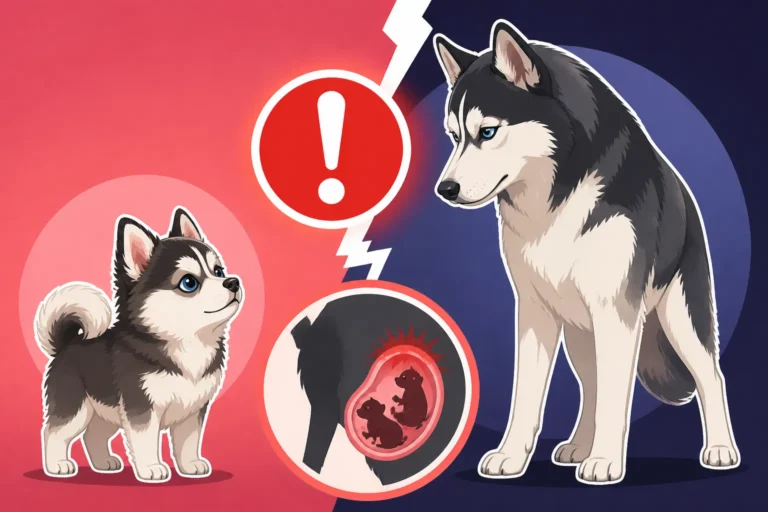
A Pomsky is a cross between a Siberian Husky and a Pomeranian, and the parents are dramatically different in size. Their puppies do not inherit a neat average of the two adults. A puppy can take after one side more strongly in body frame, leg length, and overall build, even when its coat or face resembles the other parent.
Generation can add another layer of uncertainty. An F1 Pomsky has one Husky parent and one Pomeranian parent, but that label does not say exactly how large the puppy will become. Later-generation Pomskies may have Pomsky parents, yet their size can still vary because inherited traits are not distributed evenly from puppy to puppy. A litter can include siblings with noticeably different builds.
That is why a small puppy from a large litter is not automatically the smallest adult, and the biggest puppy is not necessarily destined to be the biggest dog. How Big a Pomsky Gets is a question best answered with a range, not a single number. If size is central to your decision, compare the puppy’s family history and growth records rather than relying on appearance alone.
| What to assess | What it can tell you | What it cannot guarantee |
|---|---|---|
| Adult weights of both parents | A helpful starting point for estimating likely size | The puppy’s exact adult weight |
| Puppy’s current weight and age | Whether growth is progressing along its own curve | That the puppy will remain within a seller’s estimate |
| Littermates and relatives | How much size variation appears in the family | That every puppy in the litter will match |
| Generation label | Which broad crossing is being described | A predictable adult height or weight |
| Puppy’s paws or current appearance | A rough impression of build | A reliable adult-size forecast |
What influences a Pomsky’s final size
Parent size helps, but genetics do not average out neatly
A puppy’s parents are among the most useful clues available, especially when you know their actual adult weights and can see them. Even then, parent size is only one piece of the puzzle. A puppy may inherit a compact body from one side and longer legs or a heavier frame from the other. Two Pomskies of similar height may also differ in weight because one is leaner and the other is more solidly built.
Ask for the parents’ adult weights, not just labels such as “toy,” “mini,” or “standard.” Those labels can be used inconsistently, and they do not replace measurements. It is also reasonable to ask whether the breeder has records from previous litters and how much those puppies weighed as adults. Whether Parent Weights Predict a Pomsky's Size explains why parental measurements can guide an estimate without making it certain.
An F1 puppy’s ancestry is split between a Husky and a Pomeranian, but that does not mean the pup will weigh exactly halfway between them. Inheritance is not a simple calculator. The same is true for later generations: breeding Pomsky to Pomsky does not automatically create a stable, uniform size. A responsible estimate should acknowledge variation rather than presenting one number as inevitable.
Puppy clues are useful only when taken together
It is tempting to inspect a puppy’s paws and decide that oversized feet mean a huge adult dog is coming. Paw size can be one clue, but it is not a dependable forecast on its own. Puppies grow at different rates, and body proportions change as they mature. A photo can be even less helpful because perspective, coat fluff, and camera angle can make a puppy appear unusually tiny or large.
A more useful approach is to track weight over time. Ask for dated weights, ideally from veterinary visits, and note the puppy’s age at each measurement. A single number—such as “five pounds”—means little without knowing whether the puppy is eight weeks old or several months older. Whether a Pomsky Puppy's Size Can Be Predicted covers why several clues are more helpful than one visual guess.
If you already have your puppy, your veterinarian can assess body condition and growth at routine appointments. That is different from trying to make the dog larger or smaller. Do not restrict meals or add extra food just to influence adult size; either can create health problems. If you keep a home record, a pet scale or a consistent weighing routine can help you notice trends. Chewy may be one place owners look for basic pet-care equipment, but choose a scale that suits your dog and ask your veterinary clinic for guidance if the measurements seem surprising.
When Pomskies stop growing
Growth slows gradually rather than stopping overnight
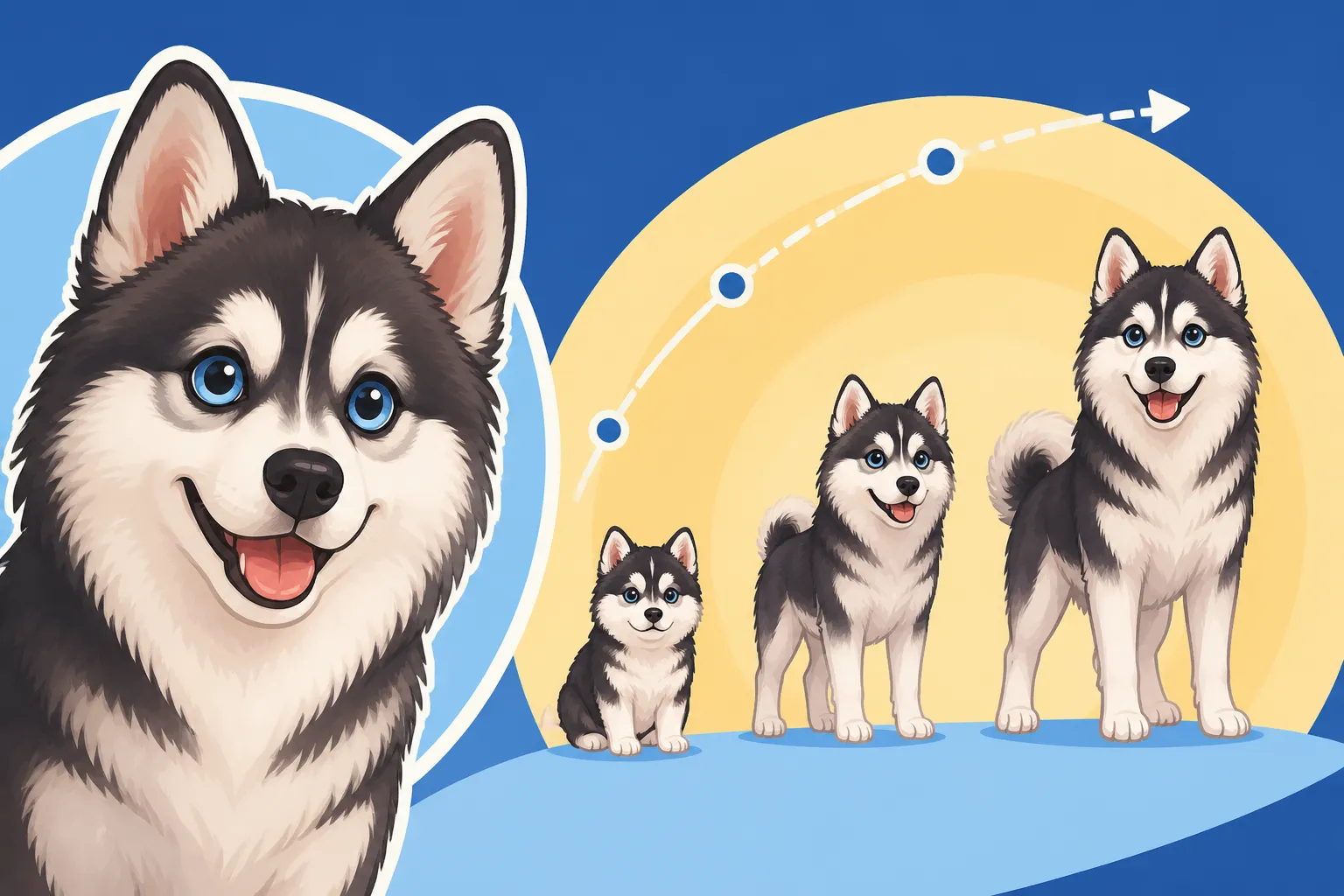
Many Pomskies do most of their height growth during puppyhood and approach their adult frame around the first year. Some continue filling out or changing shape beyond that point, and individual timing varies with genetics, body condition, and development. A dog may look nearly full-grown in height while still gaining muscle and adult proportions.
For that reason, “full size” can mean different things. A puppy might stop getting noticeably taller before its weight and body shape settle. The best way to judge progress is to look at repeated measurements and veterinary assessments rather than expecting a precise birthday when growth ends. See The Age a Pomsky Reaches Full Size for more on the typical development window.
A steady growth curve is generally more informative than whether your puppy is currently above or below another Pomsky of the same age. If weight rises sharply, stalls unexpectedly, or comes with low energy, digestive trouble, or other changes, discuss it with a veterinarian. Growth concerns are not a reason to change food portions drastically without professional input.
Healthy weight matters more than hitting a target number
Adult size and healthy weight are not interchangeable. A 20-pound Pomsky may be lean and well-proportioned, while another dog at the same weight may be carrying excess fat because of a smaller frame. You should be able to feel the ribs beneath a light layer of tissue, and your dog should have a visible waist when viewed from above. Your vet can show you how to assess body condition rather than relying only on the scale.
This is especially useful when a dog grows larger than expected. Owners sometimes keep feeding a Pomsky as if it were destined to remain tiny, or they cut food sharply because the dog has crossed a hoped-for weight. Neither response is ideal. Follow the feeding guidance for the dog’s age and condition, use measured portions, and adjust with veterinary advice as your Pomsky matures.
For routine tracking, weigh your dog under similar conditions each time—for example, at the same clinic or on the same home scale. Keep the dates and weights together so you can see a pattern instead of reacting to one reading. Chewy can be a practical place to browse feeding and weighing supplies, but product choice does not replace a veterinarian’s advice on an individual dog’s growth or body condition.
Planning for the Pomsky you may actually get
Prepare for the upper end of the estimate
If your household can only manage a dog below a strict weight limit, make that clear before choosing a puppy. A rental agreement may define pet restrictions by weight, and a carrier, crate, or airline policy may have size limits. A puppy described as likely to remain small can still grow beyond the estimate. Planning around the upper end of a reasonable range is safer than assuming the smallest outcome.
Think beyond weight, too. A 15-pound dog with a dense coat and strong, energetic build may feel more substantial than a short-haired dog of the same weight. Consider whether you can lift the dog into a car, manage it on leash, and provide suitable exercise as it grows. In a Manhattan walk-up, for example, carrying a tired or injured dog up several flights may be a more practical concern than the difference between a 15- and 20-pound estimate.
Ask a breeder to explain the basis for any adult-size prediction. Useful details include the parents’ weights, adult sizes of previous puppies, the puppy’s age and weight, and how uncertain the estimate is. If the answer is a guaranteed number without a clear explanation, take time to think it through. What Happens When a Pomsky Grows Bigger Than Sold is relevant if a size promise is part of a purchase agreement.
Buy equipment for the dog in front of you
For a growing puppy, choose adjustable equipment where appropriate and check the fit regularly. A harness that is comfortable one month may become tight as the puppy’s chest develops. Follow the manufacturer’s sizing instructions and measure the dog rather than guessing from age or breed label. Chewy is one retailer owners may use to compare pet supplies, but the useful step is checking fit and safety, not choosing a particular brand.
Crates and beds should give the dog enough room to stand, turn around, and lie down comfortably. If you buy an adult-sized crate for a puppy, a divider can help create a smaller resting space while the pup grows. For travel, confirm the actual dimensions and rules of the carrier or vehicle setup you plan to use; a weight estimate alone may not tell you whether the dog will fit.
Finally, be cautious about “toy” or “micro” claims. Those terms do not establish a recognized, dependable adult size, and unusually small breeding goals deserve careful questions about health and welfare. Whether a Toy or Micro Pomsky Is Real offers context on these labels. A realistic plan leaves room for your Pomsky to be the individual dog it becomes—rather than requiring it to match a marketing description.
Disclaimer
This article is for general informational purposes only and does not constitute professional advice. Laws, prices and regulations vary by location and change over time. Consult a qualified professional for guidance on your specific situation.