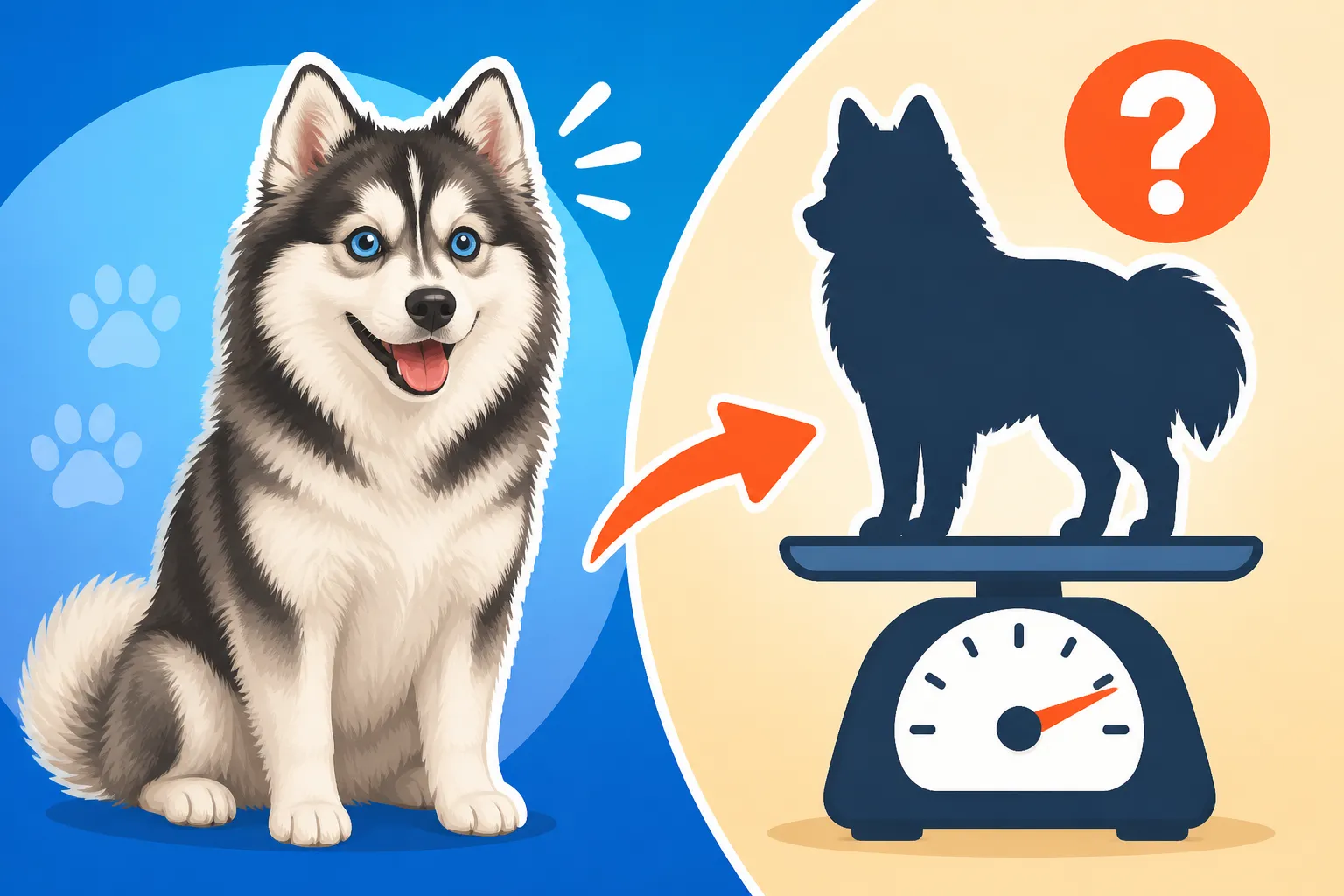
Whether a Pomsky Can Reach Thirty Five Pounds
A Pomsky can reach 35 pounds, even if that is larger than many people expect when they picture a small, fluffy companion. These dogs vary widely because they are a Husky–Pomeranian cross, not a consistently sized breed. This guide explains why a Pomsky might grow that big, how to judge whether the weight is healthy, and what to plan for before bringing one home.
Can a Pomsky really reach 35 pounds
Yes. A Pomsky can reach 35 pounds, particularly when its parents are on the larger side or its genetics favor the Husky’s size. That doesn’t mean every Pomsky will approach that weight, or that 35 pounds is a typical outcome for every litter. It means that the label “Pomsky” alone cannot guarantee a compact adult dog.
Why Pomsky sizes vary so much
A Pomsky’s size is influenced by the size and genetics of both parents, as well as the combination of traits passed to an individual puppy. Puppies in the same litter can grow into noticeably different adults. One may stay relatively small, while a littermate grows taller, longer, or more solidly built.
Generation can affect what breeders are aiming for, but it does not make adult size perfectly predictable. An F1 Pomsky, for example, is a first-generation cross, and puppies from that cross can inherit different proportions of Pomeranian and Husky traits. Later-generation breeding may help breeders select for particular traits, but buyers should still ask for evidence about the individual puppy’s family rather than treating a generation label as a size guarantee.
It’s useful to explore How Big a Pomsky Gets and Whether Parent Weights Predict a Pomsky's Size when considering a puppy. Parent weights give you clues, not a promise: a puppy can inherit a combination of traits that makes it larger or smaller than either parent’s appearance might suggest. A confident estimate should account for the parents, relatives, prior litters, and the puppy’s own growth pattern.
Is 35 pounds unusually large
Thirty-five pounds is larger than many buyers expect when they see photos of Pomskies presented as small, portable dogs. But a dog at that weight can still be a Pomsky. There isn’t one universal adult size that every Pomsky must fit, so a number on a breeder’s advertisement should be treated as an estimate, not a breed-wide rule.
A dog’s height and build matter alongside the scale. A lean, long-legged Pomsky and a compact, broad-bodied Pomsky could weigh the same but look quite different. Coat volume can also make a dog appear much bigger than it is, especially when a thick double coat is fully fluffed out.
If your expectation is a dog that will remain under 20 pounds, be explicit about that before choosing a puppy. Compare the breeder’s estimate with the puppy’s parents and close relatives, and ask what happened with previous puppies from the same pairing. Whether a Pomsky Stays Under Twenty Pounds is especially relevant if a particular size limit is important for your housing, travel plans, or ability to manage the dog.
What influences whether a Pomsky grows to 35 pounds
There is no simple calculation that turns a Pomsky puppy’s current weight into a guaranteed adult weight. Growth charts can help you follow a trend, but they cannot account for every genetic combination or individual difference. Think of an estimate as a planning tool with uncertainty, not a promise you can hold a puppy to.
Genetics and family size
The most useful starting point is often the size of the puppy’s parents and relatives. Ask for the parents’ actual weights, not just descriptions such as “mini,” “standard,” or “small.” Those terms can be used loosely, and they may not mean the same thing from one breeder to another.
Ask about adult siblings or puppies from earlier litters, too. A parent’s size can be informative, but close relatives may reveal how much variation occurs in that family. If a breeder says the puppy will stay small, ask what that estimate is based on and whether adult offspring from the same pairing have reached a larger size.
A puppy’s generation is another piece of context, not a crystal ball. What an F1 Pomsky Is explains the first-generation label, while Whether a Multigen Pomsky Is More Predictable can help you understand why repeated breeding does not automatically mean every puppy will mature to a precise weight. Look at the whole family history rather than relying on a label alone.
Age, growth, and individual development
Puppies grow quickly, but they don’t all follow the same timetable. A puppy that looks small at one age may later have a growth spurt, and a puppy that appears sturdy early on may not keep gaining at the same pace. Regular weigh-ins can help you notice the direction of growth, but a single measurement cannot settle the question of adult size.
A veterinarian can assess your puppy’s growth and body condition during routine visits. Bring notes about weight over time, along with any size estimate the breeder provided. That gives the vet a more useful picture than a one-off weigh-in and helps distinguish normal development from concerns such as excess weight.
The age at which a Pomsky reaches its adult size can vary, so avoid assuming that the first birthday means growth is finished. See The Age a Pomsky Reaches Full Size and Whether a Pomsky Grows After a Year for more on growth timing. Even after height growth slows, a young dog may continue to fill out and change shape.
How to interpret a breeder’s size estimate
A responsible estimate should come with an explanation. Ask how the breeder reached it, whether they have tracked adult weights from related litters, and how much variation they have seen. An estimate presented as a guarantee deserves careful questions, particularly when the puppy is still very young.
Be wary of marketing terms that sound precise but aren’t backed by clear information. A puppy advertised as “toy” or “micro” is not automatically guaranteed to remain tiny. Whether a Toy or Micro Pomsky Is Real is useful reading if those labels are influencing your expectations.
Use a table like this to organize what you learn before deciding:
| What to check | Why it matters | What to ask |
|---|---|---|
| Parents’ adult weights | Offers a starting point for the puppy’s likely size | What do both parents weigh as adults? |
| Close relatives | Shows how much size can vary in the family | How large are adult siblings or earlier puppies? |
| Puppy’s growth history | Helps show the direction of development | Do you have dated weights from veterinary visits? |
| Basis for the estimate | Separates an informed range from a sales claim | What information was used to estimate adult size? |
| Your own size requirements | Helps identify whether uncertainty is acceptable | Would a dog around 35 pounds still suit my home? |
How to tell whether 35 pounds is healthy for your Pomsky
A 35-pound reading does not, on its own, tell you whether your Pomsky is overweight. Two dogs can have the same weight and different healthy body shapes. Your dog’s frame, muscle, age, and body condition all matter, so it’s better to assess the whole dog than to judge by a number or a photograph.
Look at body condition, not just the scale
When viewed from above, a dog at a healthy body condition generally has a visible waist behind the ribs. From the side, the abdomen should usually tuck up rather than hang at the same level as the chest. You should be able to feel the ribs without pressing hard, though they should not be sharply prominent.
A thick Pomsky coat can make those checks harder. Part the fur and use your hands gently to assess the shape of the ribs and waist. If you’re unsure, ask your veterinarian to demonstrate how they assess body condition and what target is appropriate for your dog.
Don’t put a growing puppy on a weight-loss plan just because the number seems high. Puppies need appropriate nutrition for development, and a sudden diet change can create problems. If your dog’s weight is rising quickly or you can’t easily feel the ribs, ask the vet to review the feeding plan and growth pattern before making changes.
Feeding and activity for a larger Pomsky
Feeding should be based on your dog’s age, body condition, activity, and the food’s instructions—not on an expectation that every Pomsky eats like a small lap dog. Measure meals consistently and include treats in the overall daily picture. It can be surprisingly easy for training rewards, chews, and table scraps to add up.
Keep activity appropriate for the dog’s age and health. Walks, play, and enrichment can help maintain fitness, but a puppy should not be pushed into strenuous exercise simply to control weight. A veterinarian can help you choose a sensible routine, especially if your dog is still growing or has joint concerns.
If you order pet supplies from Chewy, use your dog’s measured weight and body measurements when comparing food guidance or gear sizes, rather than relying on a breed label. Chewy and other retailers may list products by size category, but your Pomsky’s chest and neck measurements are often more useful than its weight alone. For food quantities, follow the package guidance as a starting point and ask your vet how to adjust it for your dog.
Planning for a Pomsky that may grow bigger than expected
If you’re choosing a puppy, make your decision around a reasonable range of possible adult sizes. If you already have a Pomsky who is growing toward 35 pounds, focus on their health and needs rather than treating the outcome as a failure of the estimate. A larger dog can still be a wonderful fit; the important thing is whether your household can comfortably accommodate the dog in front of you.
Prepare your home and budget for a range
A bigger Pomsky may need a roomier crate, a properly fitted harness, a bed with enough space, and a carrier or car setup suited to its adult measurements. Check sizing charts carefully. A harness that fits a 15-pound puppy may quickly become too small, so leave room in your planning for replacements as the dog grows.
Consider everyday logistics too. Think about lifting the dog into a car, managing stairs, arranging care when you travel, and keeping the dog secure on walks. If you live in an apartment, check your building’s actual pet rules rather than assuming a Pomsky will fit a weight limit based on the puppy’s current size.
Budgeting for food and equipment should also allow for uncertainty. If you shop at Chewy, comparing options by the dog’s measured size can help you avoid buying gear that is a poor fit. Recheck measurements as your Pomsky develops; a change in weight does not always mean every body measurement changes at the same rate.
Choose a puppy with realistic expectations
Before placing a deposit, decide what range you can genuinely live with. If a 35-pound dog would be unsuitable, say so and ask whether the breeder has adult-size records for closely related dogs. If the answer is uncertain, decide whether you are comfortable with that uncertainty before committing.
Look beyond puppy photos. A fluffy puppy can look compact while still having substantial growth ahead, and camera angles can make dogs appear smaller or larger. Ask for clear information about adult relatives and check whether any written size estimate is a prediction or a contractual promise. Don’t assume a verbal reassurance means the puppy will stay within a particular weight.
If a puppy grows beyond the estimate, a calm conversation with the breeder may help clarify how the estimate was made. But growth itself does not tell you whether the breeder acted carelessly; size can vary even when parents and family history have been considered. The more useful question is whether the breeder was transparent about uncertainty from the beginning.
Chewy can be one place to compare everyday items once you know your dog’s actual needs, but buying larger equipment doesn’t resolve the question of whether a dog’s weight is healthy. Keep the veterinarian involved in growth and body-condition decisions. If your main concern is the range of possible adult sizes, Whether a Pomsky Puppy's Size Can Be Predicted and What a Pomsky Actually Weighs Full Grown offer helpful related context.
Disclaimer
This article is for general informational purposes only and does not constitute professional advice. Laws, prices and regulations vary by location and change over time. Consult a qualified professional for guidance on your specific situation.