Whether Pomskies Turn Up in Shelters
Yes, Pomskies do turn up in shelters and rescues, though they may be listed as mixed-breed dogs rather than under the name “Pomsky.” That can make one harder to find—and harder to identify from a photo alone. This guide explains where to look, how to assess a dog’s background, and what to consider before adopting.
Why Pomskies Appear in Shelters
A Pomsky may be surrendered for ordinary, practical reasons
A Pomsky can enter a shelter for many of the same reasons as any other dog: a change in housing, financial strain, a new baby, a move, or an owner’s health or work circumstances. Sometimes the issue is not that the dog is “bad,” but that the life the owner expected does not match the life the dog needs.
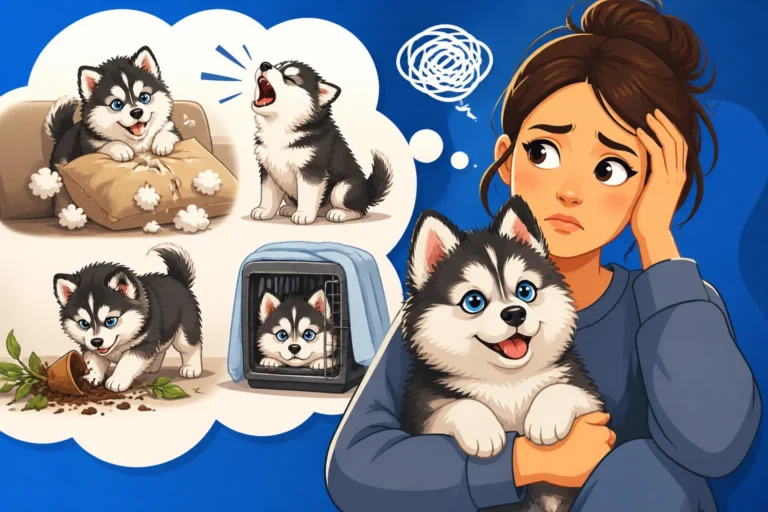
For example, someone may have chosen a puppy because it looked like a small Husky, then found that it still needs substantial daily activity, training, and attention. A Pomsky may also be noisier, more independent, or more difficult to keep safely contained than an adopter anticipated. Those traits can become stressful in an apartment with shared walls or in a home without a secure yard.
Coat care can be another surprise. A thick double coat may shed heavily, mat when neglected, and take steady brushing to maintain. Families who expected a low-shedding dog may find the day-to-day reality frustrating. For a closer look at the time and tools involved, see The Pomsky That Carries a Husky Coat at Twenty Pounds and Whether a Pomsky Blows Its Coat Twice a Year.
The breed name may not appear on the shelter listing
Shelter staff often have limited information about a dog’s history. If the previous owner did not provide reliable records, the dog may be described as a small spitz mix, Husky mix, Pomeranian mix, or simply a mixed-breed dog. A shelter may use the label that seems most plausible based on appearance, but a fluffy coat, pointed ears, or blue eyes cannot confirm a Pomsky’s ancestry.
That uncertainty is worth keeping in mind when browsing listings. A dog advertised as a Pomsky may be a Pomsky, another kind of mix, or a dog whose background is unknown. Likewise, a Pomsky in a shelter may be listed under a different description and never appear in a search for that breed name.
This is one reason breed-specific labels can make adoption searches feel discouraging: a search that returns no “Pomskies” does not prove there are none nearby. Searching for small or medium spitz-type dogs, Husky mixes, and Pomeranian mixes may reveal additional possibilities. For more context on how a Pomsky’s appearance can vary, read Whether Most Pomskies Look Like Big Pomeranians.
How to Search for a Pomsky in a Shelter or Rescue
Search by appearance and traits, not only by breed name
Start with municipal animal shelters, local humane societies, and general dog rescues in your area. Check their websites regularly, because available dogs and descriptions can change quickly. Use broader search terms alongside “Pomsky,” such as “Husky mix,” “Pomeranian mix,” “spitz mix,” and “small mixed breed.” If a site allows filters for size, age, or coat type, use those as starting points rather than strict requirements.
It may help to search nearby communities as well as your own city. Someone in Denver, for example, could check shelters and rescues across the wider Front Range rather than looking only within city limits. The same approach works around Minneapolis–Saint Paul, Seattle, or other metro areas where adopters can reasonably travel. A shelter may also have a waitlist or adoption process that requires you to be available for a meeting, so check the organization’s instructions before making plans.
You can contact shelters directly and describe the kind of dog you are hoping to adopt without insisting on a breed label. Ask whether they have a small-to-medium, spitz-like dog with a Husky or Pomeranian appearance, or whether they can note your interest for future arrivals. Be clear that you are open to a mixed or uncertain background. That flexibility can help you focus on the individual dog rather than a name on a listing.
Use breed-specific rescues as one part of the search
Some adopters look to Pomeranian or northern-breed rescues as well as general shelters. These organizations may occasionally take in dogs that resemble or are reported to be Pomsky mixes, but intake policies and available dogs vary. Ask how the rescue describes its dogs and whether it has any verified history, rather than assuming a breed label has been confirmed.
A useful search plan is to check several places on a regular schedule: local shelters, nearby humane societies, all-breed rescues, and breed-focused organizations. You can also ask your veterinarian, groomer, or trainer whether they know of reputable local rescue groups. Avoid sending money to someone who claims to have a shelter dog available but will not let you speak with the organization or verify the dog’s location and adoption process.
| Where to look | What you may find | What to keep in mind |
|---|---|---|
| Municipal shelters | Dogs listed by size, appearance, or broad mix | A Pomsky may not be labeled as one |
| Humane societies | Owner surrenders and stray dogs | Ask about known history and behavior notes |
| General dog rescues | Dogs transferred from shelters or private homes | Adoption procedures and foster information vary |
| Pomeranian or northern-breed rescues | Dogs with traits associated with either parent breed | A Pomsky-specific placement is not guaranteed |
| Online adoption listings | A broad view of dogs across a region | Photos and breed labels are not proof of ancestry |
A broader search also makes it easier to compare an individual dog’s needs with your household. If you are still deciding whether this type of dog fits your lifestyle, Which Homes a Pomsky Belongs In and What Pomsky Owners Wish They Had Known can help you think through the practical side before you apply.
How to Evaluate a Shelter Pomsky
Ask what is known, and separate facts from guesses
When you meet a dog described as a Pomsky, ask what the organization actually knows. Useful information may include the dog’s age estimate, weight, medical history, previous home, behavior in a foster home, and response to other dogs or children. A shelter may know the dog was surrendered by an owner, or it may have only limited information from a stray intake. Either situation is worth discussing openly.
It is also reasonable to ask why the dog was surrendered, if that information is available. Treat the answer as one piece of the picture rather than a complete explanation. A previous owner’s account may be incomplete, and a dog’s behavior in a kennel can differ from its behavior in a quiet home. Ask whether the dog has lived with cats, children, or other dogs, and whether those details are confirmed or simply unknown.
Appearance alone cannot establish a dog’s ancestry or predict its adult size and temperament. If breed history matters to you, ask whether the shelter has medical or pedigree records, or whether any DNA testing has been done. Even a DNA result cannot tell you everything about a dog’s likely behavior or future care needs. For a deeper discussion of breed identification, see Whether a DNA Test Confirms a Pomsky.
Match the dog in front of you to your real routine
Think beyond the appealing photo. Consider whether you have time for daily exercise, basic training, grooming, and gradual adjustment to a new home. Some Pomskies are lively and curious; others may be more reserved or unsettled in unfamiliar surroundings. A short meeting cannot reveal every part of a dog’s personality, so ask what staff or foster caregivers have observed over time.
Ask about behaviors that could affect your household: separation distress, barking or howling, chasing small animals, jumping, escape attempts, handling sensitivity, and comfort around visitors. “Not tested” does not mean “safe” or “unsafe”; it means the rescue does not yet have that information. If you have children or other pets, talk through a careful introduction plan before adopting rather than relying on a quick greeting at the shelter.
A trial adoption, foster-to-adopt arrangement, or follow-up support may be available through some organizations, but policies differ. Ask what support is offered, what happens if the placement is not a fit, and who to contact with questions after the dog comes home. Reading The Pomsky Escape Artist in a Twenty Pound Body may also help you plan for secure doors, gates, and outdoor spaces if the dog shows a strong interest in roaming.
Preparing to Adopt and Bring the Dog Home
Plan for the dog’s needs, not the label
Before adoption, make a practical list of what you will need: a properly fitted harness, a secure leash, food, a resting area, grooming tools, identification, and a plan for veterinary care. Confirm what food the dog currently eats and make any changes gradually, with veterinary guidance if the dog has health concerns. Chewy is one place people may use to browse routine supplies, but a retailer’s breed label or product recommendation should not be treated as a substitute for advice from the shelter or your veterinarian.
Ask the shelter what vaccinations, parasite treatments, microchip details, and medical records will come with the dog. Find out whether the dog has been spayed or neutered and whether any follow-up care is recommended. If the paperwork is incomplete, schedule a veterinary visit and bring every record the shelter provides. A new-pet checklist from Chewy or another retailer can help you remember basic supplies, but it will not replace the dog’s individual medical history.
Give the dog time to settle. The first days may involve disrupted sleep, cautious behavior, accidents, or difficulty eating in a new environment. Keep the routine simple and predictable: quiet rest, short walks, calm introductions, and positive reinforcement for the behaviors you want. Avoid inviting a crowd over or taking the dog to busy public places immediately. A dog who seems quiet in a shelter may need time to show its typical personality once it feels safe.
Set expectations for grooming, training, and ongoing care
A rescued Pomsky or Pomsky-like dog may need regular coat maintenance, even if the coat looks tidy at first. Ask the shelter whether the dog tolerates brushing and grooming, and begin with short, gentle sessions at home. Chewy may offer brushes and other basic supplies, but choose tools based on the dog’s coat and ask a groomer or veterinarian for guidance if you are unsure. Mats close to the skin can be uncomfortable, so do not try to cut them out with scissors.
Training should be patient and consistent. Reward check-ins, calm greetings, leash manners, and settling on a mat rather than expecting a newly adopted dog to understand household rules right away. If the dog pulls or coughs on walks, ask a veterinarian about appropriate equipment and health concerns; a collar should not be used to manage a dog that is struggling to breathe. See Why a Pomsky Should Wear a Harness for more on walking equipment and safety.
Finally, remember that adoption is about the individual dog, not a guarantee of a particular look, size, or temperament. A shelter may not be able to confirm that a dog is a Pomsky, and a dog that resembles one may still have different needs from the Pomsky you imagined. If you are comfortable with that uncertainty, open to a mixed-breed dog, and prepared to meet the animal’s actual needs, a shelter or rescue may be a rewarding place to find your companion. Chewy and other pet retailers can help with routine supplies after adoption, but the shelter team and your veterinarian are the better sources for questions specific to the dog’s history and care.
Disclaimer
This article is for general informational purposes only and does not constitute professional advice. Laws, prices and regulations vary by location and change over time. Consult a qualified professional for guidance on your specific situation.