Which Patella Grade Needs Surgery in a Pomsky
It's incredibly distressing to see your energetic Pomsky suddenly favoring a leg, holding it up, or exhibiting that odd little hop that comes and goes. This common, yet worrying, phenomenon is often a tell-tale sign of patellar luxation, more simply known as a "slipped kneecap." As a devoted Pomsky parent, you're likely grappling with anxiety, wondering what this means for your furry friend's future and, most pressingly, if your dog will need surgery. This comprehensive guide will walk you through the nuances of patellar luxation in Pomskies, detailing each grade and clarifying exactly when surgical intervention is typically recommended to restore their quality of life.
Understanding Patellar Luxation in Your Pomsky
Patellar luxation is a condition where the patella, or kneecap, dislocates or moves out of its normal groove on the end of the femur (thigh bone). This can be a painful and debilitating issue, and it's something many Pomsky owners eventually encounter due to the breed's genetic heritage.
What Exactly is Patellar Luxation?
Imagine your kneecap as a small, almond-shaped bone that sits in a specific groove at the bottom of your thigh bone. Tendons and ligaments hold it in place, allowing it to glide smoothly up and down as your leg bends and straightens. In patellar luxation, one or more of these structures are misaligned or poorly formed, causing the kneecap to pop out of that groove. It can slip either to the inside (medial luxation, which is more common in small breeds) or to the outside (lateral luxation) of the leg. When it slips, your dog often cannot bear weight on that leg until the kneecap slides back into place, causing that characteristic "skip" or temporary lameness.
This isn't just a simple nuisance; over time, the constant rubbing of the kneecap against the bone can wear away cartilage, leading to pain, inflammation, and degenerative joint disease like arthritis. Furthermore, the instability can put undue stress on other parts of the joint, potentially leading to other orthopedic issues down the line. It's a progressive condition that, if left unaddressed, can significantly impact a dog's mobility and comfort.
Why Pomskies are Prone to It
The Pomsky inherits its propensity for patellar luxation primarily from its Pomeranian side. Small breed dogs, in general, are highly predisposed to this condition due to genetic factors that affect bone structure and alignment. Huskies, the other parent breed, are less commonly affected, but the Pomeranian influence is strong here. This means that even a Pomsky with more Husky-like traits can still carry the genes for patellar luxation.
Breeders committed to the health of their lines typically screen for this condition, but it can still manifest even with responsible breeding practices. Understanding that your Pomsky might be genetically inclined to Slipping Kneecaps in a Pomsky is the first step toward proactive care. The conformation of the leg bones—specifically the angle of the femur and tibia, and the depth of the patellar groove—plays a huge role in whether a kneecap will stay put or repeatedly slip. Sometimes, it's just a shallow groove; other times, the attachment point of the patellar ligament is simply in the wrong place.
Recognizing the Signs and Symptoms
The most common sign of patellar luxation is intermittent lameness, often described as a "skip" or "hop" in their gait. Your Pomsky might suddenly pick up a hind leg for a few steps, then put it back down and walk normally as if nothing happened. This happens when the kneecap slips out and then pops back in. If the kneecap stays out, the dog might carry the leg for a longer period.
Other signs can include:
- An abnormal gait, even when not actively skipping.
- Pain or yelping when the leg is touched or manipulated.
- Reluctance to jump, run, or climb stairs.
- Stiffness or reduced range of motion in the affected leg.
- Swelling around the knee joint (though this is less common with lower grades).
It's crucial to pay attention to these subtle cues. Sometimes, the issue is so mild that owners only notice it during energetic play or after strenuous exercise. If you've ever observed The Skip That Means a Pomsky's Knee Has Gone, it's time to talk to your vet about a thorough examination. Early detection is key to managing the condition and exploring all available treatment options, whether surgical or conservative.
Deciphering the Four Grades of Patellar Luxation
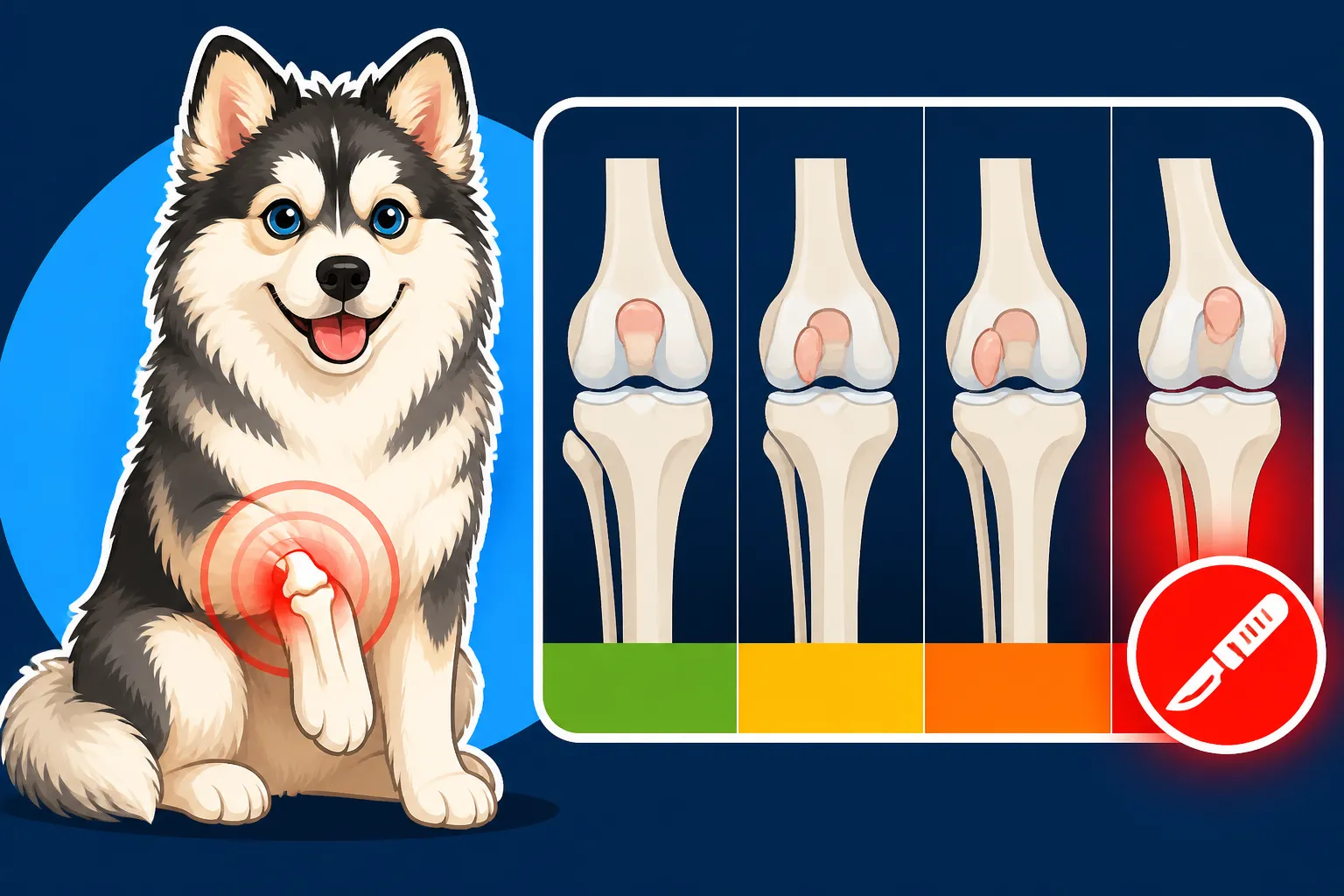
Veterinarians use a grading system from 1 to 4 to describe the severity of patellar luxation. This system helps determine the best course of action and predict the long-term prognosis for your Pomsky. Each grade describes how easily the kneecap luxates and how long it stays out of place.
Grade 1: The Occasional Skip
In Grade 1 patellar luxation, the kneecap can be manually luxated (pushed out of its groove) by a veterinarian, but it immediately pops back into place on its own. Clinically, your Pomsky might show no signs at all, or perhaps just an occasional, barely noticeable skip in their gait. This is often an incidental finding during a routine vet check-up. The patellar groove might be slightly shallow, or the alignment a tiny bit off, but the joint is largely stable.
For dogs with Grade 1 luxation, surgery is rarely recommended unless there are complicating factors or significant pain despite the mild grade. The primary focus for these dogs is often watchful waiting, weight management, and joint supplements. Owners are encouraged to monitor their dog's activity and gait, but most Grade 1 cases live full, active lives without surgical intervention. It's important to remember that while mild, Grade 1 can potentially progress to a higher grade over time, especially with trauma or repetitive strain.
Grade 2: More Frequent Instability
Grade 2 luxation means the kneecap spontaneously luxates (slips out on its own) and may stay out of place for longer periods, but it can still be manually reduced (pushed back into the groove) or will slip back in when the dog extends its knee. You'll likely see more frequent skipping or lameness, especially after exercise or when changing direction. Your Pomsky might even shake or stretch their leg in an attempt to pop the kneecap back into place themselves.
This is where the decision-making process starts to become more complex. While some Grade 2 cases can still be managed conservatively, many dogs with consistent discomfort or a significant impact on their daily activity will benefit from surgery. The frequency of luxation and the presence of pain are critical indicators. If your Pomsky is actively struggling with lameness multiple times a day, or if you see early signs of pain or inflammation, it might be time to consider surgical options. This grade represents a tipping point for many owners and their vets.
Grade 3: Consistent Discomfort and Limp
With Grade 3 luxation, the kneecap is luxated most of the time. It can still be manually reduced, but it will pop right back out once the pressure is released. Dogs with Grade 3 luxation will typically exhibit a consistent limp or a crouched, bow-legged stance. They might struggle significantly with movement, avoiding jumps or stairs entirely. The constant displacement of the kneecap leads to chronic pain, inflammation, and often, secondary changes in the bone structure as the body tries to adapt.
At this stage, the risk of developing severe arthritis and other orthopedic problems increases dramatically. Surgical correction is almost always recommended for Grade 3 luxation. The goal of surgery here isn't just to alleviate pain, but to prevent further damage to the joint and ensure the dog can use its leg properly for the rest of its life. Ignoring a Grade 3 luxation usually means condemning your Pomsky to a life of chronic pain and significantly limited mobility.
Grade 4: Permanent Dislocation
Grade 4 is the most severe form of patellar luxation. In this grade, the kneecap is permanently luxated and cannot be manually returned to its groove. The patellar groove itself is often flattened or completely absent, and the bones of the leg (femur and tibia) may be severely deformed. Dogs with Grade 4 luxation are usually in significant pain and exhibit a very abnormal gait, often walking with a severe crouch or an inability to properly extend their knee. They may even appear to "bunny hop" with both hind legs, trying to compensate for the instability.
For Grade 4 patellar luxation, surgery is absolutely essential. This is a critical situation that demands intervention not just for comfort, but to allow any semblance of normal movement. The surgical procedures for Grade 4 can be more complex, sometimes involving significant bone reconstruction to create a stable joint. Unfortunately, even with surgery, the long-term prognosis for full, pain-free function can be more guarded due to the extent of the initial damage and skeletal deformities. Understanding these different grades, as outlined in guides like Patellar Luxation Grades in a Pomsky, helps you and your vet make informed decisions.
When Surgery Becomes a Necessity for Your Pomsky
Making the decision for surgery can be daunting, but for specific grades of patellar luxation, it truly is the best path forward for your Pomsky's health and happiness.
Identifying the Critical Grades for Intervention
Generally speaking, surgery is strongly recommended for Pomskies with Grade 3 and Grade 4 patellar luxation. In these cases, the kneecap is frequently or permanently dislocated, causing chronic pain, significant lameness, and a high risk of developing severe degenerative joint disease (arthritis) if left untreated. For a dog that can't properly use its leg, or is in constant discomfort, surgery offers the best chance at a pain-free, active life.
For Grade 2 luxation, the recommendation for surgery is a bit more nuanced. If your Pomsky is showing consistent pain, if the luxation occurs very frequently, or if it's impacting their daily activities like running and playing, then surgery is often advised. Some vets might recommend surgery if they see early signs of cartilage damage or bone changes on X-rays, even if the clinical signs aren't yet severe. On the other hand, a Grade 2 luxation that only happens occasionally and causes minimal disruption might be managed with conservative methods for a period. The key here is the impact on your dog's quality of life.
Factors Beyond Grade: A Holistic View
While the grading system provides a strong framework, it's not the only factor. Your vet will consider a whole host of elements when determining if surgery is the right choice for your Pomsky. These include:
- Age and Activity Level: A young, active Pomsky with a higher-grade luxation might benefit more from early surgical intervention to prevent long-term damage and preserve their active lifestyle. An older, less active dog might tolerate conservative management better for a milder luxation. However, even older dogs can greatly improve with surgery, so age alone isn't always a deterrent, especially if they are otherwise healthy.
- Presence of Pain: Is your Pomsky showing clear signs of pain? Yelping, reluctance to move, guarding the leg? If pain is a constant feature, surgery often becomes a more urgent consideration, regardless of whether it's a Grade 2 or 3.
- Impact on Quality of Life: Can your Pomsky play, run, jump, and enjoy their daily activities without significant limitations? If the luxation is preventing them from being a happy, normal dog, surgery is likely warranted.
- Other Orthopedic Issues: Sometimes, patellar luxation can be complicated by other conditions, such as hip dysplasia or cruciate ligament tears. Addressing the patellar luxation might be part of a larger treatment plan.
- Bilateral vs. Unilateral: Is it one knee or both? Whether Both of a Pomsky's Knees Go is a common concern. If both knees are affected, surgery might be staged, addressing one knee at a time. The cumulative impact of two luxating patellas is much greater than one.
The conversation with your vet should be open and honest, discussing all these variables. They can help you weigh the pros and cons, considering your Pomsky's individual circumstances and your family's capabilities for post-operative care.
A Glimpse into Surgical Procedures
When surgery is deemed necessary, there are several techniques a veterinary orthopedic surgeon might employ, often in combination, to stabilize the kneecap. The goal is always to realign the patella and ensure it stays within its groove.
Common surgical procedures include:
- Trochleoplasty (Deepening the Trochlear Groove): This involves deepening the groove in the femur where the kneecap normally sits. This provides a more secure channel for the patella to track, preventing it from slipping out.
- Tibial Crest Transposition: The tibial crest is the bony prominence on the tibia (shin bone) where the patellar ligament attaches. If this attachment point is misaligned, the surgeon will carefully cut this bone, move it to the correct position, and reattach it with pins or wires. This corrects the pull of the quadriceps muscle on the kneecap.
- Lateral Imbrication/Medial Release: These procedures involve tightening the joint capsule on one side and releasing it on the other to help center the kneecap.
The choice of procedure depends entirely on the specific anatomical deformities contributing to your Pomsky's luxation. A skilled veterinary orthopedic surgeon will assess your dog's X-rays and joint mechanics to formulate the most effective surgical plan. While the thought of surgery is scary, these procedures are highly effective in resolving patellar luxation for most dogs. Knowing What Patella Surgery Costs a Pomsky Owner is also a significant factor, and something that should be discussed thoroughly with your vet and potentially your pet insurance provider like Healthy Paws.
Managing Patellar Luxation Without Immediate Surgery
For Pomskies with milder forms of patellar luxation, or those whose owners prefer to postpone surgery, there are effective conservative management strategies that can help improve comfort and slow progression.
Conservative Approaches for Milder Cases
If your Pomsky has Grade 1 or a very mild Grade 2 patellar luxation, and is not experiencing significant pain or lameness, conservative management is often the first line of defense. The primary goals are to support joint health, reduce inflammation, and maintain muscle strength.
Key conservative strategies include:
- Weight Management: Keeping your Pomsky at a healthy weight is paramount. Excess weight puts additional strain on all joints, including the knees, exacerbating the problem. Even a few extra pounds can make a significant difference in the frequency and severity of luxation episodes. Work with your vet to establish an ideal weight and a suitable diet plan.
- Controlled Exercise: While exercise is crucial, it needs to be managed carefully. Avoid activities that involve sudden stops, starts, twists, or high-impact jumps, such as aggressive fetch or chasing squirrels up trees. Instead, focus on low-impact activities like leash walks on soft surfaces, swimming, or short, controlled play sessions. You might also want to reconsider Whether a Pomsky Should Jump Off Furniture and provide ramps or steps to protect their joints.
- Joint Supplements: Many owners find success incorporating joint supplements containing ingredients like glucosamine, chondroitin, MSM, and Omega-3 fatty acids. These can help support cartilage health, reduce inflammation, and improve joint lubrication. Discuss with your vet Whether Joint Supplements Help a Pomsky and which specific formulations would be best suited for your dog. Brands like Dasuquin, Cosequin, and GlycoFlex are popular choices, but your vet can offer personalized recommendations.
These methods won't correct the anatomical defect, but they can significantly improve your Pomsky's comfort and potentially delay the need for surgery. Regular veterinary check-ups are essential to monitor the condition's progression.
The Role of Physical Therapy and Lifestyle Adjustments
Beyond just managing weight and exercise, targeted physical therapy can play a huge role in supporting a Pomsky with patellar luxation, especially in Grade 1 and 2 cases, or as part of post-surgical rehabilitation. A certified canine rehabilitation therapist can design a program tailored to your dog's specific needs.
This might include:
- Strengthening Exercises: Specific exercises aimed at building up the quadriceps and hamstring muscles surrounding the knee. Stronger muscles provide better natural support and stability for the kneecap, helping to keep it in its groove.
- Range of Motion Exercises: Gentle exercises to maintain or improve the flexibility of the knee joint.
- Balance and Proprioception: Exercises that help improve your dog's awareness of its body in space, enhancing coordination and stability.
- Hydrotherapy: Swimming or underwater treadmill therapy is fantastic for building muscle without putting impact stress on the joints. The buoyancy of the water provides a low-impact workout that's incredibly beneficial.
Lifestyle adjustments often go hand-in-hand with physical therapy. This includes ensuring your Pomsky has good traction on indoor surfaces (rugs on slippery floors), providing comfortable, supportive bedding, and consistently monitoring their comfort levels. It’s a commitment, but one that can significantly extend your Pomsky’s pain-free mobility.
Pain Management and Supportive Care
Even with conservative management and physical therapy, some Pomskies might experience occasional pain or inflammation, especially during flare-ups or periods of increased activity. Your vet can prescribe medications to manage this discomfort.
Common medications include:
- Non-Steroidal Anti-Inflammatory Drugs (NSAIDs): Medications like carprofen (Rimadyl), meloxicam (Metacam), or firocoxib (Previcox) are often prescribed to reduce pain and inflammation associated with joint issues. These should always be used under veterinary guidance due to potential side effects.
- Gabapentin: This medication can be used to manage neuropathic pain, which sometimes accompanies chronic joint conditions.
- Amantadine: Another medication that can be added for chronic pain management, particularly if NSAIDs aren't fully effective.
Supportive care also includes regular check-ups to assess the progression of the luxation and the effectiveness of the conservative plan. This proactive approach helps ensure that you're always providing the best possible care for your Pomsky, adapting treatments as their needs evolve, and understanding when to transition from conservative care to surgical options.
Life After Surgery: Recovery and Long-Term Outlook
If your Pomsky does undergo surgery for patellar luxation, the journey doesn't end when they leave the operating room. Post-operative care and rehabilitation are just as crucial to a successful outcome.
Navigating the Post-Operative Period
The immediate period after patellar luxation surgery requires strict adherence to your vet's instructions. This will be a time of rest and careful management to allow the tissues and bones to heal properly.
Typically, you can expect:
- Strict Rest and Confinement: Your Pomsky will need to be confined to a crate or a small, restricted area for several weeks. No running, jumping, or strenuous play. Leash walks for potty breaks will be brief and controlled. This restriction is vital to prevent the surgical repairs from being compromised.
- Pain Management: Your vet will send you home with pain medications and anti-inflammatories to keep your Pomsky comfortable during recovery. It's essential to administer these exactly as prescribed.
- Wound Care: You'll need to monitor the incision site for any signs of infection (redness, swelling, discharge) and keep it clean. Your dog will likely need to wear an Elizabethan collar (cone) to prevent licking or chewing at the stitches.
- Follow-Up Appointments: Regular check-ups with your vet are critical to monitor healing, remove stitches (if applicable), and gradually introduce more activity. X-rays might be taken to ensure the patella is tracking correctly.
It’s important to understand that your Pomsky won't be back to their old self overnight. Healing takes time and patience, usually several weeks to a few months for full recovery.
Commitment to Rehabilitation
Once the initial healing phase is complete, a structured rehabilitation program is often recommended, similar to physical therapy for humans. This is where your commitment can make a huge difference in the long-term success of the surgery.
Rehabilitation typically involves:
- Gradual Increase in Activity: Slowly reintroducing controlled exercises to build strength and endurance without overstressing the healing joint. This might start with short, slow leash walks and progress to longer walks, gentle inclines, and eventually more dynamic movements.
- Targeted Exercises: A canine physical therapist might guide you through specific exercises designed to strengthen the muscles around the knee, improve range of motion, and restore proper gait.
- Hydrotherapy: As mentioned before, hydrotherapy can be a fantastic tool for rehabilitation, allowing for muscle strengthening with minimal impact on the healing joint.
Consistent rehabilitation helps ensure optimal joint function, prevents muscle atrophy, and reduces the risk of future complications. Many insurance providers, like Healthy Paws, offer coverage for rehabilitation services, which can be a significant help with the overall cost of recovery.
Understanding Potential Complications and Prognosis
While patellar luxation surgery is generally successful, it's important to be aware of potential complications, though they are relatively uncommon.
These can include:
- Infection: As with any surgery, there's a risk of infection at the surgical site.
- Re-luxation: In some cases, the kneecap might luxate again, especially if the underlying anatomical issues were very severe or if post-operative restrictions weren't strictly followed.
- Implant Problems: If pins or wires were used, they could potentially loosen or cause irritation, requiring removal.
- Arthritis Progression: While surgery helps prevent further damage, some degree of Arthritis in a Pomsky at Ten or earlier can still develop, particularly in cases with significant pre-existing joint damage.
- Cruciate Ligament Injury: The instability of patellar luxation can put increased stress on the cranial cruciate ligament. Occasionally, a cruciate tear can occur either before or after patellar surgery.
The overall prognosis for Pomskies undergoing patellar luxation surgery is generally excellent, especially for Grades 2 and 3. Most dogs recover well and regain full, pain-free function. For Grade 4 cases, the prognosis can be more guarded, but surgery still offers a significant improvement in quality of life. Regular veterinary follow-ups, adherence to rehabilitation, and maintaining a healthy weight are all crucial for a long-term successful outcome. Early health screening, as detailed in The Health Tests a Pomsky Breeder Should Show, can sometimes identify predispositions even before symptoms arise.
| Patellar Luxation Grade | Description | Clinical Signs | Typical Surgical Recommendation |
|---|---|---|---|
| Grade 1 | Kneecap can be manually luxated but reduces spontaneously. | Occasional, barely noticeable skip; often asymptomatic. | Rarely, unless pain or progression occurs. |
| Grade 2 | Kneecap luxates spontaneously but can be manually reduced or reduces with stifle extension. | Intermittent skipping, lameness; shaking leg to reduce patella. | Often recommended if painful or frequent. |
| Grade 3 | Kneecap is luxated most of the time; can be manually reduced but immediately re-luxates. | Consistent limp, crouched stance, significant discomfort; avoidance of activity. | Almost always recommended. |
| Grade 4 | Kneecap is permanently luxated and cannot be manually reduced. | Severe lameness, inability to extend stifle, severe pain, skeletal deformities. | Essential for mobility and pain relief. |
Disclaimer
The information provided in this guide is intended for educational purposes only and should not be considered a substitute for professional veterinary advice. Always consult with a qualified veterinarian regarding your Pomsky's specific health concerns and before making any decisions about their medical care, treatment, or diet.