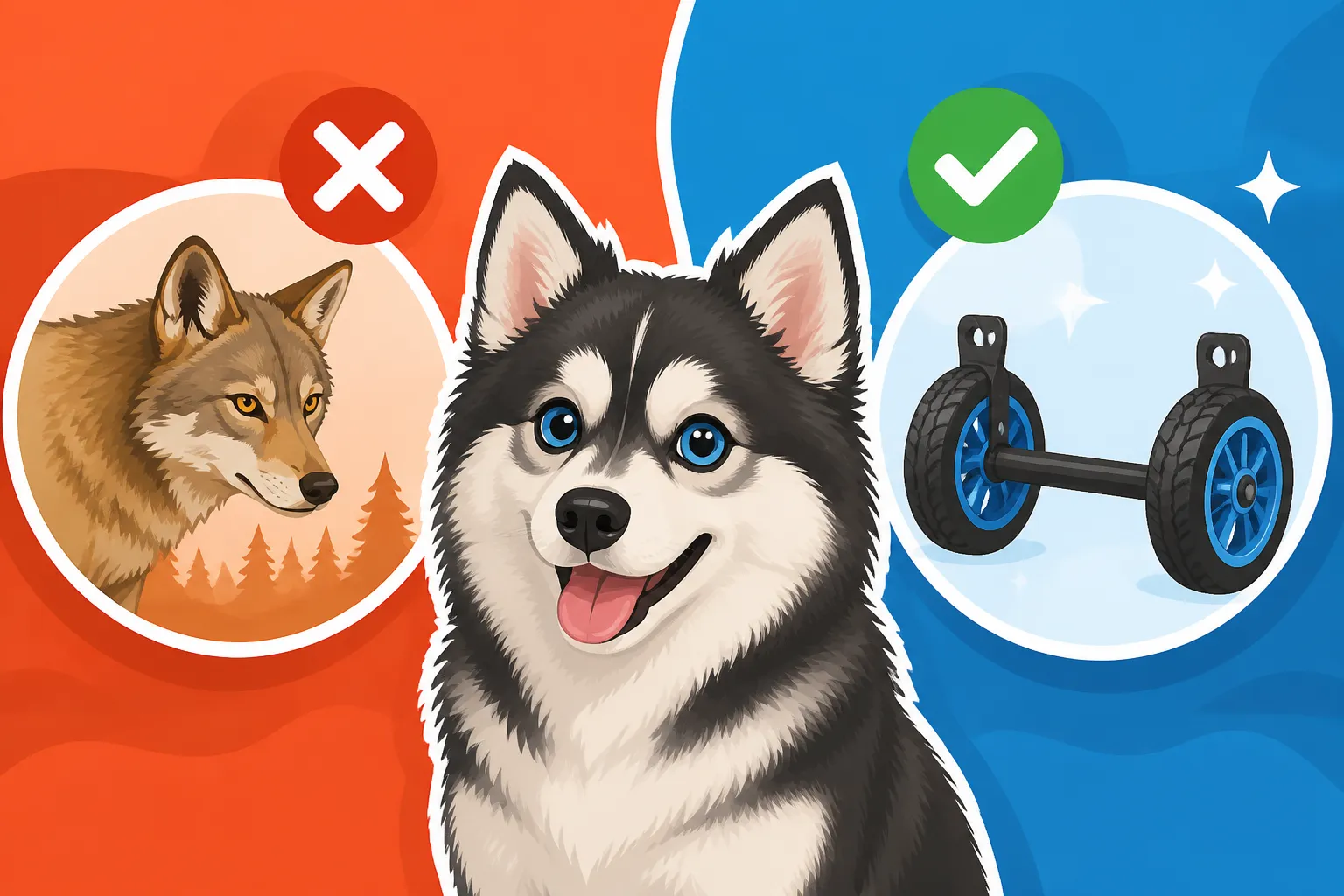
Whether a Pomsky Needs Coyote Rollers
It's incredibly frustrating, and often heartbreaking, when your clever, energetic Pomsky decides that the perimeter of your yard is merely a suggestion, not a boundary. Many Pomsky owners find themselves constantly worried about escapes, especially when their furry friend suddenly develops a knack for scaling fences. This guide will dive deep into why your Pomsky might be a budding escape artist and explore whether specialized tools like coyote rollers are the ultimate solution to keep them safely within your property.
Understanding Your Pomsky's Escape Artist Tendencies
If you've ever watched your Pomsky effortlessly clear a hurdle or squeeze through a gap you swore wasn't there, you're not alone. Their lineage is a powerful predictor of their behavior, and when you combine the Siberian Husky's adventurous spirit with the Pomeranian's cleverness, you get a dog that's often a master of Houdini-esque feats.
The Husky Influence on Escape Behavior
Let's be real: Huskies are notorious escape artists. They're bred for endurance, independence, and covering vast distances, often without a human directly guiding them. This means they possess an inherent drive to roam and explore. When you mix that into a Pomsky, even a smaller one, you still get a strong genetic inclination to test boundaries. They see a fence not as a deterrent, but as a puzzle to be solved, or simply something to go over, under, or through.
This isn't naughtiness; it's instinct. A bored or under-exercised Pomsky with Husky genes will quickly turn its considerable intellect towards finding a way out. They are incredibly agile and surprisingly strong for their size, capable of pulling themselves up and over obstacles that seem insurmountable. This can be a rude awakening for owners who assume a smaller dog means less escape risk.
The Pomeranian Twist
While Huskies bring the wanderlust, Pomeranians contribute a hefty dose of intelligence and sometimes a feisty, determined attitude. Pomeranians are small but mighty, known for their quick thinking and ability to manipulate situations (and their owners!). This cleverness, when combined with the Husky's physical prowess, makes for a formidable escape planner. A Pomsky might not just jump; it might figure out how to open a gate latch, chew through a weak spot, or even use items in the yard as stepping stones.
Their smaller stature can sometimes be misleading. While a larger Husky might need a truly tall fence, a Pomsky, especially one with a more athletic build, can often find purchase on a fence and leverage its weight and agility to climb over. Don't underestimate the sheer determination packed into that fluffy body.
Common Escape Methods
Pomskies employ a variety of tactics when they decide to go on an adventure. Understanding their methods is the first step in prevention.
- Climbing: This is where coyote rollers come into play. Many Pomskies are adept at scaling chain-link, leaning against privacy fences to gain leverage, or even using decorative elements on a fence as footholds. Their strong rear legs and keen balance make them surprisingly capable climbers.
- Jumping: Some Pomskies, especially the larger ones, can clear impressive heights, particularly if they get a running start or have a slight elevation from which to launch. A standard four-foot fence might be a walk in the park for a determined jumper.
- Digging: Ah, the classic Husky move! Given enough time and motivation, many Pomskies will attempt to tunnel under a fence. They can be incredibly efficient diggers, especially if the ground is soft or if they're motivated by a scent or something exciting on the other side. This is why addressing the bottom of the fence is just as crucial as the top. You might find yourself researching Whether a Pomsky Digs Under a Fence more than you anticipated.
- Gate-Opening: Those clever paws aren't just for looking cute! Some Pomskies quickly learn to manipulate simple gate latches. A swinging gate can also present an opportunity if it's not securely fastened or if there's enough room for them to nose their way through.
What Are Coyote Rollers and How Do They Work?
So, you've realized your Pomsky is more of a mountaineer than a lapdog. This is where specialized tools like coyote rollers might enter your consideration. They sound a bit intense, don't they? But they're designed with a very specific, effective purpose in mind.
The Mechanics of a Roller System
Coyote rollers are essentially a series of long, horizontally mounted rollers installed along the top of your fence line. Imagine a continuous, slippery bar that spins freely. When a dog attempts to climb the fence and reaches the top, their paws meet the roller. Instead of finding a stable grip to pull themselves over, the roller spins, causing them to lose their footing and slide back down. It's like trying to climb a greased pole.
The key is that the rollers extend outward and slightly downward from the fence, making it impossible for the dog to gain purchase on the very top edge. They're typically made from sturdy, smooth materials like aluminum or PVC, which offer no grip. This mechanism makes it incredibly difficult for even the most agile and determined climber to get over the barrier.
Installation and Types
Coyote rollers come in various styles and materials, and you can often find kits available for DIY installation or hire professionals.
- Materials: Common materials include aluminum, durable plastics like PVC, or even galvanized steel for maximum resilience. The choice often depends on your budget, the aesthetics you prefer, and the level of durability you need for your local climate.
- Design: Some systems feature individual rolling tubes, while others have a continuous, flexible track with internal rollers. The bracket design also varies, affecting how far the rollers extend over the fence.
- Installation: For a handy homeowner, many coyote roller kits can be installed with basic tools. They typically attach to the existing fence posts or top rail. However, given the importance of security, ensuring proper installation that leaves no weak points is paramount. If you're not confident in your DIY skills, a professional installer specializing in secure pet enclosures might be a worthwhile investment. You can often find a range of options and read reviews on platforms like Amazon to help you choose a suitable product for your fence type.
Do Pomskies Really Need Coyote Rollers?
This is the million-dollar question for many Pomsky owners. It feels like a big step, but sometimes, desperate times call for effective measures.
Assessing Your Pomsky's Specific Needs
Whether your individual Pomsky needs coyote rollers depends on several factors that make up their unique personality and your specific living situation.
- Existing Escape History: Has your Pomsky already proven its climbing abilities? If they've successfully scaled a standard fence multiple times, then rollers are a strong consideration. If they've only tried to dig or squeeze through gaps, other solutions might be more appropriate first.
- Fence Height and Type: What kind of fence do you currently have? A six-foot solid privacy fence presents a different challenge than a four-foot chain-link fence. Coyote rollers are most effective on fences that a dog can get a foothold on, or where they're trying to pull themselves over the top.
- Your Pomsky's Temperament and Drive: Is your Pomsky particularly high-energy, independent, or driven by prey? The Prey Drive a Pomsky Gets From the Husky can be a huge motivator to scale fences to chase after squirrels or other critters. A bored or under-stimulated Pomsky is far more likely to seek adventure outside the yard.
- Supervision Levels: How much time can you realistically spend supervising your Pomsky in the yard? If they're often left unsupervised for periods, the risk of escape increases significantly, making a robust physical barrier even more crucial.
- Local Wildlife: Are there coyotes, deer, or other wildlife in your area? While rollers are named for coyotes, they also deter your own dog from escaping and can make it harder for other animals to enter your yard. This added layer of security can be invaluable if you live in a rural or semi-rural area.
Pros and Cons of Coyote Rollers for Pomskies
Like any major home modification for your pet, coyote rollers come with their own set of advantages and disadvantages.
Pros:
- Highly Effective Against Climbers: They are incredibly good at preventing dogs from getting over the top of a fence. If climbing is your Pomsky's go-to escape method, rollers are often the most reliable solution.
- Peace of Mind: Knowing your fence has this additional layer of security can significantly reduce anxiety for owners who constantly worry about their Pomsky escaping.
- Durable: Once installed, most quality coyote roller systems are built to last, requiring minimal maintenance.
- Aesthetically Pleasing Options: While they might sound industrial, many modern designs are discreet and can blend well with various fence types, especially when opting for colors that match your existing fence.
Cons:
- Cost: Installing coyote rollers can be a significant investment, especially if you have a large yard or opt for professional installation and high-quality materials.
- Installation Effort: While DIY kits exist, they still require time and effort. Professional installation adds to the cost.
- Not a Universal Solution: They only address climbing. If your Pomsky is primarily a digger or a gate-opener, rollers alone won't solve the problem. You might need to pair them with other solutions, like dig guards.
- Potential for Initial Frustration: Your Pomsky might initially be confused or frustrated by the rollers, but they generally learn quickly that climbing is no longer an option.
Alternative and Complementary Escape Prevention Strategies
Coyote rollers are fantastic for climbers, but a truly secure yard for a Pomsky often requires a multi-pronged approach. Think of it as creating a fortress, not just adding one security gadget.
Reinforcing Your Existing Fence
Before or in conjunction with rollers, consider these fundamental fence reinforcements:
- Dig Guards or L-Footings: For the diggers, extending your fence underground is key. This can involve burying a section of wire mesh (like hardware cloth or chicken wire) horizontally along the bottom of the fence, bending it into an 'L' shape facing inward, or pouring a concrete footing. This makes it impossible for your Pomsky to tunnel out.
- Increasing Height: If your fence is on the shorter side (e.g., four feet), simply increasing its height with extensions can be effective for some jumpers. However, for a determined climber, height alone might not be enough without rollers or a similar deterrent.
- Solid Panels vs. Chain Link: If you have chain-link, consider adding privacy slats or even replacing sections with solid panels. This removes footholds and also eliminates visual distractions that might encourage your Pomsky to try and get to the other side. You may also need to think about How Tall a Fence Stops a Pomsky and what type of material it's made from.
Training and Management
No physical barrier is foolproof without good training and consistent management. Your Pomsky’s brain is their greatest asset and greatest challenge!
- Recall Training: A solid recall is your ultimate "emergency brake." Even if they do manage to get out, a strong "come" command could be the difference between a scary incident and a quick return. Focus on high-value rewards and make coming back to you the best thing ever. Programs like those offered by BAXTER & Bella can provide structured guidance for building a reliable recall, which is absolutely vital for a breed with a tendency to roam.
- Supervision: Never underestimate the power of direct supervision, especially when your Pomsky is young or you're unsure of their fence-testing abilities. Even five minutes alone can be enough for a determined dog to find a weakness.
- Mental and Physical Enrichment: A bored Pomsky is a mischievous Pomsky. Ensure they get enough physical exercise every day, tailored to their energy levels. But don't forget mental stimulation! Puzzle toys, training sessions, scent games, and even just varied walks can tire out their clever brains and make them less inclined to seek entertainment by escaping. A Pomsky with a fulfilling daily routine is less likely to look for trouble. You might want to consider The Exercise a Pomsky Needs Every Day.
Microchipping and GPS Trackers
Even with the most secure yard, accidents happen. These tools provide critical safety nets.
- Microchipping: This is a non-negotiable for any dog, but especially one prone to wandering. If your Pomsky gets lost and is found by a shelter or vet, a microchip greatly increases the chances of a reunion. Make sure your registration information is always up-to-date.
- GPS Trackers: For extra peace of mind, especially if your Pomsky has a history of escapes or you live in an area with a lot of open space, a GPS tracker collar can be invaluable. These devices allow you to track your dog's location in real-time via a smartphone app, dramatically cutting down the time it takes to find a lost Pomsky. Many brands offer lightweight, durable options that are perfect for active Pomskies. You might find a good one on Amazon that integrates well with your phone.
Here's a quick comparison of different escape prevention methods:
| Method | Primary Escape Method Addressed | Effectiveness (Pomsky) | Cost | Ease of Installation | Notes |
|---|---|---|---|---|---|
| Coyote Rollers | Climbing | High | Moderate to High | Moderate | Best for active climbers; can be aesthetically pleasing. |
| Dig Guards/L-Footings | Digging | High | Moderate | Moderate to High | Essential for Huskies and Pomskies with digging instincts. |
| Fence Height Extension | Jumping | Moderate | Low to Moderate | Easy to Moderate | Less effective for determined climbers; can look less appealing. |
| Solid Fence Panels | Climbing (footholds), Visual | Moderate | Moderate to High | High | Removes visual triggers, but can be scaled if no rollers. |
| Secure Gate Latches | Gate-opening | High | Low | Easy | Often overlooked; basic but critical. |
| Consistent Recall Training | All (contingency) | Varies (dog dependent) | Time/Effort | High | Vital for safety, even with secure fencing. |
| Mental/Physical Enrichment | All (motivation) | High (preventative) | Low (toys, time) | High | Reduces boredom-driven escapes. |
| Microchipping | Post-escape safety net | N/A (recovery) | Low (one-time) | Easy (vet visit) | Essential for identification and reunion. |
| GPS Tracker | Post-escape recovery | High (recovery) | Moderate (device+sub) | Easy (collar attachment) | Provides real-time location tracking for quick retrieval. |
Ultimately, securing your Pomsky requires a diligent approach. Whether or not coyote rollers are the sole answer, or part of a larger strategy, depends on your individual dog and situation. But investing in their safety and your peace of mind is always worth it.
Disclaimer
This article is for general informational purposes only and does not constitute professional advice. Laws, prices and regulations vary by location and change over time. Consult a qualified professional for guidance on your specific situation.