Whether a Pomsky Kills Small Animals
The question of whether a Pomsky, with their adorable, fluffy appearance, might pose a threat to smaller animals is a very real and often unsettling concern for many prospective and current owners. It’s a common misconception that their smaller size compared to a full Husky automatically means a diminished prey drive, but that’s not always the case, and understanding this crucial aspect of their inherited instincts is vital for responsible pet ownership and ensuring the safety of all creatures in your home and yard. This guide will walk you through the nuances of a Pomsky’s prey drive, how it impacts interactions with various small animals, and practical strategies to manage this powerful instinct.
Understanding the Pomsky's Instinctive Prey Drive
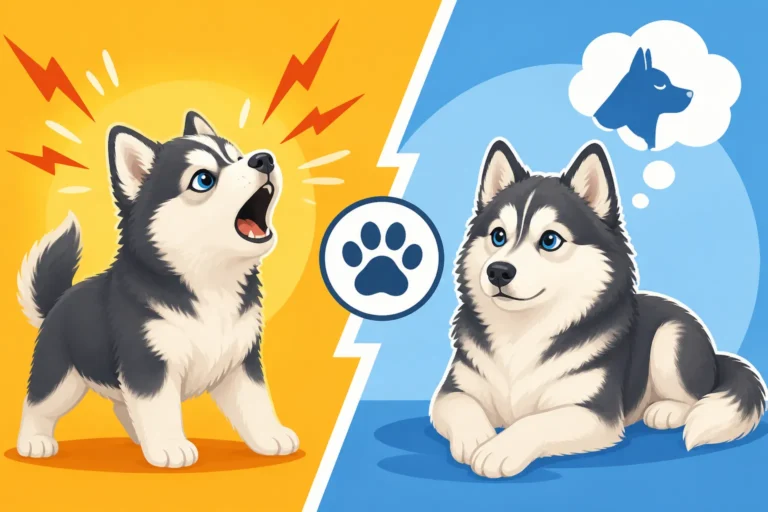
Let's be clear: a Pomsky's inclination to chase, catch, and potentially harm small animals isn't a sign of malice or a poorly behaved dog. It's a deep-seated instinct, largely inherited from their Siberian Husky lineage, though even a Pomeranian can have a surprisingly keen eye for tiny, scurrying things. This drive is a remnant of their ancestors' survival, where hunting small prey was essential for sustenance. When you see your Pomsky fixated on a squirrel or a neighborhood cat, they're not being "naughty"; they're simply responding to thousands of years of genetic programming.
The Husky's Hunting Heritage
The Siberian Husky, one half of the Pomsky equation, was originally bred as a working dog in harsh environments. While known for pulling sleds, these dogs also often had to forage for their own food, making a strong prey drive a valuable trait. They are sight hounds to a degree, easily triggered by movement, and possess the speed and agility to pursue and capture small game like rodents, birds, and even rabbits. This means your twenty-pound Pomsky can carry a surprisingly potent hunting instinct in their compact body. It's not something you can simply train out of them entirely, but rather something you must manage and redirect.
The Pomeranian's Role in the Mix
While not typically thought of as a hunting breed in the same vein as a Husky, Pomeranians themselves are small dogs descended from Spitz-type breeds, and many small terriers, with whom Poms share some distant ancestry, were bred specifically to hunt rodents. Even a tiny Pomeranian can exhibit a strong chase instinct, often pursuing insects, small birds, or even dust bunnies with surprising intensity. So, while the Husky might contribute the "kill instinct," the Pomeranian can certainly contribute to the "chase and pounce" aspect, creating a formidable combination in a Pomsky. It's a complex mix that means vigilance is always necessary.
Which Small Animals Are Most at Risk From a Pomsky?
Given their inherited instincts, certain types of small animals are naturally more vulnerable around a Pomsky. It’s crucial for owners to assess their specific living situation and the other pets or wildlife present to understand the potential risks. This isn't about fear-mongering, but rather realistic preparation.
Household Pets: Cats, Rabbits, and Rodents
This is where the concern often hits closest to home. If you already share your life with a cat, a rabbit, guinea pigs, hamsters, or even birds, introducing a Pomsky, especially a puppy, requires extreme caution and careful, supervised introductions.
- Cats: Many Pomskies can coexist peacefully with cats, especially if raised with them from a young age. However, the chasing instinct is strong. A cat running can easily trigger a Pomsky's prey drive. Even if your Pomsky doesn't intend to harm the cat, a rough chase, a pounce, or cornering a frightened feline can lead to injury for both animals. Cats need safe, high places to escape where a Pomsky cannot reach them. For multi-pet households, this means dedicated cat zones, baby gates, or even a secure catio. You might find resources on Amazon for cat trees or wall shelves that provide these essential escape routes.
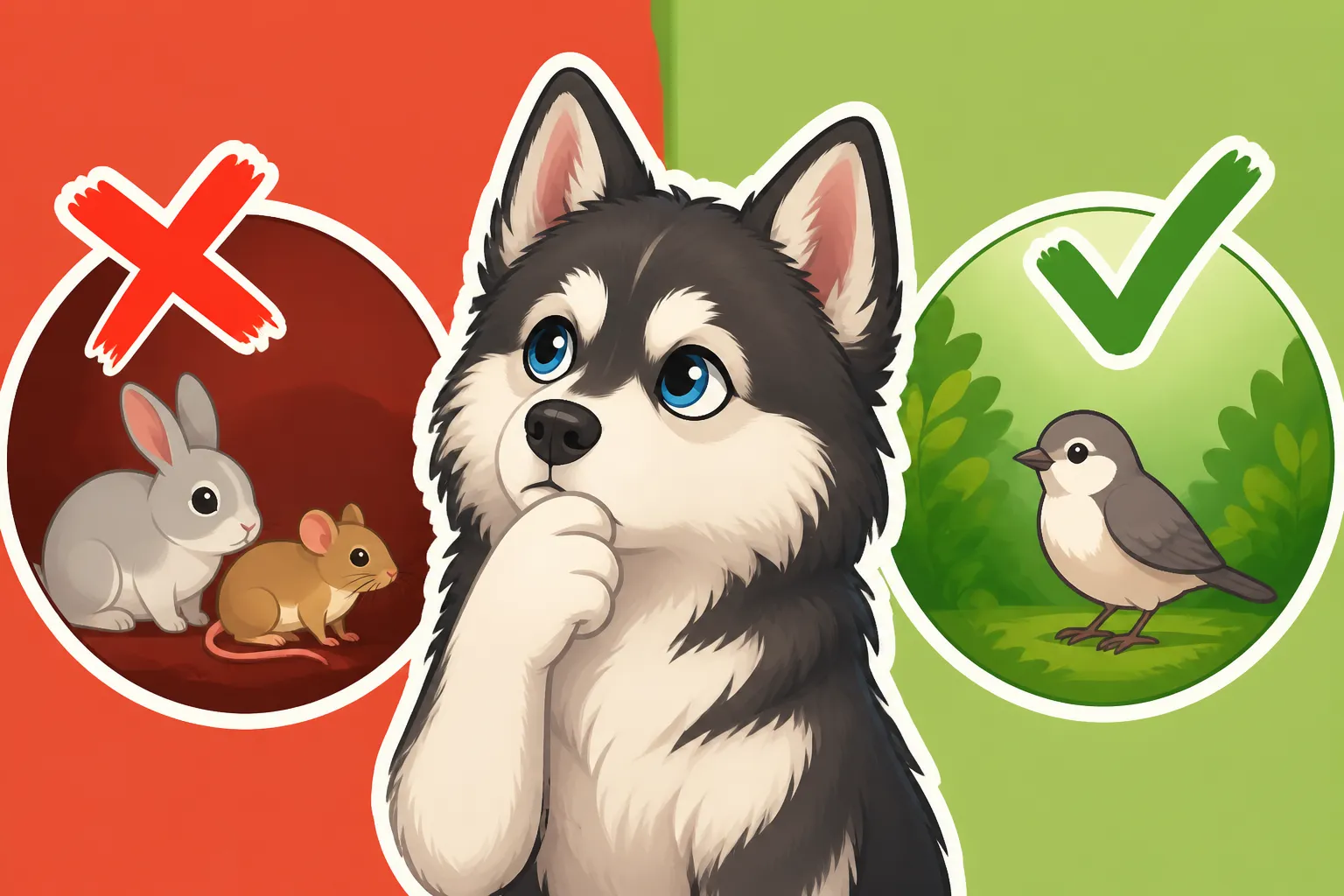
- Rabbits, Guinea Pigs, Hamsters, Birds: These animals are generally at a much higher risk. Their small size, quick movements, and natural prey behaviors (freezing, darting) are direct triggers for a dog's predatory sequence. It's rarely recommended to keep these types of pets in the same household as a Pomsky without extremely strict and permanent separation. Even a well-meaning Pomsky can unintentionally cause fatal injury through a "play" bite or shake if the prey drive is fully engaged. Remember, a quick pounce from a dog could crush a small rodent even if the intent wasn't malicious. Whether Small Pets Are Safe Around a Pomsky goes into more detail on this, and it's something every potential owner should seriously consider.
Outdoor Wildlife: Squirrels, Birds, and Other Critters
Beyond your immediate household, your yard and local environment are teeming with small animals that can activate your Pomsky’s hunting instincts.
- Squirrels and Birds: These are prime targets for most dogs with a moderate to high prey drive, and Pomskies are no exception. The erratic movements of a squirrel scurrying up a tree or a bird fluttering across the lawn can turn a calm Pomsky into a focused hunter in an instant. This is a big reason why a reliable recall is so critical, and why many owners find their Pomskies can never truly be trusted off-leash in unfenced areas. The thrill of the chase is often far more rewarding than any treat you could offer in the moment.
- Rabbits, Possums, Raccoons: Depending on your location, you might have larger wildlife visiting your yard. A Pomsky might not see a raccoon as prey, but a rabbit darting across the lawn is a huge temptation. These encounters can not only be dangerous for the wildlife but also for your Pomsky, who could be injured in a struggle, exposed to parasites, or even encounter more aggressive wildlife. A secure fence is absolutely non-negotiable for a Pomsky due to this strong drive to chase and explore. You might want to read The Pomsky Escape Artist in a Twenty Pound Body for more on how determined these dogs can be.
- Chickens and other Livestock: For owners living in rural or semi-rural areas, the question of Whether a Pomsky Is Safe Around Chickens is a serious one. While some working breeds can be trained to guard or ignore livestock, a Pomsky's inherent prey drive, combined with their lack of specific livestock guardian instincts, makes them a significant risk to poultry or other small farm animals. Even if they don't kill them, the stress of constant chasing can be detrimental to the livestock's health and productivity.
Managing Your Pomsky's Prey Drive: Training and Environment
Since completely eliminating prey drive isn't realistic, the goal becomes effective management and redirection. This involves a combination of consistent training, careful supervision, and creating a safe environment for everyone involved. It's a commitment, but one that ensures the well-being of all creatures, great and small.
Prioritizing Reliable Recall and Impulse Control
A rock-solid recall is perhaps the single most important command for any dog with a strong prey drive. Your Pomsky needs to instantly return to you, even when distracted by a fleeing squirrel or a distant rabbit. This is an uphill battle, but it's essential for their safety and the safety of others.
- Start Early and Be Consistent: Begin recall training the moment you bring your Pomsky puppy home. Make coming to you the most rewarding thing they can do. Use high-value treats (think cooked chicken or cheese, not just plain kibble).
- Practice in Varied Environments: Start in a quiet, distraction-free area, then gradually introduce more distractions. Work on a long line in a secure park or open field. A long line, which you can easily find on Amazon, gives you control while allowing your dog a sense of freedom. Always use a harness with a long line to protect their neck, as discussed in Why a Pomsky Should Wear a Harness.
- Impulse Control Exercises: Teach "leave it" and "stay" with increasing distractions. These commands help your Pomsky learn to ignore tempting things and wait for your permission. This is particularly challenging for a breed known for its independence, as explored in Whether a Pomsky Is Stubborn or Independent.
- Positive Reinforcement is Key: Punishing a dog for following a natural instinct is counterproductive and damaging to your bond. Instead, reward them heavily for choosing to disengage from prey and focus on you. Online training platforms, like those offered by BAXTER & Bella, can provide structured programs to help you build these crucial skills and manage the specific challenges of a Pomsky's temperament.
Secure Containment: Fences, Leashes, and Crates
Prevention is always better than cure, especially when it comes to prey drive. Creating physical barriers and maintaining strict supervision can prevent many dangerous encounters.
- A Truly Secure Yard: If you have a yard, it needs to be escape-proof. This means a fence that is tall enough (Pomskies can jump surprisingly high!) and extends deep enough underground to prevent digging. Many Pomskies are notorious for A Pomsky That Digs and can easily tunnel under fences if given the chance. Consider coyote rollers or a L-footer wire mesh buried along the fence line to deter escape attempts.
- Leash Walking is the Standard: Unless you are in a completely secure, fenced area, your Pomsky should always be on a leash when outside. Even if they have a decent recall, that one moment of high excitement over a rabbit could override everything. For walks, a harness is usually preferred over a collar to prevent tracheal damage and reduce the chance of them backing out of it.
- Crate Training for Safety: A crate isn't just for house training; it's a safe den for your Pomsky and a crucial tool for management. When you can't actively supervise your Pomsky, especially if you have other small pets, a properly introduced crate ensures everyone's safety. Never use the crate as punishment, but as a comfortable, safe space.
Coexisting with Small Animals: Strategies for Multi-Pet Households
Bringing a Pomsky into a home that already has smaller animals requires a thoughtful, proactive approach. It's not about hoping for the best; it's about meticulously planning for safety.
The Importance of Early Socialization
While socialization won't eliminate prey drive, it can significantly influence how your Pomsky perceives and reacts to other animals.
- Puppy Exposure: Expose your Pomsky puppy to a variety of safe, calm, small animals (if possible and ethical) under strict supervision from a very young age. Positive, low-stress interactions where the small animal is always kept safe and the puppy learns to be calm around them can be beneficial. However, never force an interaction or put a small animal at risk. The goal is desensitization, not interaction.
- Controlled Environments: Enroll in puppy classes or use resources like BAXTER & Bella to provide controlled, positive exposure to other dogs and new environments, helping your Pomsky learn appropriate social behavior. This foundation can indirectly help with impulse control around other species.
Creating Separate and Safe Zones
In a multi-pet household, physical separation is often the most reliable strategy, especially for high-risk prey animals like rodents or birds.
- Dedicated Rooms or Cages: Small caged pets should be kept in rooms inaccessible to the Pomsky, or in incredibly sturdy, escape-proof cages that are well out of reach and sight lines. Remember, even constant visual stimulation can be stressful for a prey animal and frustrating for a dog.
- Vertical Space for Cats: As mentioned, cats need vertical escape routes. Tall cat trees, shelves, or even baby gates with cat doors allow felines to move freely while keeping the Pomsky out of their safe zones. This minimizes direct confrontations and gives the cat a sense of security.
- Supervised Interactions Only: Any interaction between your Pomsky and smaller pets should be 100% supervised, without exception. This means no quick dashes to the bathroom, no leaving them alone for "just a minute." If you cannot actively supervise, separate them.
Training for Neutrality, Not Affection
The goal when managing prey drive around small animals is often not to foster affectionate bonds, but rather to achieve a state of peaceful neutrality. You want your Pomsky to be able to acknowledge the presence of a small animal without becoming hyper-focused or attempting to chase.
- Reward Calm Behavior: When your Pomsky notices a small animal but remains calm, immediately reward them with praise and a high-value treat. This teaches them that ignoring the prey animal and focusing on you brings good things.
- Leash and Muzzle Training (If Necessary): In some cases, for particularly strong prey drives or for the safety of highly vulnerable pets, a muzzle might be considered during supervised interactions. This is a temporary management tool, not a solution, and should always be introduced positively. Your vet or a certified professional trainer can guide you on safe muzzle training. Whether a Pomsky Can Be Trained Off Prey Drive touches on the realistic limits of such training.
Table: Risk Levels for Common Small Animals with a Pomsky
| Small Animal Type | Typical Pomsky Prey Drive Trigger Level | General Risk Level with Unmanaged Pomsky | Management Strategy |
|---|---|---|---|
| Cats | Moderate (especially if they run) | Moderate to High | Strict supervision, ample vertical escape routes, early socialization. |
| Rabbits | High (quick movements, natural prey) | High to Very High | Permanent, complete physical separation; no unsupervised access. |
| Guinea Pigs/Hamsters | High (small, darting movements) | Very High | Permanent, complete physical separation; secure, robust cages out of reach. |
| Birds (Caged) | Moderate (fluttering, chirping) | High | Cages in inaccessible rooms; no unsupervised access; visual barriers. |
| Chickens/Ducks (Yard) | High (flapping, running, size) | Very High | Extremely secure fencing, no unsupervised access to poultry areas. |
| Squirrels/Wild Rabbits | Very High (natural outdoor prey) | Very High | Always leashed outdoors in unfenced areas, secure fencing, strong recall training. |
Realistic Expectations for Pomsky Owners
It's important to have realistic expectations about your Pomsky and their prey drive. While consistent training and management can mitigate risks, it's rarely possible to completely extinguish this deeply ingrained instinct. Your Pomsky is a product of its ancestry, and those powerful drives will always be lurking beneath the surface, especially when triggered.
For some Pomskies, living peacefully with a cat might be achievable with diligent work. For others, particularly those with a very strong Husky influence, the temptation might always be too great, making complete separation the only truly safe option for smaller household pets. If you choose to adopt a Pomsky, you are taking on the responsibility of managing these instincts to ensure the safety and well-being of all animals, both within your home and in your community. Never underestimate the power of their inherent drives, and always prioritize safety over assumption. Knowing What a Pomsky Actually Weighs can sometimes lull owners into a false sense of security, but their bite can still be serious.
Remember, owning a Pomsky is an incredible joy, but it comes with specific responsibilities. Being informed about their potential to chase and harm small animals is the first step towards creating a harmonious and safe environment for everyone.
Disclaimer
This article is for general informational purposes only and does not constitute professional advice. Laws, prices and regulations vary by location and change over time. Consult a qualified professional for guidance on your specific situation.