Whether a Pomsky Takes to Scent Work
Many Pomsky owners find themselves constantly looking for new ways to channel their dog's incredible energy and sharp mind. You might feel like you've tried all the usual tricks – endless walks, puzzle toys, even basic obedience classes – but your clever canine still seems bored or, worse, finds its own "entertainment" by getting into mischief. This guide is here to explore whether scent work, a truly engaging activity, could be the perfect solution for your inquisitive Pomsky, turning their natural sniffing instincts into a rewarding challenge.
Unlocking the Pomsky's Inner Hunter: Why Scent Work Is a Natural Fit
Pomskies are a fascinating blend of two highly intelligent and active breeds: the Siberian Husky and the Pomeranian. Each parent breed brings something unique to the table that makes a Pomsky surprisingly adept at activities that tap into their natural instincts, especially their sense of smell. Forget the stereotype that small dogs can't excel at scent work; Pomskies often have an incredible nose, coupled with a drive to use it.
The Husky's Drive and the Pomeranian's Curiosity
Think about the Siberian Husky side of your Pomsky. Huskies are known for their incredible stamina, problem-solving abilities, and a strong The Prey Drive a Pomsky Gets From the Husky. While scent work isn't about hunting, it absolutely leverages that inherent drive to find and pursue something. This translates into persistence and focus when tracking a scent. They might not be pulling a sled, but they can certainly pull you to a hidden treat!
Then, consider the Pomeranian lineage. Pomeranians are surprisingly intelligent and alert, often possessing a "big dog" personality in a small package. They are curious and eager to engage with their owners, especially when the activity is novel and stimulating. This combination creates a Pomsky that is not only physically capable but also mentally agile, making them excellent candidates for the intricate puzzles that scent work presents. It's a fantastic way to give your Pomsky a "job" that satisfies their mental and physical needs, proving that Whether a Pomsky Needs a Job is often true.
Mental Stimulation as an Energy Outlet
One of the biggest frustrations for Pomsky owners is managing their dog's boundless energy. While physical exercise is crucial – and your Pomsky definitely needs The Exercise a Pomsky Needs Every Day – mental stimulation is just as vital. A tired body isn't always enough; a bored mind can lead to destructive behaviors, excessive barking, or even just general restlessness.
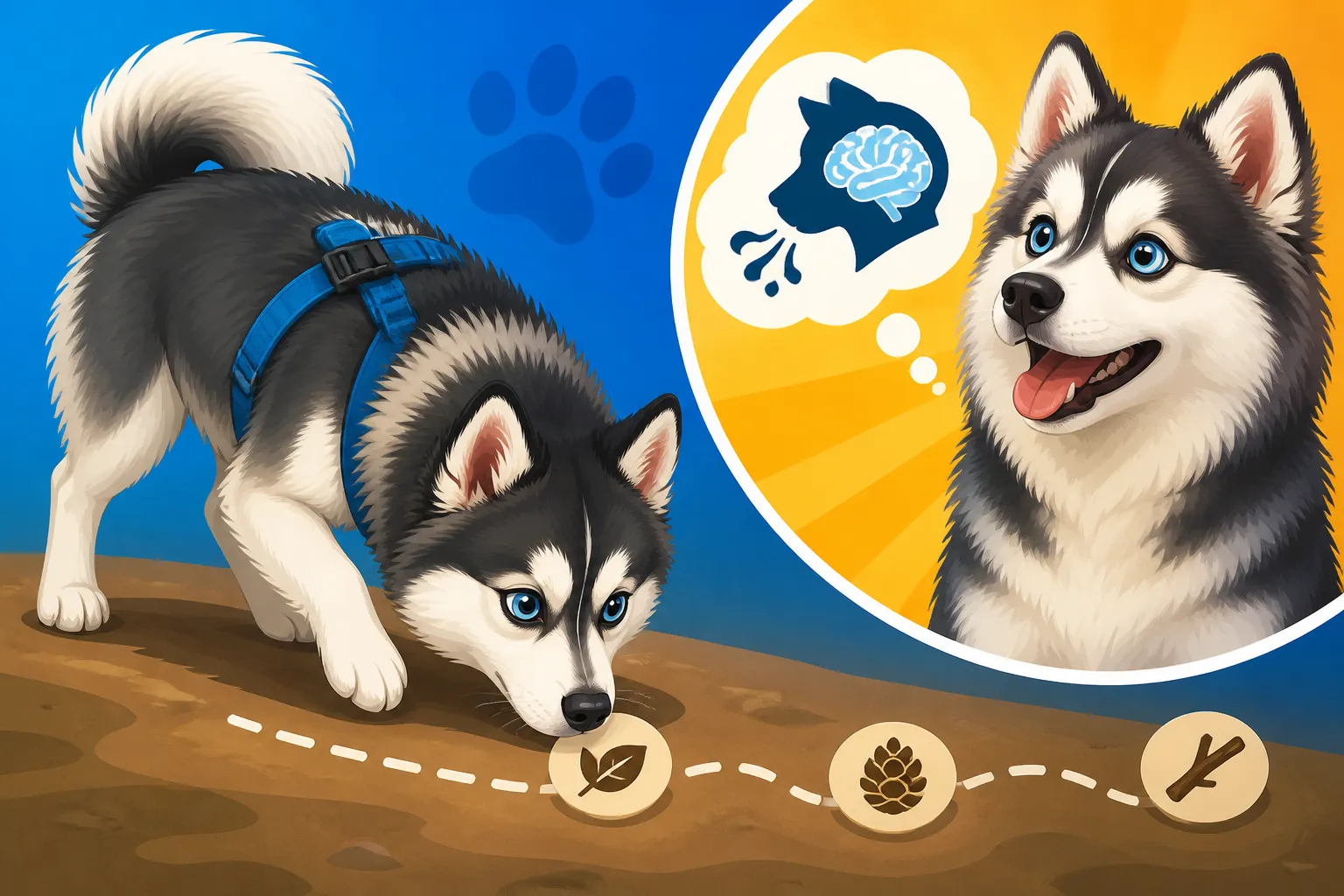
Scent work provides an unparalleled mental workout. It requires your dog to focus, discriminate between odors, and problem-solve to locate the target scent. This kind of intense concentration can be far more tiring than a long walk, helping to calm a busy brain and satisfy that inherent need to think and work. It's an activity that truly tires them out in a healthy, engaging way, preventing boredom and giving them a productive outlet for their intelligence. Many Pomsky owners find that once their dog learns to "work" for a scent, their overall demeanor is much more relaxed and content.
Getting Started: The Basics of Scent Work for Your Pomsky
Diving into scent work doesn't require fancy equipment or a professional trainer right away. You can easily start at home with everyday items, gradually introducing the concept to your Pomsky. The key is to make it a fun, positive experience that builds their confidence and drive.
Your First Steps: Introducing Target Odors and Hides
To begin, you'll need a "target odor." For beginners, this is usually a highly motivating treat. Think small, smelly, and delicious – bits of cheese, cooked chicken, or high-value training treats. Avoid using their everyday kibble at first, as you want to make this activity extra special.
Start by letting your Pomsky watch you place a treat under an overturned cup or in a small box. Say a command like "find it!" and let them immediately sniff out and eat the treat. Repeat this a few times, making it easy and ensuring success. As they get the hang of it, gradually increase the difficulty:
- Place several empty cups and one with a treat. Let them sniff to find it.
- Move the treat to a different room.
- Hide the treat in a slightly less obvious spot, like behind a chair leg or under a rug.
The goal is to teach them that following their nose leads to a reward. This early success is crucial for a breed that can sometimes be perceived as Whether a Pomsky Is Stubborn or Independent. Positive reinforcement and consistent rewards will keep them engaged. You can find simple scent work kits, often including essential oils like birch or anise, and small containers on platforms like Amazon, if you want to move beyond treats. Just remember to always dilute essential oils properly if you use them, following safety guidelines.
Building Complexity: Container, Interior, and Exterior Searches
Once your Pomsky understands the basic concept of finding a hidden treat, you can start introducing more structured "hides."
Container Searches: This involves placing your target odor (still a treat, or eventually a scent like birch or anise on a cotton swab) inside one of several identical containers, like cardboard boxes, plastic bins, or even paint cans. Arrange them in a line or circle and let your Pomsky search. When they indicate the correct container (by sniffing intensely, pawing, or lying down), reward them immediately. This teaches discrimination and focused searching.
Interior Searches: Move the game indoors to various rooms. Hide the target odor in different spots – on a chair, under a table, in a cupboard (make sure it's accessible and safe!). This teaches your Pomsky to ignore distractions and search a larger area. They learn to systematically clear an area, much like a detective searching a crime scene.
Exterior Searches: This is where the Husky's love for exploring and the Pomsky's boundless energy really shine. Take the game outside! Start in your fenced yard, hiding treats or scent articles near trees, bushes, or outdoor furniture. The added environmental distractions like wind, other smells, and varied terrain make it a more challenging and rewarding experience. For dogs with a strong desire to explore, this can be incredibly satisfying.
Remember to keep sessions short and fun, especially when your Pomsky is still learning. How Long a Pomsky Holds Concentration might not be very long at first, so brief, successful bursts are better than long, frustrating ones. It's often true that Whether Short Sessions Suit a Pomsky more than long, drawn-out training periods.
| Scent Work Type | Description | Pomsky Benefit | Starting Tip |
|---|---|---|---|
| Container Search | Finding a hidden scent in one of several identical containers. | Teaches focus, discrimination, and systematic searching. Great for building confidence. | Use treats under overturned cups, then add empty ones. |
| Interior Search | Locating scent in various spots within a room or house. | Improves problem-solving in a familiar environment, ignores distractions. | Hide a treat behind a door, under a cushion, or on a low shelf. |
| Exterior Search | Finding scent outdoors in a yard or park. | Engages natural foraging, builds stamina, handles environmental challenges (wind, diverse terrain). | Start in a small, low-distraction area like your own yard, near bushes or fences. |
Progressive Training and Utilizing Resources
As your Pomsky progresses, you can introduce actual "target odors" using essential oils (birch, anise, clove are common in canine nose work). These are much more subtle than food, requiring a finer level of discrimination. You'll place a tiny drop of the diluted oil on a cotton swab and hide it in a container or a designated spot. The reward then comes from you, not from eating the scent.
There are many fantastic resources available for continued learning. Online platforms like BAXTER & Bella offer virtual courses and trainers who can guide you through the intricacies of canine scent work, providing structured lessons and feedback. Books, local dog clubs, and experienced trainers are also invaluable. The key is consistency and making it an enjoyable partnership between you and your Pomsky. You'll be amazed at how quickly your smart companion picks it up!
Overcoming Pomsky-Specific Scent Work Challenges
While Pomskies are naturally inclined to enjoy scent work, their unique blend of traits can present a few specific hurdles. Understanding these challenges and knowing how to navigate them will set you up for success and keep frustration at bay.
The Independent Streak and Motivation
Both Huskies and Pomeranians have a strong independent streak, which means your Pomsky might not always be the most eager to please in a traditional sense. They can be incredibly smart – sometimes so much so that you feel Whether a Pomsky Is Too Smart for Its Owner – but they often need to be convinced that their effort is worthwhile. In scent work, this manifests as needing high-value motivation.
Don't be surprised if your Pomsky decides a particular hide isn't worth their time if the reward isn't exciting enough. Experiment with different treats or toys to find what truly drives them. Some Pomskies will work harder for a squeaky toy or a quick game of tug than for a piece of kibble. Keep the experience positive and end on a high note, even if it means making a hide easier. If they seem bored or give up quickly, it's a sign to reassess your reward system or the difficulty level. Remember, it should always feel like a fun game, not a chore.
Managing Distractions and Environment
The world is full of interesting smells, and for a dog with a powerful nose, it can be incredibly distracting. When training outdoors, you might find your Pomsky more interested in the squirrel that ran by, the patch of grass another dog peed on, or the leaf blowing across the yard. This is completely normal, especially given their Husky heritage with its strong prey drive.
To counter this, start training in low-distraction environments. Your quiet living room or a secluded corner of your backyard is ideal. Gradually introduce more distractions as your Pomsky gains confidence and skill. For example, if you're doing an exterior search, don't start with strong winds or areas where other dogs have recently been. Build up to it. If they get distracted, gently redirect them back to the task with your "find it" cue and lots of enthusiasm. Patience and consistency are your best friends here.
Over-Arousal and Frustration
Pomskies can be enthusiastic dogs, and sometimes that enthusiasm can tip into over-arousal or frustration if a task is too hard or they can't quite get to the reward. You might see them bark, paw excessively, or even try to chew the container the scent is in. This usually means the game is too difficult or they're not getting enough guidance.
If you notice signs of frustration, immediately simplify the task. Make the hide obvious, reward generously, and rebuild their confidence. It’s better to have many easy successes than a few frustrating failures. Teach a "reset" cue, like calling them back to you for a quick pet and then releasing them to search again. Keeping the energy light and fun will prevent them from associating scent work with stress. If you're working with essential oils, ensure the dilution is safe and the scent isn't overwhelming for their sensitive nose.
Advancing Your Pomsky's Scent Work Journey
Once your Pomsky has mastered the basics and you've navigated any initial challenges, you might find yourselves hooked! Scent work offers a vast landscape for continued learning and can even lead to competitive opportunities.
Beyond Treats: Essential Oils and Complex Hides
Moving beyond food rewards to specific essential oils (often birch, anise, and clove) is the next big step. This transition teaches your Pomsky to search for a particular odor regardless of whether it's associated with food. It requires them to truly discriminate between scents, making it a more sophisticated challenge. When introducing new oils, always do so separately and ensure you're using proper dilutions. Kits available on Amazon or through specialist pet supply stores often come with pre-diluted oils and instructions.
You can then start introducing "complex hides" where the scent is placed in challenging locations:
- Elevated Hides: On shelves, chair backs, or under tables.
- Buried Hides: Under a thin layer of blankets, leaves, or even a shallow amount of dirt in a designated digging area.
- Convergent Hides: Where two or more scents are hidden close together, and your dog must indicate only the target odor.
- Distraction Hides: Placing an appealing food item near a non-food target odor, requiring your Pomsky to ignore the food for the "correct" scent. This is where their focus really gets tested!
These advanced challenges truly tap into their innate problem-solving abilities and provide immense mental satisfaction for your bright Pomsky.
Exploring Competitive Scent Work and Nosework Trials
If you and your Pomsky are enjoying the journey, you might consider formal nose work or scent work trials. Organizations often host trials where dogs compete in various search categories (containers, interior, exterior, buried, vehicle searches) for different target odors. It's a fantastic way to see how far your Pomsky's skills have come and to meet other enthusiastic dog owners.
Participating in trials provides structured goals and can be incredibly rewarding. It’s not just about winning; it’s about the bond you build with your dog, the challenge of working together as a team, and celebrating their natural abilities. Many trainers offer classes specifically geared towards preparing for trials, helping you understand the rules and perfecting your Pomsky's "alert" or indication of a find. This can be a wonderful, lifelong hobby for both of you, providing ongoing engagement and strengthening your relationship.
Continuous Enrichment and Bonding
Ultimately, whether you compete or not, scent work is a phenomenal way to enrich your Pomsky's life and deepen your bond. It's an activity that honors their natural instincts, provides a healthy outlet for their intelligence and energy, and allows them to be the superstar detector dog they were born to be. The joy you'll see in their eyes when they successfully locate a hidden scent, the excited tail wags, and the contented sigh after a good "work" session are truly priceless.
Keep it fresh, keep it fun, and always remember to celebrate every success, no matter how small. Your Pomsky will thrive on the challenge and the shared experience, becoming a more confident, well-adjusted, and happy companion.
Disclaimer
This article is for general informational purposes only and does not constitute professional advice. Laws, prices and regulations vary by location and change over time. Consult a qualified professional for guidance on your specific situation.