Whether a Pomsky’s Coat Type Shows at Eight Weeks
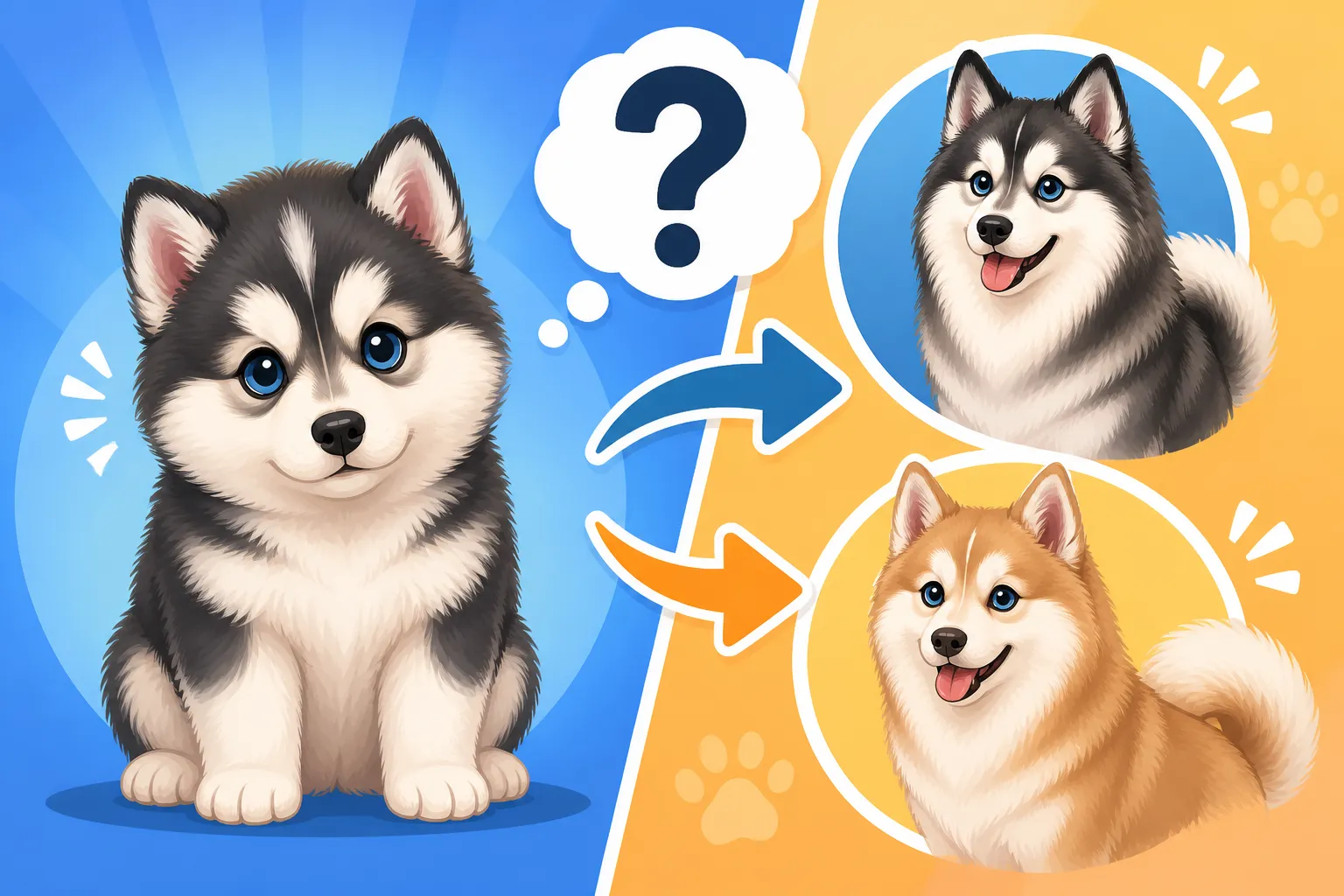
Bringing home a tiny Pomsky puppy is one of the most exciting times, but it often comes with a burning question: what will their adult coat actually look like? It's a common frustration for new owners, poring over photos and videos, trying to decipher if that eight-week-old fluffball is destined for a sleek Husky-like coat or a dense Pomeranian puff. This guide will dive deep into why predicting a Pomsky's adult coat type at such a young age is incredibly tricky, what you might be able to observe, and how these adorable pups develop their signature looks.
The Mystery of the Eight-Week Puppy Coat
When you pick up your eight-week-old Pomsky puppy, they're essentially a cloud of soft, downy fluff. This puppy coat is adorable, but it's a far cry from the dense, protective double coat they'll develop as adults. Many new owners mistakenly believe that what they see at eight weeks is a solid indicator of the future, leading to disappointment or surprise down the line. The truth is, a puppy's coat undergoes significant changes as they mature, influenced by genetics from both the Siberian Husky and the Pomeranian parents.
Why Puppy Coats are Unreliable Predictors
Think about human babies – they often have fine, wispy hair that bears little resemblance to their adult locks, if they even have hair at all. The same principle applies to Pomskies. Their puppy coat is designed for warmth and comfort during their early, rapid growth phase, not for insulation against harsh weather or for showcasing breed-specific characteristics. This means that an eight-week-old with a seemingly "short" coat could very well blossom into a magnificent wooly Pomsky, while a fluffy one might end up with a more standard, sleek appearance. It’s a genetic lottery that plays out over months, not weeks.
Moreover, the genetic expression for coat type can be complex in a hybrid breed like the Pomsky. You're combining genes from two distinct double-coated breeds, each with its own variations. A breeder might be able to offer an educated guess based on parentage and previous litters, but even then, nature loves to surprise. The initial puppy fluff simply doesn't contain all the information needed to reliably forecast the density, length, and texture of the adult guard hairs and undercoat.
The Role of Genetics in Pomsky Coat Development
Every Pomsky carries a unique blend of genes from its Husky and Pomeranian parents. Huskies are known for their dense, medium-length double coats designed for cold climates, while Pomeranians also sport a voluminous double coat with a stand-off appearance. The combination of these genes determines whether a Pomsky inherits a "standard," "wooly," or "short" coat. However, these genes don't fully express themselves immediately. Puppy coat development is a gradual process, often influenced by hormones and environmental factors as the dog grows.
For instance, some puppies might have a noticeable "fluff" gene that makes them appear extra puffy at a young age, but this doesn't guarantee a wooly adult coat. Conversely, a puppy with what seems like a very short coat could simply have less developed undercoat at eight weeks, and once those adult guard hairs come in and the undercoat thickens, it could be quite substantial. It's a testament to the complexity of canine genetics that what you see at eight weeks is merely the beginning of their coat journey. The Three Pomsky Coat Types delves into these variations in more detail, explaining how different genetic expressions lead to the diverse looks we see in adult Pomskies.
The Three Primary Pomsky Coat Types
While it's tough to predict at eight weeks, understanding the three main adult coat types a Pomsky can develop helps you manage expectations for the long run. These types differ significantly in appearance, texture, and grooming requirements, and a Pomsky can fall into any of these categories regardless of its puppy fluff.
Standard Coat: The Classic Look
The standard Pomsky coat is often what people envision when they think of a smaller Husky. This coat features a medium-length, straight outer coat (guard hairs) that lies relatively flat against the body, coupled with a soft, dense undercoat. It provides excellent insulation and protection, just like its Husky ancestor. The standard coat is incredibly functional, shedding water and dirt relatively easily, and offering protection in both warm and cold weather.
At eight weeks, a puppy destined for a standard coat might appear less fluffy than its wooly counterparts, but this isn't a hard and fast rule. Their puppy coat will still be soft and somewhat uniform. The key characteristic of the adult standard coat is its balance – neither excessively long nor exceptionally short, but perfectly proportioned for the breed's energetic lifestyle. The Standard Pomsky Coat provides a deeper dive into the characteristics and maintenance of this common coat type, which, despite its "standard" name, is still quite luxurious.
Wooly Coat: The Extra Fluff Factor
The wooly coat is perhaps the most sought-after and, paradoxically, often the least predictable from a young age. This type is characterized by significantly longer guard hairs and a much thicker, softer undercoat, giving the Pomsky a distinctly plush, teddy-bear-like appearance. While undeniably adorable, this coat demands a considerably higher level of grooming. The extended length and density make it prone to matting, especially behind the ears, under the legs, and around the tail.
For an eight-week-old puppy, identifying a future wooly coat can be difficult. Some breeders might notice a slightly longer, softer texture even at this young age, but it's not a guarantee. The true length and density often become apparent as the puppy's coat matures, typically between four to six months of age and beyond. Owners of wooly Pomskies quickly learn the importance of daily brushing and regular professional grooming to keep tangles and mats at bay. The Wooly Pomsky Coat and Its Upkeep offers essential advice for maintaining this beautiful but demanding coat.
Short Coat: The Low-Maintenance Option
Less common than the standard or wooly types, the short coat on a Pomsky is characterized by shorter guard hairs and a less dense undercoat. While still a double coat, it appears sleeker and lies even flatter against the body, resembling some types of Huskies that have a slightly shorter length. Owners often find this coat type easier to maintain due to its reduced propensity for matting and shedding (though it still sheds!).
Spotting a short-coated Pomsky at eight weeks is just as challenging as predicting the others. A puppy might have a finer, thinner coat initially, leading one to believe it will be short, only for it to fill out later. Conversely, a puppy that seems to have ample fluff might mature into a more streamlined short-coat. The main difference lies in the length and density of the adult guard hairs and undercoat, which isn't fully developed in a young puppy. Regardless of coat type, you'll still need quality grooming tools, and platforms like Amazon offer a wide range of brushes, combs, and deshedding tools suitable for any Pomsky coat.
| Coat Type | General Appearance (Adult) | Grooming Needs | Common Prediction at 8 Weeks |
|---|---|---|---|
| Standard | Medium-length, dense, lies flat | Moderate | Difficult to distinguish, appears "normal" |
| Wooly | Long, very dense, plush, fluffy | High | Sometimes slightly longer/softer fluff |
| Short | Shorter length, sleeker, less dense | Low to Moderate | Difficult to distinguish, can be misleading |
Subtle Clues That Might Emerge at Eight Weeks
While definitive prediction is often a pipe dream at eight weeks, there are some very subtle hints or trends that experienced breeders and keen-eyed owners might pick up on. These are not guarantees, but rather tendencies that could lean one way or another. It's important to approach these observations with a healthy dose of skepticism and understand that nature can always throw a curveball.
The Texture and Density of Puppy Fluff
One of the more nuanced clues might be found in the actual feel and density of the puppy's coat. A puppy that will grow into a wooly coat might have noticeably softer, more cotton-like fluff even at eight weeks, and perhaps a slightly thicker feel to the overall coat when you run your hands through it. In contrast, a puppy destined for a standard or shorter coat might have a slightly firmer texture to its puppy coat, with the hairs feeling a bit more defined.
However, this is incredibly subjective and can vary greatly from litter to litter, and even within the same litter. What feels "thicker" to one person might just feel like normal puppy fluff to another. Environmental factors, puppy nutrition, and even how recently the puppy was bathed can influence the perceived texture. It's less about a clear visual difference and more about a subtle tactile sensation that comes with experience.
Observing Parent Coats and Previous Litters
The most reliable indicator, even when looking at an eight-week-old, comes from knowing the parents' coat types and observing previous litters from the same pairing, if available. If both the Husky and Pomeranian parents have a specific coat type that tends to produce wooly offspring, there's a higher probability that the current litter will also have wooly pups. A reputable breeder will be transparent about the parent dogs' coats and their history of producing different coat types.
Of course, genetics aren't always a simple 50/50 split. A standard-coated parent and a wooly-coated parent can still produce a mix of coat types in their offspring, making prediction a fun guessing game even for the experts. Still, having access to the parental lineage and understanding their genetic contributions offers the best possible insight into what your puppy's coat might become. This is why choosing a reputable breeder who understands Pomsky genetics is so crucial.
The Evolution of a Pomsky's Coat: Beyond Eight Weeks
A Pomsky's coat is a living, breathing entity that changes significantly throughout its first year and continues to evolve thereafter. The eight-week mark is just the beginning of its journey, and understanding this progression is key to appreciating your dog's unique development.
The Puppy Coat "Blow" and Adult Coat Development
Around four to six months of age, many Pomsky puppies go through what's often referred to as a "puppy coat blow." This is similar to how adult Pomskies "blow" their undercoat seasonally. During this phase, the soft, fine puppy fur is shed to make way for the denser, more mature adult coat. This can be a surprisingly intense shedding period, and suddenly your cute, fluffy puppy might look a bit scraggly or patchy as the new coat comes in.
It's during this transition that the true adult coat type starts to reveal itself. The guard hairs will begin to lengthen and become coarser, and the undercoat will thicken. A puppy that seemed to have a modest coat at eight weeks might suddenly start to sprout a magnificent dense undercoat, or conversely, a very fluffy puppy might settle into a more sleek, standard coat. This period is a prime example of why early predictions are so difficult. Be prepared with good grooming tools from Chewy, like an undercoat rake and slicker brush, because regardless of coat type, that puppy blow is coming! Whether a Pomsky Puppy's Fluff Predicts the Adult Coat explores this topic further, debunking common myths.
Factors Influencing Coat Maturation
Beyond genetics, several factors can influence how a Pomsky's coat matures. Nutrition plays a vital role. A high-quality diet, rich in essential fatty acids and proteins, supports healthy skin and a lustrous coat. Cheap fillers or an imbalanced diet can lead to dull, brittle fur or excessive shedding. Brands like Ollie, known for their fresh, human-grade ingredients, could potentially contribute to optimal coat health, providing the building blocks for a strong, vibrant adult coat.
Environmental factors also play a part. Regular grooming, including brushing and bathing, stimulates hair follicles and helps maintain coat health. Even exposure to sunlight can influence coat color and health. A Pomsky's coat often continues to thicken and develop in density and texture well into its second year. Whether a Pomsky's Coat Gets Thicker With Age offers insights into this ongoing maturation process, explaining how the coat continues to develop long after puppyhood.
Embracing the Journey: Caring for Your Pomsky's Developing Coat
Since definitive coat type prediction at eight weeks is more art than science, the best approach is to prepare for all possibilities and embrace the uniqueness of your Pomsky. Regardless of the final coat, all Pomskies require diligent care to keep their double coats healthy and beautiful.
Essential Grooming for All Pomsky Coats
Every Pomsky, from the short-coated to the wooly-coated, possesses a double coat that needs consistent attention. This means regular brushing to remove loose undercoat, prevent mats, and distribute natural oils. During seasonal "blowouts" – when they shed their entire undercoat in preparation for new growth – grooming needs intensify dramatically. This typically happens twice a year, in spring and fall, but shedding can occur year-round to some extent. The Pomsky That Carries a Husky Coat at Twenty Pounds reminds us that even smaller Pomskies can have substantial double coats.
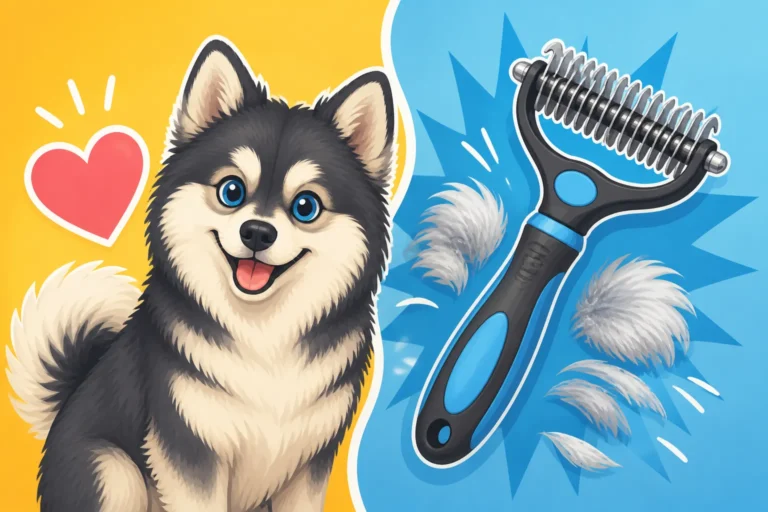
Investing in the right tools from the start will make your life much easier. A good quality undercoat rake, a slicker brush, and a sturdy metal comb are indispensable. Many owners also find a high-velocity force dryer to be a game-changer, especially for wooly coats, as it helps blast out loose fur after a bath and reduces drying time significantly. These tools can be easily found on platforms like Chewy or Amazon, making it convenient to stock up. Starting grooming habits early, even before the adult coat fully emerges, helps your puppy become comfortable with the process.
Managing Expectations and Celebrating Individuality
The initial excitement of guessing your Pomsky puppy's adult coat type is understandable, but it's important to manage those expectations. The reality is that the eight-week-old fluffy ball is just that – a puppy. Their coat, like their personality, will evolve over time, sometimes in unexpected ways. Rather than focusing on a specific outcome, revel in the journey of watching your Pomsky grow and develop its unique appearance.
Whether your Pomsky ends up with a sleek standard coat, a luxurious wooly mane, or a practical short coat, they will still be your beloved companion. Each coat type comes with its own set of grooming requirements and characteristics, but all contribute to the charm and beauty of the breed. Focusing on overall health, proper nutrition, and consistent grooming will ensure your Pomsky's coat, whatever its final form, remains healthy and vibrant throughout their life.
Disclaimer
This article is for general informational purposes only and does not constitute professional advice. Laws, prices and regulations vary by location and change over time. Consult a qualified professional for guidance on your specific situation.