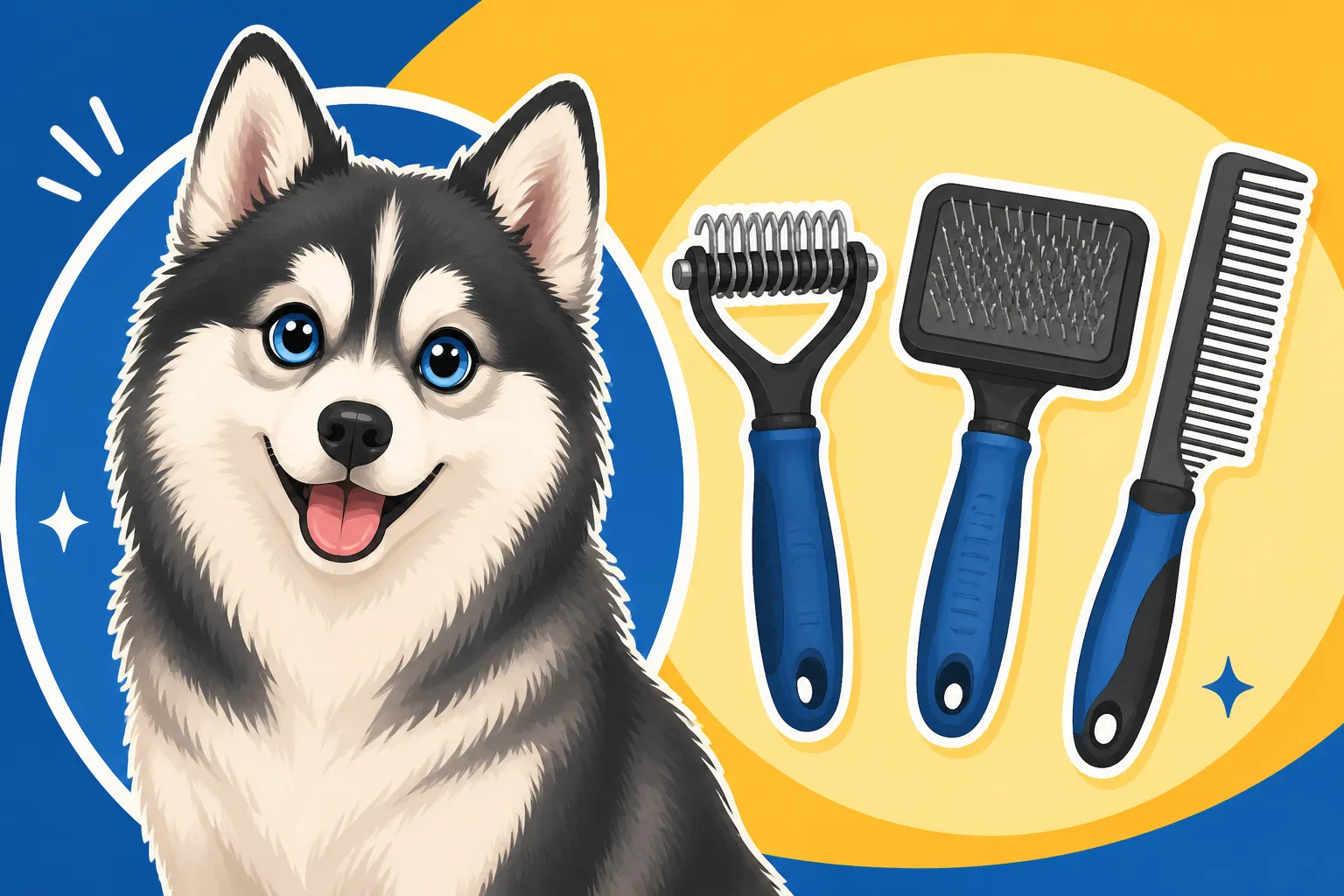
The Rake, Slicker and Comb a Pomsky Needs
If you've ever owned a Pomsky, or are just dreaming of bringing one home, you're probably already bracing yourself for the reality of that gorgeous, fluffy coat. It's truly stunning, but let's be honest, it's also a full-time job. Many new Pomsky parents find themselves completely overwhelmed by the sheer volume of hair and the seemingly endless shedding, not to mention the challenge of keeping it healthy and mat-free. This guide is here to cut through the confusion and help you equip yourself with the absolute essential grooming tools every Pomsky owner needs to keep their furry companion looking its best and feeling comfortable.
Understanding Your Pomsky's Unique Coat
Before we dive into the tools, it's crucial to truly understand the canvas you're working with: your Pomsky's coat. This isn't just any dog coat; it's a magnificent, albeit demanding, blend of its Husky and Pomeranian heritage. Without this fundamental understanding, even the best tools will feel like fighting an uphill battle.
The Double-Coated Marvel
The Pomsky is a proud bearer of a dense, insulating double coat. This isn't merely two layers of fur; it's a sophisticated natural climate control system. The outer layer consists of longer, coarser guard hairs that are designed to repel water, dirt, and protect against UV rays. They give your Pomsky that beautiful, structured look. Underneath, lies the real secret weapon: a soft, downy undercoat that is incredibly dense and provides insulation against both extreme cold and heat. It's this undercoat that does the heavy lifting when it comes to keeping your Pomsky comfortable in various temperatures, and it's also the layer that causes the most grooming headaches.
The problem, as many Pomsky owners quickly discover, is that this fluffy undercoat sheds, and it sheds a lot. Twice a year, your Pomsky will go through what's known as a "coat blow" or "blowing its coat," where vast amounts of this undercoat are released to make way for new growth better suited to the upcoming season. During these times, you'll literally find tumbleweeds of fur floating around your house. But even outside of these major seasonal events, they have a continuous low-level shed. Proper grooming isn't just about aesthetics; it's vital for their health. Matted undercoat can trap moisture, lead to skin irritations, and prevent proper air circulation, making your dog uncomfortable and susceptible to skin issues. You can learn more about this by reading The Pomsky That Carries a Husky Coat at Twenty Pounds.
Identifying Your Pomsky's Coat Type
While all Pomskies have a double coat, the exact texture and density can vary, largely depending on which parent breed's genes were more dominant in the coat department. Generally, there are a few common coat types you might encounter. Understanding which one your Pomsky has will slightly influence your grooming routine and tool selection.
Some Pomskies inherit a more "standard" Husky-like coat: thick, straight guard hairs with a dense but manageable undercoat. Others might lean towards the "wooly" side, characterized by a much longer, softer, and incredibly dense undercoat that can feel almost cotton-like. Then there are those with a "short" coat, which still has a double layer but with shorter guard hairs, making it appear less fluffy. The wooly coat, while stunning, is often the most prone to matting and requires the most diligent grooming. Breeders can often give you an idea of your puppy's potential adult coat, but sometimes you just have to wait and see how it develops. You can read more on this topic in The Three Pomsky Coat Types.
Knowing your Pomsky's specific coat type will help you anticipate challenges and choose the most effective grooming strategy. For instance, a wooly-coated Pomsky might need daily brushing, especially during a coat blow, whereas a standard coat might get by with a few times a week. The goal remains the same: keep that undercoat healthy, flowing, and free from mats, which also helps to manage the shedding around your home.
Essential Brushes for Everyday Grooming
Alright, now that we understand the glorious beast that is the Pomsky coat, let's talk about the absolute workhorse tools you'll be reaching for constantly. These aren't fancy gadgets; they're the foundational items for maintaining that beautiful fur.
The Mighty Undercoat Rake
If you own a double-coated breed like a Pomsky, the undercoat rake isn't just a suggestion; it's a non-negotiable part of your grooming arsenal. This tool is specifically designed with long, blunt teeth that are spaced far enough apart to penetrate the thick topcoat and reach deep into the dense undercoat without damaging the guard hairs. Its primary job is to loosen and remove all that loose, dead undercoat before it can form mats and tangles. Trust me, you'll be amazed (and possibly horrified) by the amount of fur this tool can extract, especially during shedding season. This is the tool for which The Undercoat Rake a Pomsky Owner Lives With was written.
Using an undercoat rake effectively requires a gentle but thorough approach. Always brush in the direction of hair growth, starting from the neck and working your way down the back, sides, and legs. Pay particular attention to areas where matting is common, such as behind the ears, under the armpits, and around the "pants" on their hind legs. You don't want to pull at the skin, so use short, careful strokes. If you hit a snag, don't yank; gently work it out with your fingers or a comb first. During a coat blow, you might find yourself raking your Pomsky daily, and even outside of these periods, a weekly session is highly recommended to keep shedding at bay and prevent serious matting. It's truly your best defense against the dreaded fur-nado. You can find a wide variety of effective undercoat rakes on platforms like Chewy, with different tooth lengths and designs to suit various coat densities.
The Versatile Slicker Brush
While the undercoat rake is for the deep work, the slicker brush is your all-rounder, great for general grooming, smoothing the topcoat, and tackling minor tangles. A slicker brush typically has a flat or curved head covered in fine, short, wire bristles that are angled to prevent scratching the skin. It’s perfect for fluffing up the coat, distributing natural oils, and removing surface debris.
After a session with the undercoat rake, following up with a slicker brush can help pick up any remaining loose hairs and leave the topcoat looking shiny and well-groomed. It’s also excellent for gently working through any smaller mats or tangles on the outer coat that weren't deep enough for the rake. When using a slicker brush, use light, gentle strokes. While the bristles are angled, too much pressure can still irritate your Pomsky's skin. Many Pomsky owners use this brush a few times a week for quick tidying up, or daily for those with woolier coats that tend to tangle more easily. It helps ensure that both layers of the coat are free of minor snags and that your Pomsky always looks presentable, not just after a full deshedding session.
Specialty Tools for Specific Needs
Beyond the daily essentials, there are a few other tools that every Pomsky owner will find invaluable for those trickier spots or during intense shedding periods. These aren't always used daily, but when you need them, you really need them.
The Indispensable Metal Comb
Think of the metal comb as your detail-oriented finishing tool and your mat-detection system. After you've gone through the coat with your rake and slicker brush, a good sturdy metal comb, preferably one with both wide and narrow-set teeth, is essential for checking your work and tackling stubborn tangles. The wider teeth are great for initial detangling, while the finer teeth can ensure you've truly removed all the loose undercoat and prevented small mats from forming close to the skin.
The comb is particularly useful in delicate or hard-to-reach areas where a larger brush might be too cumbersome or too harsh. These include behind the ears, armpits, tail, and the feathery fur on their legs. Gently work through these areas, section by section. If the comb glides through smoothly without snagging, you know you've done a good job with your brushing! If it snags, that's your cue to go back with a brush or your fingers and carefully work out the tangle. Using a metal comb regularly is a fantastic way to stay on top of potential matting before it becomes a painful problem for your Pomsky. You can easily pick up quality metal combs from online retailers like Amazon, often available in sets with varying tooth densities.
Deshedding Tools and Their Place
Deshedding tools, often characterized by a fine-toothed blade designed to grab and remove loose undercoat, can be very effective, but they must be used with extreme caution on a Pomsky. While they promise to drastically reduce shedding, overuse or incorrect use can actually cut and damage the guard hairs, leading to coat thinning, texture changes, or even "clipper alopecia" if the underlying skin is scraped. For double-coated breeds like Pomskies, preserving the integrity of the guard hairs is paramount for their natural insulation and protection.
If you choose to use a deshedding tool, do so sparingly and follow the instructions carefully. Only use it on a clean, dry, and thoroughly brushed coat, focusing on areas with a heavy undercoat buildup, typically during the peak of a coat blow. Use very light, short strokes, and stop immediately if you see any irritation or if the tool feels like it's pulling. Many professional groomers prefer using a high-velocity force dryer and a good undercoat rake for deshedding a Pomsky, as these methods are generally safer for maintaining the coat's health. For a full breakdown of the shedding cycle, check out When a Pomsky Blows Its Coat.
Here's a quick comparison of essential grooming tools:
| Tool | Primary Purpose | Best For | Frequency | Key Benefit |
|---|---|---|---|---|
| Undercoat Rake | Removing loose undercoat | Deep deshedding, preventing mats | 1-3 times weekly, daily during coat blow | Gets deep, preserves guard hairs |
| Slicker Brush | Smoothing topcoat, light detangling | General tidying, distributing oils | Daily to a few times weekly | Fluffs, shines, handles minor tangles |
| Metal Comb | Detail work, mat detection, finishing | Behind ears, armpits, tail, checking work | After brushing, as needed for tangles | Precision, ensures full mat removal |
| Deshedding Tool | Reducing extreme shedding (use caution!) | Intensive undercoat removal (sparingly) | Bi-annually during heavy coat blows (with care) | Can remove large amounts of loose hair quickly |
| Force Dryer | Drying, blowing out undercoat | Post-bath drying, deshedding aid | After baths, during coat blow for efficiency | Powerful, dries to the skin, aids deshedding |
The Importance of a Force Dryer
This might seem like an unusual item to list under "brushes and combs," but for a double-coated breed like a Pomsky, a high-velocity force dryer is arguably one of the most critical grooming "tools" you can own. It's not just for drying; it's a game-changer for deshedding and coat health.
Why Air Drying Isn't Enough
Many new Pomsky owners make the mistake of thinking their dog can just "air dry" after a bath, especially in warmer weather. This is a significant misconception that can lead to serious coat and skin problems. A Pomsky's dense double coat, particularly the undercoat, holds moisture incredibly well. If the undercoat isn't completely dried to the skin, it creates a damp, warm environment that is a breeding ground for bacteria and yeast. This can quickly lead to painful hot spots, skin infections, and a lingering "doggy smell" that no amount of shampoo can truly mask. Plus, a damp undercoat is far more prone to matting as the wet hairs clump together and then dry in tangles, which are incredibly difficult and uncomfortable to remove.
A high-velocity force dryer blasts air through the coat, separating the individual hairs and effectively drying the undercoat right down to the skin. It ensures thorough drying, preventing those moisture-related issues, and is also much quicker than towel drying or using a regular human hairdryer (which can be too hot and burn their skin). Ensuring your Pomsky is fully dry is a huge part of proper coat care, making baths truly beneficial rather than potentially problematic. Learn more about drying methods in Drying a Pomsky to the Skin.
Making Drying a Positive Experience
Introducing your Pomsky to a force dryer should be a gradual, positive experience. The sound can be intimidating for some dogs, and if they've never been exposed to it, they might be scared. Start by simply turning the dryer on in another room so they can get used to the noise from a distance, offering treats and praise. Gradually move the dryer closer, always keeping it pointed away from them at first.
When you begin drying, start on a low setting and use the cool or warm (not hot!) air setting. Focus on their back or sides first, avoiding their face and sensitive areas initially. Many dogs tolerate having their body dried much better than their head. Keep sessions short and always pair the dryer with high-value treats and calm, reassuring words. With patience and positive reinforcement, most Pomskies can learn to tolerate, and some even enjoy, the feeling of the dryer, especially once they associate it with feeling clean and knot-free. A force dryer is also amazing for blowing out loose undercoat even when your Pomsky isn't wet, making deshedding sessions much more efficient and reducing the amount of fur around your home during shedding season. This can significantly reduce shedding and make your regular brushing much more effective. For tips on acclimatization, see Getting a Pomsky Used to a Force Dryer.
Grooming Schedules and Best Practices
Having the right tools is only half the battle; knowing when and how to use them is just as important. Developing a consistent grooming routine will save you a lot of headaches and keep your Pomsky happy and healthy.
Daily Maintenance Versus Deep Dives
For most Pomskies, a regular maintenance schedule is key. This typically means a quick brush a few times a week with a slicker brush to smooth the topcoat and catch surface tangles. However, for those with woolier coats, or during periods of intense activity where they might pick up burrs or debris, daily brushing might be necessary. This daily habit should also include a quick check behind the ears and under the legs for developing mats.
Then there are the "deep dives." These are your thorough deshedding sessions, usually involving the undercoat rake and the metal comb, ideally after a bath and a full force-dry. These deep dives should occur roughly every 1-2 weeks, depending on your Pomsky's individual shedding level and coat type. During a major coat blow, which can last several weeks in spring and fall, these deep dives might need to be ramped up to once or twice a week. You'll literally be pulling out handfuls of undercoat, but it's crucial work to prevent matting and keep their skin healthy. A regular grooming schedule, even if it's just 10-15 minutes every other day, is much easier and less stressful for both you and your Pomsky than trying to detangle a matted mess once a month.
When to Seek Professional Help
Even with the best tools and a diligent routine, there might be times when calling in a professional groomer is the best course of action. This is especially true if you encounter mats that are too tight or painful to remove yourself, or if your Pomsky is particularly resistant to grooming. A professional groomer has specialized tools, techniques, and experience with double-coated breeds, and they can often demat a coat safely and efficiently without resorting to shaving.
Consider a professional groom every 6-8 weeks, especially if your Pomsky is on the woolier side or prone to significant shedding. During these sessions, groomers can provide a thorough deshedding bath, blow-out, and trim if needed (always discuss this beforehand, as shaving a Pomsky is generally discouraged due to potential coat damage – read Why a Pomsky Must Never Be Shaved). They can also check for skin issues, trim nails, and clean ears – all those things that contribute to your Pomsky's overall well-being. Think of it as a pampering spa day that keeps your Pomsky healthy and makes your home life a lot less hairy! Investing in professional help can ultimately save you time, stress, and potential vet bills from untreated skin conditions.
Disclaimer
This article is for general informational purposes only and does not constitute professional advice. Laws, prices and regulations vary by location and change over time. Consult a qualified professional for guidance on your specific situation.