Car Travel With a Pomsky
Hitting the road with your beloved Pomsky can be a truly wonderful experience, creating memories that last a lifetime. However, many of us, myself included, have faced the reality of a dog who isn't quite as thrilled about car journeys as we are. From nervous panting to outright car sickness or even the sheer energy of a Pomsky making the ride a chaotic affair, traveling with your furry co-pilot can be a challenge. This guide is here to help you navigate those bumps in the road, ensuring both you and your Pomsky have a smoother, safer, and much more enjoyable journey, no matter the distance.
Preparing Your Pomsky for Car Journeys
Getting your Pomsky comfortable with car travel isn't usually something that happens overnight, especially if they haven't had much exposure as a puppy. It's a gradual process that involves positive associations and slowly increasing their exposure. Think of it like teaching a child to enjoy broccoli – small, positive steps often work better than a forced marathon.
Desensitization and Positive Association
The key here is to make the car a happy place, not just a means to an end. Start by simply letting your Pomsky explore the car while it's parked and turned off. Open the doors, let them sniff around, jump in and out on their own terms. Praise them gently and offer high-value treats. You can even feed them a meal or play a short game inside the stationary car. The goal is for them to associate the car with good things happening. If they're hesitant, don't force them. Just sit in the open car yourself and let them come to you.
Once they're comfortable just being in the car, try turning the engine on for a few minutes while still parked. The sounds and vibrations can be a new experience for them, so keep it short and positive. Continue with treats and praise. Only when they seem relaxed with the engine running should you move on to very short trips. We're talking about a quick drive down the driveway and back, or around the block. Keep these initial trips super brief and always end them with something enjoyable, like a walk in a favorite park or a special treat at home. This helps build the anticipation of good things happening after the car ride, too.
Gradual Exposure to Longer Distances
As your Pomsky grows more accustomed to short jaunts, gradually increase the duration and distance of your trips. Instead of just around the block, try a five-minute drive to a local pet store for a new toy, or a ten-minute trip to a hiking trail. The destination should always be positive, reinforcing that car rides lead to fun adventures. Always be mindful of their body language. Are they panting excessively? Are they drooling? Whining? These are signs of stress or potential car sickness. If you notice these, scale back to shorter trips and consult your vet.
It's also important to practice restraint from day one. Even on short trips, your Pomsky should be secured. This not only keeps them safe in case of a sudden stop but also prevents them from becoming a dangerous distraction to you, the driver. You can find various car safety harnesses or travel crates that buckle into seatbelts on platforms like Chewy or Amazon. Getting them used to their designated travel spot, whether it's a Whether a Pomsky Needs a Crate at Night or a secure harness, is a vital part of preparing them for travel.
Essential Gear for Safe and Stress-Free Car Travel
Traveling safely with your Pomsky means having the right equipment. This isn't just about comfort; it's about protecting your dog and yourself in case of an accident. A loose Pomsky, even a small one, can become a projectile or a dangerous distraction.
Proper Restraint: Harnesses, Carriers, and Crates
Choosing the right restraint depends on your Pomsky's size, temperament, and your personal preference. For some, a sturdy travel crate is the best option. Crates provide a secure, den-like space where many dogs feel safe and contained. They should be sized appropriately so your Pomsky can stand, turn around, and lie down comfortably, but not so large that they can be tossed around inside. Many modern travel crates are designed to be secured by seatbelts or come with integrated anchoring systems.
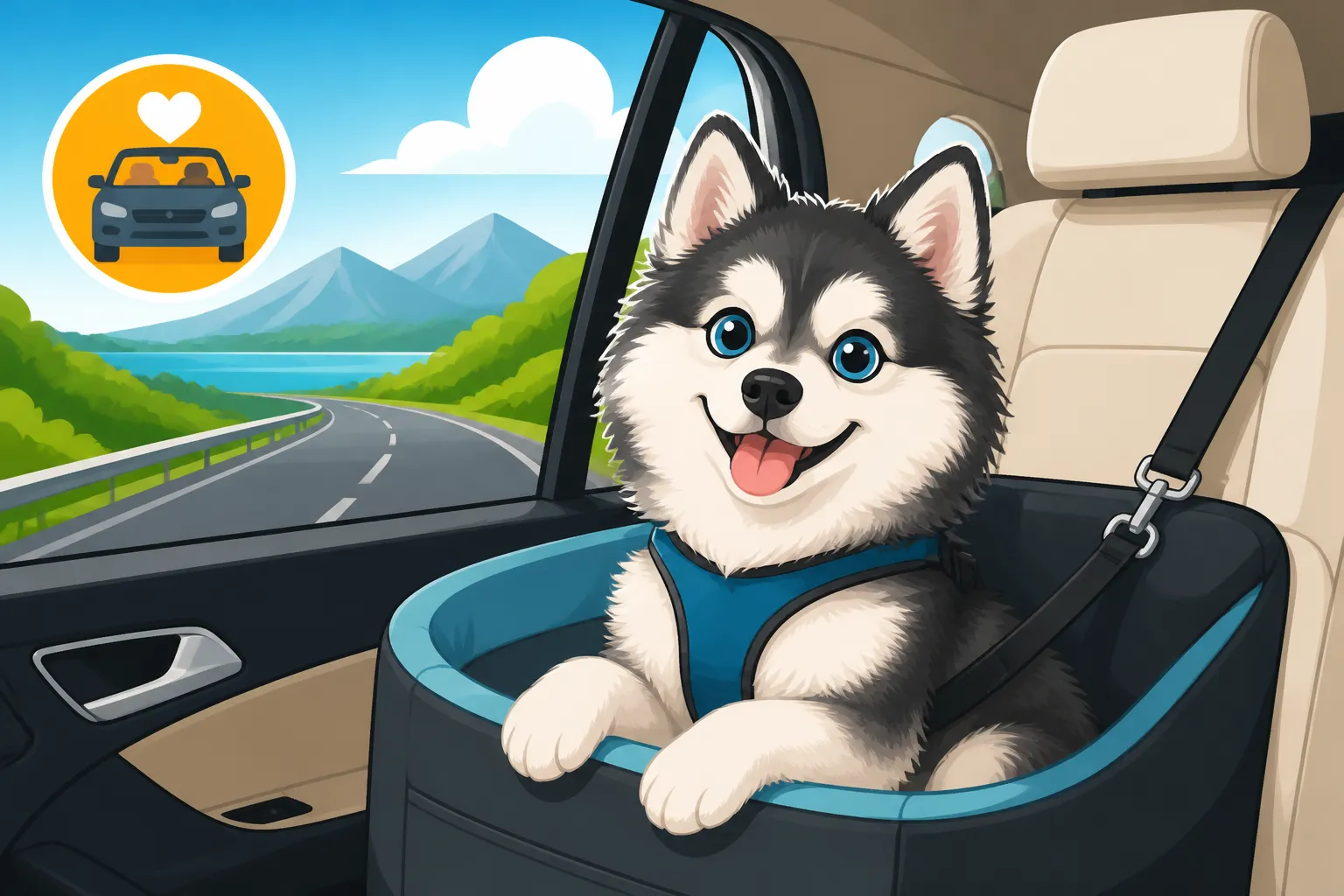
Alternatively, a car safety harness that clips into a seatbelt is a popular choice for dogs who prefer to see out the window or lie on the seat. It’s crucial to use a harness specifically designed and crash-tested for car safety, not just a walking harness. These are often padded and distribute force across the chest if there’s a sudden stop, protecting your Pomsky's neck and spine. Always pair it with a seatbelt attachment that limits their range of motion, preventing them from interfering with your driving. For smaller Pomskies, a booster seat that elevates them to see out the window might be an option, but these must still include a secure harness attachment.
| Restraint Type | Pros | Cons | Best For | Safety Notes |
|---|---|---|---|---|
| Crash-Tested Harness | Allows dog to sit/lie on seat; often gives view outside; relatively less bulky | Must be crash-tested (not all are); can still allow some movement; may not prevent distraction | Dogs prone to car sickness (can see out); dogs who prefer closeness; shorter trips | Always use with a short, secure seatbelt attachment. |
| Travel Crate (Hard-Sided) | Excellent protection in impact; provides den-like security; easy to clean | Can be bulky; may block view for some dogs; some dogs dislike confinement | Anxious travelers; escape artists (The Pomsky Escape Artist in a Twenty Pound Body); long trips | Must be securely anchored to prevent shifting/toppling. |
| Travel Crate (Soft-Sided) | Lighter, foldable, easy to store; often comfortable | Less impact protection than hard crates; not suitable for chewers/diggers | Calm, crate-trained dogs; short trips; not for serious accidents | Must be secured, but offers limited crash protection. |
| Booster Seat (with Harness) | Elevates small dogs for outside view; comfortable | Only for small dogs; harness attachment is crucial; not crash-proof | Small, calm Pomskies; dogs who enjoy looking out | Harness must be independently secure to the car, not just the booster. |
Comfort and Convenience Items
Beyond safety, consider what makes the journey comfortable for your Pomsky. A favorite blanket or bed from home can provide a familiar scent and a comfortable resting spot, especially for a Pomsky who Whether a Pomsky Suffers Separation Anxiety. Bring plenty of fresh water and a travel bowl. Collapsible silicone bowls are fantastic for this, easy to pack and clean, and readily available from places like Chewy. I always keep a dedicated car kit stocked with these essentials, plus a roll of poop bags and some paper towels for any unexpected clean-ups.
For longer trips, don't forget their food! If your Pomsky is on a fresh food diet like Ollie, ensure you have a cooler to keep it fresh. Otherwise, pre-portion their kibble for easy feeding at rest stops. Chew toys or puzzle toys can also be great for keeping them occupied and reducing anxiety during the ride, especially if you have a Pomsky who tends to get bored easily. Just make sure the toys are safe for car use and won't become a choking hazard or roll under your feet while driving.
Dealing with Car Sickness and Anxiety
One of the biggest hurdles for many Pomsky owners is dealing with car sickness or overwhelming anxiety during travel. It's heartbreaking to see your dog miserable, and it makes every trip a stressful ordeal for everyone. But take heart, there are many strategies to help.
Recognizing and Preventing Car Sickness
Car sickness in dogs often manifests as excessive drooling, licking lips, yawning, restlessness, whining, or even vomiting. It's usually caused by a disconnect between what their eyes see and what their inner ear senses, similar to motion sickness in humans. Puppies are often more susceptible than adult dogs.
Prevention starts with the desensitization steps we discussed earlier – making car rides short and positive. Avoid feeding your Pomsky a large meal right before a car trip. A light snack or an empty stomach is often best. Ensure good ventilation in the car; fresh air can make a big difference. For dogs who get sick looking out the window, a crate can sometimes help by limiting visual stimuli. Conversely, for others, seeing out helps orient them, so a booster seat might be better. Discuss preventative medications with your veterinarian. They can prescribe anti-nausea medications that can significantly reduce symptoms for dogs with severe car sickness, making travel much more comfortable for them.
Calming Techniques for Anxious Travelers
Anxiety in the car can manifest as panting, trembling, whining, pacing, or even destructive behavior. For these Pomskies, the fear isn't necessarily about getting sick, but about the car itself or the unknown destination. Again, positive reinforcement is your best friend. Make sure those short trips always end somewhere fun. Never use the car only for trips to the vet or groomer; mix in trips to the park or a friend's house.
Sometimes, a thundershirt or calming wrap can provide a sense of security for anxious dogs. Pheromone sprays designed for dogs, available from retailers like Amazon, can also be used in the car or on their bedding to create a calming environment. Natural calming supplements, often containing ingredients like L-theanine or chamomile, are another option to discuss with your vet before trying. For severe anxiety, your vet might suggest anti-anxiety medication, particularly for long journeys, to help your Pomsky relax. It's about finding the right combination that makes them feel safe and at ease. Remember, a well-exercised Pomsky is often a calmer Pomsky, so a good run or vigorous play session before a trip can sometimes help too. The Exercise a Pomsky Needs Every Day is vital for their overall well-being and can certainly contribute to calmer car rides.
Long Road Trips with Your Pomsky
Taking your Pomsky on an extended adventure requires a bit more planning than a quick trip to the vet. You're essentially packing for two (or more!), and considering their needs becomes paramount for a smooth journey.
Strategic Rest Stops and Potty Breaks
When planning a long drive, factor in frequent stops. For a Pomsky, this means a break every 2-3 hours, at minimum. These aren't just for potty breaks for your dog; they're essential for them to stretch their legs, sniff around, and burn off some pent-up energy. Find safe, grassy areas away from heavy traffic. Always keep your Pomsky leashed and harnessed at rest stops. Their natural curiosity and high prey drive can make them bolt if startled or if they spot a squirrel. Remember, Whether a Pomsky Runs If a Door Opens can be a serious concern, so never underestimate their ability to make a quick exit. A secure harness and leash are non-negotiable.
Offer water during these stops, even if they don't seem thirsty. Dehydration can happen quickly, especially in warmer weather. A short walk or a quick game of fetch (if appropriate for the area and safe) can help them relax and be more settled for the next leg of the journey. Consider bringing a long line if you find a safe, open area where they can explore a bit more without being fully off-leash.
Feeding Schedules and Hydration on the Go
Maintaining a consistent feeding schedule is important, but you might need to adjust it slightly for car travel. As mentioned, avoid large meals immediately before a drive, but don't let them go too long without food, especially if they are prone to Whether a Pomsky Puppy Crashes on Blood Sugar. Small, regular meals are often better than one big one. If you're using a specific food, ensure you pack enough for the entire trip, plus a little extra, just in case. Platforms like Chewy make it easy to order travel-sized versions of their regular food or specific treats you know they love.
Hydration is crucial. Always have fresh water readily available. I even keep a small cooler with ice water in the car during summer trips to ensure it stays refreshingly cool for my Pomsky. If you're staying at hotels or rental properties, research their pet policies beforehand. Some places offer dog bowls, but it’s always best to bring your own familiar bowls to help your Pomsky feel more at home. Having all their familiar items helps them cope with the new environments and changes in routine. What a Pomsky Needs Daily includes consistency, and that extends to travel.
Overnight Stays and New Environments
When you're on a multi-day trip, your Pomsky will need a comfortable and safe place to sleep. Many hotels now welcome pets, but it's essential to check their specific rules, fees, and any weight/breed restrictions beforehand. Bringing their own bed or a familiar blanket can help them settle into a new room more easily. For their safety and to respect hotel policies, it's often best to crate them when you leave the room, even for short periods. This also minimizes the chance of them getting into trouble in an unfamiliar space.
Introduce them to the new environment gradually. Take them for a walk immediately upon arrival to let them explore and relieve themselves. Keep their routine as normal as possible – feeding times, potty breaks, and playtime. Remember, even a small shift in their environment can be a big deal for a dog. Your patience and preparation will go a long way in making long road trips with your Pomsky not just manageable, but truly enjoyable for both of you.
Disclaimer
This article is for general informational purposes only and does not constitute professional advice. Laws, prices and regulations vary by location and change over time. Consult a qualified professional for guidance on your specific situation.