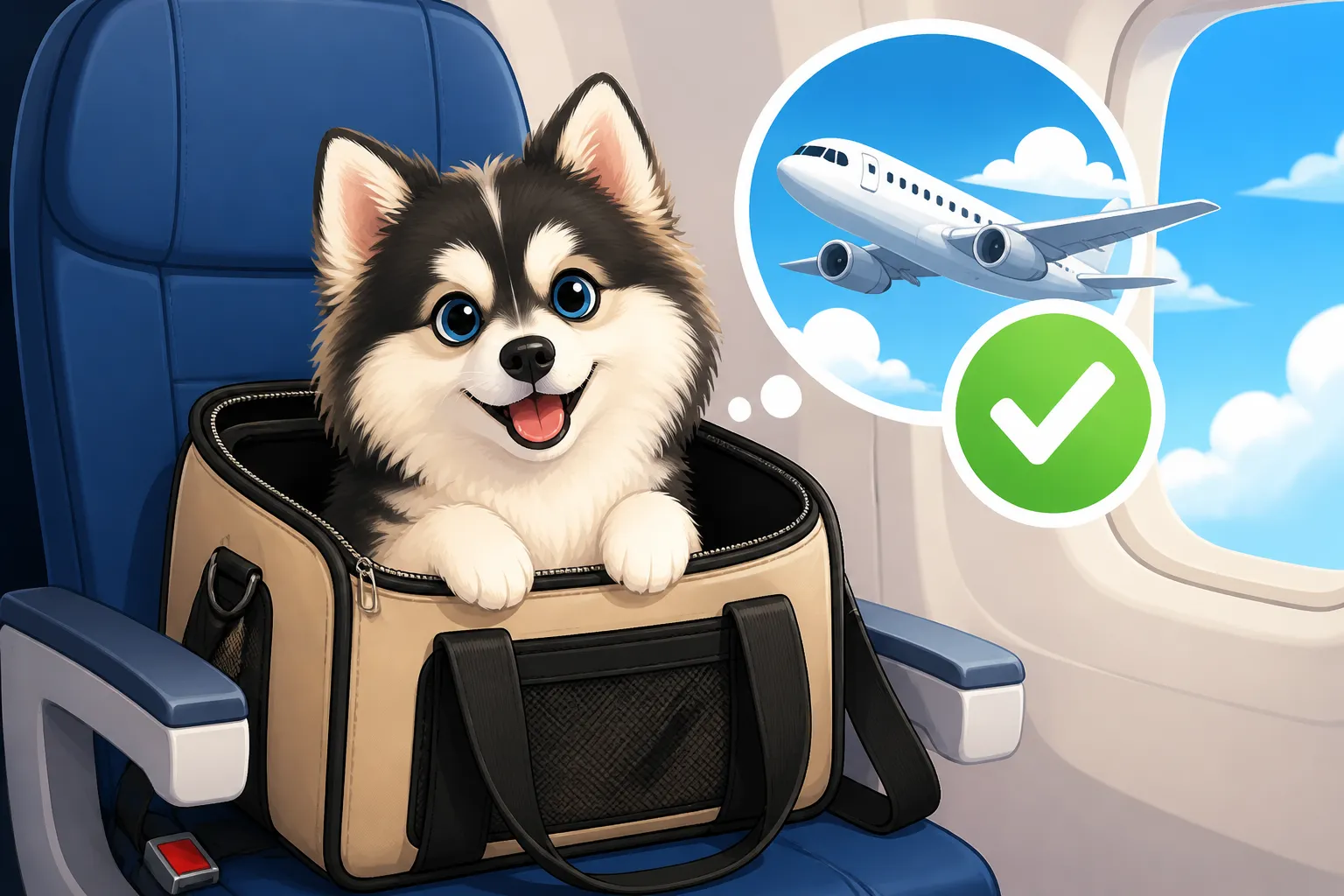
Whether a Pomsky Can Fly in the Cabin
It's a familiar scenario: you're planning a trip, and the thought of leaving your beloved Pomsky behind just breaks your heart. You want them with you, curled up safely under the seat in the cabin, but the reality of airline pet policies can feel like navigating a confusing maze of restrictions. This guide is here to untangle those rules, help you understand the specific challenges and possibilities for flying with your Pomsky in the cabin, and prepare you both for a smooth journey, or explore other options if cabin travel isn't a fit.
Understanding Airline Cabin Pet Policies
Flying with your furry companion in the cabin is a dream for many pet parents, but it's important to understand that airlines have stringent rules for good reason. These policies are designed to ensure the safety, comfort, and well-being of all passengers, including your pet. The primary challenge for Pomsky owners often comes down to two main factors: size and the required carrier dimensions.
The Size and Weight Conundrum for Pomskies
Pomskies are a mixed breed, which means their size can vary quite a bit, even within the same litter. You might have a compact Pomsky that's on the smaller side, closer to a Pomeranian in stature, or one that’s inherited more of the Husky's robust build. This inherent variability is where the cabin travel dilemma often begins. Airlines have strict guidelines that dictate the maximum dimensions of a pet carrier that can fit underneath the seat in front of you. This isn't just about the carrier itself, but also about your dog's ability to comfortably occupy that space.
Your Pomsky must be small enough to stand up, turn around, and lie down naturally within their carrier without any part of their body touching the sides or top. If your Pomsky is at the higher end of their weight range, perhaps closer to 25 pounds or more, even if they're still fairly compact, they might struggle to meet these comfort requirements within the typical under-seat dimensions. Many airlines also impose a combined weight limit for the pet and carrier, often in the range of 15-25 pounds. It's not just about fitting the carrier; it's about your Pomsky fitting inside it comfortably for the duration of the flight. This means meticulously checking the specific airline's size and weight limits well in advance, sometimes even with a measuring tape in hand to test how your Pomsky fits in a prospective carrier. You might find that a Pomsky that looks small at home is surprisingly large when trying to conform to these tight constraints.
Carrier Requirements and Dimensions
Beyond your Pomsky's size, the carrier itself is a critical piece of the puzzle. Airlines almost universally require soft-sided carriers for cabin travel. Hard-sided carriers, while sturdy, simply don't offer the flexibility needed to squeeze under the seat and conform to the sometimes awkward angles of the space. The carrier must be well-ventilated, with mesh windows on at least two sides (and ideally all sides) to ensure adequate airflow for your pet. It must also have a waterproof or leak-proof bottom, just in case of an accident during the flight.
Most importantly, the carrier's dimensions are non-negotiable. While these can vary slightly between airlines and even aircraft types, a common maximum might be around 18" L x 11" W x 11" H, though some can be smaller. It’s crucial to check with the specific airline you plan to fly with and even the type of aircraft, if possible, as overhead bin and under-seat spaces differ greatly. Your Pomsky needs to be able to stand up, turn around, and lie down in a natural position inside the carrier. This isn't just a comfort suggestion; it's a rule. If your Pomsky is too large for the carrier, or the carrier is too large for the under-seat space, you could be denied boarding at the gate, leaving you in a very difficult situation. Many owners find success with reputable pet carrier brands available on Amazon or Chewy that are specifically designed to meet IATA (International Air Transport Association) guidelines, but always double-check the exact dimensions against your chosen airline's rules.
Factors Influencing Your Pomsky's Cabin Travel Eligibility
It's not just about your Pomsky's physical size and the carrier. Several other factors come into play when determining if your Pomsky can fly in the cabin, ranging from the specific airline's rules to your dog's individual personality. Understanding these can help you plan better and avoid last-minute surprises.
Airline Specific Rules and Restrictions
This is where things can get incredibly varied. Every airline has its own set of rules for pet travel in the cabin, and these can change without much notice. What one airline allows, another might strictly forbid. Some airlines limit the number of pets allowed in the cabin on a single flight, meaning even if your Pomsky meets all the size and weight requirements, you might be denied if the quota has already been met by other passengers. This is why booking your pet's spot well in advance is absolutely critical, often at the same time you book your own ticket. Don't assume that if there's space for you, there's space for your dog.
Additionally, policies can differ for domestic versus international flights. Traveling to another country often involves more complex health certificates, vaccination requirements, and sometimes even quarantine periods, depending on the destination. Some countries have outright bans on importing certain breeds or mixed breeds. Always check the specific airline's pet policy page on their website and call their customer service to confirm current regulations, especially if you have a Pomsky that is The Pomsky That Carries a Husky Coat at Twenty Pounds, as their larger size might push them close to the limit. The cost of bringing a pet in the cabin also varies significantly, and these fees are generally non-refundable, even if your travel plans change.
Your Pomsky's Temperament and Training
Beyond the physical requirements, your Pomsky's behavior is arguably just as important for a successful cabin flight. While we love our vocal, expressive Pomskies, a noisy or anxious dog in a confined space for several hours can be a nightmare for everyone, including your pet. Pomskies can inherit a vocal nature from both their Husky and Pomeranian parents; they're known for their "talking," howling, and sometimes high-pitched barks. An airline will not hesitate to remove a disruptive pet (and owner) from a flight, or deny boarding altogether, if they anticipate a problem.
For cabin travel, your Pomsky needs to be calm, quiet, and comfortable being confined in their carrier for extended periods. This means they should be well crate-trained, view their carrier as a safe den, and not panic when zipped inside. If your Pomsky suffers from separation anxiety or is generally prone to excessive barking, this might not be the best option for them. Consider their ability to cope with strange noises, confined spaces, and being unable to see you constantly. If you're concerned about Whether an Apartment Building Tolerates a Pomsky due to noise, imagine that amplified on a plane. A Pomsky with a well-established "quiet" cue and a solid foundation in relaxation training will have a much better chance of a stress-free flight.
Preparing Your Pomsky for Cabin Flight
Deciding to fly with your Pomsky in the cabin is only the first step. The real work begins in preparing your furry friend for the journey. This involves not just packing their bags, but also getting them mentally and physically ready for the unique challenges of air travel.
Acclimating to the Carrier
Think of the carrier as your Pomsky's personal airplane seat. It needs to be a comfortable, familiar, and positive space for them, not a scary cage they only see when something unusual is happening. Start introducing the carrier weeks, or even months, before your planned flight. Leave it open in a common area of your home, lined with a soft blanket that smells like you, and sprinkle treats or toys inside. Encourage your Pomsky to go in and out voluntarily. You can feed them meals inside the carrier, which helps create a positive association.
Gradually, start zipping them inside for short periods, always rewarding calm behavior with praise and high-value treats. Increase the duration slowly. Practice carrying the carrier around, simulating the jostling and movement they'll experience at the airport. You can even try taking them for short car rides in the carrier. The goal is for your Pomsky to feel safe and relaxed in their carrier, associating it with good things. Remember, they need to be able to stand, turn, and lie down comfortably. If your Pomsky struggles with confinement or Whether a Pomsky Escapes a Crate, this pre-flight training is absolutely non-negotiable. Using a cozy blanket and a favorite toy inside the carrier can provide comfort and familiarity during the flight.
Health Checks and Documentation
Before you even think about booking, schedule a vet visit. Most airlines require a health certificate issued by a licensed veterinarian within a specific timeframe (often 10 days) prior to travel. This certificate confirms that your Pomsky is healthy enough to fly and is free of contagious diseases. Your vet will also ensure all vaccinations are up to date, especially rabies. For international travel, the requirements become even more complex and time-sensitive, sometimes requiring multiple vet visits and specific government endorsements.
Be transparent with your vet about your travel plans. Discuss any concerns you have about your Pomsky's anxiety or susceptibility to motion sickness. Your vet might suggest calming pheromone sprays or supplements, but never sedate your Pomsky for a flight without explicit veterinary guidance. Sedatives can have unpredictable and dangerous effects at altitude, impacting your dog's breathing and cardiovascular system. It's a risk not worth taking. Your vet can also advise on managing potential stress and provide a copy of your Pomsky's medical records to carry with you.
Day-of-Travel Tips
The day of travel can be stressful for both you and your Pomsky, but a little planning goes a long way. Before heading to the airport, ensure your Pomsky gets plenty of exercise. A long walk or a good play session will help burn off excess energy and make them more likely to rest quietly during the flight. Consider their routine; if they usually have a How Much an Adult Pomsky Eats Daily, adjust meal times so they aren't eating a large meal too close to departure. Limit food and water a few hours before the flight to minimize the risk of accidents in the carrier, but offer a small amount of water if they're thirsty.
Ensure multiple potty breaks right before you enter the terminal. Once inside, look for designated pet relief areas. Have their favorite, non-squeaky toy or a long-lasting chew (if allowed and safe) to keep them occupied. Don't forget to attach a visible tag to the carrier with your contact information, just in case. During the flight, try to remain calm and reassuring. Your Pomsky will pick up on your stress. If they do get a bit restless, a soft word or a gentle stroke through the carrier mesh can make all the difference. Remember the importance of having your Pomsky microchipped and ensuring your contact information is up to date, and consider a Whether a Pomsky Should Have a GPS Tracker attached to their harness or collar as an extra precaution.
Alternatives to Cabin Travel for Your Pomsky
Despite your best efforts, flying in the cabin with your Pomsky might not always be feasible. Perhaps your Pomsky is simply too large, or their temperament isn't suited to the confines of a small carrier for several hours. When cabin travel isn't an option, it's essential to explore safe and comfortable alternatives for your beloved companion.
Cargo Travel Considerations
For larger Pomskies that exceed cabin size restrictions, cargo is often the only airline travel option. However, this is a decision that requires serious consideration and understanding of the risks involved. While airlines have protocols for pet cargo, it inherently carries more stress and potential risks for animals. Your Pomsky would travel in a climate-controlled compartment below the passenger cabin, often in a much larger, hard-sided crate. This is a very different experience from being near you.
Many breeds, especially brachycephalic (short-nosed) dogs, are restricted from cargo travel due to breathing difficulties, but Pomskies typically do not fall into this category. Still, temperature restrictions are very common; airlines often won't fly pets in cargo if ground temperatures at departure, connection, or arrival airports are too hot or too cold. This means travel might only be possible during specific seasons. Your Pomsky would also need a health certificate, and likely other documentation, from your vet ensuring they are fit for cargo travel. Discuss with your vet if your Pomsky has any underlying health conditions, like The Collapsing Trachea a Pomsky Gets From the Pomeranian or Whether a Pomsky Gets Heart Disease, that could make cargo travel particularly risky. Many owners find the separation and potential stress of cargo travel too much to bear, and it should only be considered if truly necessary and after careful consultation with your veterinarian.
Road Trips and Pet Sitters
If airline travel, either in-cabin or cargo, doesn't feel right or isn't possible for your Pomsky, there are other excellent alternatives. A road trip offers much more flexibility and control over your Pomsky's comfort and schedule. You can make frequent stops for potty breaks, exercise, and hydration, and your Pomsky can travel securely in a crate or with a safety harness in the backseat, still close to you. This reduces stress significantly and allows for a more relaxed journey. It’s also a great way to bond and explore new places together at your own pace. You can pack all their usual food, like their favorite Ollie meals, without worrying about airline restrictions.
Alternatively, if you're flying to a destination where your Pomsky can't come, or you simply prefer not to put them through the travel stress, consider a trusted pet sitter or a reputable boarding kennel. Many professional pet sitters will come to your home, maintaining your Pomsky's routine in a familiar environment, which can greatly reduce anxiety. For Pomskies who might develop Whether a Pomsky Suffers Separation Anxiety, this can be a much kinder option than travel. If you choose a boarding facility, ensure it's clean, safe, and provides plenty of human interaction and exercise opportunities. Always do a trial run with a pet sitter or a short stay at a boarding kennel to ensure it's a good fit for your Pomsky before your actual trip.
Here's a quick comparison of the options:
| Feature | Cabin Travel (Pet in Carrier) | Cargo Travel (Pet in Crate) | Road Trip (Pet in Car) | Pet Sitter / Boarding (Pet Stays Home) |
|---|---|---|---|---|
| Pomsky Size | Small (must fit under seat, usually <25 lbs w/carrier) | Any size (within crate limits) | Any size | Any size |
| Human Proximity | Yes, under your seat | No, separate compartment | Yes, in the car with you | No, separate from you |
| Stress Level for Pet | Moderate (confined, noise, new environment) | High (separated, noise, unfamiliar environment, temperature) | Low to Moderate (familiarity of owner, stops, own space) | Low (familiar environment, routine maintained) |
| Cost | Variable airline fee | Higher airline cargo fee | Fuel, lodging, food (variable) | Daily rate for sitter/boarding |
| Documentation Needed | Health Certificate, rabies vaccination | Health Certificate, rabies, specific import permits (int'l) | Vet records, proof of ownership (less strict, but wise) | Vet records (for sitter/boarding to have on hand) |
| Flexibility | Low (strict airline rules, limited spots) | Low (strict airline rules, weather dependent) | High (control over schedule, stops) | High (you set the terms with sitter/boarder) |
| Typical Pomsky Fit | Smallest Pomskies only | Possible for larger Pomskies, but with risk | Excellent | Excellent |
Disclaimer
This article is for general informational purposes only and does not constitute professional advice. Laws, prices and regulations vary by location and change over time. Consult a qualified professional for guidance on your specific situation.