How Fast the Pomsky Spread After 2012
The explosion of interest in the Pomsky after 2012 was truly something to behold, almost like a wildfire spreading across the internet and then into real-world breeding programs. For many of us who remember the early days, it felt like one moment these adorable miniature husky-like dogs were a viral dream, and the next, they were a tangible, much-sought-after reality, leaving many new owners scrambling to understand this energetic, charming new crossbreed. This guide dives deep into how the Pomsky cemented its place in the dog world in the years following its unofficial debut.
The Initial Spark: From Viral Photos to Real Litters
Before 2012, the "Pomsky" was mostly a fantastical internet creation, a series of doctored images or misidentified dogs that captured the public's imagination. People saw these pictures and instantly fell in love with the idea of a pint-sized Siberian Husky. The demand was palpable, a clear indication that if such a dog could exist, many people would want one. The journey from those viral images to actual living, breathing Pomsky puppies was a fascinating and somewhat chaotic one, marked by both innovation and challenges.
The Power of Internet Virality and Early Demand
It all really kicked off with those captivating online images that went absolutely viral. You know the ones – impossibly cute, fluffy dogs with piercing blue eyes, looking exactly like miniature Huskies. The problem, as many soon discovered, was that these photos often depicted dogs that weren't Pomskies at all, or were clever digital manipulations. You might even recall seeing posts like The 2011 Photos That Were Not Pomskies circulating around that time. Regardless of their authenticity, these images ignited a massive public desire for a specific type of dog that didn't yet reliably exist. People were messaging breeders, posting on forums, and searching frantically online, all wanting to know where they could get their hands on one of these elusive pups. This intense, pre-existing demand, fueled by the rapid sharing capabilities of social media, created a vacuum that breeders eventually stepped in to fill.
The allure was simple: combine the striking looks of the Siberian Husky with the manageable size of the Pomeranian. Who wouldn't want that? This initial online phenomenon created a market almost overnight, before breeders even had a consistent way to produce them. It put immense pressure on early breeders to figure out the logistics and genetics, and to navigate the skepticism that came with creating a brand-new "designer" crossbreed. The internet didn't just spread the idea; it essentially created the market for the Pomsky, proving once again how powerful collective desire can be in shaping trends, even in the world of purebreds and crossbreeds.
Bridging the Gap: From Concept to Canine
The transition from a purely digital fantasy to a physical reality was tricky, to say the least. Breeders understood the public's excitement, but the practicalities of breeding a large male Siberian Husky with a tiny female Pomeranian were, frankly, impossible and unsafe. This is why Why a Pomsky Cannot Be Bred Naturally became a crucial piece of information for anyone interested in the breed. The solution lay in artificial insemination, with the female always being the larger Husky to ensure a safe pregnancy and delivery. This immediately made Pomsky breeding a specialized, often costly, endeavor, distinguishing it from accidental mixes.
The actual birth of the first recognized Pomsky litters, like The 2012 Litter That Made the Pomsky Real, marked a pivotal moment. These were the first true steps towards legitimizing the crossbreed. Suddenly, the "Pomsky" was no longer just an image; it was a puppy, complete with its own unique traits and, importantly, its own set of potential challenges. Breeders began to experiment with different generations (F1, F1b, F2, etc.) to understand how traits were inherited, hoping to achieve more consistent results. This experimental phase was critical, as it helped establish the early genetic foundations for what would become a rapidly spreading canine phenomenon.
The Rise of Dedicated Pomsky Breeders
As demand soared, so did the number of individuals and small kennels dedicating themselves to breeding Pomskies. This wasn't just a casual undertaking; it required significant investment in time, resources, and expertise. These breeders were effectively charting new territory, aiming to consistently produce dogs that met the public's expectations for appearance and temperament, all while navigating the unique challenges of a relatively new crossbreed.
The Challenges of Ethical Pomsky Breeding
Ethical breeding, especially for a new cross like the Pomsky, is fraught with challenges. First and foremost is the health aspect. Breeders had to contend with the potential genetic predispositions from both parent breeds, the Siberian Husky and the Pomeranian. This meant rigorous health screening of parent dogs for conditions like patellar luxation, eye diseases, and certain heart conditions. It's a huge responsibility to ensure you're not passing on genetic faults, and it requires a significant financial commitment to proper veterinary care and testing.
Beyond health, there's the ongoing effort to define and refine the desired Pomsky characteristics. What "look" was most sought after? What temperamental traits were ideal? Early on, there was a great deal of variability, and it was a real struggle for breeders to consistently produce puppies that resembled the popular "miniature husky" image that had taken the internet by storm. This led to a lot of learning on the fly, and unfortunately, some less ethical breeders jumping on the bandwagon without proper consideration for the health and welfare of their dogs. The journey of establishing a consistent Pomsky type remains an evolving process for reputable breeders.
The Role of Online Communities and Registries
To bring some order to the burgeoning Pomsky world, online communities and registries quickly emerged. These platforms played a crucial role in the rapid spread and "formalization" of the breed. They allowed breeders to connect, share information, best practices, and even their frustrations. These groups were instrumental in educating potential owners about what to expect from a Pomsky, moving beyond just the pretty pictures. For example, discussions around What the International Pomsky Association Does became vital, as organizations like the IPA stepped in to establish guidelines and a semblance of a breed standard, even without official recognition from major kennel clubs.
These registries, while not universally recognized, provided a framework for pedigrees and health testing requirements, giving buyers a bit more confidence. They also helped to differentiate serious, ethical breeders from those simply looking to make a quick profit from the craze. Through these online networks, information about available puppies, breed characteristics, and care tips could spread quickly, allowing enthusiasts worldwide to follow the Pomsky's development and connect with breeders. This interconnectedness was a huge driver in how fast the Pomsky phenomenon spread beyond isolated pockets.
Geographical Spread and Popularity Boom
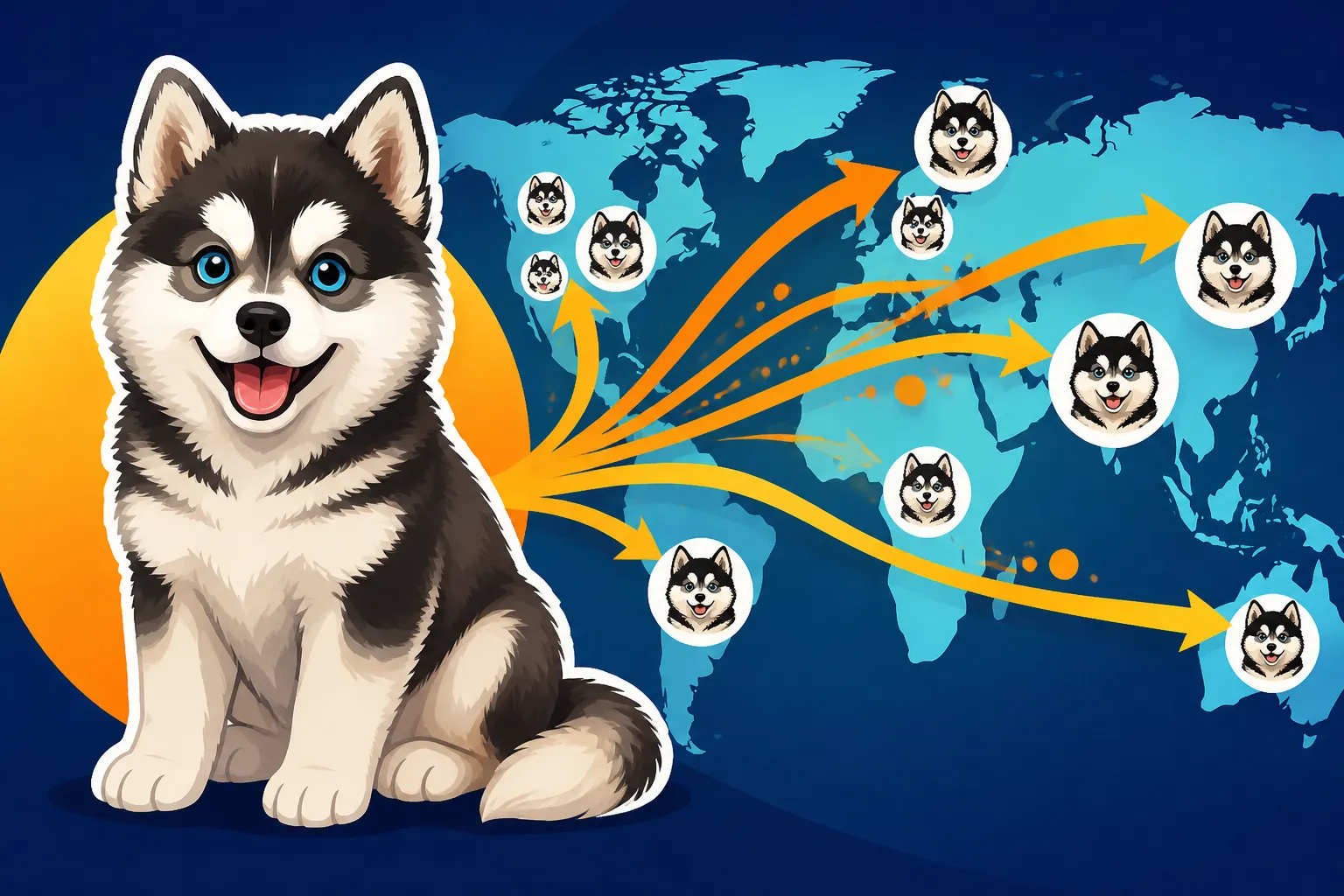
The rapid dissemination of information online meant that the Pomsky didn't just spread within a single country; it quickly became a global sensation. From North America to Europe and beyond, people were captivated by the idea of this charming crossbreed.
North American Adoption Trends
The Pomsky craze truly took root and flourished in North America. Thanks to the internet's reach, demand was practically instantaneous across the United States and Canada. Breeders, often starting small and operating out of their homes, saw their waitlists grow exponentially. People were willing to travel across states or even provinces to pick up their new puppies, showcasing the incredible pull these dogs had. The initial excitement was for that "miniature husky" look, and while not every Pomsky fit that exact mold (as many discovered when they brought home their unique pups), the overall appeal remained incredibly strong.
Many families, often urban or suburban dwellers, found the idea of a smaller, more manageable Husky incredibly appealing. The perception was that you got the stunning looks and personality of a Husky without the full-sized challenges, even though any Pomsky owner will tell you they still come with plenty of Husky-sized energy and vocalizations! Over time, certain regions with higher disposable incomes and a strong pet culture saw a particularly rapid adoption rate. This early, widespread adoption in North America laid the groundwork for the crossbreed's continued growth and solidification in the pet market.
International Interest and Accessibility
It wasn't long before the Pomsky's popularity jumped borders. European countries, particularly the UK, Germany, and the Netherlands, began to see a significant rise in interest. Australian and Asian markets also started to catch on. This international spread was primarily driven by the same factors that fueled its growth in North America: viral social media content, dedicated online breeder directories, and word-of-mouth. Breeders in one country might even connect with potential owners in another, making arrangements for transport, though this brought its own set of logistical challenges and costs.
While accessibility varied significantly — some regions might have only a handful of breeders, making puppies quite rare and expensive — the desire for a Pomsky was global. This international demand further solidified the Pomsky's status as a trendy and desirable crossbreed. The internet erased geographical barriers, allowing a charming dog, initially a digital fantasy, to quickly find its way into homes across continents. The challenges remained, particularly for those in areas with fewer breeders, but the allure was undeniable, pushing the Pomsky into the international spotlight at a remarkable pace.
Media Influence and Social Media's Role
If the internet provided the initial spark, then continuous media exposure and the ever-growing power of social media were the fuel that kept the Pomsky fire burning brightly, propelling its spread at an astonishing rate.
Celebrity Endorsements and Influencer Culture
In today's world, few things accelerate a trend faster than celebrity endorsement or the influence of popular social media personalities. The Pomsky quickly found its way into the arms of minor celebrities, influencers, and even popular TikTok and Instagram accounts. When a well-known personality shares a photo or video of their adorable Pomsky, the effect is immediate and far-reaching. Millions of followers are exposed to the breed, often seeing them as the ultimate "cute dog" accessory.
This kind of exposure does wonders for awareness, but it also creates an almost idealized image of the Pomsky, sometimes glossing over the realities of owning one. People see the adorable puppy antics and striking blue eyes without fully understanding that What a Pomsky Actually Weighs Full Grown might be quite different from the tiny puppy they envisioned, or that their Pomsky might possess The Husky Howl in a Pomsky. Nevertheless, this constant visibility across various digital platforms played a huge role in normalizing the Pomsky and making it a household name in the dog world, driving demand from a wide, diverse audience.
The Visual Appeal and "Miniature Husky" Allure
Let's be honest, a massive part of the Pomsky's rapid rise is its sheer visual appeal. The "miniature husky" look, with those striking markings, often blue eyes, and a fluffy double coat, is incredibly photogenic and captures hearts instantly. This made the Pomsky perfectly suited for social media platforms where visual content reigns supreme. Every picture and video shared contributed to the breed's viral spread. It wasn't just about owning a dog; for many, it was about owning a unique, beautiful dog that garnered attention and "likes."
The consistent imagery of small, fluffy dogs that looked like Huskies was exactly what people had initially seen in those viral photos, and even if Whether Pomsky Buyers Got What the Photos Promised varied from dog to dog, the dream was powerful. This strong visual branding, almost like a carefully crafted marketing campaign, helped the Pomsky to stand out in a crowded field of dog breeds and crossbreeds. It appealed directly to the emotional desire for something both exotic and adorable, ensuring its continued presence in our social media feeds and, consequently, in our homes.
The Impact on the Pet Market and Rescue Efforts
The rapid rise and spread of the Pomsky, while exciting for many, also brought with it significant shifts and challenges for the broader pet market and, inevitably, for animal welfare organizations.
The Upsurge in Crossbreed Popularity
The Pomsky's success undeniably contributed to a wider acceptance and explosion in popularity of "designer dog" crossbreeds. Prior to the Pomsky, other crosses like the Labradoodle and Goldendoodle had already paved the way, but the Pomsky brought a new level of internet-driven demand to the crossbreed scene. It demonstrated that a well-marketed and visually appealing cross could capture the public's imagination and command prices comparable to, or even exceeding, some purebreds.
This trend led to a proliferation of other "miniature" versions of popular breeds (e.g., mini Aussies, mini Goldens, etc.), as breeders sought to replicate the Pomsky's success. It highlighted a growing consumer desire for dogs that offered a unique combination of traits, often with a focus on specific aesthetics and perceived hypoallergenic qualities (though Pomskies are definitely not hypoallergenic!). The Pomsky became a prime example of how quickly public perception and demand can reshape the pet market, shifting focus from traditional purebreds to novel crosses.
Addressing the Challenges of Rehoming and Rescues
While the initial spread of the Pomsky was largely driven by excitement, the reality of ownership quickly set in for some. The breed combines the independent, often stubborn nature and high energy of a Husky with the sometimes "bossy" tendencies and vocalizations of a Pomeranian. Many people, captivated by the cute puppy pictures, simply weren't prepared for the demanding reality. This often led to heartbreaking situations where Pomskies found themselves needing new homes. This is a big reason Why Pomskies Reach Rescue at Two or three years old—that's when puppy energy has morphed into adult behavior, and novelty has worn off for unprepared owners.
The characteristics that make them charming can also be challenging: their strong prey drive, their potential as The Pomsky Escape Artist in a Twenty Pound Body, and their notorious Husky vocalizations can be overwhelming. As a result, dedicated Pomsky rescues, or specific programs within broader Husky or Pomeranian rescues, began to emerge. These organizations work tirelessly to educate potential adopters and find suitable, forever homes for these energetic and often misunderstood dogs. It's a testament to the Pomsky's rapid spread that an entirely new rescue infrastructure had to be developed to address the needs of those dogs whose initial homes weren't quite the right fit. When considering supplies for these rescued dogs, reputable online retailers like Chewy often become a go-to resource for new owners needing everything from food to toys and training aids quickly.
Supporting Your Pomsky's Health and Well-being
Understanding the Pomsky's unique blend of traits is key to providing a happy, healthy home. Their double coat, for instance, requires diligent grooming, and you'll find yourself needing specific tools like undercoat rakes and high-velocity dryers, which are readily available on platforms like Chewy. Regular grooming helps manage their shedding and keeps their skin healthy.
| Aspect | Husky Influence (Potential) | Pomeranian Influence (Potential) | Pomsky Reality |
|---|---|---|---|
| Size | Medium to large (40-60 lbs) | Toy (3-7 lbs) | Small to medium (10-35 lbs), highly variable depending on generation and parent size. |
| Energy | High, needs extensive exercise and mental stimulation | Moderate, enjoys walks but also indoor play | High energy, requires significant daily exercise to prevent destructive behavior. |
| Coat | Dense double coat, significant shedding, "blows coat" | Double coat, fluffy, prone to matting if not groomed | Dense double coat, sheds profusely, "blows coat" twice a year. Needs consistent brushing. |
| Vocalization | Howling, "talking," sometimes barking | Barking, yapping | Mixture of howling, "talking," and barking. Can be quite vocal. |
| Training | Intelligent but independent and stubborn, can be challenging | Intelligent and eager to please, but can be manipulative | Intelligent but prone to stubbornness. Consistency, positive reinforcement, and engaging training are essential. |
| Prey Drive | High | Moderate to high | High. Requires careful management around smaller pets and in unfenced areas. |
| Escape Artist | High, known for climbing/digging | Moderate, can slip collars | High. Needs secure fencing, may try to climb or dig. The Pomsky Escape Artist in a Twenty Pound Body is real. |
When it comes to feeding, Pomskies can sometimes inherit the Husky's tendency to be a "light eater," but their high energy means they need quality nutrition. Exploring different food options on Chewy to find one that suits your Pomsky's specific needs and taste preferences can be a journey. From high-quality kibble to fresh food options, ensuring they have a balanced diet is crucial for their overall health and vitality throughout The Twelve to Fifteen Years a Pomsky Lives.
Disclaimer
This article is for general informational purposes only and does not constitute professional advice. Laws, prices and regulations vary by location and change over time. Consult a qualified professional for guidance on your specific situation.