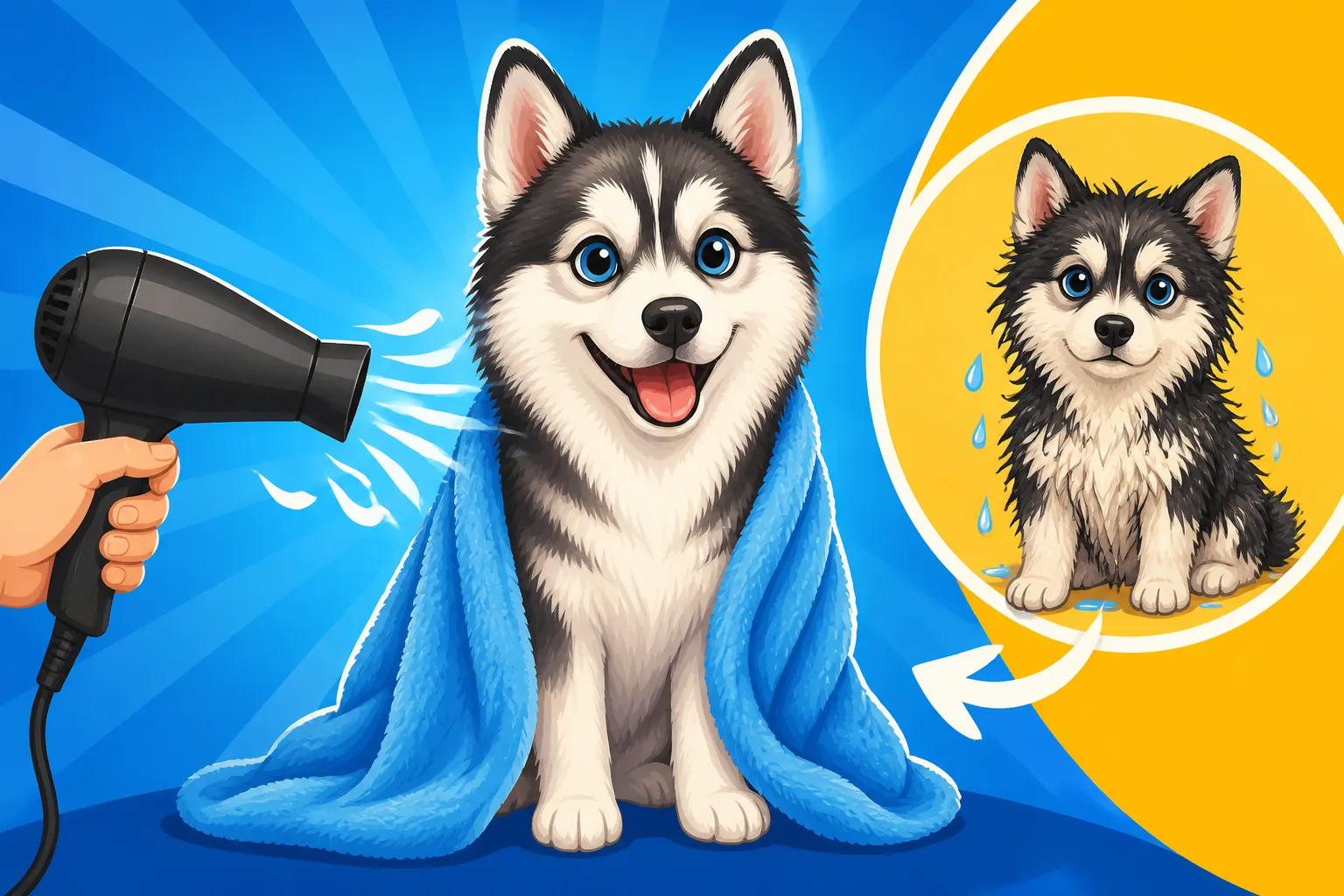
Drying a Pomsky to the Skin
One of the biggest frustrations Pomsky owners face, especially after a bath or a romp in the rain, is getting that incredibly dense double coat truly dry. Many assume a towel-dry and some air will do the trick, only to discover lingering dampness that can quickly spiral into uncomfortable and even painful skin issues. This comprehensive guide will walk you through the proper techniques and essential tools to ensure your Pomsky's coat is dried thoroughly, right down to the skin, keeping them healthy and happy.
The Perils of a Damp Pomsky Undercoat
Let's be honest, those fluffy, adorable Pomskies come with a coat that’s both a blessing and a bit of a challenge. Their plush, insulating fur, a direct inheritance from their Siberian Husky parentage, is designed to keep them warm in harsh climates. But this incredible feature becomes a double-edged sword when it comes to drying after a bath or an unexpected swim. Leaving even a slight amount of moisture trapped in that dense undercoat is like inviting trouble, and trust me, you don't want to deal with the aftermath.
Imagine going to bed with damp hair every single night – eventually, your scalp would get irritated, right? The same principle, magnified by fur density, applies to your Pomsky. That warm, dark, damp environment deep within their coat is a breeding ground for all sorts of unwelcome guests. Owners often don't realize the severity until a problem has already taken root, leading to costly vet visits and discomfort for their beloved companion. It’s a common pitfall, and one that diligent drying can entirely prevent.
Why a Double Coat Stays Wet
A Pomsky’s coat isn't just one layer; it’s a magnificent, functional double coat. You have the longer, tougher outer guard hairs that protect against elements like rain and snow, and then underneath, there's an incredibly soft, thick, and insulating undercoat. This undercoat is what gives them that plush, luxurious feel, and it's also the part that absolutely adores to hold onto water. Think of it like a really efficient sponge, but one that’s tucked away beneath another layer, making it hard to reach.
When you bathe your Pomsky, the water penetrates both layers, soaking the undercoat right down to the skin. If you then rely solely on towel drying or letting them air dry, that outer layer of guard hairs can dry relatively quickly, giving the illusion that your dog is dry. However, the undercoat underneath remains stubbornly damp, often for hours, sometimes even days, depending on the humidity and the dog's activity. It’s a sneaky kind of dampness that’s hard to detect without really getting your fingers deep into their fur. You can learn more about The Pomsky That Carries a Husky Coat at Twenty Pounds.
This isn't just an inconvenience; it's a serious health concern. That trapped moisture doesn't just sit there; it creates the perfect warm, moist, and oxygen-deprived environment for skin problems to flourish. Many first-time Pomsky owners are caught off guard by this, expecting a similar drying experience to short-coated breeds, only to find themselves battling skin infections weeks later. Understanding this unique coat structure is the first step to proper care.
The Risks of Lingering Moisture
The most common and dreaded consequence of a damp undercoat is the dreaded "hot spot," technically known as acute moist dermatitis. These are intensely itchy, red, weeping lesions that appear almost overnight. They're incredibly painful and irritating for your Pomsky, who will lick, chew, and scratch at them relentlessly, making the problem even worse. It's a vicious cycle that starts with that little bit of dampness. Whether a Damp Pomsky Undercoat Causes Hot Spots is a question many owners face.
Beyond hot spots, lingering moisture can lead to other skin infections. Yeast and bacteria thrive in damp, warm environments. You might notice a yeasty smell, like stale bread or corn chips, emanating from your dog's coat, especially in areas like their armpits, groin, or under their ears. This can manifest as red, itchy skin, flaky patches, or even changes in coat texture. Bacterial infections can cause pustules, hair loss, and scabbing, all starting from that seemingly innocent dampness.
Another significant risk, particularly for Pomskies with thicker or woolier coats, is matting. When the undercoat is wet and then allowed to dry without being thoroughly brushed out, the damp hairs can clump together and felt, forming tight, painful mats right against the skin. These mats pull on the skin, causing discomfort, and can hide further skin infections. Once a mat forms this close to the skin, it often requires professional grooming and sometimes even shaving to remove, which can be an upsetting experience for both you and your dog.
Essential Tools for Drying Your Pomsky
You might be thinking, "What, my regular hairdryer won't work?" The short answer is no, absolutely not. Human hair dryers get far too hot and don't have the power or airflow needed for a thick double coat. Attempting to dry your Pomsky with one could easily burn their delicate skin, not to mention it would take forever and still leave the undercoat damp. Proper drying requires specific tools designed for dogs, and investing in them will save you a world of trouble (and vet bills!) in the long run.
Think of it like this: you wouldn't try to hammer a nail with a screwdriver, right? Each tool has a specific job, and when it comes to a Pomsky's coat, the right tools make all the difference between a half-dry, potentially problematic coat and a truly fluffy, healthy one. It’s not about being extravagant, it’s about being effective and responsible in your pet care. Many owners find these tools quickly become indispensable.
High-Velocity Dog Dryers
This is the absolute hero of the Pomsky grooming kit. A high-velocity dog dryer, often called a force dryer, is designed specifically for pets. Unlike human hairdryers, they don't use heat as their primary drying mechanism; instead, they use powerful, concentrated airflow to literally blast water off and out of the coat. This powerful air jet separates the hairs, pushing moisture away from the skin and allowing the coat to dry from the inside out. Whether a Force Dryer Is Essential for a Pomsky is a question many consider.
These dryers come with different nozzle attachments, allowing you to direct the airflow precisely. The force of the air is incredible – you'll be amazed at how much water comes off, even after a thorough towel dry. They dramatically cut down drying time, which is a huge bonus for both you and your Pomsky. While the initial investment might seem like a lot, it pays for itself by preventing skin issues and reducing the need for professional grooming appointments just for drying. You can find excellent options on sites like Chewy or Amazon.
When choosing one, look for models with variable speed and heat settings. While you primarily use cool or low heat, having options can be helpful for different coat stages or sensitivities. The noise level can be a concern for some dogs, so introducing it gradually and positively is key. Many models are surprisingly quiet for their power, but training your dog to accept it is part of the process. For more on this, check out Getting a Pomsky Used to a Force Dryer.
Absorbent Towels and Microfiber
Before you even think about the high-velocity dryer, you’ll want to get as much surface water off your Pomsky as possible with good, absorbent towels. Regular bath towels work, but super absorbent microfiber dog towels are even better. They’re designed to soak up more moisture faster, which means less time under the force dryer.
The key here is to blot and squeeze, not to rub vigorously. Rubbing can tangle the hair, potentially leading to mats, especially if your Pomsky has a tendency to mat. Gently press the towel against their coat, squeezing excess water from their legs, belly, and back. Don't forget their paws and tail! Getting this initial dampness out makes the force drying process quicker and more efficient.
Having a couple of these on hand is always a good idea. One for the initial heavy soak-up, and another for a second pass before you bring out the big guns. They’re also handy for quick wipe-downs after a rainy walk, preventing those smaller damp spots from lingering and becoming problematic.
Brushes and Combs for the Drying Process
You can't just blast air at a matted dog and expect miracles. Brushing throughout the drying process is crucial to ensure the air reaches every single strand of that undercoat. You’ll primarily need a good undercoat rake and a slicker brush. The Undercoat Rake a Pomsky Owner Lives With is truly an indispensable tool.
As you dry, use the undercoat rake to gently separate the hair, working in small sections, particularly in thicker areas like the ruff, hindquarters, and tail. This helps the air penetrate deeper and speeds up drying. Follow up with a slicker brush to smooth the outer coat and remove any loose shedding hair. This "line brushing" technique – where you brush in sections, working your way up from the skin – is vital for ensuring no damp spots are missed.
A fine-toothed comb can also be useful for checking for dryness, especially in delicate areas or behind the ears. If the comb snags or feels damp, keep drying! Brushing not only aids drying but also helps in deshedding, making your efforts multi-purpose. Remember, a thorough brush-out before the bath can also help prevent matting during the wash and make drying easier.
Step-by-Step Guide to Drying Your Pomsky to the Skin
Drying a Pomsky properly is a systematic process, not a haphazard one. It takes patience and a little practice, but once you get the hang of it, it becomes second nature. Think of it as a grooming ritual that protects your beloved companion's skin and coat. Rushing through it is where problems begin, so allocate enough time and approach it with a calm, steady hand.
The goal is not just a surface-dry dog, but one where you can run your fingers through their dense fur and feel absolutely no dampness at the skin level. This detailed approach is what differentiates a successful home groom from one that leads to issues like skin irritation or the need for a trip to the professional groomer to fix mats. Remember, a happy grooming experience starts with you being prepared and confident.
Pre-Drying Prep
First things first, bathing your Pomsky should be done with appropriate shampoo for their double coat. Look for formulas designed for deep cleaning and detangling. After the bath, let your Pomsky shake out as much water as possible (maybe in an enclosed shower or outdoors if weather permits!). Then, grab those super absorbent towels and get to work blotting and squeezing water from their coat. Remember, no vigorous rubbing. Focus on getting as much water off before the dryer comes out. How Often a Pomsky Should Be Bathed and Shampoos That Suit a Pomsky's Double Coat are great resources here.
Next, set up your drying station. A non-slip surface is essential. Many people use a grooming table, but a non-slip bathmat on a sturdy table or even the bathroom floor can work. Gather all your tools: the high-velocity dryer, various nozzles, your undercoat rake, slicker brush, and maybe some treats for positive reinforcement. Ear protection for yourself (and possibly your dog, if they’re sensitive to noise) is a good idea. Ensure your Pomsky has had a chance to relieve themselves and is relatively calm.
If your dog is new to the force dryer, take it slow. Turn it on a low setting, away from them, and offer treats. Let them sniff it. Gradually increase the intensity and bring it closer. Positive reinforcement is key to making this a stress-free experience. A relaxed dog is much easier to dry efficiently.
The Force Drying Technique
Once your Pomsky is towel-dry and accustomed to the sound of the force dryer, it’s time to get down to business. Start by selecting a comfortable nozzle – typically a flat, wide one is good for general drying, and a more concentrated one for specific, very dense areas. Begin on a low-to-medium setting, and always test the air on your own skin first to ensure it’s not too hot (though most good force dryers have minimal heat).
Work in small sections, starting from the hindquarters and working your way forward. Use one hand to hold the dryer nozzle, directing the air close to the skin, while the other hand (or your brush) parts the fur to help the air penetrate. You'll literally see the water being pushed out and away from the coat. As you dry each section, use your undercoat rake and slicker brush to line brush, making sure all the undercoat is separated and drying. Keep moving the dryer; don't hold it in one spot for too long to avoid skin irritation.
Pay extra attention to dense areas like the ruff around their neck, their tail, and the thick fur on their back legs. These spots are notorious for retaining moisture. Don't forget their armpits and belly, which can be easily missed. Periodically run your fingers deep into their coat in these areas to check for any lingering dampness. The goal is to feel completely dry, right down to the skin. This might take a while, depending on your Pomsky's coat density and size, but patience is a virtue here!
Finishing Touches
Once you're confident that every inch of your Pomsky's coat is bone dry, it's time for the final brush-out. Use your slicker brush to smooth the entire coat, removing any remaining loose hairs that the dryer might have missed. This also helps distribute natural oils and leaves their fur looking shiny and feeling incredibly soft. You might even find yourself saying, "Wow, I forgot how much fur they had!"
After brushing, run a wide-toothed comb through their coat, especially in areas prone to tangles like behind the ears, armpits, and leg feathering. The comb should glide through easily without snagging. If it catches, that's your cue to go back with the slicker brush and potentially the dryer for any stubborn damp spots or small tangles that might have formed. This is your final check to ensure the job is truly done.
Finally, reward your Pomsky generously! Drying can be a long process, and they've been incredibly patient. A favorite treat, some playtime, or a good belly rub will reinforce that grooming time is a positive experience. Making it enjoyable for them will make future grooming sessions much easier on both of you.
Common Pitfalls and Troubleshooting
Even with the best intentions and the right tools, grooming can sometimes throw a curveball. It’s important to anticipate potential challenges and know how to address them, ensuring your Pomsky remains comfortable and safe throughout the drying process. From preventing a re-wetting fiasco to managing their comfort, a little foresight goes a long way.
Remember that every Pomsky is an individual. What works perfectly for one might need slight adjustments for another. Don’t get discouraged if your first few attempts aren't picture-perfect. Grooming is a skill that develops over time, and your bond with your dog will only strengthen as you navigate these experiences together.
Why Air Drying Isn't Enough
We touched on this earlier, but it bears repeating: air drying is simply not an option for a Pomsky's dense double coat. It's a fundamental misunderstanding of their coat type that can lead to significant health issues. While a short-haired dog might be fine air drying, a Pomsky will inevitably end up with a damp undercoat, no matter how warm or dry the ambient air feels to us. The outer guard hairs may feel dry to the touch, but the critical, insulating undercoat remains a hidden damp sponge.
This isn't just about discomfort; it’s about preventing serious skin problems like yeast infections, bacterial dermatitis, and the notoriously painful hot spots. Whether a Pomsky's Coat Comes Back After a Shave is a concern for owners who have had to resort to shaving due to severe matting or skin issues caused by improper drying. Don't put yourself or your Pomsky through that if it can be avoided by proper drying techniques. The minimal effort of using a force dryer properly vastly outweighs the potential consequences of air drying.
It's also about hygiene. A perpetually damp coat can develop a musty odor, indicating bacterial or fungal growth. This is unpleasant for everyone in the household and a clear sign that the coat isn't being managed correctly. Embrace the force dryer; it's a game-changer for double-coated breeds.
Avoiding Overheating and Stress
Even though force dryers use minimal heat, the sustained airflow can still make your Pomsky feel warm, especially in a confined space. Always pay attention to your dog's body language. Signs of overheating include excessive panting, drooling, restlessness, or seeking to move away from the dryer. If you see any of these, stop immediately and give them a break. Offer water and allow them to cool down.
To prevent stress, introduce the dryer slowly, with lots of treats and praise. Keep drying sessions positive and calm. You can even break up the drying into shorter intervals, allowing your Pomsky to rest in between. Some dogs benefit from having a comfort item, like a favorite toy or blanket, nearby. Always ensure there's good ventilation in your drying area.
Using a happy, reassuring voice throughout the process can also make a big difference. If your Pomsky is particularly noise-sensitive, consider canine ear protection, often available on Amazon or Chewy, which can significantly reduce their anxiety. The goal is a cooperative experience, not a wrestling match.
When to Seek Professional Help
If, despite your best efforts, you find yourself struggling to thoroughly dry your Pomsky, or if they develop skin issues like persistent itching, redness, or a strange odor, don't hesitate to consult a professional groomer or your veterinarian. Professional groomers have specialized equipment and extensive experience with double-coated breeds. They can not only dry your dog effectively but also offer advice and demonstrations on techniques.
Sometimes, the issue isn't just about drying, but about an underlying skin condition that needs veterinary attention. If your Pomsky has hot spots, severe matting, or signs of infection, a vet visit is paramount. They can diagnose the issue and prescribe appropriate treatment, which might include medicated shampoos, antibiotics, or anti-fungal medications. Remember, it's better to address these issues early than to let them fester.
Don’t be ashamed to seek help. Grooming a Pomsky is a commitment, and it's perfectly normal to need assistance or advice. A professional groomer might be able to offer a "bath and blow-out" service that ensures your Pomsky is properly dry. This can be a great option after a particularly muddy adventure or during heavy shedding seasons when How Often a Pomsky Needs a Blowout becomes a real consideration. It’s all part of ensuring your furry family member lives their best, healthiest life.
Disclaimer
This article is for general informational purposes only and does not constitute professional advice. Laws, prices and regulations vary by location and change over time. Consult a qualified professional for guidance on your specific situation.