Whether a Pomsky Should Swim to Cool Down
When the sun beats down and temperatures climb, many Pomsky owners find themselves desperate for ways to help their furry companions cool off. It’s natural to think a refreshing dip in the water might be the perfect solution, especially with that thick, luxurious double coat. However, the question of whether a Pomsky should swim to cool down is more complex than it first appears, bringing with it both benefits and potential pitfalls. This guide will delve into the realities of Pomskies and swimming, offering realistic advice on how to keep your little fluffball safe and comfortable when the heat is on.
Understanding Your Pomsky's Unique Cooling Challenges
Before we even consider swimming, it’s crucial to understand why Pomskies face particular challenges with heat. Unlike us, dogs don't sweat efficiently through their skin; they primarily cool down by panting. And then there's that magnificent coat! Many people mistakenly believe that shaving a double-coated dog like a Pomsky will help them stay cool, but this often does more harm than good. Why a Pomsky Must Never Be Shaved is a topic we've covered, and it highlights how that double layer of fur actually insulates them against both heat and cold.
The Double Coat: Friend and Foe in the Heat
Your Pomsky's double coat, a glorious inheritance from both the Siberian Husky and Pomeranian, is a marvel of natural engineering. It consists of a soft, dense undercoat that provides insulation and a coarser, longer outer coat (guard hairs) that protects against the elements. In winter, this system traps warm air, keeping them cozy. In summer, it helps prevent the sun's harsh rays from reaching their skin and allows air to circulate, creating a cooling effect.
However, this same coat, if not properly maintained, can become a heat trap. If the undercoat is matted or excessively dense from a lack of proper grooming, it can prevent air circulation, making it harder for your Pomsky to regulate their body temperature. Imagine wearing a heavy, non-breathable jacket on a summer day – that's what a poorly maintained double coat can feel like. This is why regular brushing, especially during the shedding seasons when they are Whether a Pomsky Blows Its Coat Twice a Year, is so vital. Keeping that undercoat free of loose hair allows for proper airflow, which is essential for natural cooling.
The Risk of Overheating: A Constant Concern
Pomskies, inheriting traits from their northern Husky ancestors, are generally built for colder climates. While the Pomeranian side might offer a slightly wider temperature tolerance, the Husky influence often means they can struggle significantly in hot, humid weather. This makes them particularly susceptible to overheating, also known as heatstroke, which can be a very serious, life-threatening condition. Signs a Pomsky Is Overheating is something every owner should be familiar with.
Symptoms can escalate quickly from excessive panting, drooling, and restlessness to vomiting, diarrhea, staggering, and even collapse. It's a terrifying experience to witness, and prompt action is critical. Because of this inherent vulnerability, any activity that generates heat or occurs in warm environments needs careful consideration. This includes intense exercise during the hottest parts of the day or prolonged exposure to direct sunlight. The goal is always to prevent overheating rather than react to it. Understanding The Temperature a Pomsky Starts Struggling At is key to proactive management.
Is Swimming a Safe and Effective Cooling Method for Your Pomsky?
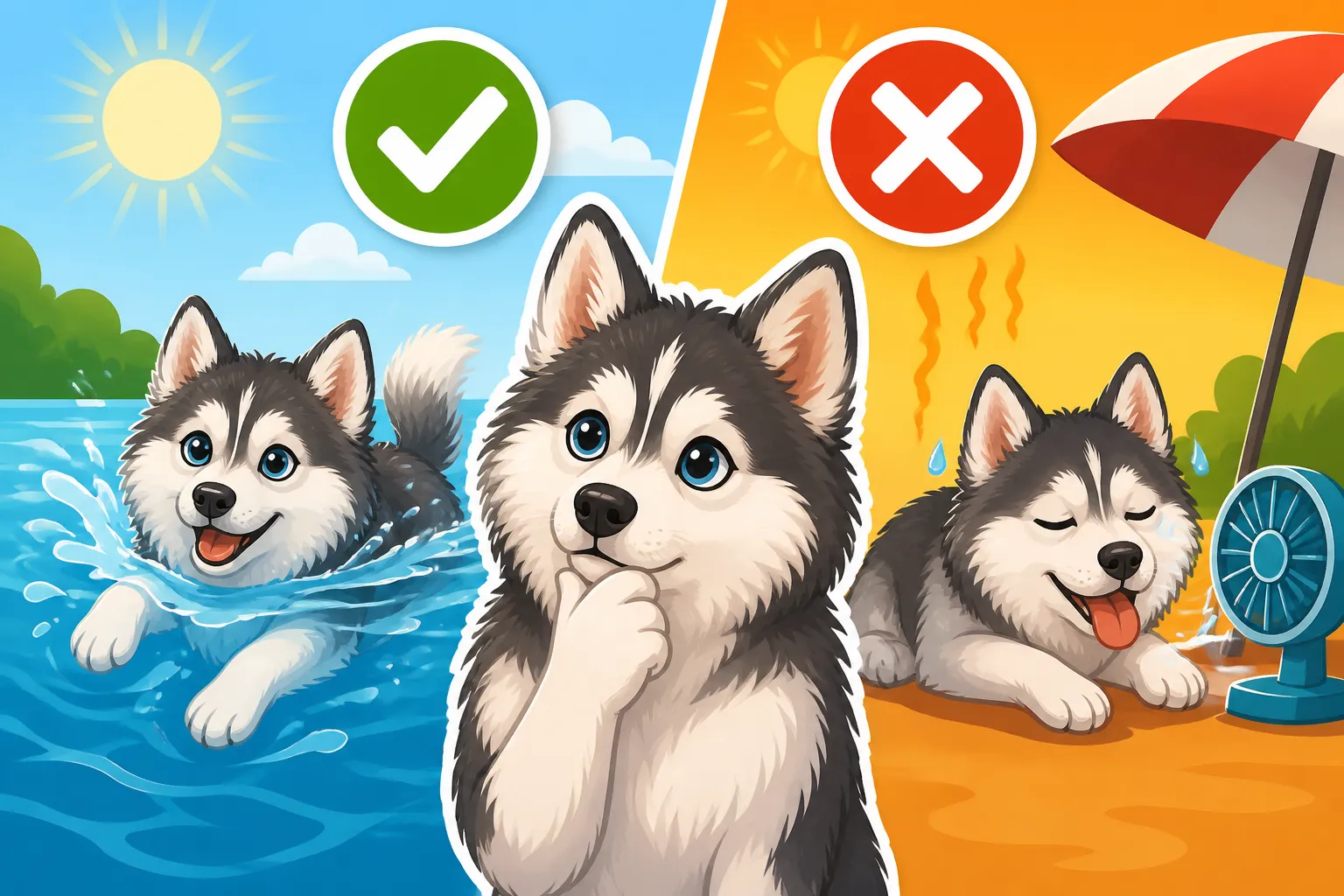
Now that we understand the baseline challenges, let's tackle the swimming question head-on. Yes, swimming can be an effective way for some Pomskies to cool down, but it comes with a significant asterisk. It's not a universal solution, and careful precautions are always necessary.
The Pros: When Swimming Works
When done correctly and safely, swimming offers several benefits for a Pomsky in warm weather:
- Direct Cooling: Immersing the body in cool water is one of the most direct ways to lower core body temperature. It bypasses the slower process of evaporative cooling from panting alone.
- Low-Impact Exercise: Swimming is an excellent full-body workout that puts minimal stress on joints. For Pomskies who might have joint predispositions like Slipping Kneecaps in a Pomsky or Hip Dysplasia in a Pomsky, this can be a fantastic way to get exercise without the impact of running on hard surfaces.
- Mental Stimulation: Many dogs genuinely love the water, and swimming can be a fun, enriching activity that provides mental engagement and a break from routine. The sheer joy of splashing and playing can be a wonderful stress reliever.
However, these benefits are only realized if your Pomsky is actually comfortable and capable in the water, and if you take the necessary safety measures.
The Cons and Considerations: The Risks You Can't Ignore
Despite the potential benefits, swimming presents several challenges and risks for Pomskies:
- The Coat's Capacity to Absorb Water: That thick double coat, while insulating, can become incredibly heavy and waterlogged when wet. It's like a sponge that just keeps soaking up water. This can make it difficult for your Pomsky to stay afloat, especially if they are not strong swimmers. The added weight makes propulsion harder and can quickly lead to exhaustion.
- Drying Time and Matting: This is perhaps the biggest practical hurdle. Getting a double coat thoroughly dry after a swim is a monumental task. If left damp, the dense undercoat creates a perfect breeding ground for bacteria and yeast, leading to skin infections, hot spots, and an unpleasant odor. It also creates a nightmare scenario for matting, where the wet fur clumps together and tightens as it dries, pulling at the skin and causing pain. These mats are incredibly difficult and sometimes impossible to brush out, often requiring professional shaving. You'll need tools like The Undercoat Rake a Pomsky Owner Lives With and potentially a high-velocity dryer, which we discuss in Drying a Pomsky to the Skin.
- Risk of Aspiration and Water Intoxication: Dogs can accidentally inhale water while swimming, leading to aspiration pneumonia. If they swallow too much water, especially from a pool or freshwater source, they can suffer from water intoxication (hyponatremia), a dangerous condition where sodium levels in the blood become diluted. This is particularly a risk for smaller dogs or those who spend extended periods in the water.
- Temperature of the Water: While the goal is to cool down, water that is too cold can be a shock to your Pomsky's system, potentially causing cramping or other issues. Conversely, stagnant, warm water might not offer sufficient cooling and could harbor bacteria or algae.
- Water Quality and Safety: Lakes, rivers, and ponds can contain harmful bacteria (like leptospirosis or blue-green algae), parasites, sharp objects, or strong currents. Pools require careful chemical balancing, and even then, chlorine can irritate skin and eyes. Always supervise your Pomsky closely and rinse them thoroughly after any swim to remove contaminants.
Essential Swimming Safety Measures
If you decide swimming is right for your Pomsky, prioritize safety above all else.
| Safety Measure | Description | Why it's Important for Pomskies |
|---|---|---|
| Life Vest | A properly fitted dog life vest provides buoyancy, helping your Pomsky stay afloat without expending as much energy. Look for one with a strong handle on the back for easy lifting. | Even if your Pomsky can swim, their heavy coat can quickly lead to fatigue. A vest reduces effort, prevents exhaustion, and makes it easier for you to assist them in an emergency. You can find excellent options on Chewy or Amazon. |
| Shallow Entry/Exit | Choose swimming spots with gradual, easy-to-access entry and exit points. Avoid steep banks, slippery rocks, or areas where your dog might struggle to get out. | Reduces the risk of injury or panic for your dog, especially if they are new to swimming or feeling tired. Makes it less stressful for both of you. |
| Constant Supervision | Never, ever leave your Pomsky unsupervised around water, even for a moment. This includes dog pools in your backyard. | Accidents happen quickly. A life vest is not a substitute for active supervision. You need to be ready to intervene if they get into trouble, swallow too much water, or get tangled. |
| Limited Time in Water | Keep swimming sessions short, especially when your Pomsky is new to it or if they're not a natural swimmer. Build up duration gradually. | Prevents exhaustion and reduces the risk of water intoxication. A few short dips are better than one long, strenuous session. |
| Rinse and Dry | Immediately after swimming, thoroughly rinse your Pomsky with clean, fresh water to remove chlorine, salt, dirt, or potential irritants. Then, dry their coat completely. | Prevents skin irritation, hot spots, and mats. This is arguably the most crucial step for a double-coated dog. A high-velocity dryer purchased from Amazon can be a game-changer here. |
| Check Water Quality | Be aware of potential hazards in natural bodies of water (algae blooms, strong currents, underwater debris) and ensure pool chemicals are properly balanced. | Protects your Pomsky from dangerous toxins, infections, or physical injury. When in doubt, it's safer to avoid. |
Drying Your Pomsky After a Swim: The Make-or-Break Step
Let's be brutally honest: the most demanding part of allowing your Pomsky to swim isn't the swimming itself, it's the aftermath. If you can't commit to a thorough drying routine, then swimming might not be the best cooling method for your dog. The health of their skin and coat depends on it.
Why Air Drying is Not an Option
For a double-coated breed like a Pomsky, air drying is simply not an option. The dense undercoat traps moisture against the skin for hours, even days. This creates a warm, damp environment where bacteria and yeast thrive. The consequences range from unpleasant odors to severe skin infections like pyoderma or yeast dermatitis. Furthermore, as the hair dries, it shrinks and tightens, forming painful mats and tangles deep within the coat that are excruciating to remove and can require a full shave-down.
This isn't just about aesthetics; it's about your dog's comfort and health. Imagine walking around with soaking wet hair plastered to your scalp for hours. It’s itchy, uncomfortable, and eventually, can lead to skin problems. Your Pomsky feels the same, but multiplied by the sheer volume of their fur.
The Essential Drying Toolkit and Technique
To properly dry your Pomsky, you’ll need the right tools and a systematic approach.
- Towels, and Lots of Them: Start by toweling your Pomsky vigorously to remove as much surface water as possible. Don't just pat; rub down into the undercoat. You'll likely go through several towels.
- High-Velocity Dryer: This is non-negotiable for double-coated breeds. A professional-grade high-velocity dryer (often available on Amazon or specialized pet supply stores like Chewy) uses powerful, cool or lukewarm air to blast water out of the coat, right down to the skin. It works by separating the hair shafts, allowing air to penetrate.
- Technique: Start at the rear and work your way forward, section by section. Hold the nozzle close to the skin, pointing it in the direction the hair grows, then against the growth to fluff out the undercoat. Use a brushing motion with your free hand (or a slicker brush) to help separate the hair and find any damp spots.
- Safety: Always keep the nozzle moving to prevent any single spot from getting too hot or too dry. Ensure the air temperature is comfortable for your hand – if it's too hot for you, it's too hot for your dog. Protect their ears from the noise; some dogs benefit from a Snood or cotton balls in their ears.
- Brushing During Drying: As you dry, continuously brush your Pomsky. A good slicker brush and an undercoat rake will help separate the hairs, allow the air to reach the skin, and prevent mats from forming as the hair dries. This is crucial for getting all the moisture out and leaving their coat fluffy and tangle-free. This combination of drying and brushing is key to preventing those dreaded post-swim skin issues.
A complete drying session can take a significant amount of time, sometimes an hour or more, depending on your Pomsky's coat density and size. Be prepared for this commitment before you even think about letting them get wet.
Alternatives to Swimming for Cooling Down
If swimming seems too complicated, too risky, or simply not your Pomsky's cup of tea, don't despair! There are plenty of other effective ways to help them beat the heat. Whether a Pomsky Needs Air Conditioning is a related topic, emphasizing the need for environmental control.
Water Play Without Full Immersion
- Sprinklers or Hoses: Many Pomskies love to "chase" a gentle stream from a garden hose or play in the spray of a sprinkler. This allows them to get wet enough to cool off, especially around their paws and belly, without fully saturating their thick coat. It's often easier to manage the drying process afterward.
- Kiddie Pools (Shallow Water): A shallow plastic kiddie pool with just a few inches of water can be a wonderful way for your Pomsky to splash and cool their paws and belly without a full swim. They can lay down, paddle, and have fun, and the drying effort is significantly reduced. You can even toss a few ice cubes in for extra fun!
- Wet Towels/Bandanas: Dampen a towel or a cooling bandana with cool (not ice-cold) water and drape it over your Pomsky's back, neck, or chest. The evaporation helps draw heat away from their body. This is a quick and easy way to provide relief, especially if you're on a walk or relaxing outdoors.
Cooling Gear and Environmental Management
- Cooling Mats: These clever mats, available on Chewy or Amazon, use pressure-activated gel or water to provide a cool surface for your dog to lie on. They don't require electricity or refrigeration and can be a lifesaver on hot days, offering a passive way for your Pomsky to reduce their body temperature. Whether a Cooling Mat Helps a Pomsky delves into this further.
- Frozen Treats: Homemade pupsicles made from diluted broth, plain yogurt, or pureed fruits (ensure they are dog-safe!) are a fantastic way to hydrate and cool your Pomsky from the inside out. They also provide mental stimulation as your dog works to enjoy their treat.
- Shade and Air Conditioning: The simplest and most effective solution. Ensure your Pomsky always has access to shade when outdoors, and that your home is kept comfortably cool with air conditioning or fans. Avoid walks or strenuous activity during the hottest parts of the day. For more advice, refer to When to Walk a Pomsky in Summer.
- Grooming: A well-groomed coat is a cooling coat. Regular brushing, particularly during shedding season, removes dead undercoat and allows for proper air circulation. This is paramount to their comfort in heat. The Pomsky That Carries a Husky Coat at Twenty Pounds needs regular maintenance.
Ultimately, whether your Pomsky swims to cool down depends on their individual comfort with water, your commitment to safety, and your dedication to the post-swim drying process. For many, a combination of these methods provides the best way to keep these beautiful, fluffy dogs happy and healthy through the warmer months, ensuring they get sufficient The Exercise a Pomsky Needs Every Day without overheating.
Disclaimer
This article is for general informational purposes only and does not constitute professional advice. Laws, prices and regulations vary by location and change over time. Consult a qualified professional for guidance on your specific situation.